
What Is QSR Experience and Why It Matters for Your Success
· Thibault Le Conte
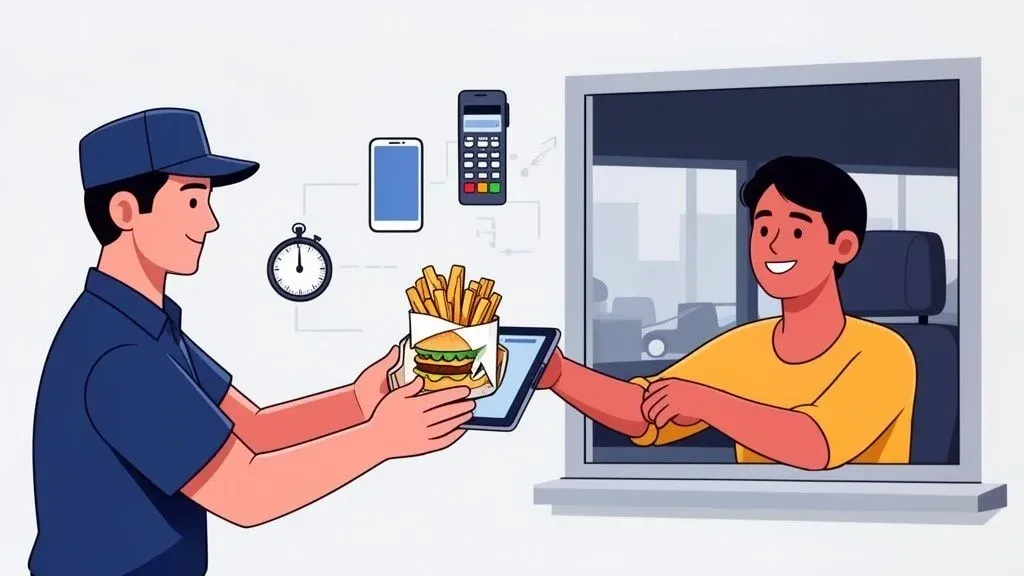
The term “QSR experience” is about more than just fast food. In simple terms, it’s the entire journey a customer takes with your restaurant, from their first thought of ordering to their last bite. Today, a winning journey is built on three simple promises: getting the order fast, getting it right, and getting it easily.
This experience is the key to earning repeat business. Whether a customer is in your drive-thru, at the counter, or ordering on their phone, they expect a smooth, predictable, and satisfying process. Why does this matter? Because meeting—and exceeding—these expectations directly impacts your efficiency, reduces costs, and is what separates thriving restaurants from struggling ones.
What Exactly Is the Modern QSR Experience?
Think of your restaurant as a high-speed pit stop for someone’s busy day. The total experience you provide is the single most important factor driving their loyalty and your profitability. It’s a careful balance between your digital ordering platforms, like DoorDash and Uber Eats, the operational flow of your drive-thru, and the service inside your store.
At its heart, this whole experience is built on a few core promises you make to every customer who chooses you.

The Three Pillars of QSR Success
These aren’t just buzzwords; they are the absolute baseline for competing in today’s market. Get these wrong, and nothing else matters.
-
Speed: People choose a QSR because they’re short on time. Every second you can save—from faster drive-thru lines to quicker delivery prep—improves their experience and allows you to serve more customers, which increases revenue.
-
Accuracy: Nothing ruins a meal faster than a wrong order. Every mistake creates food waste, invites a negative review, and risks losing a customer forever. This directly hits your bottom line through remakes and lost business.
-
Convenience: You have to meet customers where they are. That means offering easy ordering through mobile apps, your website, and other channels that fit seamlessly into their day, increasing your potential sales volume.
This focus on a reliable, value-driven experience becomes even more critical when wallets get tighter. During periods of inflation, many diners trade down from full-service restaurants, giving QSRs a surge in traffic. The U.S. fast-food market, now valued at $412.7 billion across more than 215,000 businesses, perfectly illustrates this resilience.
To see these principles in action, just look at how the best fried chicken chain options have mastered different facets of service and product quality. They are masters of a well-executed QSR strategy. The technology behind these top-tier operations is just as important, which you can learn more about in our deep dive into https://www.orderout.co/blog/quick-service-restaurant-software/.
At the end of the day, a stellar QSR experience isn’t an accident. It’s engineered with a sharp focus on these pillars, powered by the right technology like POS integrations, and backed by rock-solid restaurant operations.
The Core Pillars of a Great QSR Experience
Here’s a quick summary of the fundamental elements that define a successful Quick-Service Restaurant experience for customers.
Pillar What It Means for the Customer Why It Matters for Your Restaurant Speed “I got my food fast without a long wait.” Faster service means higher table/drive-thru turnover, increased sales volume, and better staff productivity. Accuracy “They got my order exactly right.” Prevents costly food waste, avoids negative reviews, and builds crucial customer trust, reducing errors and saving money. Convenience “Ordering was easy, wherever I was.” Multiple ordering channels (app, web, drive-thru) attract more customers and increase sales, especially with efficient delivery.
Mastering these pillars is the key to creating an experience that not only satisfies customers but turns them into loyal regulars who choose you time and time again.
The 3 Core Ingredients of a Winning QSR Strategy
A great quick-service restaurant doesn’t just appear out of nowhere. It’s carefully built on three core ingredients: speed, accuracy, and convenience. These aren’t just buzzwords on a corporate memo; they are the interconnected gears that power the entire customer experience. If you nail one but drop the ball on another, you create friction. But when you get all three working in harmony, you build the kind of customer loyalty that directly grows your bottom line.
Think of it like a pit crew at a racetrack. Speed is how fast they swap the tires. Accuracy is making sure every single lug nut is tightened correctly. Convenience is the driver being able to pull right into the pit box without a hitch. If any one of those things goes wrong, you’re not winning the race.
Speed is More Than Just Fast Hands
In the QSR world, speed isn’t just about how quickly you can hand food to a customer. It’s about streamlining the entire order lifecycle, from the moment a customer opens an app to the second that order is in their hands. The actionable insight here is to hunt down and eliminate bottlenecks. Is your drive-thru line slow because of a clunky payment process? Is your kitchen staff overwhelmed by manually punching in delivery orders? Each delay costs you time and money. Shaving off seconds at each step adds up to minutes during a lunch rush, which means more orders served and higher staff productivity.
The Hidden Costs of Getting it Wrong
Order accuracy is where trust is won or lost, especially with delivery and takeout. Speed might get a customer to try you once, but accuracy is what convinces them to come back again and again.
One wrong order sets off a domino effect: wasted food, the cost of remaking the meal, a likely one-star review, and a customer who might never return. The primary cause of these expensive mistakes is manual data entry. When your team juggles tablets from DoorDash, Uber Eats, and other platforms during a dinner rush, errors are inevitable. This turns your skilled staff into data clerks, slowing down operations and directly hurting profits through error reduction.
A study from Intouch Insights found that while customers appreciate speed, order accuracy is the single most important factor in their QSR experience. Getting it right isn’t just a nice-to-have; it’s the bare minimum expectation.
Convenience: The New Competitive Edge
Modern customers expect ease above all else. They want to order from anywhere, anytime, with minimal effort. This is where your Point-of-Sale (POS) system becomes the command center for your entire restaurant operation. Imagine a customer places an order on DoorDash. Instead of a tablet beeping for attention, that order flows directly into your Square POS system. This single integration nails all three pillars at once. The order is received instantly (speed), it’s transcribed perfectly without human error (accuracy), and the customer used their preferred app (convenience). This is a perfect real-world example of how food tech boosts restaurant efficiency.
Bringing all these ordering channels together isn’t just a technical upgrade; it’s the most straightforward way to improve all three pillars at once and end the operational chaos for good.
How Food Tech Boosts Restaurant Operations
If you’ve ever been behind the counter of a busy QSR, you know the scene: a chaotic mess of beeping tablets—one for Uber Eats, one for DoorDash, another for Grubhub. This “tablet farm” is a major operational bottleneck. For every order that comes in, a staff member has to stop, read the screen, and manually punch it into the main Point-of-Sale (POS) system. It’s slow, stressful, and a recipe for mistakes. A single typo leads to a wrong order, an unhappy customer, and wasted food, hurting your efficiency and profits.
There’s a much smarter way to work.
This process shows that getting the customer experience right isn’t just one thing; it’s a sequence. You have to nail speed first, then guarantee accuracy, and finally deliver convenience. Get that flow right, and you’re well on your way to building a loyal customer base.
The Game-Changer: POS Integration for Restaurant Delivery
The solution to tablet chaos is direct POS integration. This technology acts as a central pipeline connecting all your delivery apps directly to your kitchen. Instead of juggling tablets, every online order—no matter the source—flows seamlessly into your main POS and appears on your kitchen display system (KDS) just like an in-person order.
Why does this matter for your restaurant? By cutting out manual double-entry, you solve several critical problems at once:
- Slash Order Errors: Orders are transmitted exactly as the customer placed them. This error reduction saves money on remakes and prevents negative reviews.
- Improve Staff Productivity: Your team can stop being data entry clerks and get back to what they’re good at: making great food and helping customers. This is a huge boost for morale and efficiency.
- Accelerate Ticket Times: The moment an order is placed online, it’s in your kitchen’s queue. This time saving dramatically improves your speed of service and delivery times.
When you automate the flow of orders from apps to your kitchen, you’re not just saving a few seconds here and there. You’re building a more resilient, scalable, and profitable operation from the ground up.
The Real-World Impact on Restaurant Efficiency
Technology is no longer a background tool; it’s now central to defining a great QSR experience. Look at a major player like Chipotle. They posted an impressive 7.4% same-store sales growth, driven by digital sales that hit a staggering $3.9 billion—or 35% of their total revenue.
Those numbers send a clear message: winning in today’s market means embracing mobile apps and integrated restaurant delivery. For restaurant managers, food tech that plugs services like DoorDash and Uber Eats directly into a Square or Clover system is essential. You can read more about how software is changing the industry to see where things are headed.
This single tech upgrade is one of the most powerful moves you can make to boost your restaurant’s efficiency. It cuts costs by reducing waste, saves labor by automating tedious work, and drives revenue by ensuring every order is fast and right. That’s how you get happy customers to come back again and again.
Mastering On-Premise and Off-Premise Restaurant Operations
A great QSR experience feels effortless for the customer, no matter how they decide to order. Today’s diners don’t think in terms of “channels”—they just want their food. To earn their repeat business, your restaurant must nail speed and accuracy every time, whether they are dining in, getting takeout, or ordering delivery.
The way customers interact with QSRs is always in flux. For years, the drive-thru was the undisputed king, but its reign is being challenged by the sheer convenience of ordering delivery and takeout through an app. This shift doesn’t mean the drive-thru is dead—far from it—but it does demand a more holistic strategy that treats your physical and digital storefronts with equal importance. You can dig deeper into these drive-thru trends on revenuemanage.com.

Nail the In-Store and Drive-Thru Experience
For customers in your restaurant or car, efficiency is everything. Your job is to remove every point of friction.
- Make the Drive-Thru Flow: An actionable insight is to treat your drive-thru as an assembly line. Use bright, digital menu boards you can update easily. Create a clear workflow for taking orders, processing payments, and handing off food. Every second saved improves staff productivity and customer satisfaction.
- Create a Dedicated Pickup Zone: A chaotic counter is a recipe for a bad experience. Designate a clear, easy-to-find spot for takeout and delivery drivers. This simple move prevents a bottleneck, keeps dine-in guests happy, and gets delivery orders out the door much faster, improving overall restaurant efficiency.
These aren’t just minor tweaks; they’re smart operational changes that boost your team’s productivity, slash customer wait times, and directly improve your bottom line.
Unify Your Off-Premise Orders with POS Integration
The biggest headache for most QSRs is juggling off-premise orders from apps like Uber Eats and DoorDash. Manual entry into the POS creates chaos, slows down restaurant operations, and is a major source of expensive mistakes. This is where seamless POS integration is a total game-changer for your delivery efficiency.
By automatically funneling all your digital orders into one system, you’re treating a delivery order with the same urgency and precision as an in-person one. That’s the secret to creating a truly consistent customer experience.
Picture this: an order comes in from DoorDash and instantly appears on your Clover kitchen display screen. No one had to stop what they were doing to re-enter it. This one change eliminates the number one cause of order errors, frees up your team, and gets food on its way to the customer faster. If you’re looking to get a handle on all your different order sources, it’s worth exploring multi-channel order management software.
Winning at the QSR game means giving customers what they want, how they ordered it, as fast as possible—no matter if they’re in your store or on their couch. That consistency builds trust, and trust brings people back.
To see how you can put an end to order errors and get your delivery operations running smoothly, you can get started for free by visiting the OrderOut dashboard.
The Numbers That Define Your QSR Experience
There’s an old saying in business: you can’t improve what you don’t measure. This is especially true in the QSR world. Relying on gut feelings won’t cut it; you need hard data to understand your restaurant’s performance.
Focusing on the right Key Performance Indicators (KPIs) is what separates the pros from the amateurs. It’s how you spot a bottleneck before it becomes a disaster and make smart decisions that actually improve your restaurant efficiency, delivery speed, and bottom line.
Putting Your Operations Under the Microscope
If you’re going to track anything, start here. Think of these metrics as the vital signs of your restaurant. Monitoring them consistently shows you the real-world impact of every change you make, from a new drive-thru procedure to a POS integration.
Here’s a breakdown of the metrics that matter most and actionable insights on how to improve them.
Essential QSR Performance Metrics
Metric What It Measures How to Improve It Order Ticket Time The total time from when a customer orders to when they receive their food. This is the ultimate measure of your restaurant’s speed and efficiency. Streamline kitchen workflows and automate order entry with POS integration to eliminate manual tablet punching, which saves significant time. Order Accuracy Rate The percentage of orders that are 100% correct. This is a direct reflection of your attention to detail and a key driver of customer trust. Use a Kitchen Display System (KDS) for clear order visibility and reduce human error by integrating delivery apps directly into your POS. This boosts error reduction. Average Check Size The average amount a customer spends per transaction. A small increase here can have a massive impact on your bottom line. Train staff on effective upselling, offer compelling combo deals, and feature high-margin add-ons prominently. Customer Repeat Rate This tracks how many customers return. It’s the truest measure of loyalty and a clear sign you’re delivering a great experience. Offer a simple loyalty program and consistently deliver on speed and quality to build trust. Delivery NPS Net Promoter Score for delivery asks: “How likely are you to recommend us?” It gauges the experience of your third-party delivery customers. Use smart packaging so food travels well, prioritize delivery orders to reduce wait times, and use POS integration to ensure accuracy from the start.
Tracking these metrics gives you a clear report card on your restaurant’s health. And when you see where you’re falling short, you can take targeted action. You can learn more about how these numbers fit into the bigger picture with our guide to a restaurant income statement example.
How POS Integration Improves Your Metrics
Knowing your numbers is one thing; improving them is the real challenge. This is where modern food tech, particularly POS integration, offers a serious competitive edge. If your team is still manually punching in orders from delivery tablets, you are actively harming your ticket times and accuracy rates.
Think about it: every time a staff member re-enters an order from Uber Eats or DoorDash, you lose precious seconds and add a chance for human error. By integrating these delivery services directly into your Clover POS, orders fly to the kitchen instantly and exactly as placed.
That single move directly attacks two of your most critical metrics—speed and accuracy. This saves your team from a major headache, boosts staff productivity, and cuts down on costly mistakes that eat into your profits.
Your Next Step Toward a Flawless QSR Experience
Creating a stellar QSR experience doesn’t happen by accident. It’s the direct result of a relentless focus on speed, accuracy, and convenience—all supercharged by the right technology. We’ve walked through how juggling multiple delivery apps and manually punching in orders creates a massive bottleneck, one that wears down your staff, frustrates customers, and eats into your bottom line.
The single biggest leap forward you can make is to cut out that operational chaos. By automating your online ordering and plugging it straight into your POS system, you reclaim lost time, practically eliminate errors, and let your team focus on what they do best: serving great food.
This is what a unified system looks like—one dashboard where every order from every app flows into a single, manageable queue.
Imagine your counter without all those tablets. Instead, you have one clear command center for your entire off-premise business. This is the bedrock of any modern, efficient QSR.
It’s time to stop letting technology run your kitchen and start making it work for you. Centralizing your orders is how you build a more streamlined, more profitable business from the ground up. To explore this further, check out our in-depth guide to choosing the ideal restaurant order management system.
Ready to build a truly flawless QSR experience? The most practical next step is to unify your delivery channels. You can get started for free in just a few clicks over at the OrderOut dashboard.
Frequently Asked Questions
We get a lot of questions from restaurant owners about navigating the QSR experience and making smart tech choices. Here are a few of the most common ones we hear.
What Is the Single Biggest Mistake QSRs Make?
Hands down, the most common mistake is letting small, frequent errors on delivery orders become the norm. In the race for speed, many kitchens sacrifice accuracy by having staff manually re-enter orders from a jumble of tablets.
Think about it: one person trying to punch in orders from DoorDash, Uber Eats, and Grubhub tablets all at once is a recipe for disaster. This leads directly to wrong orders, wasted food, bad reviews, and customers who never come back.
The fix? Automate the whole thing. Integrating those delivery apps directly into your POS system—whether it’s Square or Clover—gets rid of the manual errors and ensures every order is right, every time. This directly impacts your restaurant’s efficiency and profitability.
How Can I Improve My QSR Experience Without a Huge Budget?
You don’t need a massive budget to make a real impact. The most powerful, cost-effective change is to find and fix the biggest bottlenecks in your workflow with smart, affordable food tech.
A perfect example is integrating your third-party delivery apps. It’s a high-impact solution that doesn’t break the bank. You stop paying staff to be data-entry clerks, which immediately cuts down on labor costs and expensive mistakes. That simple change frees up your team to focus on customers and gets food out the door faster. The ROI is almost immediate through time savings and error reduction.
Will Adding New Technology Complicate My Restaurant Operations?
That’s a completely fair question. Nobody wants another piece of tech that just creates more problems. But the right tools are designed to do the exact opposite: they simplify your restaurant operations. The entire point of a POS integration platform is to eliminate complexity, not create more of it.
Instead of forcing your team to juggle multiple tablets with different alerts and workflows, a good system creates a single, unified stream of orders sent directly to the kitchen.
This one change dramatically reduces staff stress and makes training a breeze since they only have to learn one system. Your team can work faster and with more confidence. The transition is usually quick, and the result is a calmer, more organized kitchen. It’s about taking control of the chaos, not adding another headache.
Ready to eliminate manual order errors and boost your restaurant’s efficiency? OrderOut connects all your delivery apps to your POS system, saving you time and money. Start onboarding for Free in just a few clicks at https://dashboard.orderout.co.