
What is Mid Shift? A Restaurant Operator's Guide
· Thibault Le Conte
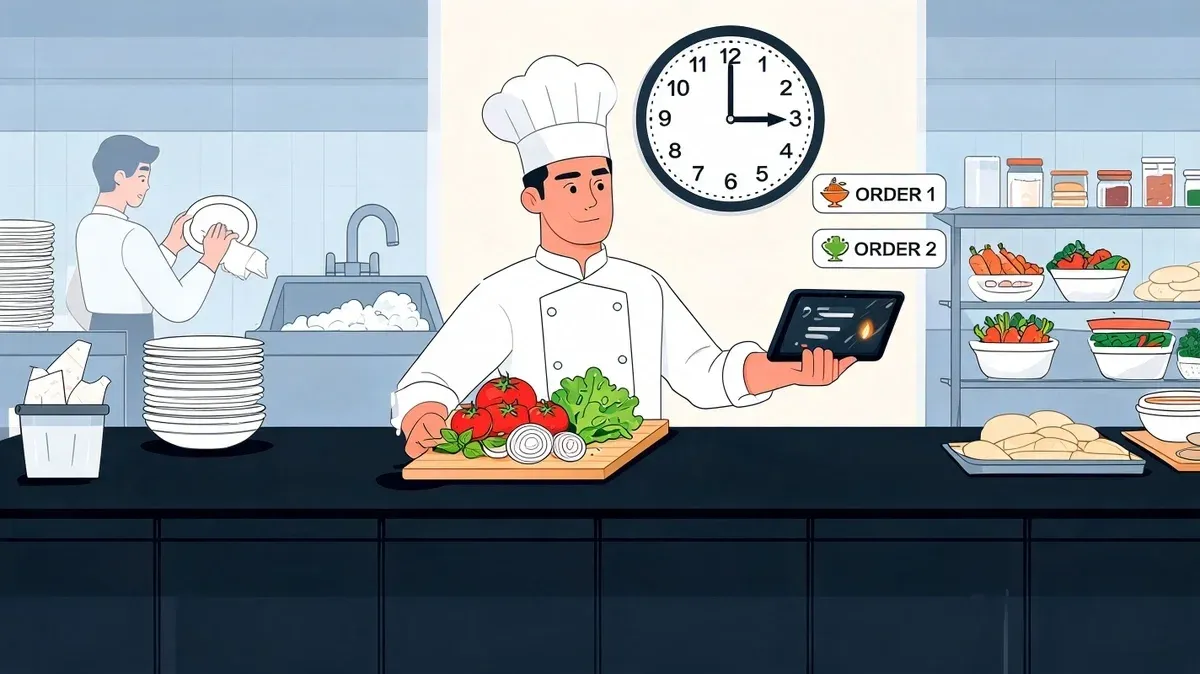
A mid shift in a restaurant usually means a schedule that starts around 11:00 AM and ends around 7:00 PM, covering the gap between lunch and dinner. In delivery-heavy operations, that window matters because online food orders typically peak between 11 AM-2 PM and 5-8 PM, making the mid shift one of the most important parts of the day to staff well.
If you’re running a restaurant right now, you already know the problem. Lunch is wrapping up, the dining room looks calmer, prep still needs to get done, delivery tablets are still chirping, and dinner is coming faster than the floor team thinks. At this point, a lot of restaurants either tighten up operations or start leaking money.
The mistake is treating the mid shift like filler. It isn’t. In modern restaurant operations, the mid shift is the control point for prep, handoff, delivery flow, and POS accuracy. If you manage it well, you protect the dinner rush before it starts. If you manage it badly, you walk into dinner behind, short on prep, and chasing order errors from Uber Eats, DoorDash, and Grubhub.
Understanding the Mid Shift in Modern Restaurants
It is 2:15 PM. The lunch rush has faded, a few dine-in tables remain, delivery orders are still coming in, and the kitchen has to reset for dinner without slowing ticket times. That operating window is the mid shift.
Operators often start with a simple definition of what is mid shift, but the better question is what the shift needs to accomplish. In a modern restaurant, the mid shift is the period where labor, prep, order flow, and system accuracy either stay under control or start slipping before dinner even begins.
For delivery-heavy restaurants, this shift has become a revenue block, not just a staffing gap. The dining room may feel quieter for an hour or two, but third-party orders, pickup demand, station restocking, and handoff coordination keep the operation active. Restaurants that treat this period as dead time usually pay for it later with stockouts, delayed tickets, and rushed dinner setup.
The strongest teams use the mid shift to protect margin.
That starts with clear ownership across the line, expo, and support roles. If responsibilities are blurry, tasks get pushed to the night crew and errors build up in the handoff between shifts. A solid understanding of back-of-house restaurant positions and responsibilities helps managers assign mid shift work to the right people instead of dumping everything on whoever is still on the clock.
Technology changes the economics here. When online orders flow into the POS automatically, the team spends less time re-entering tickets, checking multiple devices, and correcting preventable mistakes. That gives the mid shift room to do profitable work, such as tightening prep pars, staging packaging, confirming item availability, and keeping delivery channels open without overwhelming the kitchen.
Scheduling still matters, but scheduling alone will not fix a weak mid shift. Managers need labor mapped to actual order patterns, prep requirements, and system workflows. If you still build coverage by hand, it helps to automate hour tracking in Excel so you can spot overlap gaps, long handoffs, and wasted labor before they turn into service problems.
The practical view is simple. A well-run mid shift protects dinner. A well-tooled mid shift also grows delivery sales because the restaurant can accept, produce, and hand off orders with fewer delays and fewer corrections.
Typical Mid Shift Hours and Core Restaurant Duties
Most restaurant mid shifts fall into a few familiar patterns. The most common is 11 AM to 7 PM, but plenty of operators use 12 PM to 8 PM or a later version that runs into early evening. The exact schedule depends on your dining pattern, prep load, and delivery volume.
What makes this shift different from a morning shift is that it doesn’t focus on opening. What makes it different from a night shift is that it isn’t centered on full dinner execution and close. The mid shift sits in the middle and carries both cleanup and setup.
Common mid shift hours in restaurant operations
Here’s how operators usually think about the timing:
- 11 AM to 7 PM: Best for lunch coverage, afternoon prep, and early dinner ramp.
- 12 PM to 8 PM: Useful when lunch starts later or dinner demand builds later.
- 11 AM to 9 PM: More common in high-volume stores that need one person bridging both major rushes.
If you’re still building schedules manually, it helps to automate hour tracking in Excel so you can spot overlap gaps and labor inefficiencies before they become service problems.
What a mid shift employee actually does
The best way to understand the role is by task flow, not job title.
- Lunch recovery: Clear the line, refresh mise en place, restock containers, check depleted items, and reset expo so the restaurant doesn’t drag lunch chaos into dinner.
- Dinner prep: Batch sauces, portion proteins, prep garnishes, fold boxes, refill beverage stations, and top up disposables for delivery.
- Order management: Watch incoming third-party orders, check modifiers, confirm prep timing, and keep front-of-house and kitchen aligned.
- Handoff support: Bridge communication between openers and closers so important details don’t disappear between teams.
- Side work that removes bottlenecks: Label backups, rotate stock, sanitize work zones, and prep the items that always run out first.
A restaurant that defines these duties clearly usually runs calmer. A restaurant that leaves the mid shift vague gets a lot of “I thought the other shift handled that.”
Why the role needs range
Mid shift work often blends front-of-house and back-of-house responsibilities. That’s why the strongest people in this slot are flexible and organized. If you want a clearer breakdown of how these kitchen and support responsibilities connect, this guide to back of the house positions is a useful reference.
Mid shift success usually comes from one habit: assign ownership before the rush, not during it.
How to Staff for Peak Delivery and POS Integration
At 2:30 p.m., the dining room looks calm, but the operation usually is not. Lunch cleanup is still in motion, dinner prep has started, and delivery orders keep coming in. If nobody owns that window, ticket times drift, modifiers get missed, and the restaurant gives away profitable delivery volume during a part of the day that should be paying for itself.
That is why mid shift staffing needs to be built around order flow and system control, not just coverage. In delivery-heavy restaurants, this shift can protect margin and grow sales if the person on it can manage incoming digital orders, keep prep aligned with demand, and catch POS issues before they hit the line. Analysts at Shiftbase found that delivery demand often stretches well beyond traditional meal peaks, and that planned overlap improves handoffs and labor efficiency during the lunch-to-dinner transition.
Who belongs on this shift
Put a systems-minded operator here.
The best mid shift employee is rarely just the fastest prep cook or the friendliest cashier. The right person can read the board, spot when delivery volume is building, package accurately, and keep the POS and kitchen in sync without constant manager input. That range matters because the profit opportunity in this shift comes from handling more orders cleanly, not from having another body on the clock.
Look for these traits:
- Independent judgment: They can prioritize prep, order checks, and packaging without waiting for step-by-step direction.
- Comfort with order systems: They understand modifiers, throttling, item availability, and how app orders should appear in the POS.
- Task switching without losing accuracy: They can move from restocking to ticket review to delivery handoff and still catch mistakes.
- Clear communication: They leave clean notes, flag outages early, and tell the next shift what changed.
A poor fit is someone who works well in a narrow lane but stalls when digital orders, prep demands, and handoff tasks hit at once.
Why overlap and integration matter
Mid shift performance improves when one person owns delivery flow during overlap periods. That ownership closes a common gap in restaurant operations. Lunch staff are trying to finish. Dinner staff are not fully set. Delivery keeps selling through the gap whether the restaurant is ready or not.
Without POS integration, the mid shift turns into clerical work. Staff bounce between tablets, re-enter orders, check for missing modifiers, and answer preventable questions from the kitchen. That labor does not produce revenue. It slows the team down and increases remake risk.
With integrated ordering, the role changes. The mid shift employee can focus on timing, prep readiness, packaging accuracy, and throughput. That is the difference between a shift that absorbs delivery demand and one that uses the afternoon to build profitable sales.
If you are reviewing how these app orders should route into service, this guide to restaurant change order integration workflows shows what a clean setup looks like in practice.
A practical staffing model
For restaurants with meaningful third-party volume, I recommend a simple model.
- Map the typical order curve: Use your POS and delivery reports to find when dine-in drops, when app orders stay active, and when dinner prep starts competing for labor.
- Schedule overlap on purpose: Give the mid shift enough shared time with both lunch and dinner teams to transfer information, not just keys and aprons.
- Assign one owner for digital orders: One person should monitor order intake, modifier accuracy, item outages, and pickup timing during the transition window.
- Train for exception handling: The employee in this slot needs a clear process for paused tablets, rejected tickets, delayed drivers, and orders that fail to print.
- Tie the role to revenue, not side work: Measure whether this shift keeps delivery times stable, reduces remakes, and supports more completed orders in the afternoon.
Operators often under-staff this period because the floor looks quiet. The screens tell a different story. If delivery is a serious sales channel for the restaurant, the mid shift is not filler between lunch and dinner. It is the control point that keeps orders flowing and turns a messy transition into a profitable service block.
Avoiding Common Pitfalls in Mid Shift Management
A lot of operators talk about mid shift problems like they’re unavoidable. They aren’t. Most of them come from vague ownership, broken handoffs, and too much manual work packed into the middle of the day.
The biggest risk isn’t just slower service. It’s staff fatigue. Mid shifts can increase fatigue by 40% compared to day shifts, and hospitality mid-shift roles see a 22% higher turnover rate, according to mid shift fatigue and turnover data. That same source notes integrated ordering technology can automate up to 50% of manual tasks, which matters because repetitive admin work is one of the fastest ways to burn out a capable team member.
The problems that keep showing up
These are the failure points I see most often in restaurant operations:
- Poor handovers: The lunch team leaves without documenting shortages, guest complaints, or prep gaps.
- Coverage gaps: The restaurant has bodies on the clock, but nobody owns delivery flow.
- Low-value busywork: Staff spend too much time copying orders from one screen to another.
- Social isolation: Mid shift employees can feel disconnected from both the opening and closing teams.
- Unstructured downtime: Managers assume the afternoon lull will take care of itself, so people drift.
What actually works
Fixes don’t need to be complicated. They need to be consistent.
Don’t solve mid shift stress with pep talks. Solve it with cleaner workflows and fewer manual steps.
Start with a written handoff. Keep it short and specific. Then assign one person to own third-party order visibility during the shift, even if other people help with packaging or expo.
Also, stop treating admin friction like a personality problem. If staff are tired because they keep retyping tickets and reconciling mismatched tablets, the answer isn’t “be more careful.” The answer is to remove avoidable tasks and give them a clearer operating system. A good set of restaurant operating procedures makes that possible because it defines what gets done, who owns it, and how it gets checked.
Burnout prevention that holds up
Mid shift burnout usually drops when managers do three things well:
- Limit task switching: Group prep, order review, and cleaning into clear blocks.
- Reduce duplicate admin: Keep systems aligned so staff aren’t entering the same information twice.
- Create belonging: Include mid shift workers in team notes, updates, and performance feedback.
The goal isn’t to make the shift easy. It’s to make it controlled.
Performance Metrics That Matter for Your Mid Shift
If you want to improve the mid shift, you need to score it on what the shift is supposed to accomplish. Generic end-of-day sales totals won’t tell you whether the middle of the day is healthy. The right measures should show whether the team is preparing dinner properly, handling delivery cleanly, and handing off without confusion.
A lot of managers already track broad numbers but miss the operational signals underneath them. The better approach is to use a short KPI set that reflects this shift’s actual job.
Key Mid Shift Performance Metrics
Metric Why It Matters Target Goal Order accuracy rate Shows whether digital and in-house orders are reaching the kitchen correctly and leaving correctly Trend upward week over week Time-to-ready for dinner prep Reveals whether prep is complete before the evening rush starts Finish core prep before dinner demand builds Delivery order throughput Shows whether the team can process app orders steadily during the ramp period Maintain a consistent pace without ticket pileups Tablet vs. POS discrepancy count Exposes process breaks between ordering channels and the POS Drive discrepancies toward zero Handoff completion rate Confirms whether shortages, outages, and unresolved issues are documented between shifts Complete every handoff, every day
How to use these metrics
Track these weekly, not just daily. One bad day can come from weather, staffing, or a menu outage. A pattern is what matters. If order accuracy falls whenever one manager is off, that’s a training issue. If prep readiness slips on high-delivery days, that’s a staffing or workflow issue.
A good mid shift doesn’t feel quiet. It feels prepared.
If you need a broader framework for measuring restaurant performance, this guide to restaurant KPIs is a solid place to compare shift-level metrics with overall business health.
An Action Plan for a More Profitable Mid Shift
At 3:15 p.m., the dining room has slowed down, but the operation has not. Delivery tickets start stacking up, prep for dinner is half-finished, one employee is answering a driver question, and another is re-entering an order that should have gone straight into the POS. That hour decides whether the restaurant heads into dinner organized or already behind.
The fix is operational discipline. Treat the mid shift as a revenue block with a clear owner, a defined workflow, and technology that removes manual steps.
Five moves to make this week
-
Watch the shift in real time
Stand in the expo or service area and follow the work from order intake to handoff. Look for repeat failure points: delayed prep pulls, missed modifiers, packaging gaps, and orders that stall between tablets and the kitchen. -
Build one mid shift playbook
Put the shift on paper. Include reset tasks from lunch, prep deadlines for dinner, delivery packing standards, restock points, and the exact handoff notes the evening team needs before service starts. -
Give one person control of delivery flow
Shared responsibility usually means missed responsibility. Assign one lead to monitor order timing, item availability, modifier accuracy, and exception handling so delivery revenue does not get lost in the transition between shifts. -
Fix the system before adding labor
Extra hands do not solve broken order flow. If staff are still bouncing between multiple tablets, printed tickets, and manual POS entry, the process is creating delay, voids, and remake risk. For a broader view of sales improvement beyond staffing alone, Adwave’s restaurant sales guide is a useful reference. -
Route delivery orders into the POS automatically
Many operators recover control when third-party delivery orders feed into the POS instead of being re-entered by hand. The team moves faster, accuracy improves, and the mid shift becomes easier to manage for profit instead of survival.
Strong mid shifts have a visible operating rhythm. Prep gets finished before dinner demand builds. Delivery orders move through one system. The evening team walks into a kitchen that is set up to produce, not one still cleaning up unfinished afternoon work.
Weak mid shifts leave clues. Staff ask what sold out. Drivers wait for orders that were never fired. Managers spend the first part of dinner solving problems that should have been closed two hours earlier.
A dependable system for delivery operations fixes that by tying together order intake, kitchen execution, and shift handoff. That is the opportunity in the mid shift. It is not just a bridge between lunch and dinner. It is a controlled window to increase delivery sales, protect labor efficiency, and set up a cleaner dinner service.
If you want to turn your mid shift into a cleaner, more profitable part of the day, OrderOut helps connect delivery apps directly into your POS so your team spends less time on manual entry and more time on service. Restaurant owners can start free onboarding in a few clicks at the OrderOut dashboard.