
What is family style dining: Family Style Dining Explained:
· Thibault Le Conte
Saturday night exposes every weakness in a restaurant. A six-top wants substitutions on half the menu. A birthday table orders across multiple courses. Delivery tablets keep chiming. Servers bounce between the kitchen and dining room with individual plates, and one missed modifier turns into a remake.
That’s where family style dining earns its keep.
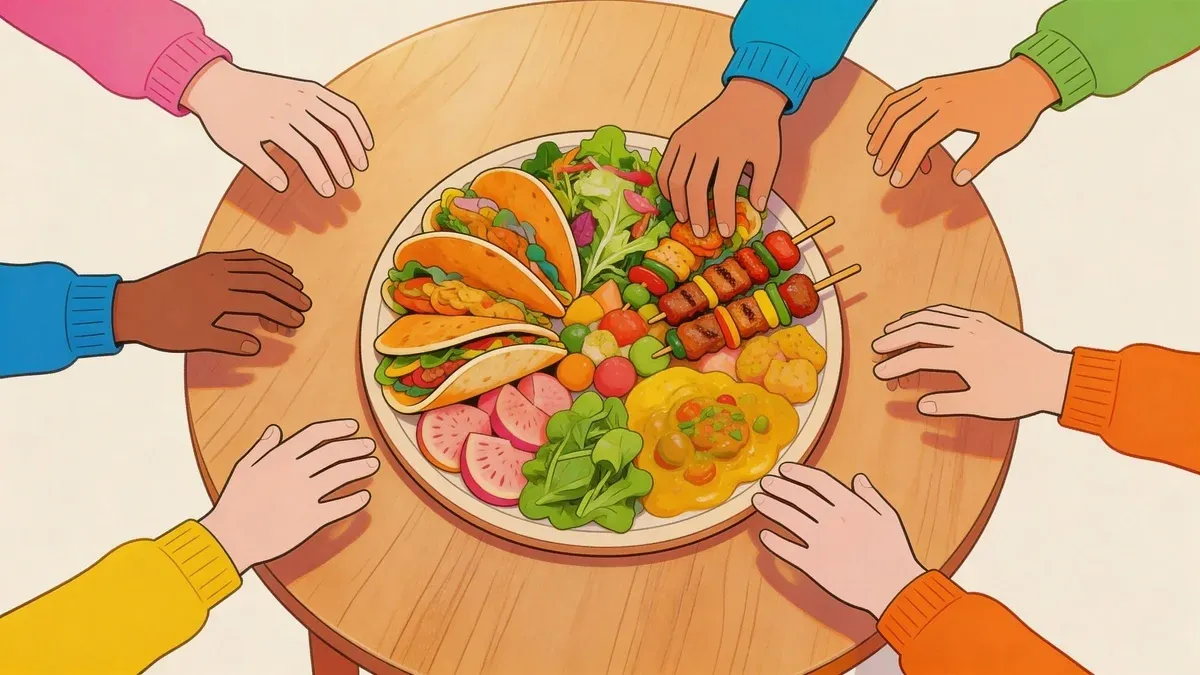
Instead of sending out a separate plate for every guest, the kitchen sends larger shared dishes to the table. Guests serve themselves. The dining room feels more generous. The kitchen gets fewer one-off tickets. Front-of-house spends less time acting like a courier service and more time controlling the flow of the meal.
For operators, the question isn’t just what is family style dining. The question is whether it can help you run a tighter shift, protect margins, and make delivery less chaotic. In the right concept, it can.
An Introduction to Family Style Dining
Family style dining serves food in shared bowls, platters, or trays so the table portions it out together. Guests still expect full service, but the meal is built around group ordering, shared serving pieces, and coordinated pacing.
For operators, that changes more than presentation. It changes how items are prepped, fired, rung in, packed, and sold across dine-in and off-premise channels.
A four-top that might order four custom entrees can often be steered into two mains, a few sides, and one dessert package. The kitchen produces fewer individualized plates. Servers make fewer runs. Expo has fewer seat-specific details to track. The result is often a calmer service line, especially during peak periods and large-party turns.
What guests experience
Guests usually respond to family style in three practical ways:
- They engage with the meal more. Passing dishes and building a plate creates interaction without requiring formal service.
- They read the table as generous. Shared platters create a stronger visual value cue than several modest individual plates.
- They settle in faster. Food arrives in waves meant for the whole group, not as a sequence of separate plate drops.
That guest perception matters because shared dining can support higher average checks when the menu is priced and framed correctly.
What operators should notice
Family style works best as an operating system, not a plating shortcut. The model only pays off when portions, servingware, ticket structure, and POS buttons are set up for shared ordering from the start.
That is the part many restaurants miss.
If your menu reads like a standard full-service menu and your online ordering flow still pushes every guest toward a separate entrée, family style loses much of its value. If your POS supports bundles, fixed group packages, clear modifiers, and production routing by course, the format becomes easier to sell and easier to execute. That is one reason some operators borrow packaging and menu logic from quick service restaurant systems built for speed and order accuracy, then apply it to shared meals.
Family style also fits the current mix of dine-in, takeout, and delivery better than many owners assume. Shared meals travel well when containers are chosen correctly, reheating is simple, and the digital menu makes portions obvious. A family pack for pickup or delivery can be easier for guests to understand than four separate customized orders, and easier for the kitchen to produce consistently.
Used well, family style creates a better table experience and a cleaner operational model at the same time.
Family Style Dining vs Other Restaurant Service Models
A four-top orders four different entrées, three substitutions, and one late allergy note. The kitchen plates by seat, the expo line stalls, and a server makes multiple trips before everyone is fully set. Put that same table on a well-built family-style menu, and the ticket often becomes easier to fire, easier to run, and easier to sell online as a group meal.
The service model changes more than presentation. It changes labor allocation, table pacing, packaging logic for takeout, and how the POS should structure orders.
Service Model Comparison
Factor Family Style Plated Service Buffet Service How food is served Shared platters or bowls at the table Individual plates built in the kitchen Guests serve themselves from a central station Guest control Moderate. Guests choose portions from shared dishes High on individual order choice High on item selection and portioning Server workload Lower plate-running volume after the initial drop Higher, because every guest gets a separate plate Lower at the table, but labor shifts to setup and maintenance Kitchen workflow Grouped production with fewer plate builds More firing and plating by seat Batch production with holding concerns Dining feel Communal and interactive Structured and individualized Functional and high-volume POS setup Bundles, platter modifiers, serving counts, group pricing Standard per-guest entrée flow Often fixed-price or access-based
Why family style changes labor math
Family style reduces item count in motion. That matters on the line and on the floor.
Instead of building and running a separate plate for each guest, the kitchen can produce larger shared dishes with fewer final plating steps. Servers spend less time on repetitive food drops and more time on refills, clearing, pacing courses, and handling guest questions. In a labor market where every shift has to be productive, that trade-off can improve throughput without making service feel stripped down.
The gain is not automatic. If platters are oversized, serving utensils are missing, or courses hit the table with no pacing plan, staff lose the time they saved in plating and running.
Where plated service still wins
Plated service fits concepts that depend on exact presentation, tight portion control, or heavy customization. It also protects execution when allergy management is complex or guests expect a distinct individual entrée experience.
That is why many operators use a hybrid model. Dine-in may feature shared starters, sides, or feast menus, while core entrées stay plated. For takeout and delivery, the same restaurant may package the menu in bundles because group ordering is easier to understand and easier to produce than a long chain of one-off modifications. Teams studying quick service restaurant operations built around speed and order accuracy often borrow that menu logic for family packs, even in full-service concepts.
Buffet and staff meal are not the same thing
These formats solve different operational problems.
- Buffet service moves guests to the food.
- Family style moves the food to the table.
- Staff family meal is an internal meal practice, not a guest-facing service model.
For operators, the distinction affects pricing, service standards, and POS rules. A buffet is usually sold as access. A family-style meal needs defined serving counts, included components, add-on logic, and clear refill rules. If those settings are vague, margin slips fast and the kitchen has to guess what the ticket means.
The Business Case Benefits and Challenges for Your Restaurant
Family style dining isn’t just a design choice. It’s a business decision. Done well, it can improve the guest experience and simplify execution. Done poorly, it can destroy margin under the banner of hospitality.
Why demand is durable
Communal meals still matter to customers. According to the Institute for Family Studies analysis of family dinners, the share of dinners eaten with family has held steady at 50% to 60% for decades, and over 80% of Americans said they ate the same or more family meals in the past year.
That consistency is important for restaurant operators. It means shared dining isn’t a novelty. It’s tied to an established habit.
The upside in restaurant operations
When the menu suits the format, family style can help in several ways:
- Simpler production: Large-format dishes reduce seat-by-seat complexity.
- Better pacing: The whole table starts together, which smooths service flow.
- Clearer upsell opportunities: Shared starters, sides, and desserts are easier to recommend in bundles.
- A stronger occasion feel: Guests often associate shared meals with celebration, connection, and generosity.
For operators watching prime cost, that combination matters as much as guest sentiment. A service model that simplifies execution can create room for better labor deployment.
Guests remember whether the meal felt easy. Staff remember whether the shift felt controllable.
The problems operators run into
The same qualities that make family style appealing can create trouble.
First, guests may interpret a platter as endless, even when it isn’t. Second, portion control can slip if the kitchen doesn’t standardize build weights and vessel sizes. Third, some menus don’t hold well for sharing. Crisp fried items, carefully plated proteins, and dishes that die quickly in a hot pass don’t always survive the format.
Margin pressure usually shows up in two places:
- Overproduction in the kitchen
- Underpricing in the menu
If you’re tightening costs, a good starting point is reviewing food cost percentage basics for restaurant operators. Family style only works long-term when perceived abundance and actual cost are kept separate in your pricing logic.
Here’s a useful visual breakdown of the topic before you build or revise your own program.
What works and what doesn’t
Family style works when the menu is engineered for sharing, service staff explain the format clearly, and the kitchen can reproduce the same platter every time.
It underperforms when operators treat it like plated service on bigger dishes. That usually leads to muddled pricing, inconsistent portions, and a dining room that feels messy instead of relaxed.
Designing a Profitable Family Style Menu
The menu decides whether family style is profitable. Not the idea. Not the plating. The menu.
A strong family-style menu uses dishes that travel well from kitchen to table, hold quality for a reasonable window, and can be portioned consistently. Braises, roasted meats, pastas, composed salads, rice dishes, and vegetable sides usually perform well. Delicate plating, highly customized entrees, and dishes that lose texture quickly usually don’t.
Start with portion architecture
The platter has to answer two questions before a guest ever sees it. How many people is it for, and what exactly is included?
The verified operational guidance here is useful. According to the Virtual Lab School discussion of family-style service, strategic portion control with group-sized platters and self-selection can lower food waste by 15-25% compared with pre-plated service because diners get better visual cues for satiety.
That only happens if you build the portion intentionally.
Use serving vessels that signal quantity clearly. Wide bowls and platters help guests read abundance without forcing the kitchen to overfill. Small side dishes also help isolate components instead of making every platter one giant all-or-nothing build.
Practical rule: If your cooks can’t describe the platter build in one clean sentence, the dish isn’t ready for service.
Choose dishes that scale cleanly
The best family-style items usually share these traits:
- Batch-friendly prep: Roasted chicken, baked pasta, braised short ribs, rice, beans, and seasonal vegetables are easier to scale than individually seared proteins.
- Stable hold quality: The dish should still eat well after a short delay.
- Easy self-service: Guests shouldn’t need a steak knife and a negotiation to split it.
- Clear replenishment logic: Staff should know whether a refill is included, available for charge, or not part of the offer.
When operators need help formatting bundles and shareable sections, resources like Restaurant Menu Templates can be useful for organizing layout ideas before the final menu goes to print or online ordering.
Price for margin, not vibes
Family style often fails because the platter looks abundant and gets priced emotionally instead of mathematically.
The menu should define serving count, included sides, add-ons, and upgrade logic. If your digital menu says “feeds a family” and nothing else, guests will create their own expectation. That expectation is usually expensive.
Build family bundles in the same disciplined way you’d build any other revenue-driving menu section. If you’re refining descriptions, layout, and digital presentation, menu design software for restaurants is worth reviewing because the online menu has to carry the same clarity as the printed one.
A practical menu test
Before rollout, test each platter against this checklist:
- Can the kitchen build it consistently during a rush?
- Can one server explain it in one sentence?
- Can guests understand the serving count without asking follow-up questions?
- Can it be packed for takeout without collapsing in transit?
If any answer is no, keep developing the dish. The family-style format is forgiving socially, but it’s unforgiving operationally.
Modernizing Service with Food Tech and POS Integration
Family style used to be mostly a dine-in play. That’s changed. Customers now want the same shared meal experience at home, and that pushes the format straight into restaurant delivery, menu syndication, and POS workflow.
Why convenience now drives the format
According to the Mintel family dining market report, 73% of parents are open to kids leading dining choices and over a third of children already order online, with convenience identified as the primary driver for family dining.
That matters because shared meals are a natural fit for digital ordering. A guest would rather tap “Family Feast for 4” than build four separate meals across an app screen full of modifiers.
For the restaurant, fewer item-level decisions can mean cleaner order flow, better packaging discipline, and less confusion at pickup.
What a good POS setup looks like
A family bundle shouldn’t hit the kitchen as a mystery.
In Clover or Square, the cleanest setup is usually a parent item with structured modifiers. For example:
- Base item: Family Pasta Dinner
- Protein choice: Meatballs, chicken, or vegetarian
- Included sides: Salad and bread
- Add-ons: Dessert tray, extra salad, extra protein
- Serving count: Clearly labeled on the item name
That setup helps kitchen staff read the ticket fast and helps managers track what’s selling. If you’re mapping delivery bundles into the POS, this guide to an integrated POS system for restaurants is a solid reference point.
Real-world tools that keep orders clean
Operators usually separate into two camps here. One group treats delivery as a side channel and manually re-enters orders. The other treats it like core revenue and structures it properly.
If you’re using Clover, family-style items can be built as clear bundles with modifiers that kitchen staff can read without guessing. If you’re on Square, the same principle applies. Keep bundle logic centralized, use consistent naming, and make sure every delivery menu mirrors the in-store build.
The cleaner the item structure in the POS, the fewer explanations your line cooks need during a rush.
Delivery changes packaging, not standards
The mistake many operators make is assuming family style for off-premise means “throw more food in bigger containers.” It doesn’t.
It means designing dishes that survive travel, preserving hot and cold separation, labeling components clearly, and making sure the guest can unpack the meal without confusion. A good restaurant delivery experience still needs sequence and structure. Salad should not steam under pasta. Sauces should not flood starches. Serving utensils should be included when the format depends on sharing.
The modern version of what is family style dining isn’t limited to the dining room. It’s a format that can work across dine-in, takeout, and third-party delivery if the food tech underneath it is organized.
Practical Implementation and Service Etiquette Tips
Execution is where family style either feels polished or starts to look cheap. Guests will forgive a rustic presentation. They won’t forgive confusion.
Train staff to explain the model fast
Servers need one clean script. Not a speech.
Something as simple as this works: “These dishes are designed for sharing. We’ll bring them out on platters for the table, and you can build your own plate as you go.”
That short explanation sets expectations early. It also reduces the awkward pause when one guest thinks they ordered an individual entree and sees a large bowl arrive.
Control hygiene and table flow
Shared dining needs clear utensil discipline. Every platter should have its own serving utensil, and staff should be ready to replace dropped or mixed utensils quickly. For delivery and takeout, include serving tools when the meal format requires them.
Front-of-house also needs to watch depletion. Don’t wait until a platter is scraped clean before checking in. Guests experience that as a miss, even if the food itself was excellent.
A simple pre-shift checklist helps:
- Confirm platter builds: Every server should know what each bundle includes.
- Set replenishment rules: Staff need a consistent answer on paid add-ons versus included refills.
- Assign table touchpoints: Someone owns the check-back after platters land.
- Stage shareware properly: Extra spoons, tongs, side plates, and napkins should be easy to access.
For broader consistency, restaurant leaders should document these steps in their restaurant operating procedures, not leave them to verbal memory.
Protect revenue without hurting the experience
There’s a real trade-off here. According to TheFork Manager’s discussion of family-style dining, some data indicates family style can produce 12% lower per-head revenue in high-volume urban settings because guests perceive the format as “unlimited” value. The same source notes restaurants need to counter that with strategic pricing, such as pricing platters at 1.8x the cost of individual equivalents.
That doesn’t mean guests dislike the format. It means operators can’t be vague.
What works versus what does not
What works
- Clear serving counts
- Paid upgrades that feel optional but attractive
- Staff language that frames the meal as curated, not bottomless
- Menus that define exactly what’s included
What does not
- “Feeds a few people” style descriptions
- Underspecified bundles on delivery apps
- Inconsistent platter sizes
- Servers promising extras that the menu doesn’t support
Don’t sell infinity when you mean abundance.
Family style should feel generous. It should never be financially open-ended.
The Future of Communal Dining and Your Next Steps
Family style keeps its place in the market because it solves two problems at once. Guests want connection and convenience. Operators need simpler service patterns and cleaner order flow.
That makes the format more relevant now, not less.
The strongest setups treat family style as a system. The menu is built for sharing. The dining room knows how to present it. The packaging supports restaurant delivery. The POS identifies each bundle cleanly. Once those pieces line up, the format becomes easier to run and easier to scale.
There’s also room to adapt the experience to your concept. A casual patio restaurant might use shared platters on large wooden picnic tables to reinforce the communal feel. A neighborhood Italian spot might lean into takeout bundles for weeknight family meals. The core principle is the same. Shared dining works when the operational design is deliberate.
If you’re testing what is family style dining in your restaurant, start small. Pick a few dishes that hold well. Define the serving counts. Build the bundles clearly in your POS. Train one service script. Then watch ticket clarity, guest feedback, and margin by platter instead of by instinct.
If you’re ready to streamline delivery orders, reduce manual entry, and make family-style bundles easier to run across Uber Eats, DoorDash, and Grubhub, start with OrderOut. Restaurant owners can begin onboarding for free in a few clicks at https://dashboard.orderout.co.