
What Is a Ghost Kitchen and How Does It Work for Restaurants
· Thibault Le Conte
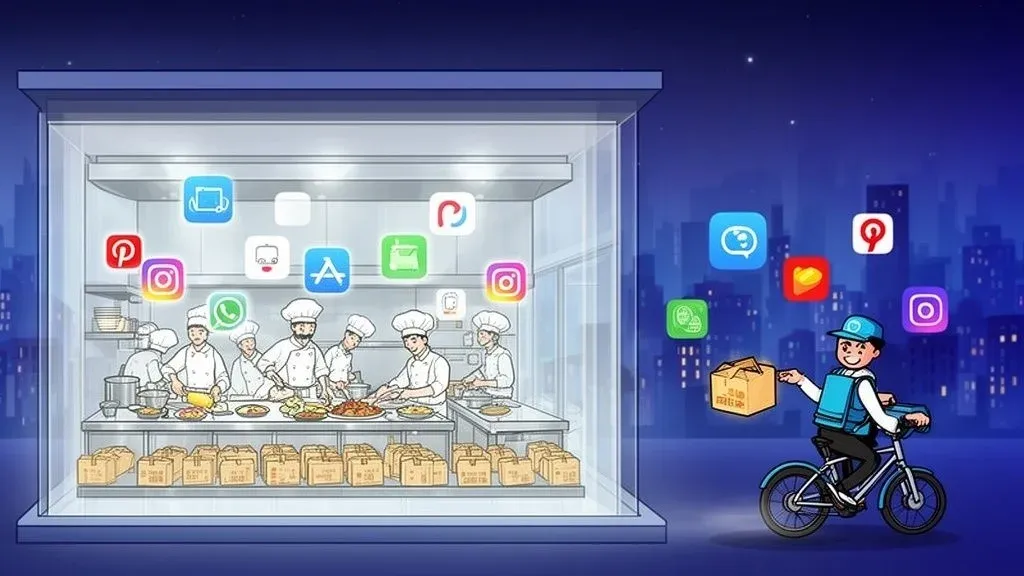
Picture a restaurant with no dining room, no host stand, and no waiters. It’s just a kitchen, laser-focused on one thing: creating incredible food for delivery. That, in a nutshell, is a ghost kitchen.
In simple terms, it’s a kitchen built only for online orders. All the action happens behind the scenes, fulfilling orders that come in from apps like DoorDash and Uber Eats. The technology behind it, especially how orders flow into the restaurant’s Point of Sale (POS) system, is what makes it efficient. By streamlining delivery, a ghost kitchen helps restaurants increase sales without the high costs of a traditional dining room.
Understanding The Ghost Kitchen Concept

A ghost kitchen—also called a cloud kitchen or virtual kitchen—is a professional cooking facility built exclusively for delivery and takeout. This setup gives restaurant operators a powerful way to expand their reach, experiment with new ideas, or even launch a brand-new concept with a fraction of the overhead of a traditional restaurant.
By stripping away the huge costs of prime real estate and front-of-house staff, ghost kitchens run on a much leaner, more efficient model. This shift puts technology front and center; seamless POS integration and order management become the backbone of the entire operation. It’s all about mastering off-premise dining, a trend that has completely changed how restaurants operate. For a deeper look, check out our guide on what off-premise means for your restaurant.
Ghost Kitchen vs Traditional Restaurant Key Differences
To really grasp the model, it helps to see a side-by-side comparison. This table breaks down the core differences between a ghost kitchen and a traditional restaurant.
Feature Ghost Kitchen Traditional Restaurant Primary Focus Delivery and takeout only Dine-in experience, with delivery/takeout as a secondary focus Location Low-cost industrial areas; foot traffic is irrelevant High-visibility, high-foot-traffic retail locations Upfront Costs Low (kitchen equipment, minimal rent) High (real estate, construction, decor, FOH staff) Staffing Lean kitchen staff only (chefs, prep cooks) Large team (chefs, servers, hosts, bartenders, managers) Technology Needs Critical (POS integration, order aggregators, delivery apps) Important, but secondary to the in-person experience Marketing Entirely digital (social media, delivery app promotions) Mix of digital and physical (signage, local ads, events) Menu Flexibility High; can launch and test virtual brands easily Lower; tied to a single brand identity and physical menus
As you can see, the ghost kitchen model trades the dine-in experience for operational agility and significantly lower financial risk.
The Core Benefits For Restaurant Operations
The appeal of a ghost kitchen really boils down to two things: efficiency and a smaller financial gamble. For any restaurant owner or operator, the advantages are compelling.
- Reduced Overhead Costs: You’re not paying for expensive retail space, front-of-house salaries, or dining room decor. This directly impacts your bottom line, freeing up capital that can go right back into perfecting your menu or marketing your brand.
- Increased Market Reach: A ghost kitchen lets you tap into brand new neighborhoods and customer bases without the massive cost and risk of opening a full-scale restaurant.
- Greater Menu Flexibility: Want to test out a new taco concept or a line of vegan bowls? Go for it. If an idea doesn’t stick, you can pivot almost instantly without the headache of reprinting menus or redecorating a physical space. This agility reduces waste and maximizes profit potential.
This isn’t just a fleeting trend—it’s a fundamental shift. The global ghost kitchen market was valued at USD 71.12 billion in 2024 and is on track to hit USD 145.54 billion by 2030.
Why POS Integration Matters For Ghost Kitchens
The real power of a ghost kitchen is only unlocked when the technology works flawlessly. In simple terms, POS integration means your delivery apps (like Uber Eats) talk directly to your kitchen’s order system. Without it, your staff is stuck manually typing orders from multiple delivery tablets into your main POS.
Why it matters: This manual entry is a recipe for disaster. It directly leads to order mistakes, kitchen delays, and burned-out staff—all of which costs you time, money, and customer loyalty. An integrated system isn’t a “nice-to-have”; it’s essential for a profitable delivery operation because it eliminates errors and boosts staff productivity.
For example, connecting Uber Eats and DoorDash directly to a POS like Square or Clover completely removes that friction. Orders flow instantly into the kitchen line, just like an in-house ticket. This reduces ticket times, ensures every customer gets exactly what they asked for, and lets your team focus on cooking, not typing.
A Look at the Different Ghost Kitchen Models
So, you get the basic idea of a ghost kitchen. But the real magic is in how you can adapt the concept to fit what you’re trying to achieve. It’s not a one-size-fits-all game.
Think of it less as a single blueprint and more like a toolkit with different options. The right model for you depends entirely on your goals—whether you’re trying to grow an existing restaurant, test out a wild new food idea, or just get into the business without a massive upfront investment.
The Single-Brand Model
Let’s start with the most straightforward approach: the single-brand model. This is simply an established restaurant setting up a separate kitchen just to handle its delivery orders.
This is a brilliant move for restaurants with a loyal following that are getting overwhelmed by delivery volume. By splitting operations, your dine-in staff can focus on the customers in front of them, while a dedicated delivery team can get hyper-efficient at pumping out orders. The only catch? Your kitchen’s POS and the main restaurant’s system absolutely must talk to each other to keep sales and inventory straight.
The Multi-Brand Virtual Restaurant Model
Now, things get a bit more strategic. With the multi-brand model, one kitchen facility becomes the engine for several different “virtual restaurants.” You might have a single team making food for three completely different brands on DoorDash and Uber Eats—say, a wing spot, a salad concept, and a gourmet sandwich shop.
This is all about maximizing restaurant efficiency. Your kitchen, your staff, your inventory—they all work harder. By creating brands that appeal to different cravings, you can grab a much bigger piece of the local delivery pie. That same crate of chicken can become the star of a Caesar salad for one brand and a spicy fried chicken sandwich for another.
Why it matters: The biggest hurdle here is complexity. Juggling different menus, packaging, and ingredients requires an almost military level of organization. And more than anything, you need powerful POS integration. Without it, your kitchen will descend into chaos, leading to costly errors and slower delivery times.
The Shared Kitchen Model
Finally, you have the shared kitchen model, often called a commissary kitchen. Here, you’re essentially renting a spot—a prep station or a fully-equipped kitchen pod—inside a larger facility that houses lots of other food businesses. Think of it as a “WeWork for kitchens.”
This model is the ultimate low-risk entry point. It’s perfect for new chefs, food truck operators who need more prep space, or anyone wanting to test an idea without betting the farm. You get access to commercial-grade gear without the headache and cost of building your own kitchen. You can learn more about this flexible setup in our guide on what a cloud kitchen is and how it functions.
Choosing The Right Tech and Restaurant Operations Strategy
No matter which path you take, success comes down to running a tight ship, and that ship is powered by the right technology.
- For Single-Brand Kitchens: It’s all about efficiency. You need to replicate your brand’s quality at a high volume. A direct POS integration with a system like Square makes sure every order zips through the system without errors, cutting down ticket times and keeping drivers happy.
- For Multi-Brand Kitchens: Order consolidation is a must. You can’t have your staff wrestling with a dozen tablets. You need a system that pulls all orders from every brand into one clean interface. Integrating your delivery apps with a POS like Clover is the difference between smooth sailing and a complete mess of mixed-up orders.
- For Shared Kitchens: You have to stay lean. In a small, rented space, every minute and every motion counts. Automating order entry frees up your small team to do what they do best: cook and pack. This is how you boost staff productivity and start turning a profit faster.
The takeaway: Assess which model aligns with your brand’s ambitions and what you can realistically manage. But whatever you choose, a solid technology foundation that automates order entry and eliminates costly mistakes is non-negotiable.
Ready to build that foundation? Get started for free and see how seamless integration works by visiting the OrderOut dashboard to begin your onboarding.
Why Ghost Kitchens Are the New Food Tech Frontier
The explosion of ghost kitchens isn’t just a fleeting trend—it’s the industry’s answer to a massive, permanent shift in how we all eat. In simple terms, convenience is king. We’ve all come to expect fast, reliable food delivery at the tap of a button, and that expectation has completely rewired restaurant operations. This new reality has created the perfect environment for a digital-first approach to not just survive, but thrive.
This model is flipping the traditional restaurant business on its head. It drastically lowers the sky-high barrier to entry, letting creative chefs bring their ideas to life without taking on the crushing debt of a brick-and-mortar build-out. For established brands, ghost kitchens serve as a low-risk lab for experimenting with new concepts, testing the waters in a new neighborhood, or adding a new revenue stream with a surprisingly small upfront investment.
Food Tech is the Engine Driving Ghost Kitchen Restaurant Delivery
Ghost kitchens and food technology are two sides of the same coin; one simply can’t exist without the other. Technology isn’t just a part of the business—it’s the central nervous system that runs the entire delivery-only operation. This relationship is so much more than just having a menu online; it’s about building a seamless, fully connected digital ecosystem from the ground up.
Think about it. From the second a customer taps “place order” on an app like DoorDash, a whole cascade of tech-driven events kicks off. This journey from phone to fork really shows just how critical modern tools are.
- Online Ordering Platforms: These apps are the new storefront. They give ghost kitchens the visibility and customer base they need to even get in the game.
- Order Aggregation: This is the unsung hero that prevents utter chaos in the kitchen. Instead of staff juggling five different tablets, all incoming orders are neatly funneled into a single, manageable stream.
- POS Integration: Here’s where the real magic happens. Orders are zapped directly from the delivery app to the kitchen display system (KDS), which means no more manual punching-in of tickets.
Why it matters: This deep POS integration is the foundation of a scalable and profitable business. It eliminates manual entry errors, which saves money, and speeds up the entire order process, which boosts staff productivity and gets food to the customer faster. You can get a better sense of how all these pieces fit together by checking out the latest hospitality technology trends shaping the industry.
The Numbers Don’t Lie: Growth and Financial Smarts
The statistics behind this movement are staggering and paint a crystal-clear picture of an industry in the midst of a massive shake-up. The ghost kitchen market was valued at USD 57.85 billion in 2024 and is on a trajectory to hit an incredible USD 190.06 billion by 2035. This growth is being driven by our own changing habits, with 51% of US restaurateurs already running a ghost or virtual kitchen to keep up with the delivery boom. You can discover more insights about this market growth and what’s fueling it.
The financial upside is just as persuasive. Ghost kitchens are designed from the ground up for efficiency. They can slash labor costs by 25-35% simply by not having a front-of-house staff. On top of that, their lean, data-driven operations can cut food waste by up to 20% thanks to smarter inventory and centralized prep.
This isn’t just theory; it’s what happens when you run a smarter operation. For example, a restaurant using an integrated POS like Square can see exactly which ingredients are being used across multiple virtual brands in real-time. That data leads to incredibly precise ordering, which minimizes spoilage and maximizes the profit on every single order that leaves the kitchen. The time saved and errors avoided go straight to the bottom line.
Fueling a New Era of Innovation and Scale
When you get right down to it, the marriage of ghost kitchens and food tech creates a business model built for speed and growth. An operator can dream up and launch a new virtual brand in a matter of days, not the months or years it takes for a traditional restaurant. If a new concept—say, a plant-based burger joint—suddenly takes off, the operational data from an integrated POS like Clover provides a clear, data-backed roadmap for how to expand it.
This power to test, learn, and scale at lightning speed is what makes the ghost kitchen model so compelling. It gives restaurant operators the agility to respond to market trends and shifting customer tastes faster than ever before, turning the kitchen into a dynamic hub for culinary innovation.
Here’s the key takeaway: Ghost kitchens are far more than just delivery-only restaurants; they are tech companies that sell food. Their success is completely dependent on having a rock-solid technological foundation to drive efficiency, cut costs, and let the kitchen staff focus on what they do best: making incredible food.
To see how you can build this foundation for your own restaurant, you can start onboarding for free in just a few clicks at the OrderOut dashboard.
The Tech Stack: Your Ghost Kitchen’s Central Nervous System
Anyone who’s worked a busy Friday night in a delivery-heavy restaurant knows the scene all too well: the dreaded “wall of tablets.” Each one—Uber Eats, DoorDash, Grubhub—chirping away, demanding attention. It’s pure chaos.
This setup isn’t just stressful; it’s a recipe for disaster. Every time a staff member has to stop, grab a tablet, and manually punch an order into your main point-of-sale (POS) system, you’re bleeding efficiency. It’s a slow, painful process that opens the door to costly mistakes—a missed allergy note, a wrong side dish, a completely bungled order. Those little errors add up fast, tanking your reputation and your profits.
Why it matters: The goal is to have a smooth, hands-off flow from the customer’s phone straight to your kitchen. This automation directly improves your restaurant’s delivery efficiency, reduces costly errors, and boosts staff productivity by letting them focus on food, not data entry.

This is what a modern, efficient kitchen workflow looks like—no frantic tablet-juggling required.
Your Central Hub: Tying It All Together with POS Integration
The cure for tablet chaos is POS integration. This technology acts as a universal translator for your restaurant. It intercepts orders from every delivery app you use and injects them directly into your POS system, no human intervention needed.
An order placed on DoorDash pops up on your kitchen display screen (KDS) just like an order from a server in a dining room. Your team doesn’t have to touch a thing. This single change is what separates a struggling ghost kitchen from a thriving one.
By getting rid of manual order entry, restaurants have been shown to cut down on order errors by over 95%. Even better, they typically save 2-3 hours of labor per day. This isn’t just a small tweak; it frees up your crew to focus on what matters: food quality and speed, which directly impacts your bottom line.
Real-World Impact on Restaurant Delivery and Operations
Integrating your technology isn’t just a “nice-to-have.” It delivers real, measurable results that you’ll see on day one.
Just look at the difference it makes when you connect your delivery apps to your POS.
Impact of POS Integration on Ghost Kitchen Operations
Operational Metric Without POS Integration With POS Integration (e.g., using OrderOut) Order Entry Time 60-90 seconds per order 0 seconds (fully automated) Error Rate 15-20% (due to human error) Less than 1% Staff Focus Managing tablets, manual data entry Food prep, quality control, packing Ticket Times Slower due to manual bottlenecks Instantaneous transfer to kitchen
This isn’t just theory. The numbers show a clear path to a calmer, more profitable kitchen.
Here’s what that looks like in practice:
- Drastically Fewer Mistakes: When orders are automated, they’re accurate. Say goodbye to typos, missed modifiers, and angry phone calls from customers with the wrong meal. This saves time and protects your brand’s reputation.
- A More Productive Team: When your staff isn’t babysitting a half-dozen tablets, they can actually cook, check orders for quality, and get food out the door. Staff productivity goes up, and so does your kitchen’s capacity during a rush.
- Faster Out-the-Door Times: Orders hit the kitchen line the second they’re placed. Shaving even a few minutes off each ticket means hotter food, happier drivers, and customers who are more likely to order again.
For instance, a ghost kitchen running on a system like Square or Clover can consolidate every delivery channel into one seamless workflow, eliminating chaos and boosting profitability.
Don’t Forget the Physical Workflow
While the digital side is crucial, it only works if your physical kitchen is set up for success. You need a space designed for a high-volume, delivery-first model. A smart layout and the right equipment are just as important as your software. To make sure you’ve got all your bases covered, it’s worth reviewing a solid commercial kitchen equipment checklist.
Your practical next step: Stop punching in orders by hand. A modern, integrated tech stack is no longer a luxury—it’s the cost of entry for running a ghost kitchen that can actually scale and turn a profit.
How to Plan Your Ghost Kitchen Launch
Jumping into the ghost kitchen game isn’t something you do on a whim. It’s a calculated move that demands serious planning. With a traditional restaurant, your success is often tied to a great location and plenty of foot traffic. But in the delivery-only world, success is all about operational efficiency, tight financial controls, and a smart tech setup.
Your first move? Nail down the numbers. The good news is that the startup costs for a ghost kitchen are a world away from a typical brick-and-mortar restaurant. You’re not looking at a median of $375,000 for a full build-out. Instead, you’ll be working with a much leaner budget that zeroes in on just the essentials.
Mapping Out Your Financial Blueprint
When you’re starting out, your main expenses will fit into a few distinct buckets. Getting a handle on these from day one is the key to creating a realistic budget and sidestepping the financial traps that trip up so many new ventures.
- Kitchen Space: Renting a station in a shared commercial kitchen is the most popular way to get started. This lets you dodge the massive upfront construction costs and often includes the big-ticket appliances.
- Equipment and Supplies: While the shared space might have ovens and coolers, you’ll still need the specific gear your menu demands. As you plan your launch, remember that having the right physical tools is just as critical as your digital ones. A practical commercial kitchen equipment checklist will save you from last-minute headaches.
- Licensing and Permits: There’s no getting around these. Health department permits, business licenses, and liability insurance are non-negotiable costs you have to bake into your budget.
- Initial Inventory: This is your first big food order—everything you need to stock the line and get ready to fire up your first tickets.
Of course, it’s not just about the startup money. You have to keep a close eye on your ongoing operational costs. Third-party delivery commissions, which usually eat up 15-30% of every order, will likely be your biggest recurring expense. After that comes your food costs, your marketing budget for running in-app promotions, and all your packaging supplies.
Designing a Kitchen for Pure Efficiency
The layout of a ghost kitchen is an exercise in pure function. You don’t have a dining room to worry about, so every single square foot has to be optimized for one thing: getting orders out the door as fast and accurately as possible. This is a fundamental piece of the puzzle, as we cover in our complete checklist for opening a restaurant.
Think of your kitchen as a finely tuned assembly line. The workflow should move in a straight line, starting from raw prep stations, flowing to the cooking line, and ending at a dedicated area for packing and handing off to delivery drivers.
Why It Matters: A messy kitchen becomes pure chaos during a dinner rush. A streamlined, delivery-first layout directly impacts your team’s productivity, lowers ticket times, and makes sure the food arrives hot. This operational efficiency is what keeps customers happy and brings them back for more.
Managing your inventory also gets trickier, especially if you’re running a few different virtual brands from the same kitchen. That case of chicken breasts might be going into a sandwich for one brand, a salad for another, and a pasta dish for a third. This demands absolute precision in your tracking to make sure you never run out of a key ingredient mid-service.
The Role of Technology in Financial Planning
This is where your technology stack goes from a simple tool to your most important financial asset. A system that consolidates all your orders isn’t just about making the kitchen less frantic—it’s about giving you a crystal-clear view of your financial health.
By integrating all your delivery apps straight into your POS system, whether it’s Clover or Square, you get clean, unified sales data. This information is gold for accurate financial forecasting. You can see at a glance which virtual brand is making you the most money, which dishes are your top sellers, and what your real profit margin is after commissions. This pulls you out of the world of guesswork and lets you make smarter, data-driven decisions on everything from your menu to your marketing spend.
Ready to automate your operations and gain financial clarity? Get started for free in just a few clicks by visiting the OrderOut dashboard.
So, You’re Ready to Launch a Ghost Kitchen? Here’s How.
You’ve seen the potential of the ghost kitchen model—less risk, faster growth, and a real shot at better profit margins. Now, it’s time to turn that idea into a plan. The secret to success isn’t just a killer menu; it’s about executing smartly with the right technology from the get-go.
Think of this as your launchpad. Getting from concept to reality isn’t one giant leap. It’s a series of clear, practical steps that build on one another. If you focus on what your market actually wants and nail your operations from day one, you’re building a business that can last.
Your Four-Step Launch Plan
Let’s break this down into four manageable phases. This approach helps you tackle the biggest business, food, and tech hurdles before you ever take your first order.
-
Do Your Homework and Scout the Market: Before you do anything else, you need to become a student of your local delivery scene. Open up apps like DoorDash and Uber Eats and see what’s actually selling in your delivery zones. Are there any glaring holes? Maybe your neighborhood is drowning in pizza but desperate for a good salad. This is how you find an unmet need your kitchen can satisfy. This research is the foundation for a brand that people will actually order from.
-
Pick the Right Ghost Kitchen Model: As we’ve covered, “ghost kitchen” isn’t a one-size-fits-all term. Are you going to run a single virtual brand out of your existing restaurant’s kitchen? Launch several concepts from one location? Or rent a spot in a shared commissary? Your decision needs to line up with your budget, your goals, and what you can realistically handle. A shared kitchen is the lowest-risk way to test a new idea, while a multi-brand setup can squeeze the most revenue out of a single space.
-
Craft a Menu That’s Built for Delivery: Your menu is your single most important piece of marketing. It has to be designed for two things: profit and travel. Focus on dishes with high-profit margins that won’t turn into a mess on the back of a bike. A smaller, focused menu is almost always better than a huge one. It simplifies everything—kitchen prep, food waste, and ordering ingredients.
-
Get Your Tech in Order: This is where so many concepts fall apart. You absolutely must have a system to handle your orders automatically from day one. Having someone manually punch in orders from a half-dozen delivery tablets into your POS is a guaranteed recipe for mistakes, slow service, and frustrated staff.
Why This Is a Non-Negotiable: Directly connecting your delivery apps to your POS system is the backbone of an efficient ghost kitchen. It gets rid of the single biggest operational headache, ensuring every order flows into your kitchen instantly and accurately. This automation saves time, reduces costly errors, and boosts staff productivity.
By integrating your delivery channels with a POS like Clover or Square, you’re building a system that can handle growth instead of being crushed by it. This isn’t just about cool tech; it’s about building a smarter, more profitable restaurant from the ground up.
Practical next step: Your path to a more efficient delivery business starts right now. To see how you can finally stop the madness of manual order entry, you can start your onboarding for free in just a few clicks at the OrderOut dashboard.
Got Questions? We’ve Got Answers.
Jumping into the world of ghost kitchens can feel like a big move, and it’s natural to have questions. Here are some of the most common things restaurant owners ask when they’re thinking about launching a delivery-only brand.
How Much Does It Really Cost to Start a Ghost Kitchen?
You’re looking at a startup cost that’s a fraction of a traditional restaurant—typically somewhere between $20,000 to $80,000. That budget usually covers your essential kitchen equipment, the first month’s rent at a shared facility, necessary permits, and a little marketing cash to get the word out.
The biggest savings? You’re completely cutting out the costs of a dining room, a bar, and all the front-of-house staff that go with them. This dramatically reduces your ongoing labor costs and initial investment.
Can I Run a Ghost Kitchen Out of My Current Restaurant?
Absolutely. This is actually a super popular strategy, often called a “virtual restaurant.” You use your existing kitchen space, your current staff, and even your inventory to launch a completely new, delivery-only brand on apps like Uber Eats.
It’s a smart, low-risk way to create a whole new revenue stream without the headache and expense of leasing more real estate.
For this hybrid model to work without causing total chaos, your operations have to be smooth. A system that automatically pushes delivery orders into your existing POS, like Clover or Square, is non-negotiable. It’s what keeps your dine-in and delivery brands from tripping over each other, ensuring staff can manage both efficiently.
How Do Ghost Kitchens Even Market Themselves?
Marketing for a ghost kitchen is almost 100% digital, happening right where your customers are: on the food delivery apps. Think of your profile on DoorDash or Grubhub as your new digital storefront.
Success comes down to a few key things:
- A killer menu with mouth-watering photos and descriptions that sell.
- Smart in-app promotions and discounts to get first-time customers to take a chance on you.
- Sponsored listings that push your brand to the top of the search results when a hungry customer is scrolling.
What’s the Single Biggest Operational Hurdle?
Without a doubt, it’s managing the avalanche of orders pouring in from multiple delivery apps all at once. Picture a Friday night rush with tablets for DoorDash, Uber Eats, and Grubhub all beeping simultaneously.
If your team has to manually punch every single one of those orders into your main POS, you’re going to get bogged down fast, and mistakes are inevitable. This is why automated order consolidation isn’t just a nice-to-have; it’s essential for running an efficient and profitable delivery operation. It directly reduces errors, saves labor hours, and improves staff productivity.
Ready to stop the madness of manual order entry and build a delivery business that actually works? With OrderOut, you can automate the entire workflow and get back to what you do best—making incredible food. Get started for Free in just a few clicks.