
7 Essential Tips for DoorDash in 2025 to Boost Your Restaurant's Profitability
· Thibault Le Conte
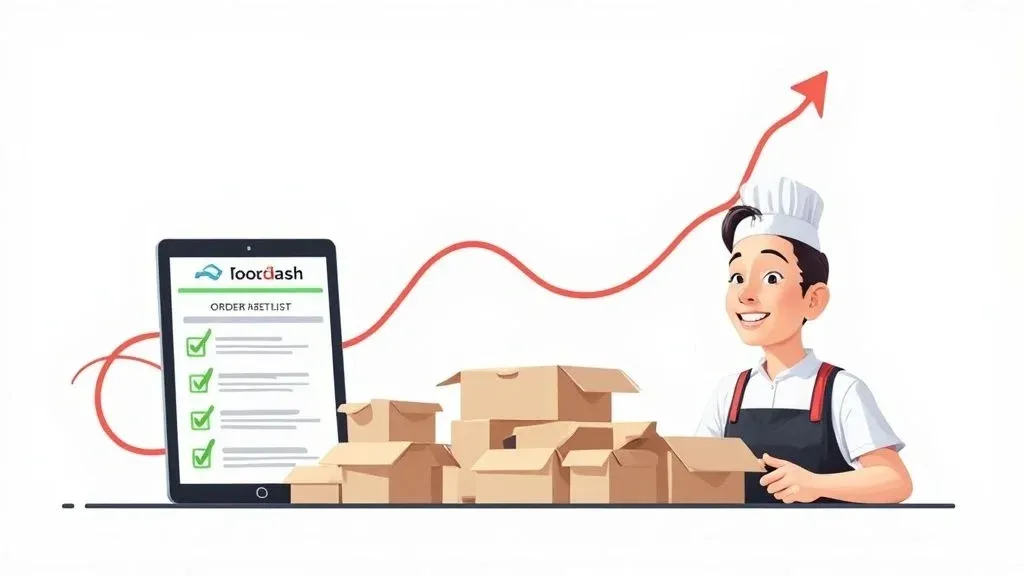
DoorDash has become a crucial revenue stream for restaurants, but simply being on the platform isn’t enough to guarantee success. The difference between barely breaking even and achieving significant profitability lies in operational efficiency and strategic integration. Many restaurant owners get bogged down by the chaos of managing multiple delivery tablets, manually entering orders into their POS, and dealing with costly errors. This process doesn’t just waste time; it hurts your bottom line, strains your staff, and can lead to negative customer reviews.
This guide provides actionable tips for DoorDash specifically for restaurant owners and operators. We’ll move beyond generic advice and dive into practical strategies that connect directly to your restaurant’s efficiency and profitability. You will learn how to optimize every aspect of the delivery process, from fine-tuning your menu for off-premise dining to leveraging powerful POS integrations that eliminate manual entry. The goal is to transform DoorDash from a necessary hassle into a streamlined, profit-generating machine. Let’s explore the specific steps you can take to make that happen, starting with your menu.
1. Optimize Your Menu for Profitability and Delivery Success
One of the most impactful tips for DoorDash success is to move beyond simply uploading your in-house menu. The simple idea is to create a special menu just for delivery. A common mistake that costs restaurants money is treating their dine-in and delivery menus as one and the same. A successful delivery menu is carefully engineered for profitability, travel-worthiness, and operational speed. This matters because a specialized menu reduces kitchen errors, speeds up prep time, and ensures customers receive food that looks and tastes great, even after a 20-minute drive.
Technically, this process is called menu engineering. It involves a deep dive into your item-level profit margins to identify and prominently feature dishes that are not only profitable but also quick to prepare and durable enough to withstand transit. This strategic curation boosts your average order value, increases positive reviews, and significantly reduces staff stress during peak hours, directly improving your restaurant operations.

Why Menu Engineering Matters for Restaurant Operations
An optimized delivery menu is a cornerstone of an efficient kitchen. It simplifies the entire workflow, from order intake to handoff. When your staff can assemble delivery orders using a streamlined menu, you naturally reduce preparation times, minimize costly errors, and increase your overall order throughput. This allows your restaurant to handle a higher volume of delivery orders without compromising the quality of your food or overwhelming your team, directly boosting staff productivity and reducing food waste.
For a real-world example, a cafe using Square for Restaurants can analyze its POS data and discover its avocado toast has a 75% profit margin and travels perfectly. By featuring it at the top of their DoorDash menu with a new, high-quality photo, they can strategically boost sales of a high-performing item, increasing both revenue and profitability.
Actionable Steps for Menu Optimization
Ready to build a more profitable delivery menu? Start with these practical tips:
- Analyze Your Data: Use your POS system to identify your top five most profitable and top five least profitable items. This data is your roadmap for what to feature and what to cut.
- Create a “Greatest Hits” Menu: Develop a smaller, delivery-focused menu featuring only your high-margin, durable, and popular items. This focus reduces decision fatigue for customers and simplifies inventory management.
- Invest in Professional Photography: High-quality photos are non-negotiable. Invest in professional images for your top 10 delivery items to dramatically increase their appeal and conversion rate.
- Bundle for Higher Tickets: Create “delivery combos,” “lunch specials,” or “family meals” that bundle a main dish, side, and drink. This is a proven strategy for increasing the average ticket size on third-party platforms.
- Test and Measure: Implement menu changes and track the impact on sales, prep times, and customer feedback over a two-week period to validate your strategy.
2. Ensure a Professional Handoff Experience
Another crucial tip for DoorDash success extends beyond the kitchen and into the final moments of the delivery experience: the handoff. The simple concept is that the driver is the final representative of your brand. A clean appearance and a reliable vehicle build immediate customer trust, directly impacting ratings and the likelihood of repeat orders. This matters because this final interaction reinforces the quality and care you put into the food itself.
From a technical operations standpoint, a professional driver and reliable vehicle minimize the risk of delivery-delaying breakdowns. This protects your restaurant’s reputation for timeliness, prevents lost revenue from canceled orders, and reduces the time your staff spends on customer service issues. Whether you use your own fleet or third-party drivers, the quality of this final touchpoint reflects directly on your restaurant.

Why a Professional Handoff Matters for Your Restaurant Operations
The delivery driver is often the only human face a customer associates with their order. A positive, professional handoff reinforces the quality of the entire experience, making customers more likely to leave a glowing review and order again. This final step is an extension of your restaurant’s brand and service standards, safeguarding your online reputation and reducing the likelihood of negative feedback related to delivery.
For example, a restaurant using an integrated POS system like Clover can track delivery times and customer feedback. A pattern of late deliveries or negative comments can highlight issues with driver reliability, allowing the manager to address the problem with DoorDash before it harms their online reputation. A key piece of food tech for this is a reliable data network installation, which ensures your POS system stays connected and can reliably automate order entry.
Actionable Steps for a Professional Delivery Image
Ready to ensure your delivery experience matches your food quality? Share these practical tips with your delivery team:
- Prioritize Vehicle Cleanliness: A clean car suggests a hygienic process. Encourage drivers to keep their vehicle tidy.
- Conduct Regular Maintenance Checks: Proactive vehicle checks prevent breakdowns that lead to canceled orders and angry customers, saving your restaurant time and money on refunds.
- Maintain a Neat Appearance: Drivers should wear clean, presentable clothing. It reflects positively on both the driver and your restaurant.
- Create a “Handoff Kit”: Encourage drivers to keep a small kit with hand sanitizer in their vehicle to ensure a hygienic interaction at the customer’s door.
- Use Car Organizers: Simple organizers for the front seat or trunk keep delivery bags, drinks, and other items secure. This prevents spills and keeps the food looking as good as it did when it left your kitchen.
3. Master Efficient Route Planning and Time Management
One of the most crucial tips for DoorDash that directly impacts a restaurant’s reputation is ensuring food arrives hot and on time. The core idea is simple: the faster the delivery, the happier the customer. This is achieved through smart route planning. This matters because quick, efficient deliveries lead to better food quality on arrival, higher customer satisfaction, and more positive reviews for your restaurant.
Technically, this means leveraging technology for route optimization and strategically sequencing deliveries. Empowering drivers with optimized routes reduces transit time, minimizing the risk of food arriving cold or damaged. This operational efficiency increases the number of successful deliveries a driver can make per hour, which directly translates to a more reliable delivery operation for your restaurant and a better overall customer experience.

Why Route Optimization Is Key for Restaurant Delivery
Efficient route planning is the engine of a successful restaurant delivery service. When drivers follow the most logical and fastest path, they dramatically cut down on delivery times. This operational efficiency means your kitchen can handle a higher volume of orders without creating a bottleneck at the handoff stage. It saves time, reduces the chance of errors, and keeps both your in-house and delivery customers satisfied.
For instance, a pizza shop using an integrated system can see all its pending DoorDash orders on a map. Instead of dispatching them randomly, it can group three orders in the same neighborhood for a single driver. This batching ensures all three pizzas are delivered within a 15-minute window, a significant time saving over three separate, less efficient trips. Better delivery management is changing the game for local businesses.
Actionable Steps for Better Time Management
Ready to streamline your delivery process and boost efficiency? Start with these practical tips:
- Leverage Navigation Tools: Encourage drivers to use apps like Google Maps or Waze, which provide real-time traffic data and suggest the fastest routes, helping them avoid unexpected delays.
- Batch and Cluster Orders: Group orders by geographic proximity. Before sending a driver out, check if other orders are heading in the same direction to create a logical, clustered delivery run.
- Understand Peak Traffic Times: Learn your city’s daily traffic patterns. During rush hour, it may be faster for drivers to use side streets or slightly longer routes to bypass major congestion points.
- Optimize Pickup and Handoff: Ensure orders are packed and ready the moment a driver arrives. A streamlined handoff process shaves critical minutes off the total delivery time, improving your restaurant operations.
- Analyze Delivery Data: Regularly review delivery times in your DoorDash portal. Identify common slowdowns or problem areas to continuously refine your routing strategy and improve overall performance.
4. Build Strong Customer Service Skills and Communication
One of the most underestimated tips for DoorDash is recognizing that excellent customer service drives repeat business. The simple idea is to communicate proactively with customers about their order. This matters because it prevents misunderstandings, reduces complaints, and can turn a standard delivery into a premium service experience, boosting your restaurant’s ratings and encouraging loyalty.
From an operational standpoint, strategic communication is a low-cost, high-impact tactic. Proactive updates about potential kitchen delays or simple check-ins can turn a potentially negative situation into a positive one. This demonstrates a level of care that sets your establishment apart from the competition, reduces the time your staff spends on service recovery, and protects your online reputation.
Why Communication Directly Impacts Your Restaurant’s Bottom Line
Clear, friendly, and professional communication is a cornerstone of an effective restaurant delivery strategy. It minimizes friction between the restaurant, the driver, and the end customer, leading to fewer order cancellations and refund requests. When customers feel informed and valued, they are more likely to leave positive reviews, which boosts your restaurant’s visibility and ranking on the DoorDash platform, leading to more orders without additional marketing spend.
For example, when a DoorDash driver sends a simple text upon arrival, they are reported to receive 25% more in tips. For the restaurant, proactively contacting a customer about a kitchen delay can prevent up to 80% of related complaints, safeguarding your ratings and freeing up staff time.
Actionable Steps for Superior Customer Service
Ready to turn your delivery service into a five-star experience? Implement these communication strategies:
- Set Clear Handoff Protocols: Have a designated, clearly marked area for driver pickups. This small step saves time and reduces confusion during busy shifts.
- Communicate Delays Immediately: If the kitchen is backed up, use the DoorDash tablet to notify the customer right away with an estimated time. This simple action can prevent frustration and negative reviews.
- Confirm Special Instructions: Before the order is sealed, have your staff double-check any special requests. This extra layer of quality control dramatically reduces order errors.
- Develop Response Templates: Just as you would manage online feedback, having pre-written responses for common issues ensures a consistent and professional tone. Learning how to respond to online reviews can provide valuable insight.
- Empower Your Team: Give your staff the autonomy to offer a small token, like a coupon for a future order, if a mistake is made. This can quickly resolve an issue and retain a customer for a minimal cost.
5. Track Income, Expenses, and Optimize Tax Strategy
One of the most critical tips for DoorDash that directly impacts profitability is diligently tracking your delivery-related finances. The basic idea is to know exactly what you’re spending and earning on every delivery order. Many restaurants treat third-party delivery revenue as a simple lump sum, failing to account for commissions, fees, and packaging costs. This matters because without clear tracking, you can’t know if you’re actually making a profit.
The technical approach involves meticulous record-keeping to understand your true profit margins and optimize your tax strategy. This detailed financial tracking empowers you to make data-driven decisions about menu pricing, negotiate better terms with delivery partners, and reduce tax liabilities, turning a complex revenue stream into a manageable and more profitable part of your business.

Why Detailed Financial Tracking Matters for Restaurant Operations
Accurate financial tracking is the foundation of a sustainable delivery operation. It provides clarity on your cash flow and reveals the true cost of acquiring a delivery customer. When you can precisely attribute expenses to revenue, you can adjust menu pricing intelligently and ensure you are setting aside adequate funds for tax obligations, avoiding unexpected financial shortfalls. This data is essential for improving your restaurant’s overall financial health.
For instance, a pizzeria might discover that after DoorDash commissions and the cost of special packaging, a popular pizza special is only marginally profitable. This insight allows them to either adjust the price or create a more profitable bundle, directly improving their financial performance. Efficient financial management also includes optimizing cash flow, and you can learn more about innovative payout solutions.
Actionable Steps for Financial Optimization
Ready to take control of your delivery financials? Start with these practical tips:
- Reconcile Payouts Weekly: Don’t wait for monthly statements. Dedicate time each week to reconcile DoorDash payouts against your POS sales records to catch discrepancies, missing payments, or incorrect fees early.
- Segment Your Expenses: Create specific categories in your accounting software for “delivery commissions,” “delivery marketing fees,” and “delivery packaging.” This granularity provides a clear view of where your money is going.
- Automate Data Entry: A key piece of food tech is a POS integration that automatically syncs sales and fee data into your accounting software. This eliminates manual entry, saves hours of administrative work, and reduces human error.
- Consult a Tax Professional: Work with an accountant who specializes in restaurants. They can help you identify all eligible deductions, from tablet subscription fees to packaging costs, maximizing your tax savings.
- Set Aside Funds for Taxes: A best practice is to automatically transfer 25-30% of your gross revenue from third-party platforms into a separate savings account. This ensures you have the funds ready for quarterly tax payments.
6. Leverage Promotions, Bonuses, and Peak Pay Opportunities
One of the most effective tips for DoorDash involves strategically using the platform’s built-in marketing tools. Simply put, DoorDash offers promotions like “20% off” or “Free Delivery” that you can opt into. This matters because these promotions can attract new customers and significantly boost your order volume during slow periods, turning a quiet Tuesday into a profitable one.
Technically, these platform incentives directly impact driver availability and customer demand. For restaurant operators, understanding how to use these tools is crucial. By aligning your own restaurant’s operations with these promotions, you can capture a larger share of active customers, boost sales, and improve your visibility on the DoorDash app. This is a key lever in modern restaurant marketing.
Why Driver Incentives Matter for Restaurant Operations
A motivated and available driver fleet is essential for a smooth delivery operation. When DoorDash offers driver incentives like Peak Pay, your restaurant benefits from quicker driver assignments and faster delivery times. This reduces the time food sits waiting for pickup, ensuring it arrives fresher. The result is fewer customer complaints, more positive reviews, and a stronger reputation on the platform, all of which contribute to better restaurant operations.
For instance, a pizzeria that sees a consistent dinner rush from 6 PM to 8 PM can run a “Free Delivery” promotion during this window. This leverages the increased customer traffic and driver availability that DoorDash experiences at peak times, helping them push out more orders efficiently and maximize revenue. Understanding how these third-party food delivery services structure their incentives gives you a competitive edge.
Actionable Steps to Capitalize on Platform Incentives
While you don’t control DoorDash’s driver incentives, you can align your operations to benefit from increased platform traffic.
- Track Local Peak Times: Pay attention to when your restaurant is busiest on DoorDash. This is often during lunch (11:30 AM - 1:30 PM) and dinner (5:30 PM - 9:00 PM), but also during holidays or local events.
- Align Your Promotions: Run your own delivery-specific promotions, like “Free Delivery Friday,” during these peak windows. This creates a powerful combination of offers that can significantly increase your order volume.
- Communicate with Drivers: Ensure your pickup area is clearly marked and orders are ready on time. A smooth handoff process makes your restaurant a preferred pickup spot for drivers looking to maximize their earnings during a busy shift.
- Monitor Your Performance: Use your POS integration to track order times and delivery efficiency during promotions. This data will help you understand the ROI of your marketing spend and its impact on your operations.
7. Develop a Sustainable Kitchen Workflow for Delivery
While maximizing order volume is important, one of the most overlooked tips for DoorDash success is creating a sustainable workflow in your kitchen. The simple concept is to prevent your staff from becoming overwhelmed by delivery orders. This matters because an overworked team makes more mistakes, leading to incorrect orders, negative reviews, and staff burnout, all of which hurt your restaurant’s profitability and reputation.
From an operations perspective, a sustainable approach focuses on creating efficient, repeatable processes for handling delivery orders, from the moment they appear on the tablet to the handoff. This includes designated packing stations and clear communication protocols. This directly translates to faster prep times, fewer order issues, and better customer satisfaction, safeguarding your brand’s standing on third-party platforms.
Why Sustainable Scheduling Improves Restaurant Operations
A well-managed kitchen team is a critical component of a smooth delivery operation. When your staff is not fatigued, they are more attentive, leading to a significant reduction in common errors like missed items or incorrect orders. This operational discipline minimizes the need for costly order remakes and refunds, directly protecting your bottom line. It also ensures you can confidently handle peak order volumes without service degradation.
For instance, a busy pizza shop that relies on third-party delivery can use its POS data from a system like Clover to identify that 70% of its delivery orders occur between 5 PM and 9 PM. Instead of overwhelming their existing line cooks, they can schedule one staff member dedicated solely to managing and packing delivery orders during that peak window, ensuring maximum efficiency and accuracy when it matters most.
Actionable Steps for Sustainable Driver Management
Ready to build a more resilient and effective delivery workflow? Implement these practical tips:
- Create a Dedicated Prep Station: Set up a specific area in your kitchen just for bagging and checking delivery orders. This simple change reduces chaos and minimizes errors.
- Focus on Peak Hours: Use your sales data to schedule an extra person specifically for delivery order management during your busiest times to maximize throughput and minimize fatigue.
- Mandate Rest Days: Ensure every staff member has 1-2 complete days off per week. This recovery time is essential for maintaining consistent performance and high morale.
- Use Checklists: Create a simple checklist for each order to ensure all items, sides, drinks, and utensils are included before the bag is sealed.
- Monitor for Burnout: Check in with your kitchen staff regularly. If a team member seems stressed or overwhelmed, be proactive about adjusting workflows or staffing to prevent performance decline.
DoorDash: 7-Point Tips Comparison
Strategy Implementation Complexity 🔄 Resource Requirements ⚡ Expected Outcomes 📊 Ideal Use Cases 💡 Key Advantages ⭐ Optimize Your Delivery Menu 🔄🔄 — moderate menu analysis ⚡⚡ — POS data, photos, time 📊 Higher profit margins; fewer errors — ⭐⭐⭐⭐ Restaurants with diverse menus looking to boost profitability Increases average order value and kitchen efficiency Ensure a Professional Handoff 🔄 — simple process implementation ⚡ — designated space, staff training 📊 Better driver relations; faster pickups — ⭐⭐⭐ All restaurants using third-party delivery services Reduces driver wait times and improves brand perception Master Route Planning and Time Management 🔄🔄 — data analysis & process changes ⚡⚡ — POS data, staff scheduling 📊 Faster delivery times; better food quality — ⭐⭐⭐⭐ Restaurants with their own driver fleet or high volume Increases throughput and on-time performance Build Strong Customer Communication 🔄🔄 — consistent communication practices ⚡ — time for tablet messages 📊 Higher ratings, fewer complaints, repeat orders — ⭐⭐⭐⭐ Restaurants prioritizing customer loyalty and reputation Reduces time spent on service recovery and builds trust Track Income, Expenses, and Optimize Tax Strategy 🔄🔄🔄 — disciplined record-keeping ⚡⚡⚡ — accounting software/POS integration 📊 Clear profit picture and tax savings — ⭐⭐⭐ All restaurants needing to understand true delivery profitability Maximizes deductions and improves financial decision-making Leverage Promotions and Peak Pay 🔄🔄 — monitoring offers & running campaigns ⚡⚡ — marketing budget, operational readiness 📊 Increased order volume and new customer acquisition — ⭐⭐⭐ Restaurants looking to boost sales during specific times Adds significant short-term revenue with minimal setup Develop a Sustainable Kitchen Workflow 🔄🔄 — process planning and staff training ⚡ — designated space, checklists 📊 Reduced burnout, fewer errors, consistent service — ⭐⭐⭐ High-volume restaurants prioritizing long-term success Preserves staff productivity and ensures order accuracy
Your Next Step: Turn These Tips into Action
We’ve covered a comprehensive set of strategies designed to transform your restaurant’s DoorDash operations from a daily challenge into a significant revenue stream. From curating a delivery-optimized menu to ensuring five-star customer service, each tip is a building block for a more profitable and efficient system. The journey to mastering third-party delivery isn’t about a single magic bullet; it’s about the consistent application of smart, actionable insights.
The most critical takeaway is the shift from a reactive to a proactive operational mindset. Instead of just accepting orders, you are now equipped to analyze them, plan efficient workflows, and manage your time effectively to maximize earnings. Building strong communication habits and understanding the nuances of promotions are no longer afterthoughts but core components of a successful strategy. These tips for DoorDash are designed to empower you to make delivery a cornerstone of your business.
From Knowledge to Profitable Action
The true value of this guide lies in its implementation. Reading these tips is the first step, but integrating them into your daily workflow is what drives real results. Start by picking one or two areas that present the biggest opportunity for your restaurant.
- Is manual order entry causing chaos during peak hours? Focus on integrating DoorDash with your POS system. This single change can save dozens of staff hours per week and eliminate costly punching errors.
- Are customer complaints about order accuracy hurting your ratings? Implement a double-check system and streamline your kitchen-to-driver handoff process. This will immediately reduce refunds and improve reviews.
- Do you feel like your delivery menu isn’t profitable enough? Use your POS data to engineer a smaller, high-margin menu specifically for your DoorDash customers.
Mastering these concepts is invaluable because it directly impacts your bottom line, reduces operational friction, and enhances your brand’s reputation. By moving away from manual, error-prone processes, you free up your team to focus on what truly matters: creating exceptional food and ensuring every customer has a fantastic experience. The goal is to build a delivery operation that runs so smoothly it becomes a powerful, reliable engine for growth.
Ready to eliminate manual tablet entry and consolidate all your delivery platforms into a single, automated system? OrderOut seamlessly integrates DoorDash, Uber Eats, and more directly with your POS, like Clover and Square. Start onboarding for free in just a few clicks and see how effortless restaurant delivery management can be.