
The Profitable Teppanyaki Take Out Playbook
· Thibault Le Conte
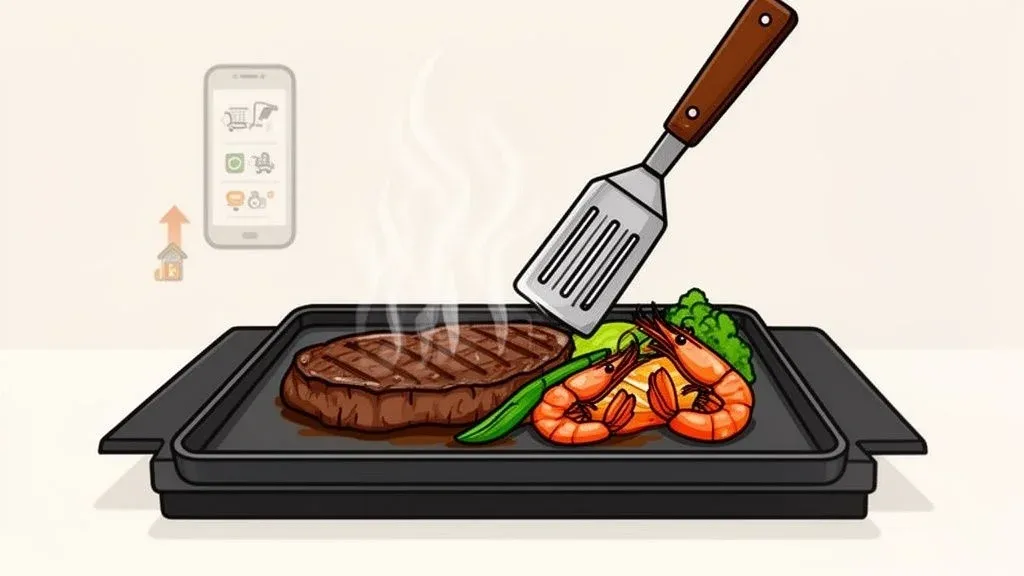
Trying to capture the magic of a live teppanyaki performance in a takeout box can feel like an impossible task. But let’s be clear: it’s also a massive opportunity for your restaurant. As people increasingly look for premium, restaurant-quality meals to enjoy at home, teppanyaki take out has moved from a quirky idea to a serious revenue stream just waiting for you to tap into.
The whole game is about mastering the details to protect that incredible quality from the moment it leaves the grill to the second it arrives at your customer’s door.
The Sizzling Opportunity in Teppanyaki Take Out
Let’s face it, teppanyaki is traditionally a show. It’s a culinary performance built around that shared iron griddle. But customer habits have changed for good. Diners now want the exact same high-quality, exciting meals they get in your restaurant, just without leaving their living room. This shift has blown the doors wide open for teppanyaki spots to grab a huge piece of the off-premise market.
The real challenge is in the translation. How do you package the sizzle, the perfect char, and the “wow” factor of a dish that’s meant to be eaten seconds after it’s cooked? This guide is your playbook. We’re going to break down how to solve that problem and turn a potential operational nightmare into a powerful engine for growth.
To give you a quick overview of what we’ll be tackling, here’s a look at the common hurdles and the solutions we’ll walk through.
Teppanyaki Takeout At-a-Glance Challenges and Solutions
Operational Challenge Key Solution (Explained in this Guide) Impact on Business Menu Engineering Adapting dishes for travel, focusing on items that hold temperature and texture. Higher customer satisfaction, fewer complaints, and repeat orders. Packaging & Quality Using vented, multi-compartment containers to separate items and prevent sogginess. Preserves food integrity, justifying premium price points. Kitchen Workflow Creating a dedicated prep and assembly station for takeout to avoid dine-in disruption. Faster order fulfillment, less chaos, and improved staff productivity. Staffing & Training Training kitchen staff on new packing protocols and timing for delivery drivers. Ensures consistency and quality control for every single to-go order. Food Safety Implementing strict temperature control measures from grill to handoff. Protects customers and your brand’s reputation. Pricing & Margins Strategically pricing the menu to cover packaging, commissions, and labor. Maintains healthy profit margins for a sustainable takeout operation. Tech Integration Automating order flow from delivery apps directly into your POS system. Drastically reduces manual entry errors and speeds up service. Marketing & Promotion Running targeted ads and promotions to announce and drive takeout orders. Builds awareness and generates a steady stream of new revenue.
Each of these solutions is a critical piece of the puzzle. By addressing them head-on, you build a teppanyaki takeout program that doesn’t just work—it thrives.
Why It Matters: Connecting Teppanyaki Take Out to Restaurant Efficiency
Adding takeout isn’t just about offering another service. It’s a smart, strategic play to make your entire restaurant more efficient and profitable. Think about it—with a solid to-go teppanyaki menu, you can:
- Increase Revenue Per Square Foot: Your kitchen can now serve far more people than you have seats in your dining room. This means turning fixed costs like rent into a more productive asset.
- Reach New Customer Segments: You’ll attract people who love your food but prefer eating at home, or those looking for a special meal without the fuss of going out.
- Maximize Kitchen Capacity: A takeout operation allows you to turn slow dine-in periods into busy, profitable windows. Your kitchen staff can be fulfilling orders from the most popular food delivery apps, turning fixed labor costs into revenue-generating activity.
The demand for high-end Japanese food at home is already there, and it’s strong. Just look at the big players. In one report, the teppanyaki giant Benihana saw its total restaurant sales jump 5.4% to $73.6 million in a single quarter. Their full-year sales hit $303.9 million, proving that this style of cuisine performs incredibly well, even when dine-in traffic is unpredictable. This isn’t just theory; the numbers show that with the right game plan, teppanyaki can compete and win in the delivery world.
Throughout this guide, we’ll give you the concrete steps to engineer your menu, set up your kitchen for food tech, and get all those orders flowing seamlessly. The goal is to make every teppanyaki take out order just as impressive as the one you serve fresh off the grill in your restaurant.
Designing a Teppanyaki Menu That Actually Travels
Making your teppanyaki menu work for delivery is a whole different ball game than serving it in-house. It’s not just about getting food into a box; it’s about a complete rethink of what you offer. The truth is, not every showstopper from your dining room will survive a 20-minute drive. Getting teppanyaki takeout right means building a menu that protects your food’s integrity, your brand’s reputation, and—most importantly—your profits.
It all begins with taking a hard, honest look at your current menu. You need to find the dishes that hold their temperature and texture. These are your new workhorses.
Picking Your Delivery All-Stars
Right off the bat, you’ll find that heartier proteins are your best bet. Steak and chicken are perfect. They hold onto their heat and moisture, so they still arrive tender and juicy at your customer’s door. Delicate items? They’re a gamble. Things like scallops or certain kinds of fish can easily keep cooking in the container from the residual heat. The result is a rubbery, overcooked mess and a customer who probably won’t order again.
A great move is to build a separate, streamlined menu just for takeout. This isn’t about limiting your customers’ options; it’s about controlling quality. By zeroing in on a handful of dishes you know are winners, you can be confident that every single order going out the door is a fantastic reflection of your restaurant.
Why This Matters: A perfectly cooked steak that arrives hot is your best marketing. It creates repeat customers, generates glowing reviews, and reduces costly refund requests. A soggy, lukewarm seafood dish, on the other hand, actively hurts your brand and costs you money through comps and lost business.
Crafting Profitable Takeout-Only Combos
Beyond single dishes, creating “takeout-only” combos is one of the smartest things you can do. These bundles are a brilliant way to steer customers toward your most profitable and easiest-to-make items. Think about pairing a high-margin protein like chicken hibachi with your standard sides of fried rice and vegetables.
This approach gives you a few major advantages:
- Higher Average Checks: Combos naturally encourage people to spend a bit more than they would if they were just ordering à la carte.
- Smoother Restaurant Operations: When orders for pre-set combos come in, your team can fly. They aren’t bogged down by custom requests; they’re firing up standardized orders they’ve made a hundred times. This improves staff productivity and reduces errors.
- Smarter Inventory Control: By nudging customers toward specific items, you can forecast what you’ll need with much better accuracy. That means less food waste and lower costs.
A “Family Teppanyaki Feast” for four, with chicken, steak, rice, and appetizers, is a perfect example. It’s an easy upsell for the customer and simplifies everything for your kitchen. If you need more inspiration on how to structure these offers, our guide on building a ghost kitchen menu has some fantastic ideas that apply here, too.
Pricing and Packaging for Healthy Margins
Don’t forget to price your takeout menu to reflect the real cost of doing business. This goes way beyond your food cost. You have to factor in packaging, commissions from delivery apps (which can climb as high as 30%), and the extra labor. Adjust your pricing to make sure you’re actually making money on these orders.
Packaging is another area where you can’t afford to cut corners; it’s a huge part of the experience. Good containers are a must. When thinking about a menu built for travel, finding the right packaging is just as important as the food itself. Many restaurants look into different kinds of cardboard boxes made specifically for food delivery because they’re sturdy and can be insulated. Look for vented lids that let steam out—this is the secret to keeping vegetables from turning to mush. And multi-compartment trays are a lifesaver for keeping that filet mignon separate from the ginger sauce. This isn’t just a box; it’s your final quality check.
Actionable Insight: The next piece of the puzzle is making sure this new menu works seamlessly with your ordering system. For instance, if you’re using a Square POS, you can easily create a new menu category called “Takeout Combos.” When an order from Uber Eats hits your kitchen, it will pop up on the screen with clear, standardized instructions, so there’s no guesswork. Everyone knows exactly what to make and how to pack it. This kind of direct POS integration is what connects your smart menu strategy to a smooth-running kitchen, reducing errors and saving time.
Your Next Step: Go through your menu and pick five of your best-selling dishes that you think will travel well. Pack them up exactly as a customer would receive them, let them sit for 20 minutes, and then taste them. This simple, hands-on test is the first real step toward building a teppanyaki takeout menu that people will love.
Mastering Your Kitchen Workflow for Peak Freshness
Let’s be honest: the success of your teppanyaki take out service lives and dies in the back of house. A smooth, well-oiled kitchen workflow is what separates perfectly cooked takeout from total chaos during the Friday night rush. It’s not just about speed; it’s about protecting the quality of your food, slashing errors, and making sure every customer gets a meal that’s just as good as what you serve in-house.
Simply trying to shoehorn takeout orders into your existing dine-in process is a recipe for disaster. It creates bottlenecks, frustrates your crew, and inevitably leads to cold food and unhappy customers. The real solution is to get organized and create dedicated, specialized zones in your kitchen.
Building Your Takeout Assembly Line
Think of it like setting up a mini-factory just for takeout. The first step is to establish a dedicated station for assembling and packing delivery orders. This spot needs to be completely separate from your main dine-in line to stop your teams from tripping over each other.
This packing station needs to be armed with everything your staff needs to get an order out the door, fast and right.
- A variety of containers: Stock all your different multi-compartment trays, sauce cups, and bags.
- Labeling equipment: A reliable printer for order tickets and labels is a must-have for accuracy.
- Utensils and condiments: Keep napkins, plasticware, and soy sauce packets right there, ready to go.
- Sealing tools: If you’re using tamper-evident stickers, make sure they’re within easy reach.
Why This Matters: A dedicated packing station can dramatically cut your ticket times and order errors. When your staff isn’t scrambling to find a specific lid or bag, they can focus on getting the order right. This directly boosts staff productivity and slashes the costly mistakes that lead to refunds, saving both time and money.
Cross-Training Your Team for Ultimate Flexibility
Your kitchen staff is your biggest advantage, and cross-training is the secret to handling those unpredictable rushes. A grill cook who knows how to pack an order or an expo who can jump on the prep line gives you incredible flexibility when a sudden wave of DoorDash orders hits.
Start small. Train at least one person from each station on the basics of the takeout packing process. This simple move ensures there’s always someone who can step in and help assemble orders correctly, preventing a single bottleneck from grinding your whole operation to a halt. For more strategies on building a resilient team, check out our guide to effective restaurant operating procedures.
The infographic below shows the kind of thinking that goes into building a travel-ready menu—the very foundation that your kitchen workflow needs to support.
It all comes down to picking high-profit items that hold up well during travel and using smart portioning to control your costs and keep things consistent.
The Science of Smart Teppanyaki Packaging
For teppanyaki, packaging isn’t just a box—it’s your front line of quality control. The wrong container can turn crisp vegetables into a soggy mess and a perfectly seared steak into a steamed, gray disappointment. The entire goal is to preserve the distinct textures and temperatures of every single component.
This is where specialized packaging is non-negotiable. Look for these key features:
- Multi-Compartment Trays: These are an absolute must. They let you keep the hot protein separate from the fried rice and crisp vegetables, preventing everything from becoming a single-temperature mush.
- Vented Lids: Steam is the enemy of texture. Vented lids are crucial because they let steam escape, which keeps fried items crispy and stops vegetables from overcooking on the way to the customer.
- Secure Sauce Containers: Nothing sours a customer’s experience faster than a bag soaked in spilled ginger sauce. Invest in small, leak-proof containers with lids that actually stay on.
Think about it this way: you’d never serve a dine-in guest by dumping their steak, rice, and veggies into one big bowl. The same logic applies to takeout. A great teppanyaki take out experience follows this rule. By investing in the right packaging, you’re protecting your premium price point and delivering an experience that feels worth it.
The Final Handoff: Syncing with Restaurant Delivery Drivers
Finally, your workflow has to nail that last, critical step: the handoff to the driver. Set up a designated holding area for completed orders. If you don’t have heat lamps, you’ll need to time your order completion to line up perfectly with the driver’s arrival.
Actionable Insight: With a modern food tech solution like a Clover POS that integrates with delivery apps, you can see real-time driver ETAs. This allows your kitchen to fire the final items at the last possible second, ensuring the food is at its absolute peak freshness when it leaves your restaurant. This simple process change dramatically improves quality without slowing down your operations.
By optimizing your layout, cross-training your team, and mastering your packaging, you build a powerful and efficient system. This workflow doesn’t just manage orders—it protects your brand’s reputation, one perfectly packed meal at a time.
Taming Tablet Chaos with Food Tech and POS Integration
If you’re running a teppanyaki takeout service, you know the sound. That constant, frantic symphony of chimes from a half-dozen tablets lined up on your counter. One for Uber Eats, another for DoorDash, a third for Grubhub—all screaming for attention. Your host is stuck playing a high-stakes game of telephone, trying to punch every order into the POS without making a mistake, all while greeting guests at the door.
This isn’t just chaotic; it’s a recipe for disaster and a major drain on restaurant efficiency. We’ve all seen it happen. A single typo turns a medium-rare steak into well-done, an allergy note gets missed, or the wrong address is entered. The result is always the same: a comped meal, a one-star review, and a customer you’ll never see again. It’s an exhausting drain on your team and a direct hit to your profits.
There’s a much smarter way to handle this. The fix is to automate the entire process with direct POS integration.
How to Connect Your Delivery Apps Directly to Your Kitchen
In simple terms, POS integration is a type of food tech that acts as a bridge between your delivery apps and your kitchen. It’s a piece of software that automatically catches every order from all your delivery apps and pushes them straight into your restaurant’s point-of-sale (POS) system. This means no more manual data entry.
A platform like OrderOut sits in the background, grabbing every order the second it comes in and funneling it right into your kitchen’s existing workflow.
Instead of your host hearing a chime, walking to the tablet, and re-typing the entire order, it just appears. The ticket prints from your kitchen printer or pops up on your Kitchen Display System (KDS) exactly like an order from a server on the floor. It’s a simple change that completely transforms your off-premise restaurant operations.
Why This Matters: This kind of automation saves your staff countless hours of mind-numbing work. More importantly, it virtually eliminates order entry mistakes—one of the biggest silent profit killers in the restaurant delivery game. Your team is freed up to focus on what actually makes you money: incredible food and top-notch service. This leads to massive cost savings from error reduction and improved staff productivity.
What This Looks Like in a Real Teppanyaki Restaurant
Let’s walk through a real-world scenario. Imagine your restaurant runs on a Clover POS. A customer places a big “Family Hibachi Combo” order through the DoorDash app on a busy Friday night.
Without integration, your host would have to manually key in every single item: the filet, the shrimp, the fried rice, the extra yum-yum sauce. But with a service like OrderOut, that order appears in your Clover system instantly and perfectly. No human hands touched it. The kitchen gets the right ticket, right away.
The same magic happens with other major systems. If your restaurant uses Square, the integration is just as smooth. Orders from every platform you’re on—Grubhub, Postmates, you name it—flow directly into your restaurant delivery queue inside the Square POS. Suddenly, you have one central, unified system for every single order, whether the customer is sitting at a teppan table or on their couch.
The Real-World Payoff: Better Margins and a Happier Team
The benefits go far beyond just being more organized. This kind of automation delivers tangible results that you’ll see in your P&L statement and in your staff’s morale.
- You Get Time Back: Shaving off an average of 90 seconds per order by eliminating manual entry adds up fast. Across hundreds of orders a week, you’re getting back hours of paid labor time that can be spent on tasks that actually grow the business.
- Errors Vanish: Automated orders are 99.9% accurate. That means almost no more wrong meals, angry phone calls, or costly refunds that chip away at your hard-earned margins.
- Your Staff Can Finally Focus: When your team isn’t chained to a wall of tablets, they can do their real jobs. They can sell another round of drinks to a dine-in table, double-check takeout bags, and provide the kind of attentive service that turns first-time guests into regulars.
The boom in teppanyaki takeout is part of a much larger trend. The global market for Japanese cuisine is massive—the sushi restaurant sector alone is expected to climb to $24.1 billion by 2030. For any operator, that number should be a clear signal of the opportunity at hand. But to capture a piece of that market efficiently, especially with ongoing labor shortages, you have to operate smarter.
POS integration isn’t just a nice-to-have anymore. It’s the engine of a modern, profitable delivery program. To get a better handle on the big picture, our guide on what an order management system is is a great place to start.
Practical Next Step: For any serious restaurant looking to master teppanyaki takeout, integrating your POS is non-negotiable. It simplifies your workflow, protects your profit, and positions your restaurant to handle growth without the chaos. You can link your delivery apps to your POS in minutes at https://dashboard.orderout.co.
Marketing Your Takeout to Drive More Orders
Okay, you’ve got the kitchen running like a well-oiled machine. Now, it’s time to make sure those delivery tablets don’t stop chiming. Marketing your teppanyaki take out isn’t just about flipping the “open for delivery” switch; it’s about making your food the only thing someone can think about when they’re scrolling on their couch.
The great news? You don’t need a Hollywood-sized budget to get real results. A few smart digital plays combined with some simple in-house promotions will build momentum, pull in new faces, and create a steady stream of orders.
Optimize Your Digital Storefront
Think of your menu on Uber Eats or DoorDash as your new front door. It has to look amazing. If there’s one thing you shouldn’t skimp on, it’s professional photography. People absolutely eat with their eyes, and a blurry smartphone pic just isn’t going to cut it for the beautiful food you’re making.
Actionable Insight: Shoot your dishes in their takeout containers. Let customers see exactly what they’re getting. A picture of a perfectly organized container with vibrant vegetables, seared steak, and fluffy fried rice shows them the care you put into every order. It screams quality and justifies your price before they’ve taken a single bite.
Your menu descriptions are just as crucial. You’re not just listing ingredients; you’re selling an experience.
- Instead of: “Chicken Hibachi”
- Try: “Tender, grilled-to-perfection chicken hibachi, paired with our signature ginger sauce, sizzling fried rice, and a medley of crisp market vegetables. It’s the full teppanyaki experience, delivered.”
See the difference? One is a label, the other is a craving. That little bit of effort helps justify your price and makes the choice easy for the customer.
Use Social Media to Showcase the Experience
Social media is where you can really show off what makes your takeout special. Short, punchy videos are gold here. Film an “unboxing” of a takeout order, showing off how well it’s all packed. Get a close-up of the steam rolling off the food as the lid comes off. It’s pure food porn, and it works.
Start running some targeted ads on Instagram and Facebook. You can aim them directly at people in your delivery zone who’ve shown they’re interested in Japanese food or dining out. Hit them with an offer they can’t refuse to get them to place that first order.
Actionable Insight: A “20% off your first teppanyaki takeout order” promotion is a classic for a reason—it works. For example, you can feature this offer in a targeted ad on Uber Eats. This lowers the barrier for someone to give you a try and can turn a casual browser into a paying customer instantly.
The goal isn’t just one sale. It’s about winning a new customer who might order from you for years to come. For more on building out these campaigns, our complete guide on creating a marketing plan for restaurants has a ton of valuable strategies.
Drive Orders from Inside Your Restaurant
Don’t overlook the best audience you have: the people already sitting in your dining room. They already love your food. Turning them into delivery regulars is some of the easiest marketing you’ll ever do.
- Bag Stuffers: Stick a small flyer in every takeout bag and with every dine-in check. Highlight your delivery service and maybe include a small discount code for their next order.
- Train Your Team: A simple script for your hosts and servers can work wonders. “Just so you know, you can get your favorite hibachi delivered for your next night in!” It plants a seed.
- Email & SMS: If you’re collecting customer info (and you should be), send out a quick email or text when you have a new takeout special or an exclusive delivery deal.
Why This Matters for Restaurant Operations: This isn’t just marketing fluff. These efforts create a consistent, predictable flow of orders for your kitchen. That steady volume is what makes all your hard work on kitchen workflows and POS integration really pay off. More orders mean your efficient system generates more revenue, keeps staff productive, and improves your margins across the board.
Practical Next Step: Your mission is simple: pick one digital tactic and one in-store tactic from this list and get it going this week. Start by updating your DoorDash photos and printing some simple flyers for your checks. Small, consistent actions are what build a powerhouse teppanyaki take out business.
You’ve done the hard work of thinking through the big picture—from crafting a menu that can handle the ride to a customer’s home to redesigning your kitchen flow for speed. Now it’s time to turn those plans into a real, profitable takeout service.
Let’s get practical. This isn’t just a summary; it’s a launch plan for turning the unique experience of teppanyaki into something that shines, even when it’s enjoyed on a customer’s couch.
Your Go-Live Game Plan for Teppanyaki Take Out
To bring it all together, focus on these four areas first. Getting these right from day one will build a solid foundation for your teppanyaki take out operation.
- Rethink Your Menu for Travel: Don’t just list your dine-in items. Zero in on proteins like steak and chicken that hold up well. I highly recommend creating a few “takeout-exclusive” combos; they not only bump up your average ticket but also make things much faster for your grill cooks.
- Get Serious About Packaging: This is non-negotiable. Invest in quality, vented, multi-compartment containers. It’s the only way to keep the steak hot, the veggies from getting soggy, and the sauces from turning everything into a mess. Good packaging is what allows you to charge a premium.
- Create a Dedicated Takeout Workflow: You need a designated packing station, period. Don’t let your servers or hosts try to juggle this off the corner of a service bar. Cross-train a few key people so they can jump in and out of the packing role during a rush. This is how you prevent those dreaded bottlenecks.
- Sharpen Your Digital Storefront: Your food photos on delivery apps are your new front door. They need to look amazing, and they should show the food in your actual takeout packaging. Also, take time to write menu descriptions that sell the sizzle, not just the ingredients.
Walking through these steps systematically is how you build consistency and efficiency. As you get your operation running, remember that clear internal communication is everything. It’s worth looking into how a specialized communication software for food and beverage companies can keep your BOH and FOH teams perfectly in sync.
Use Technology to Protect Your Margins
There’s no question that people want Japanese food—it’s a massive global trend. We’re seeing it in Japan’s own foodservice market, which bounced back to 26.5 trillion yen in 2023. Full-service restaurants, the home of teppanyaki, claimed 45% of that.
But here’s the reality check: that growth comes with serious operational challenges. A staggering 72% of Japanese restaurants report chef shortages, which is pushing labor costs through the roof. For you, this means every second of your team’s time counts. Manually punching in orders from Uber Eats or Grubhub tablets isn’t just slow—it’s a costly, error-prone process that directly eats into the profits of your high-ticket teppanyaki orders. You can see more on these trends in the full Japan foodservice industry statistics.
Why This Matters: This is where smart restaurant operations and food tech intersect. If there is one thing you do to combat rising labor costs and mistakes, it should be automating your delivery order management. Integrating your delivery apps directly with your POS is the single most powerful move you can make.
Think about it: when DoorDash talks directly to your Clover POS, or Uber Eats sends orders straight into Square, you eliminate the manual entry. This small change saves hours of labor, brings costly order mistakes down to almost zero, and lets your staff focus on what they do best—making incredible food. It’s not just about being more efficient; it’s about building a business model that can actually last.
The road to a successful teppanyaki take out program starts with fixing your biggest operational headache. At OrderOut, we believe technology should work for you, not the other way around. It’s time to end the tablet chaos and see how direct POS integration can transform your team’s productivity and your bottom line.
Ready to take back control? Start your free onboarding in just a few clicks.