
A Restaurant Owner's Practical Guide to Sustainability
· Thibault Le Conte
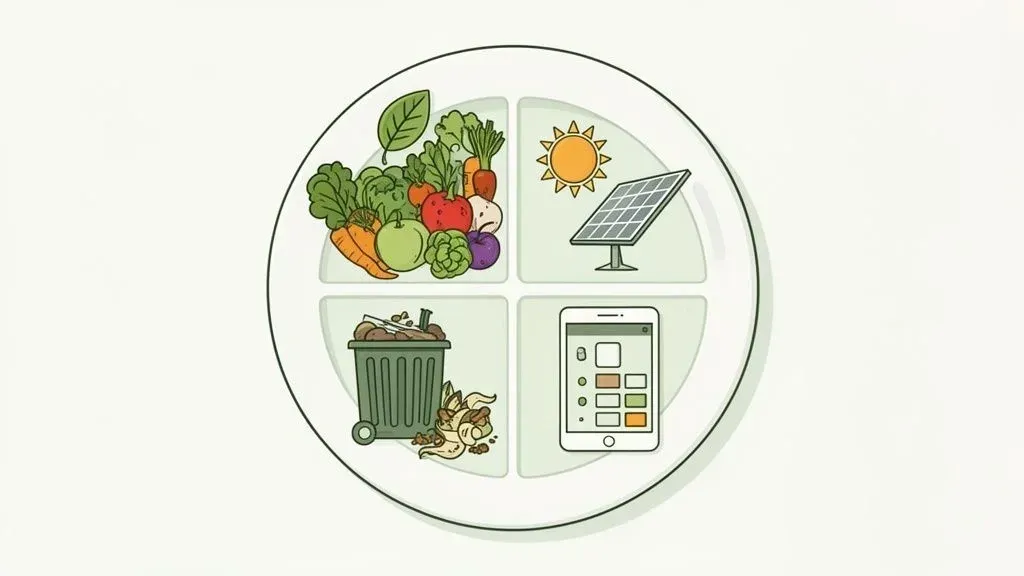
For a long time, “sustainability in restaurants” felt like a niche interest—something for farm-to-table spots or vegan cafes. That’s no longer the case. Today, sustainability is simply a smarter way to run your business. In simple terms, it means using your resources—like food, energy, and staff time—more efficiently. This not only reduces your environmental footprint but also directly boosts your restaurant’s efficiency and, yes, your bottom line.
Why it matters: Thinking this way turns eco-conscious practices into very real cost savings. For example, reducing food waste means lower supply bills. Streamlining your kitchen operations frees up staff time, and using less energy cuts your utility costs. This approach also helps build a brand that today’s customers are proud to support, whether they’re dining in or ordering delivery.
The Pillars of Restaurant Sustainability
To get a better handle on this, it helps to break sustainability down into its core components. Each pillar represents an area of your business where small, actionable changes can lead to significant gains in restaurant efficiency.
Pillar of Sustainability What It Means for Your Restaurant Key Business Benefit Environmental Responsibility Using less energy and water, creating less waste, and choosing eco-friendly packaging for your delivery orders. Lower utility and supply bills, plus a stronger brand reputation. Economic Viability Making smart operational changes that cut costs and improve long-term profitability, like preventing food spoilage. Increased profit margins and a more resilient business model. Social Equity Sourcing from local and ethical suppliers and fostering a positive, productive workplace for your staff. Stronger community ties and higher employee retention.
As you can see, these pillars work together. For instance, sourcing locally (Social Equity) often means fresher ingredients with a lower carbon footprint (Environmental) and less spoilage, which improves your food cost (Economic).
Why Sustainability Is the New Recipe for Success
Think of sustainability less as a restriction and more as a recipe for a healthier, more profitable business. It’s a comprehensive game plan that touches every part of your operation, from the produce you buy and the electricity you use to the takeout containers for your delivery orders. Making sustainable choices is one of the most effective ways to improve restaurant efficiency, slash costs, and connect with the values of modern diners.
This isn’t just theory. The relationship between sustainability, efficiency, and cost reduction is direct and measurable.
As the map shows, these aren’t separate goals but interconnected results of a single, focused strategy. For example, when you boost kitchen efficiency by reducing food waste, you also cut down on supply costs. That same action also appeals to the growing number of customers who care about where their money goes.
Tying Profitability Directly to Your Restaurant Operations
At its core, sustainability is just smart resource management. Every kilowatt of electricity you don’t use, every gallon of water you conserve, and every pound of food waste you prevent goes straight back to your bottom line. This isn’t just about feeling good; it’s about running a leaner, more resilient business where profit and planet aren’t at odds.
Why it matters: By focusing on sustainability, restaurants can dramatically reduce operational costs. Studies show that for every $1 invested in food waste reduction, a restaurant can see an average return of $14 in savings, boosting staff productivity and profit.
These financial wins come from a few key areas:
- Reduced Waste: Lowering food spoilage and cutting down on order errors means you spend less on raw ingredients and waste disposal. This directly improves your margins.
- Energy Efficiency: Upgrading to energy-efficient appliances or just implementing smarter kitchen habits will shrink your monthly utility bills, a direct cost saving.
- Increased Productivity: When your workflows are cleaner and more direct, you reduce manual tasks and free up your staff to focus on what matters most—the food and the guest experience.
How Food Tech and POS Integration Make It All Happen
This is where modern food tech becomes your best friend. In simple terms, POS integration connects your different systems, like delivery apps and your main sales system, so they can talk to each other automatically. This is a game-changer for making sustainability measurable and achievable.
For example, when your delivery platforms like Uber Eats or DoorDash feed orders directly into your POS system, you gain an incredible advantage. This automation instantly gets rid of paper tickets and practically eliminates order errors from manual entry, which are two major sources of waste and error.
Why it matters: By integrating your POS—whether it’s Clover or Square—you get clean sales data. Analyzing this data lets you make smarter purchasing decisions, fine-tune your inventory, and stop over-ordering. This data-first approach is the foundation of a truly sustainable and efficient business, directly reducing costs and errors. You can dive deeper into how to use data analytics for restaurants in our detailed guide.
Meeting Modern Diner Demands for Eco-Friendly Dining
The push for sustainability isn’t just some top-down industry trend anymore. It’s bubbling up directly from your customers. Diners today, especially the younger crowd, genuinely want to spend their money at restaurants that care about the planet. They’re voting with their wallets, and it’s a shift that’s powerful enough to drive real loyalty and growth.
When you embrace sustainable practices, you’re not just doing a good thing—you’re crafting a compelling story that connects with people. It gives you a clear edge. Imagine two restaurants side-by-side with similar menus and prices. The one that’s open about its eco-friendly mission will almost always win over the thoughtful customer.
Tuning Into What Your Customers Really Want
Talking about your green initiatives is smart business, not just good PR. In simple terms, customers want to see that you care. The National Restaurant Association has flagged sustainability and local sourcing as a top trend, which tells us this is a deep-seated change in how people choose where to eat.
Technically speaking, the numbers back this up loud and clear. A staggering 91% of consumers say they’d rather buy from businesses that are actively working to reduce food waste. On top of that, the market for carbon-neutral food is expected to explode from $3.2 billion in 2025 to $8.5 billion by 2032.
Why it matters: This demand is especially potent among Millennial and Gen Z diners, who practically expect restaurants to source ingredients locally and keep waste to a minimum. If you can communicate your green efforts effectively—especially for your restaurant delivery—you’ll not only attract this crucial demographic but also turn them into vocal supporters. Our guide on using social media for restaurants has some great tips for sharing your story where people will see it.
How Restaurant Delivery Platforms Give Your Green Efforts a Megaphone
This demand for sustainability doesn’t stop at your front door; it follows your food all the way to the customer’s home. Big delivery players like Uber Eats and DoorDash are starting to catch on, actively highlighting restaurants that make greener choices. They are giving more screen time to businesses using eco-friendly packaging or championing local ingredients, which means more visibility for you in a very crowded space.
Why it matters: Your commitment to sustainability can directly improve your placement and appeal on the very platforms driving your off-premise sales. It’s a clear example of how doing good for the planet is also good for business efficiency and growth, leading to more orders and higher staff productivity.
For example, a restaurant that makes the switch to compostable takeout containers might get a special badge on a delivery app like Uber Eats. That small icon is a powerful shortcut for customers, instantly setting you apart from the competition and potentially leading to more orders with zero extra ad spend.
Tying It All Back to Your Restaurant Operations
Meeting these modern demands isn’t just a marketing exercise. It’s about building a smarter, more resilient business from the kitchen out. Here’s how these customer-facing efforts connect directly to what happens behind the scenes:
- Local Sourcing: Customers love the freshness, but for you, it also means a simpler supply chain and lower shipping costs. This is a direct hit against food waste that protects your bottom line.
- Waste Reduction: People feel good knowing you’re fighting food waste. Internally, that same effort sharpens your inventory management, reduces errors, and brings down your overall food costs.
- Eco-Friendly Packaging: This checks a box for customers, but it also forces you to look at your whole packaging workflow. You might find ways to consolidate supplies and cut down on spending.
Why it matters: This is where POS integration becomes your best friend. By integrating your delivery apps with your POS system, whether it’s Square or Clover, you get crystal-clear data on what’s selling. That information empowers you to dial in your orders for locally sourced items, prevent overstocking, and ultimately reduce waste while freeing up your staff. Pick one or two areas to start with, and you’ll find you’re not just giving diners what they want, but also building a more efficient and profitable restaurant.
Turning Kitchen Scraps Into Restaurant Profit
Let’s look at food waste differently. It’s not just an environmental problem; it’s a hole in your restaurant’s pocket. Every vegetable peel, forgotten ingredient, or sent-back dish is money you spent that never made it back as revenue. Honestly, tackling waste is probably the single most impactful—and financially rewarding—sustainability effort you can make.
Why it matters: When you start treating food waste as a core financial metric, it changes everything about how your kitchen operates. The goal shifts from just “taking out the trash” to actively “recovering lost profit.” This directly improves efficiency and reduces costs. A key part of this is a hands-on approach to reducing food waste in restaurants.
Technically speaking, the numbers behind this are staggering. U.S. restaurants throw away an incredible 11.4 million tons of food every year. But here’s the upside: for every dollar a restaurant invests in cutting food waste, it can see around $14 in savings. That’s a massive 1,300% return on investment, making it one of the smartest financial decisions you can make.
Actionable Insight: Start with a Food Waste Audit
You can’t manage what you don’t measure. A food waste audit is your first, best step to see exactly what’s being tossed and why. This doesn’t need to be a complex project. For just a few days, set up clearly labeled bins for different waste streams:
- Spoilage: Ingredients that went bad before you could use them.
- Prep Waste: Vegetable peels and other scraps from the prep line.
- Overproduction/Errors: Mistaken orders or dishes made in excess.
- Customer Plate Waste: Food left uneaten on guests’ plates.
Weigh each bin at the end of the day. The results will give you a clear, data-backed picture of your biggest issues. This data is your roadmap for cost savings.
Connect Your Inventory to POS Sales Data with Food Tech
Once you know what you’re wasting, you need to figure out why. This is where your food tech, especially your POS system, becomes an indispensable tool. In simple terms, you use your sales data to make smarter buying decisions.
Why it matters: By analyzing sales data from your POS, you move from reactive ordering to predictive inventory management. You stop guessing what you’ll need and start knowing, which is the key to preventing spoilage waste before it happens. This saves time, reduces errors, and frees up staff.
For instance, if your POS data reveals your fish special is a hot seller on Fridays but a dud on Mondays, you can tweak your fish orders. This data-driven approach means you’re not left with expensive ingredients spoiling in the walk-in. This is fundamental to accurately calculate your food cost percentage and protect your margins.
This becomes even more crucial for restaurant delivery. When online ordering platforms like DoorDash integrate directly into a POS such as Clover or Square, every order is logged automatically. This simple automation wipes out manual entry errors—a frequent cause of wrong orders and wasted food—and keeps your sales data pristine for forecasting.
Turn Actionable Insights Into Profit
Armed with solid data from your audit and POS, you can now roll out specific strategies that hit your bottom line and boost staff productivity.
- Refine Your Menu: If a certain dish consistently comes back half-eaten, tweak the recipe or shrink the portion size.
- Train for Precision: Use your audit findings as a teaching tool. Show your team how precise portioning minimizes prep waste and saves money.
- Create “Waste-Based” Specials: Turn vegetable trimmings into stock or day-old bread into croutons. This turns would-be trash into new revenue streams.
Practical Next Step: Stop seeing food waste as a cost and start treating it as a controllable part of your restaurant operations. Kicking things off with a simple audit and using the sales data you already have will deliver immediate changes that cut waste, lower food costs, and make your entire restaurant more efficient.
Building Greener Restaurant Operations from the Ground Up
When we talk about sustainability, it’s easy to focus just on the food. But running a truly green restaurant means looking at everything, from the lights in the dining room to the routes your delivery drivers take. In simple terms, it’s about finding and fixing small “leaks” in your operation that waste resources and money.
Why it matters: That dripping faucet in the back? It’s not just water; it’s money trickling right down the drain. An inefficient delivery route burns extra fuel and wastes staff time. Fixing these small issues unlocks serious cost savings, boosts staff productivity, and shows customers you’re a brand that cares.
Slashing Utility Costs with Smarter Energy and Water Use
The fastest way to make your restaurant greener is to get a handle on your energy and water use. Commercial kitchens are notorious energy hogs, but many of the best fixes are simple and don’t require a huge upfront investment.
Technically speaking, ENERGY STAR certified commercial food service equipment can be 10% to 70% more energy-efficient than standard models. That translates directly into lower monthly bills and a quicker return on your investment, a clear cost saving.
Here are a few practical steps you can take right away:
- Upgrade Key Appliances: When it’s time to replace a fridge or oven, make ENERGY STAR models a priority.
- Install Low-Flow Fixtures: Swapping in low-flow faucets and pre-rinse spray valves is a cheap fix that can cut water use by thousands of gallons a year.
- Conduct Regular Maintenance: Simple checks on refrigeration seals and HVAC filters prevent energy from leaking out and help equipment last longer.
Even if you’re renting, you can still make an impact by swapping to LEDs and training staff to turn off equipment. If you’re planning a bigger project, you can go even further by choosing sustainable building materials.
Optimizing Restaurant Delivery for Peak Efficiency and Sustainability
With off-premise dining becoming a huge part of the business, your delivery operation’s environmental footprint is growing. The good news is that sustainable delivery and efficient delivery are one and the same. When you fine-tune your logistics, you cut fuel consumption, which lowers costs, reduces emissions, and helps your team get more done.
Why it matters: The goal is to minimize the time and distance traveled for every single order. One of the most effective strategies is adopting sustainable packaging—think compostable or recycled-content containers. Beyond just appealing to customers, it forces you to be more intentional about your packaging, which can save space and money. To dig deeper into optimizing your back-of-house, our guide to creating effective restaurant operating procedures is a great resource.
How POS Integration Drives Delivery Sustainability
Connecting your delivery platforms directly to your POS system is the final piece of the puzzle. When apps like DoorDash and Uber Eats are integrated with a POS like Clover, you get a single, clear picture of your entire order flow.
Why it matters: This POS integration gives you the data you need to make smarter decisions. For example, you can analyze order times and locations to see where your delivery hotspots are. With that knowledge, you can start batching orders going to the same neighborhood, drastically cutting down on driver trips. This data-driven approach turns your POS into the command center for a greener, more profitable restaurant delivery operation, saving time and reducing errors.
How POS Integration Can Drive Real Sustainability
If you’re serious about making your restaurant more sustainable, you have to start with the data. You can’t manage what you don’t measure. This is where modern restaurant food tech comes in, turning abstract goals into tangible actions.
Think of your Point of Sale (POS) system as the central nervous system of your restaurant. When you use POS integration to connect it with your delivery apps, it becomes the engine that drives efficiency, slashes waste, and directly boosts your bottom line.
Stop Waste at the Source with POS Integration
One of the most common sources of waste comes from manual order entry. Every time a staff member has to take an order from an Uber Eats tablet and punch it into the main POS, there’s a risk of error. A missed modifier or a simple typo means an incorrect order—wasted food, wasted time, and a frustrated customer.
Why it matters: By integrating your delivery platforms directly into your POS, you create one automated workflow. This simple change can slash costly order errors by up to 80%, tackling a major source of food waste and lost revenue head-on while increasing staff productivity.
This automation hits several sustainability targets at once:
- Less Food Waste: Getting orders right the first time means no more recooks, a direct cost saving.
- No More Paper Tickets: Digital orders reduce supply costs and your environmental footprint.
- More Productive Staff: Your team can stop being data-entry clerks and focus on what they do best: improving your restaurant operations.
This is exactly what a tool like OrderOut is built for. It bridges the gap between apps like Uber Eats and your POS, whether it’s Clover or Square. An order goes straight from the customer’s phone to your kitchen, with no manual steps in between.
Use Your Data to Make Smarter Decisions
Beyond just preventing mistakes, a fully integrated POS gives you a goldmine of clean, reliable data. This unified data is your key to making smarter, more sustainable business decisions.
Why it matters: By analyzing sales trends, you can fine-tune your purchasing and stop over-ordering perishable ingredients that just end up spoiling. If you know you sell 100 orders of guacamole on a Friday but only 20 on a Monday, you can adjust your avocado order accordingly and put that money right back in your pocket. This is a clear time and cost saving.
This data-driven mindset also applies to restaurant delivery. When you analyze order locations and times, you can spot delivery “hotspots.” This insight lets you batch orders heading to the same area, which cuts down on fuel consumption, lowers emissions, and gets food to customers faster. Your POS becomes the command center for a more efficient, eco-friendly delivery strategy. You can find out more about what an integrated POS system can do to transform your whole operation.
The Bottom Line: POS Integration Powers Sustainability
At the end of the day, POS integration is a fundamental tool for building a restaurant that’s both sustainable and profitable. It gives you the clear visibility you need to make decisions based on facts, not guesswork.
By automating your workflows, you can directly address the root causes of waste, from order entry errors to inventory mismanagement. The result isn’t just a greener brand image; it’s real cost and time savings, fewer mistakes, and a more productive team. The path to a more sustainable restaurant starts with smarter restaurant operations, and those operations are powered by integrated food tech.
Practical Next Step: Ready to gain the control and data you need to build a more sustainable and efficient restaurant? You can start onboarding with OrderOut for Free in just a few clicks at https://dashboard.orderout.co.
Your Practical Sustainability Checklist for Immediate Action
Alright, let’s get down to business. All the theory in the world doesn’t mean much until you start making real changes in your kitchen. This actionable checklist is designed to help you do just that, breaking down the process into concrete steps you can tackle today, this month, and this quarter.
Think of it as your roadmap—a guide to getting those quick wins while setting yourself up for long-term success.
Waste Reduction and Menu Optimization
If you want a quick financial win, start with your trash can. Understanding what you’re throwing out is the first step to turning that waste back into revenue.
This Week:
- Run a simple waste audit. Grab a few bins and label them: spoilage, prep waste, and plate waste. Weigh each one at the end of the day. This gives you a data-backed starting point for cost savings.
This Month:
- Create a “waste-to-revenue” special. Challenge your BOH team to craft a new dish from ingredients that usually get tossed, like veggie stems. It’s a creative way to turn a loss directly into profit.
This Quarter:
- Let your POS data guide your inventory. Dive into the sales reports from your Clover or Square POS. Use that intel to refine purchasing and stop over-ordering, reducing waste and improving efficiency.
Energy and Restaurant Delivery Efficiency
A greener restaurant is almost always a leaner, more profitable operation. Small tweaks to your energy use and delivery logistics can add up to big savings.
Why it matters: At its core, sustainable restaurant management is about doing more with less—without compromising the guest experience. It’s about being smart with everything from your walk-in cooler to the routes your delivery drivers take, which boosts staff productivity and reduces errors.
This Week:
- Make an equipment shutdown schedule. Create a simple end-of-day checklist for your team to power down non-essential appliances. This simple habit can immediately trim your electricity bill.
This Month:
- Research one eco-friendly packaging swap. Focus on one high-volume item, like your takeout containers, and find a compostable or recycled alternative. Even one small change makes a difference to customers on Uber Eats and DoorDash.
Food Tech and POS Integration
Technology is what ties all of this together. The right food tech makes your sustainability goals measurable and manageable. A solid POS integration is your command center for better restaurant operations.
This Quarter:
- Automate your online ordering. This is a game-changer. By integrating your delivery apps directly into your POS, you can finally put an end to manual order entry. This single move dramatically cuts down on order errors—a huge source of food waste and lost revenue—and frees up your staff.
The Practical Next Step: The most powerful thing you can do this quarter is put technology to work. Automating your order flow is the foundation. It helps you cut waste, boost efficiency, and collect the data you need for every other sustainability initiative on your list.
Take the first step toward a more efficient and profitable future. You can start onboarding for Free in a few clicks at https://dashboard.orderout.co.
Got Questions About Sustainability? Let’s Talk.
You’ve probably got some questions buzzing around your head at this point. That’s a good thing. It means you’re serious about making a real change. Let’s tackle some of the most common ones we hear from restaurateurs just like you.
Isn’t This All Going to Be Too Expensive?
That’s the big one, isn’t it? The fear that “going green” means spending a lot of green. But the reality is often the complete opposite. Many of the highest-impact changes are low-cost or even free, and they start paying you back almost immediately with cost savings and improved staff productivity.
Why it matters: Training your team on better portioning or enforcing a strict “first-in, first-out” rule for your walk-in cuts waste instantly. That’s money straight back into your pocket. And this is where modern POS integration becomes a game-changer. For example, integrating with Clover or Square gives you hard data to stop over-ordering ingredients that just end up in the bin, reducing errors and saving time.
Can a Small Restaurant Like Mine Really Make a Difference?
Don’t ever think your small restaurant can’t move the needle. In fact, it’s often the local spots that make the biggest impression on a community. Every single restaurant that makes a change is part of a bigger industry-wide shift.
Why it matters: Think of it this way: your small, consistent changes don’t just add up; they ripple out. Your actions influence your staff, your customers, and even other local businesses, building a reputation that people in your town will talk about, which can directly improve your efficiency and delivery orders.
How Does POS Integration Actually Help With This Stuff?
This is where the rubber meets the road. Good POS integration isn’t just a tech upgrade; it’s a powerful sustainability tool that directly impacts your restaurant operations and efficiency. It connects your systems, automates manual work, and gives you the clear insights you need to cut waste and run a tighter ship.
When your delivery apps feed directly into a POS like Square or Clover, you see immediate benefits:
- No More Paper Tickets: Orders appear digitally in the kitchen. It’s a small change that eliminates a surprising amount of daily paper waste, a real cost saving.
- Fewer Food-Wasting Mistakes: Manual order entry is a huge source of errors—and every wrong order is wasted food and lost profit. Automation stops these mistakes before they happen.
- Smarter Ordering: With perfect sales data from your restaurant delivery and in-house orders, you know exactly what to order. This precision is the key to lean inventory and better cost control.
Practical Next Step: Ready to take your first, practical step toward a more efficient and sustainable kitchen? With OrderOut, you can automate your delivery orders to slash errors, save your team’s valuable time, and get the data you need to make smarter business decisions. Start onboarding for free in just a few clicks.