
A Restaurant's Guide to the Skip The Dishes Restaurant Portal in 2026
· Thibault Le Conte
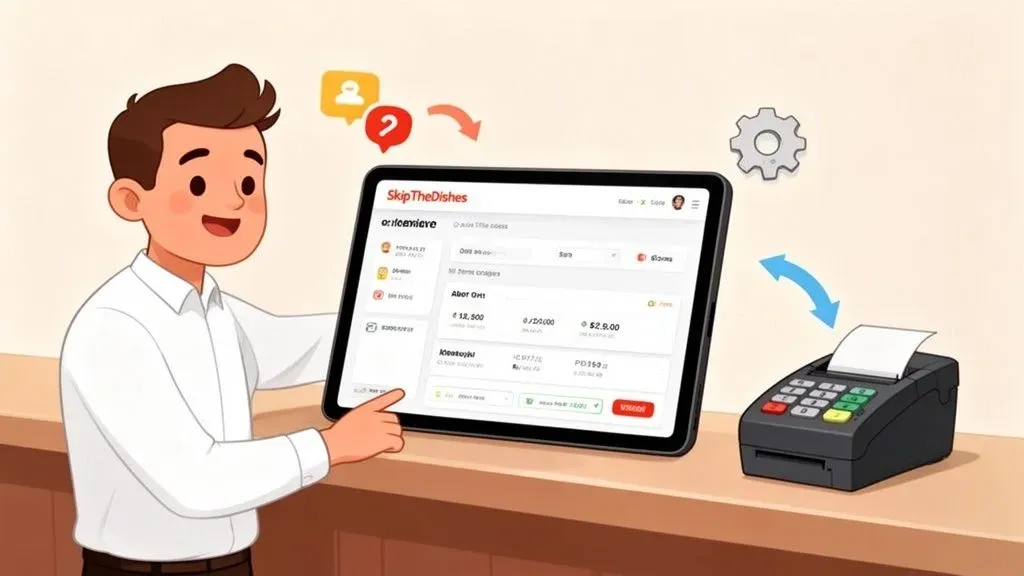
If you’re a restaurant partner with SkipTheDishes, you know the tablet. It’s that constant pinging lifeline to a huge part of your customer base. But the real power isn’t just on that tablet—it’s in the SkipTheDishes restaurant portal. Think of the portal as your command center, the digital back-of-house for your entire delivery operation.
This is where you manage your menu, track every order, dive into your sales analytics, and handle payments. It’s your digital front door, and getting comfortable with it is non-negotiable for improving restaurant efficiency.
Why Mastering the SkipTheDishes Portal Improves Restaurant Operations
Let’s be real—managing another online platform can feel like one more task on a never-ending to-do list. But ignoring the portal’s full potential is like leaving money on the table. This isn’t just about admin work; it’s a strategic food tech tool that directly impacts your bottom line, your operational flow, and your staff’s sanity.
Why it matters: When you take full control of the portal, you’re taking control of a massive revenue stream. It’s how you control your brand, ensure order accuracy, and keep customers happy and coming back. This leads to higher staff productivity and better profits from your restaurant delivery service.
Your Direct Link to Millions of Hungry Customers
The sheer scale of SkipTheDishes is staggering, which makes managing your presence there a high-stakes game. By the first quarter of 2025, the platform was pulling in over 15 million website visits in March alone, with a dedicated audience of 3.7 million monthly users. For the 50,000+ restaurants on the platform, that’s a massive pool of potential orders.
You can dig into more of the data in this report on Canadian food delivery services. This isn’t just about passively accepting orders. It’s about actively managing your profile to stand out on a platform that millions of Canadians use every single day.
The Real-World Impact on Your Restaurant
Using the restaurant portal effectively has a direct, measurable effect on your daily operations. When you’re on top of it, you can implement these actionable insights quickly:
- Slash Order Errors: Instantly 86 an item when you run out. This simple action prevents orders for sold-out dishes, saving you from awkward phone calls, reducing food waste, and preventing unhappy customers.
- Boost Staff Productivity: A well-managed portal means your team spends less time troubleshooting with support and more time doing what they do best—making great food and serving guests. This directly translates to time and cost savings.
- Improve Customer Ratings: Quick confirmations and an accurate menu lead to a smoother customer experience. Happy customers leave better reviews, which in turn boosts your restaurant’s visibility in the app.
Real-World Example: Imagine DoorDash sending an order for a ‘Limited Time Offer’ that your restaurant ran out of yesterday. Without an automated system, your staff has to manually call the customer, apologize, and process a refund, all while the kitchen gets backed up. This is a costly, frustrating error that damages your reputation.
This is where automation becomes a game-changer. By integrating your delivery portals directly with your POS system—whether you use Clover or Square—your menu and inventory sync automatically. No more manual updates, no more costly mistakes.
Before we dive into how to use the portal, it’s worth understanding the difference between managing it by hand versus automating the process through POS integration. The contrast in day-to-day restaurant operations is stark.
Restaurant Delivery Management: Manual vs. Automated POS Integration
Task Manual Management (No Integration) Automated Management (With POS Integration) Accepting Orders Staff must monitor a separate tablet and manually punch each order into the POS. This is slow and prone to error. Orders flow directly into the POS and print automatically in the kitchen. No manual entry needed, saving time and increasing staff productivity. Menu Updates Someone has to log into the portal to 86 items or change prices, often during a rush. It’s an extra, stressful step. Inventory counts in your POS automatically update the SkipTheDishes menu in real-time. This saves time and prevents order errors. Order Errors High risk of typos and mistakes when re-entering orders, leading to incorrect food, comps, and wasted money. 100% order accuracy. The customer’s order is exactly what the kitchen receives, dramatically reducing errors and associated costs. Reporting Sales data is siloed. You have to manually combine reports from SkipTheDishes and your POS for a full financial picture. All sales data is consolidated in your POS, giving you a complete and accurate financial picture for better business decisions.
As you can see, POS integration isn’t just a convenience—it’s a fundamental shift in how you run your delivery business. It saves time, cuts down on chaos, and eliminates the human errors that eat into your profits. Mastering the portal is your first step. Automating it is the next.
Takeaway: Manual portal management is a bottleneck. Automating with POS integration saves hours of labor, eliminates costly errors, and boosts staff productivity.
So you’re ready to get your restaurant on SkipTheDishes. It can feel like a big hurdle, but with a little preparation, the process can be surprisingly painless. We’re going to walk through how to get your account set up and taking orders, with actionable insights you won’t find in the official FAQ.
The real goal here isn’t just to get listed—it’s to go from signing up to making your first sale as fast as possible. The secret is getting all your information organized before you even start the application. This simple step can shave weeks off your launch time and prevent the kind of back-and-forth delays that drive so many new partners crazy.
Preparing for a Fast Launch
Before you fill out a single form, take a few minutes to gather your documents. I’ve seen restaurants get stuck in limbo for weeks over a missing piece of paper. Getting this right from the start shows the Skip onboarding team you’re ready for business and helps them fast-track your approval.
Here’s exactly what you should have on hand:
- Business Information: Your official restaurant name (the one on your business license), address, and your business registration number.
- Contact Details: The name, email, and phone number of the one person who will handle communications with Skip.
- Banking Information: A void cheque or a direct deposit form. This is crucial for getting paid. A single typo in your account number can cause major payment delays, which is a cash flow nightmare you don’t need.
- Your Menu: A final, up-to-date digital version of your menu, like a PDF, with all your current prices.
Why it matters: We see more restaurants get held up by incorrect banking info and outdated menus than anything else. A simple typo in an account number can seriously disrupt your cash flow by pushing your first payout back by weeks. Don’t let that be you.
Crafting a Winning Restaurant Profile
Think of your SkipTheDishes profile as your digital storefront. It’s the first impression a customer gets. A well-built profile doesn’t just get you approved; it convinces hungry customers to click that “order” button.
First, get your restaurant hours right. Be precise. If the kitchen closes at 9:45 PM, don’t list 10:00 PM. Inaccurate hours are one of the quickest ways to earn a bad review. The setup process is pretty similar across different delivery apps; you can find some extra tips in our guide on how to add your restaurant to DoorDash that also apply here.
This initial setup directly affects your day-to-day operations. A restaurant with great photos, detailed descriptions, and accurate hours will naturally have fewer customer complaints and canceled orders. That means less time on the phone with support, less food waste, and more money in your pocket from day one.
Practical Next Step: Before you head to the SkipTheDishes site, do this one thing: create a folder on your computer named “SkipOnboarding.” Put a scan of your business license, a photo of your void cheque, and your final menu PDF inside. This simple organizational step will make the whole process feel incredibly smooth and fast.
Daily Operations: Mastering Your Menu and Orders for Peak Restaurant Efficiency
This is where the real action happens—managing your day-to-day operations within the SkipTheDishes restaurant portal. Getting a handle on your digital menu and order flow isn’t just about ticking boxes; it’s a core part of your restaurant’s strategy that directly impacts customer satisfaction, reduces errors, and improves profitability.
Think of your digital menu as your first line of defense against chaos. It’s more than a list of what you sell. It needs mouth-watering descriptions and high-quality photos. But most importantly, it has to be accurate. The ability to instantly mark an item as ‘sold out’ the second you run low is one of the most powerful features in the portal.
Why it matters: That one simple click prevents a chain reaction of headaches: frustrated customer calls, your staff wasting time on refunds (costing you time and money), and the dreaded negative reviews that can sink your ranking on the app.
The Order Acceptance Workflow
From the moment you hear that notification “ping” to the final handoff to the courier, the entire order lifecycle lives inside the portal. How quickly and accurately you move through this process has a real, tangible effect on how visible your restaurant is on SkipTheDishes. The platform’s algorithm rewards faster confirmation times, literally bumping you higher in the search results.
This is exactly why having a solid grip on your online order management system can improve your business. Slow confirmations don’t just create a bad experience for one customer; they can lead to fewer orders from everyone over time.
Handling Order Volume with Smart Food Tech
Let’s be realistic: the SkipTheDishes restaurant portal is your command center for dealing with a massive number of orders in Canada’s crowded delivery space. In 2024, platforms under Just Eat Takeaway in North America, which includes SkipTheDishes, processed millions of orders—a huge jump from just a few years ago. This tidal wave of orders puts incredible pressure on any kitchen still relying on manual entry. As you can discover in more detail from market data, this trend isn’t slowing down.
Why It Matters: Every second your staff spends manually tapping “sold out” on a tablet or calling a customer to break bad news is a second they aren’t helping dine-in guests or getting food out. Over a week, those seconds add up to serious labor costs and lost productivity. This directly eats into your profit margins.
Real-World Example: A busy burger spot using a POS like Clover or Square connected with an integration service is a perfect illustration. When they sell the last ‘Bacon Jam Burger’ for the night, their POS inventory syncs automatically. The item is instantly grayed out on SkipTheDishes and Uber Eats. No one had to lift a finger. That automation turns a potential customer service nightmare into a complete non-issue, keeping the kitchen running smoothly and protecting your profit margins.
Takeaway: Your daily workflow in the portal is a direct reflection of your restaurant’s operational health. Treat every menu update and order confirmation as a critical business decision that builds customer loyalty and drives profitability.
End Manual Entry with POS Integration for Better Restaurant Delivery
We’ve all seen it: the front counter buried under a mountain of delivery tablets, each one pinging and demanding attention during the middle of a dinner rush. That chaotic mess of devices from the SkipTheDishes portal, Uber Eats, and DoorDash isn’t just stressful—it’s a recipe for burnout, costly mistakes, and a bottleneck that slows down your entire kitchen. This is “tablet hell,” and it’s time to escape it.
The solution is to stop treating delivery orders as a separate, manual task. You can automate the entire flow by connecting the SkipTheDishes portal directly to your restaurant’s point-of-sale (POS) system. This is what’s known as POS integration. It builds a direct bridge for your orders to flow from the customer’s phone straight to your kitchen printer, with no staff member manually punching everything in.
Why Connect Your POS? The Impact on Restaurant Operations
This isn’t just about convenience; it’s a fundamental upgrade to your restaurant’s operational engine that delivers immediate cost savings and efficiency gains. When an order from SkipTheDishes shows up instantly in your POS, it’s treated just like any other order.
Here are the actionable benefits you’ll see right away:
- Fewer Errors: Manual entry is where mistakes happen. A missed modifier or a typo leads to angry customers and wasted food. Integration guarantees 100% order accuracy, eliminating the cost of remakes and refunds.
- Happier, More Productive Staff: You free up your team to focus on cooking great food and taking care of guests. They’ll be less stressed and more productive, reducing staff turnover.
- Massive Time Savings: Those minutes spent typing in each order add up to hours of paid labor every week that you get back. This is a direct cost saving that improves your bottom line.
This process transforms your workflow from a frantic, multi-step scramble into a single, smooth handoff.
Why it matters: By cutting out the manual steps, the whole operation becomes quicker and far more reliable. That means a better night for your staff, a perfect order for your customer, and a healthier profit margin for the restaurant.
Seeing The Difference Firsthand
Real-World Example: Picture a busy pizzeria on a Friday night. A customer orders a complex pizza from SkipTheDishes: large, half pepperoni, half mushroom, extra cheese, gluten-free crust, with a side of wings. Without integration, a staff member has to stop, read that off a small tablet, and hope they punch it into the POS correctly while three other orders are coming in.
Now, imagine that same order instantly appearing in your Square POS the second the customer hits “confirm.” The kitchen ticket prints immediately with every single modification perfectly listed. No one had to touch the tablet. The kitchen just makes what’s on the ticket. The same seamless process applies to other systems, like those running on Clover.
The Takeaway: The goal of POS integration is to turn your delivery business from a chaotic, hands-on chore into a streamlined, automated part of your daily revenue. It’s truly about working smarter, not harder.
Of course, getting this right starts with having a solid POS system. If you’re looking to upgrade, it’s worth checking out some of the best restaurant POS systems of 2026 that are built for these kinds of connections. For a deeper look at how it all works behind the scenes, our guide on how integrated POS systems work breaks it down even further.
Practical Next Step: Have one of your managers track how much time your team actually spends manually entering delivery orders during a single busy shift. Once you put a number to those lost hours and calculate the labor cost, the value of automating the process becomes crystal clear.
Using Portal Analytics to Boost Your Profits and Restaurant Efficiency
Taking orders is just the beginning. If you’re only using the SkipTheDishes restaurant portal to accept orders, you’re leaving money on the table. The real value is buried in the analytics—a goldmine of sales data that helps you shift from just reacting to the dinner rush to making smart, strategic decisions that actually pad your bottom line.
Think of it this way: every order tells a story. Your portal’s analytics section is where you get to read all those stories at once. It shows you what’s flying out the door, when your kitchen is getting slammed, and even where your most loyal customers live. This data is critical for improving your restaurant operations.
The sheer size of SkipTheDishes makes this even more critical. We’re talking about a platform that’s a massive part of Canada’s food delivery scene. Its annual revenue recently soared to an estimated $670.5 million, a huge leap from $312 million back in 2018. Tapping into that ever-growing user base is essential, and the data they generate is your roadmap.
Turning Numbers into Actionable Insights
So, what should you actually be looking for? It’s easy to get lost in a sea of numbers. The trick is to focus on the data points you can act on right away.
Here are a few actionable insights restaurant owners can implement quickly:
- Find Your All-Stars (and Bench the Underperformers). Pull up a sales report for the past month. Is your “Bacon Cheeseburger” consistently outselling every other item by a mile? That’s your hero. Put it in a combo, make it your featured banner item, and watch sales climb even higher. This optimizes your menu for profitability.
- Stop Guessing on Staffing. Check your peak order times. If you see a massive spike every Friday between 6 PM and 8 PM, you know you need an extra set of hands on the line. This data-driven scheduling reduces staff stress and ticket times, preventing costly errors.
- Know Your Neighborhoods. The portal can show you a heatmap of where your orders originate. If you notice a cluster of orders coming from a new condo development, it might be time to run a targeted flyer drop or a local social media ad for that specific area.
Why it matters: Let the data guide your gut. Instead of just guessing what promotions might work or when you need more staff, you’re using cold, hard facts to fine-tune your menu, scheduling, and marketing for maximum profit and efficiency.
Enhancing Your Strategy with Deeper Data
Beyond just sales figures, your analytics can give you clues about your operations. For instance, are you seeing a high number of canceled orders for a specific dish? That’s a huge red flag. It could mean you’re constantly running out of a key ingredient, pointing to an inventory issue. This is where a POS integration with a system like Square or Clover can save you a world of headache by syncing inventory automatically.
To really get into the weeds, you can explore more advanced techniques in our complete guide to data analytics for restaurants.
When you use the portal effectively, it has a ripple effect. Smoother operations and fewer mistakes lead to happier customers, which is the secret sauce for getting reviews for restaurants and building that loyal following.
Practical Next Step: Log into your portal this week and pull a sales report for the last 30 days. Find your top three best-sellers and your bottom three worst-sellers. Your mission is to brainstorm one new promotion for a top item and seriously consider removing one of the poor performers to simplify your menu and kitchen workflow, reducing ingredient waste and complexity.
Your Next Step to Streamlined Restaurant Operations
Let’s be honest—mastering the SkipTheDishes restaurant portal is just the start. You’ve gotten the hang of managing your menu, hours, and orders. But if you’re still manually punching every single Skip order into your POS, you’re leaving a ton of efficiency and profit on the table.
We’ve all seen it: the frantic rush, the chorus of tablet dings, and the inevitable errors that come from a staff member trying to juggle online orders and in-house guests. This isn’t just stressful; it costs you real money in mistakes, wasted time, and lower staff productivity. The real game-changer is connecting SkipTheDishes directly to your restaurant POS system.
Takeaway: It’s time to end the tablet juggling and modernize your restaurant’s workflow for good. The goal is to make every delivery order feel as simple and efficient as a customer walking up to the counter.
If you’re ready to make that leap, it helps to understand how these systems talk to each other. In simple terms, an integration partner acts as a bridge between your delivery apps and your POS. For a better grasp of the tech that makes this possible, you can learn more about the role of POS system integrators in our detailed guide.
Take this practical next step today.
See what it feels like to have your orders flow directly into your kitchen, saving time and eliminating errors. You can start onboarding for free with OrderOut in just a few minutes and take back control of your delivery operations.
Answering Your Top Questions About the Portal and POS Integrations
If you’re running a restaurant, you’ve probably had a few questions pop up while navigating the SkipTheDishes restaurant portal and figuring out how it fits with all your other food tech. Let’s walk through some of the most common ones I hear from owners and managers.
”How Do I Update My Menu on the Portal?”
The manual way is to log into your portal, navigate to the ‘Menu’ section, and make changes. You can add dishes, tweak items, or change prices. This is also where you 86 an item when you’ve run out.
But in non-technical terms, there’s a much smarter, hands-off approach: POS integration. This automatically syncs your main menu from a system like Square or Clover directly to SkipTheDishes. When you 86 an item on your POS, it automatically disappears online. Why it matters: This saves huge amounts of time, improves staff productivity, and prevents costly errors from customers ordering something you don’t have.
”What Happens If My Staff Misses an Order?”
If your team misses the tablet alerts, the order will eventually time out and be canceled. This leaves the customer hungry and frustrated, and it dings your restaurant’s rating on the app, making you less visible.
Why it matters: This exact scenario is why POS integration is so critical for restaurant delivery. An integrated order doesn’t just ping a tablet; it prints directly in your kitchen, right alongside your dine-in tickets. It becomes part of the natural workflow, making it nearly impossible to miss and ensuring a smooth customer experience.
”Can I Get My SkipTheDishes Commission Fees Reduced?”
The short answer is no; those commission fees are generally fixed. Instead of trying to lower the fee, the smarter strategy is to increase your profit on every order. How? By slashing your operational waste and improving efficiency. Think about the labor costs tied to manually punching in orders. Think about the cost of remaking an order because of a typo. Automating your order flow with POS integration eliminates those costs, putting more money from every single sale directly back into your pocket.
”Does POS Integration Work with Other Apps Like Uber Eats, Too?”
Yes, and this is where the real magic happens for your restaurant operations. A good integration partner isn’t just about connecting one app; it’s about ending ‘tablet hell’ for good.
The right service consolidates everything. Orders from SkipTheDishes, DoorDash, Uber Eats, and all your other platforms get funneled into one clean, simple stream that flows right into your POS. You get one system to manage, your kitchen gets one standard ticket format, and you reclaim your counter space. It turns a chaotic mess into a streamlined, efficient, and profitable off-premise operation.
Ready to stop juggling tablets and get rid of manual entry errors for good? With OrderOut, you can connect all your delivery apps directly to your POS and finally get back to focusing on what you do best—running your restaurant. Start onboarding for Free in just a few clicks.