
10 Profitable Seafood Menu Ideas for Restaurants
· Thibault Le Conte
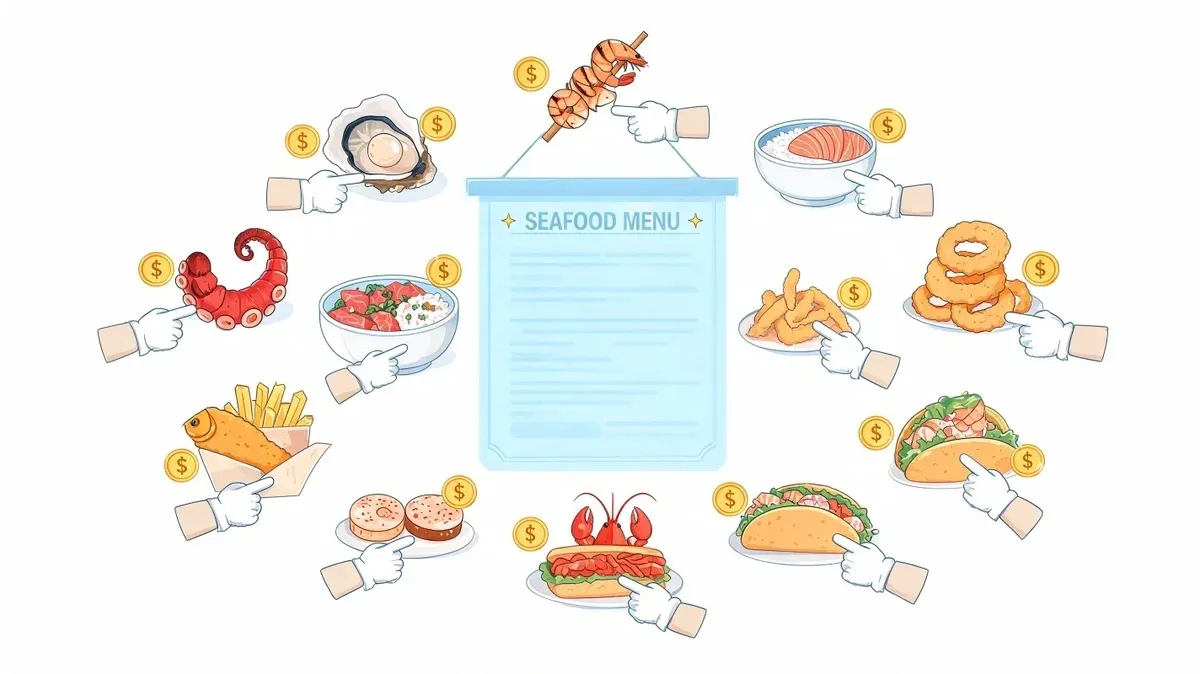
The dinner rush gets expensive fast when seafood tickets pile up across delivery tablets, a fryer station, and a POS that treats modifiers like an afterthought. Seafood sells on appetite, but it lives or dies on execution. A bad packaging choice turns crisp into soggy. One loose portion spec turns a high-margin special into a food cost problem by the end of the week.
That is why seafood menu ideas should be built as operating systems, not just chef ideas on a seasonal brainstorm sheet. The best ones give guests something familiar enough to order quickly, give the kitchen a repeatable build, and give managers clean modifier data inside the POS. If a dish looks great on Instagram but needs constant ticket interpretation, separate prep containers, or custom pricing workarounds, it will drag service and delivery scores.
Menus that hold up in the industry usually share the same traits. They cross-use core ingredients across multiple items. They travel well enough to protect quality for 20 to 30 minutes. They fit online ordering logic without creating a mess of exceptions. That combination is what turns seafood from a risky category into a reliable revenue driver.
Menu design matters here, but system design matters just as much. Restaurants that use menu design software to structure item flow, modifiers, and visual hierarchy usually have an easier time pushing profitable seafood items online because the guest journey and the kitchen workflow match each other.
The ideas below are built with that filter in mind. Each one is meant to help you sell seafood with fewer operational surprises, better delivery performance, and stronger margins.
1. Build-Your-Own Poke Bowl
A poke bowl works because it feels premium to the customer and repetitive to the kitchen. That’s exactly what you want in restaurant delivery. The guest sees customization. Your line sees scoops, portions, and modifiers.
This is one of the safest seafood menu ideas if you want control without making the menu feel small. A bowl format also keeps add-ons simple. Extra avocado, extra salmon, premium sauce, crispy topping, side seaweed salad. Those are easy upsells when your POS is set up correctly.
Keep the front end flexible and the back end strict
Don’t open the floodgates with endless choices. Start with three to five signature bowls, then offer a build-your-own option below them. That reduces decision fatigue on delivery apps and keeps ticket times predictable.
Ahi tuna is especially useful here because Datassential says ahi tuna appears on 9.8% of menus and is up 28% over four years, with raw applications like poké and sashimi up 167% on menus in the same period, according to Food Business News coverage of 2026 seafood trends. That matters because diners already understand the format.
Practical rule: If a poke bowl needs more than one person to interpret the ticket, you’ve overbuilt it.
For execution, use tightly portioned proteins, hold sauces in squeeze bottles, and map modifiers to exact charges inside your POS. If you’re refining that structure, this guide to menu design software for restaurants is a useful reference point.
Real-world example: a restaurant using Clover with Uber Eats and DoorDash can structure bowls so the kitchen sees “Base + Protein + 3 Included Toppings + Sauce,” not a paragraph of custom text. That reduces remakes and keeps assembly close to a short pickup window.
2. Fish Tacos with Rotating Weekly Specials
Fish tacos earn their place on seafood menus because the core build stays stable even when the featured fish changes. Tortilla, slaw, sauce, lime. You can swap species or flavor profile without retraining the whole line.
That’s a primary advantage of a weekly special. It creates freshness for the customer without creating chaos for your cooks. If your supplier has better availability on one fish this week, you can rotate the protein and keep the rest of the mise en place almost identical.
What works in delivery and what doesn’t
Crispy fish tacos can travel well, but only if you separate wet components. Put slaw and crema in sealed cups, vent hot items, and never let hot fried fish steam inside a fully sealed clamshell. That’s how you turn crisp batter into paste.
Grilled fish tacos are easier operationally. They hold better, reheat more gracefully, and give you a cleaner labor model during peak hours. For descriptions, sharp naming matters. “Chipotle mahi taco” sells better than vague menu copy. If your team needs a reminder on writing tighter item copy, this piece on restaurant description words that actually sell is more useful than most generic menu-writing advice.
A practical bundle is two tacos plus one side. It reads like a meal on DoorDash and gives you room to upsell rice, beans, street corn, or chips without forcing a three-step kitchen process.
Separate crunch from moisture. Fish tacos fail in transit for packaging reasons more often than recipe reasons.
3. Lobster Roll Subscription or Frequent-Purchase Model
Lobster rolls aren’t a volume item for every restaurant. They are, however, a strong repeat-purchase item when you package them as a limited premium habit instead of a one-off splurge.
The best approach is controlled availability. Offer them on specific days, portion them tightly, and use integrated ordering data to identify customers who reorder premium handhelds. That lets you push a recurring offer without discounting the item into irrelevance.
Turn a luxury item into predictable demand
This works especially well if you use pre-portioned lobster meat and keep the build simple. Split-top roll, measured seafood portion, one side, one branded sauce. Simplicity protects both cost and consistency.
You don’t need a complicated subscription engine to start. A recurring “Friday lobster roll drop” tied to your CRM, loyalty program, or ordering platform can create that same rhythm. Dynamic pricing also matters here when supply costs move. This article on dynamic pricing strategies for restaurants is worth reviewing before you lock in a weekly premium special. For brands thinking bigger than a single promo, the Wand Websites guide for scaling brands with subscriptions is a useful framing model.
Operationally, this item lives or dies on packaging. Toasted rolls should be packed so steam doesn’t soften them, and cold lobster mix should stay insulated from hot fries if you’re bundling. On the tech side, integrated delivery orders help you track repeat behavior across apps instead of relying on memory or a cashier’s best guess.
4. Salmon Sheet Pan Meal Kit Concept
A guest places a delivery order at 5:30, wants seafood for the family, and still cares how the salmon comes out of the oven. A sheet pan meal kit fits that occasion better than a fully cooked fillet sitting in transit for 25 minutes. It gives the customer control over doneness and gives the restaurant a product that holds, packs, and travels with fewer quality failures.
Salmon is the practical starting protein because customers already know it, trust it, and understand how to cook or reheat it at home. That lowers the friction that kills meal-kit adoption. If the format is new, the species should feel familiar.
The operating advantage is bigger than the menu description suggests. A chilled kit lets the kitchen prep in batches, stage components by shelf life, and reduce last-minute firing pressure during dinner rush. It also opens a new sales lane for slower dayparts, family orders, and planned weekday meals, which matters if you want revenue outside the usual lunch and dinner peaks.
Keep the build tight. One salmon portion, one vegetable mix, one starch or second vegetable, one sauce, and one instruction card. Limit flavors to a small set such as Mediterranean, Cajun, or ginger-soy. Fewer versions make prep faster, photos clearer in third-party apps, and staff training easier across shifts.
This item should be built in the POS as separate SKUs, not as one vague “salmon kit” with loose notes. Distinct buttons by flavor and portion size improve inventory counts, modifier accuracy, and reorder reporting. That reporting matters because meal kits only help margins if you know which version moves, which add-ons travel well, and which bundles raise average ticket.
Packaging decides whether this concept works. Use oven-safe or clearly labeled transfer packaging, separate wet sauces from vegetables, and print the heating steps in plain language. Customers are far more likely to follow prep directions on a meal kit than on a hot entree, so use that behavior to protect food quality and reduce complaint credits.
Cross-utilization is what makes the numbers work. The same salmon portion can support this kit, a salad add-on, or a grain bowl in another section of the menu. Vegetables, sauces, and seasoning blends should overlap with at least one or two other dishes. If the kit requires unique ingredients, custom packaging, and separate prep habits, it becomes a novelty item instead of a dependable profit line.
5. Shrimp and Grits Bowl
Friday night, tickets stack up, third-party orders hit at once, and the kitchen needs one seafood item that holds quality for 20 minutes without turning into a mess. A shrimp and grits bowl can do that job well if it is built for repeatable assembly, not plated like a dine-in special.
The appeal is broader than comfort food nostalgia. This bowl works across brunch, lunch, and dinner, which matters because one prep line can support multiple dayparts without adding a separate inventory lane. It also gives operators easy upsell paths that make sense to guests and are easy to ring in: extra shrimp, andouille, pimento cheese, a fried egg for brunch, or a hotter sauce tier.
Build it in layers the kitchen can repeat
Profit on shrimp and grits comes from texture control and ticket discipline. Set one grits spec, one shrimp portion, one sauce build, and a short modifier list in the POS. That keeps expo faster, improves inventory counts, and prevents the common problem where every cashier enters a custom version that the line reads differently.
Shrimp has another advantage. It is familiar, easy to sell in almost any market, and does not need much menu education. That reduces hesitation in online ordering, where guests often choose the item they understand fastest.
For operations, the bowl should be treated like an assembly product with clear POS logic. Use base item buttons for size or protein count, then limit modifiers to high-value add-ons that the line can execute without slowing down the station. Too many low-impact options hurt throughput and create remake risk.
A practical setup:
- Cook shrimp to order: Hold shrimp cleaned and portioned, then fire them fresh so they stay snappy instead of turning rubbery under heat lamps.
- Standardize grits texture: Aim for a spoonable consistency that settles in the bowl without separating during delivery.
- Keep sauce controlled: A measured ladle protects food cost and keeps the bowl from arriving watery.
- Use a wide, vented bowl with a tight lid: It presents better, holds heat more evenly, and reduces condensation that thins the grits.
Cross-utilization is where this item earns its place. The same shrimp can support tacos, salads, po’ boys, or pasta. The same andouille, scallions, cheddar, and hot sauce can appear in brunch hashes, loaded fries, mac and cheese, or omelets. If shrimp and grits needs its own one-off ingredients, it becomes harder to justify once the initial demand levels out.
6. Ceviche Flight or Tasting Platter
Ceviche flights can be profitable, but they’re not a universal delivery item. They work when your brand already has credibility with raw or cured seafood and when your packaging discipline is excellent. If that’s not your operation, keep ceviche dine-in only.
When it does fit, a flight gives you premium positioning without requiring large portions of any one fish. You can showcase contrast. One citrus-forward cup, one spicy version, one richer preparation with avocado or leche de tigre.
Keep the menu tight and the handling strict
Flights should be preset, not fully customized. The more options you add, the more likely the kitchen mispacks one cup, one garnish, or one side component. Three fixed flights are usually enough. A classic flight, a spicy flight, and a premium house flight covers most use cases.
The bigger issue is handling. Label the packaging clearly, include “eat immediately” language, and separate crackers or chips so they stay crisp. If your integrated POS can route ceviche separately for inventory and prep visibility, use that.
Raw seafood delivery is a trust business. If your labeling, cold chain, and timing aren’t sharp, don’t list it.
A short visual explainer can also help customers understand the product before they order.
Operationally, this is one of the seafood menu ideas that benefits most from order throttling. Limit availability to specific hours, require a clear prep buffer, and avoid stacking it in the same production lane as fried pickup-heavy items.
7. Fish and Chips with Strategic Upsell Sides
Fish and chips is still one of the most dependable seafood sellers because the order decision is easy. Customers know what they’re getting. That cuts friction on delivery apps where unfamiliar items get skipped.
The problem is that basic fish and chips can become a commodity fast. If your listing looks the same as everyone else’s, the customer picks on price. You need one or two obvious differentiators that survive transit.
Upsell the sides, not the core item into confusion
Keep the core simple. One fish, one fry, one sauce. Then layer profitable extras around it. Curry sauce, house tartar, slaw, mushy peas, loaded fries, chowder add-on, bottled soda. Those are operationally cleaner than turning the base item into a six-part customization puzzle.
Packaging is essential. Fish and fries should be packed separately whenever possible. Vent the fried component. Keep sauce cups tight-lidded. If you need side ideas that naturally bundle well with a handheld or fried entrée, this roundup of what to serve with sandwiches has crossover value.
Consumer preference around sourcing can also support your menu language. Restaurant Business notes that 42% of consumers prefer wild-caught seafood in the same seafood demand reporting cited earlier. Use that kind of sourcing cue when it’s true, but don’t overload the app description with sustainability jargon at the expense of clarity.
For restaurant delivery, this item benefits from preset combos in the POS. A cashier or third-party app shouldn’t be assembling custom meal deals by memory. Build bundles once, then let the system do the repetitive work.
8. Grilled Fish Collar and Seasonal Vegetable Plate
A Saturday night special board is packed with salmon, shrimp, and fried baskets. The fish collar plate is the item that gives guests a reason to stop scrolling, ask a question, and order something they cannot get from every seafood spot nearby. That matters if margins are tightening and your menu needs one item with a clear identity.
Fish collar works best in concepts that already have some credibility around grilled seafood, Japanese influence, or chef-led specials. The upside is stronger whole-fish utilization and a plate that feels premium without relying on the most expensive center-cut portions. The trade-off is training. Staff need one clear description that sells flavor first, then format: rich, juicy meat near the collarbone, grilled hard, served with vegetables.
Keep the plate tight and build the back-end around limited counts
The plate should read clean on the menu. Grilled collar, seasonal vegetables, one starch if your audience expects a fuller entrée, and no more than two sauce choices. Too many modifiers bury the point of the dish and slow ordering in-house and online.
If you use fish collars as part of a whole-fish program, say that plainly. Responsible utilization and daily availability give the item a stronger reason to exist than chef jargon ever will. Guests respond better when the description explains what they are buying and why the cut is worth trying.
A separate POS button under chef specials or limited catch keeps reporting cleaner. Set a hard daily par, tie it to available collars, and 86 it automatically when counts run out. That protects inventory, avoids awkward substitutions, and gives managers a clean read on whether the item deserves a permanent slot or stays a controlled special.
Guests will try an unfamiliar cut when the menu answers two questions fast: how it tastes and why the restaurant put it on the menu.
For delivery, this plate needs restraint. Grilled fish collar can travel, but only if the vegetables are packed so steam does not soften the skin and any sauce is kept on the side. Add a short reheating note in the item description or order confirmation. A quick broil or toaster oven refresh preserves texture better than microwaving, which matters because one bad off-premise experience can turn a signature plate into a one-time order.
9. Spicy Korean-Style Fish Cakes with Dipping Sauces
A guest adds two fish cake orders at checkout because the entrées already feel decided. That is the role this item should play. It is a fast add-on, easy to explain on the menu, and profitable when the base recipe stays tight.
The operational win is control. One fish cake mix, one cooking method, and a short sauce set gives the kitchen a low-friction seafood item that works for dine-in, takeout, and third-party delivery. It also gives the POS clean modifier data you can use. If one sauce pairing keeps winning, promote it to the default and keep the custom option for guests who want it.
Build the listing around three decisions. Portion, heat level, and dipping sauce. Anything beyond that slows ordering and creates avoidable ticket mistakes.
Sauce choice does most of the menu work here. Gochujang mayo, soy-garlic, and a sweet chili option are enough for most stores. Those sauces can also cross over into chicken, fries, rice bowls, or vegetable sides, which matters because every extra SKU needs to earn its space. If you are already working on a sourcing story across the seafood menu, this pairs well with a broader restaurant sustainability strategy because it rewards trim use, controlled portions, and repeatable prep.
For delivery, texture is the make-or-break issue. Fish cakes hold better than many fried seafood starters, but they still soften fast if they steam in a closed box. Vent the container, pack sauces on the side, and avoid burying them under garnish. A photo that shows the crisp exterior and the sauce cups will usually sell more effectively than a long description.
Set the item up in the POS as a base product with required sauce modifiers and a preset combo option such as 6 pieces with 2 sauces. That keeps reports readable and helps managers spot which versions deserve placement as a featured bundle on first-party ordering channels.
A few rules keep the item profitable:
- Keep the portion snack-sized: It should sit between a side and an appetizer, not compete with entrées.
- Limit sauce modifiers: Three core sauces are easier to prep, count, and forecast than six weak sellers.
- Use one consistent pack-out: The right vented container protects texture and reduces packing errors during rushes.
- Cross-use the sauces elsewhere: Shared ingredients lower waste and make reorders easier to justify.
Fish cakes earn a menu slot when they stay simple, travel well, and give the cashier or app one easy upsell line. That is the standard.
10. Sustainability-Focused Catch of the Day with Supply Chain Transparency
A guest opens your delivery app at 5:30 p.m., sees “catch of the day,” and has one immediate question. What fish is it, and can they trust it? If the listing is vague, the item gets skipped. If the listing is specific and your POS is current, the dish can signal quality across the whole seafood menu and justify a stronger check average.
This item works when the operating rules are tight. Catch of the day is not a free-form special. It is a controlled daily SKU with a repeatable naming format, fixed modifier logic, and a same-day update routine. That matters because off-premise orders leave no room for a server explanation, and mismatches between the POS and app menu create refunds, substitutions, and wasted product.
Use transparency to reduce friction and strengthen margin
Write the description the same way every day. Start with the species, then source, preparation, side, and a short reason it is featured. That format helps guests decide fast, helps staff answer questions without guessing, and keeps menu updates quick enough to complete before service.
Supply chain transparency also has to show up in the systems, not just the copy. Add source details to the POS item name or kitchen notes, train cashiers on one approved script, and make sure the receipt language matches the app listing. Restaurants that want to build this into a broader restaurant sustainability program should treat catch of the day as a daily execution test, not a branding exercise.
There is a trade-off. More detail builds trust, but too many variables create prep errors and slow menu maintenance. The fix is to standardize everything except the fish. Keep one portion size, one plating format, and one or two approved sides that cross-use inventory from other seafood dishes. That protects food cost and makes purchasing more flexible when the best available fish changes.
Set a morning cutoff and assign one owner. Update the POS first, push the synced menu to delivery channels, then brief the front-of-house and expo line with the exact wording. If that sequence does not happen, keep the item in-house only for the day. A catch-of-the-day program earns money when transparency is specific, the pack-out is consistent, and every daily change flows cleanly through the POS, ordering channels, and line prep.
10 Seafood Menu Ideas Comparison
Concept Implementation 🔄 Resource Needs ⚡ Expected Outcomes 📊 Ideal Use Cases 💡 Key Advantages ⭐ Build-Your-Own Poke Bowl Moderate–high: complex POS modifiers and modular prep workflows High: ingredient variety, prep/portioning space, refrigeration Higher AOV and customization-driven orders; scalable delivery fit Delivery-first fast-casual; health/diet-conscious markets Modularity, standardized components, strong upsell potential Fish Tacos with Rotating Weekly Specials Low–moderate: fixed base with scheduled menu changes Moderate: reliable fish sourcing, simple fry/grill line, marketing cadence Repeat visits and LTO-driven spikes; content for apps Quick-service, coastal markets, promotional calendars Portability, repeatability, lower per-item cost Lobster Roll Subscription / Frequent-Purchase High: POS subscription integration and recurring-order logistics High: premium lobster supply, insulation/packaging, CRM Predictable recurring revenue and high margins Premium brands, loyalty programs, subscription-focused markets Very high margin, subscription stickiness, premium positioning Salmon Sheet Pan Meal Kit Concept Moderate: food-safety rules and POS meal-size config Moderate–high: packaging, temp control, prep/assembly space Differentiation; higher multi-serve AOV; meal-kit market capture Meal-kit demand, family dinner orders, off-peak shifts Reduced delivery sensitivity, meal-kit margins, prep-ahead friendly Shrimp and Grits Bowl Low–moderate: single-bowl workflow with sauce control Moderate: shrimp sourcing, thick sauce, thermal packaging Broad appeal; efficient food cost via base; add-on sales Comfort-food menus, all-day parts (breakfast–dinner) Comfort appeal, sauce preserves quality, flexible add-ons Ceviche Flight / Tasting Platter High: strict food-safety, skilled prep and presentation High: sushi-grade fish, chilled packaging, trained chefs Premium pricing, group orders, strong social media impact Special-occasion delivery, group sharing, premium menus High perceived value, creative chef showcase, shareable format Fish and Chips with Strategic Upsell Sides Low: familiar fry line and simple bundling Moderate: fryer capacity, oil management, fry quality High volume sales and strong POS upsells High-traffic delivery markets, comfort-food segments Volume driver, consistent execution, effective bundling Grilled Fish Collar & Seasonal Vegetables Moderate: grilling expertise and supplier relationships Moderate: consistent fish-collar supply, grill equipment Premium margins and brand differentiation Upscale delivery tiers, chef-driven concepts Sustainable story, distinctive offering, quick cook time Spicy Korean-Style Fish Cakes (Eomuk) Low: simple assembly and sauce customization Low: low-cost bases, sauce development, fry/steam line High margin, trend-driven orders, frequent repeat buys Appetizers/sides, younger demographics, social-ordering Very low food cost, high shareability, quick prep Sustainability-Focused Catch of the Day High: daily menu updates, transparency workflows High: transparent suppliers, POS agility, marketing resources Premium pricing, customer loyalty, storytelling-driven repeat Conscious-consumer markets, chef-led restaurants Brand differentiation, flexible sourcing, authentic narrative
Your Next Step From Ideas to Implementation
Friday night exposes weak menu ideas fast. Tickets stack up, a delivery tablet lags behind the POS, a fish taco order arrives missing slaw, and the kitchen starts making judgment calls instead of following a system. Seafood can carry strong margins, but only when the item is built for repeatable prep, clean packaging, and accurate ordering across every channel.
That is the filter to use on every idea in this list. A poke bowl earns its spot because portions are easy to standardize and modifiers are easy to map in the POS. Fish tacos hold up better when crisp and wet components are packed separately, which protects reviews and cuts remakes. Shrimp and grits works in a bowl because it travels better than a composed plate and simplifies the line during a rush. Catch of the day only works if one person updates the item, price, and availability everywhere, every day.
Every seafood item should do a specific job.
Some drive frequency. Some support a higher check average. Some help use ingredients already in the building across multiple dishes. Some give the brand a premium position that justifies pricing. If an item does not improve margin, throughput, order accuracy, or brand value, it is taking up space on the menu and in the prep list.
POS setup determines whether ideas remain manageable or become expensive. Modifier logic must match how the kitchen builds the dish. Packaging rules need to be tied to the item so staff do not guess on sauces, cold components, or vented containers. Delivery availability needs guardrails so you can turn off a special or 86 a fish before orders keep coming in. Operators who skip that setup usually pay for it in voids, comps, and slower ticket times.
Start small and test like an operator, not like a marketer. Choose two items. One should be a volume driver, such as fish tacos or fish and chips. The second should be a premium or differentiated play, such as poke or catch of the day. Build both in the POS with clear modifiers, default side assignments, packaging instructions, and a short training note at the station. Then track ticket errors, add-on attachment, prep time, and repeat orders for a few weeks.
As noted earlier, seafood demand is broad, and many guests still buy it less often than operators would like. That creates room for approachable formats that remove friction. Familiar builds, clear customization, and reliable delivery execution usually outperform ambitious dishes that look better in a photo than they perform on a line.
Stop re-entering orders and asking the kitchen to compensate for system problems. Fix the workflow first, then let the menu produce margin. If you’re ready to connect delivery apps directly to your POS and cut down manual work, you can start onboarding with OrderOut for free in a few clicks.
OrderOut helps restaurants connect Uber Eats, DoorDash, and Grubhub directly into POS systems, so orders flow into one system instead of getting re-entered by hand. If you want seafood menu ideas that are easier to run, not just easier to photograph, explore OrderOut.