
SaaS for Restaurants: A Guide to Modern Food Tech
· Thibault Le Conte
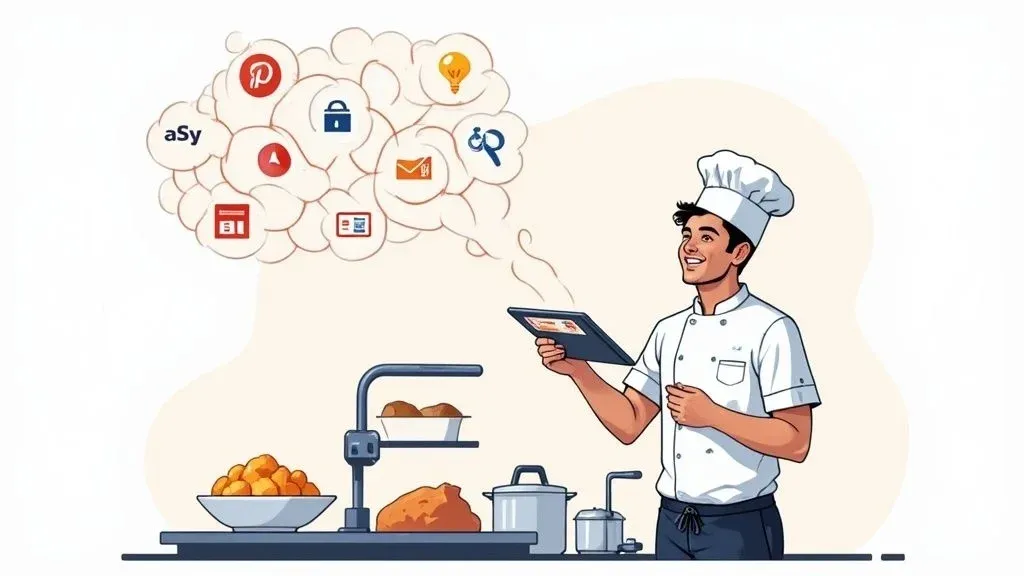
Software as a Service (SaaS) for restaurants is a simple idea: you subscribe to powerful software over the internet instead of buying it outright. Think of it like your Netflix subscription. You pay a predictable monthly fee for access to the best cloud-based tools for restaurant operations, without needing bulky hardware or making a massive one-time purchase. This subscription model gives you immediate access to software that helps manage everything from online orders to inventory, all through a tablet or laptop.
Technically, this means the software is hosted by the provider in the cloud. They handle all the security, updates, and maintenance, so you can focus on running your restaurant. This is a huge shift from old-school software that required you to buy expensive licenses and manage your own on-site servers.
Why SaaS Is Reshaping Restaurant Operations

Let’s use an analogy. Old-school restaurant software was like owning a massive DVD collection. You had to spend a ton of money upfront, find a place to store it all (think servers humming away in your back office), and manually update everything. When a new version came out? You had to buy it all over again. It was a huge capital expense that locked you into outdated technology.
SaaS completely flips that model on its head. It gets rid of the burden of ownership. Instead, you get continuous access to the latest food tech, automatic updates, and top-notch security, all handled for you by the provider. This shift makes powerful tools accessible and affordable, leveling the playing field so independent restaurants can compete with the big chains in the modern restaurant landscape.
The New Standard for Restaurant Efficiency
The industry is in a weird spot—experiencing massive growth and facing huge challenges at the same time. U.S. restaurant sales, for example, jumped an incredible 82% between 2020 and 2023. But here’s the kicker: 96% of operators say that rising labor costs are a major headache. This is exactly where SaaS comes in to save the day.
By bringing in the right SaaS platforms, you can tackle these pressures head-on. These tools are built to make your restaurant more efficient, cut down on costly mistakes, and help your staff get more done with less stress. For example, by integrating delivery orders directly into your POS, you eliminate the need for a staff member to manually re-enter orders, which reduces errors and saves valuable time during a busy rush. This directly boosts staff productivity and protects your profit margins.
The real magic of SaaS is that it turns a huge, one-time capital expense into a small, predictable operating expense. This frees up your cash flow, letting you invest in growing your business instead of just keeping the lights on.
To make this even clearer, here’s a quick comparison showing the key differences between buying traditional software and using a modern SaaS solution for your restaurant.
Traditional Software vs Restaurant SaaS At a Glance
Feature Traditional Software SaaS for Restaurants Initial Cost High (requires large upfront purchase) Low (affordable monthly subscription) Updates & Maintenance Manual, often requires an IT professional Automatic and handled by the provider Accessibility Limited to on-site hardware Accessible from anywhere with an internet connection Scalability Difficult and expensive to scale Easy to add users, locations, or features Hardware Requires dedicated on-premise servers and hardware Runs in the cloud, no special hardware needed
As you can see, the SaaS model is built for the flexibility and agility that modern restaurants need to thrive.
Key Advantages of the SaaS Model
SaaS offers some pretty obvious wins over the clunky, on-premise systems of the past, especially when it comes to running a tight ship.
- Lower Initial Cost: You don’t have to shell out thousands of dollars for software licenses and hardware. A subscription makes best-in-class technology affordable, reducing your initial financial risk.
- Automatic Updates: The provider takes care of all software updates and security patches in the background. You always get the latest features without downtime or IT drama, keeping you competitive.
- Scalability: As your restaurant grows, your software scales right along with you. It’s easy to add new locations, team members, or features without having to rip and replace your whole system.
- Remote Accessibility: Need to check on things from home? No problem. Manage your restaurant from anywhere with an internet connection—check sales reports, update menus, and see how things are running from your laptop or phone.
By connecting tools for restaurant delivery, POS systems, and day-to-day management, SaaS builds a single, unified system that helps you run a more profitable business. This move is a huge part of the broader restaurant digital transformation that’s happening right now.
The takeaway is simple: Restaurant SaaS isn’t a “nice-to-have” anymore. It’s a core part of running a modern, competitive, and profitable restaurant. Now, let’s dig into the specific features that will actually make a difference to your bottom line.
Essential SaaS Features for Modern Restaurants
So, we’ve covered the “why” behind restaurant SaaS. Now, let’s get into the nitty-gritty and look at the actual features that can solve some of the most frustrating problems you face every single day. These aren’t just tech novelties; they’re tools built to tackle the real-world chaos of running a restaurant, from a slammed kitchen line to costly food waste.
Think of it this way: each feature is like hiring a specialist for a specific job. You have one expert focused purely on bringing in online orders, another dedicated to keeping the dining room full, and a third who acts as a hyper-efficient stockroom manager. When they all work in concert through your POS, your restaurant just runs better. And more profitably.
Tools That Drive Restaurant Efficiency and Sales
The whole point of good restaurant SaaS is to automate the tedious, manual stuff and give you clear insights into your business. This frees up your team to focus on what truly matters: cooking incredible food and giving guests an experience they’ll remember.
Three types of features, in particular, consistently deliver the biggest bang for your buck by directly cutting costs and boosting revenue:
- Online Ordering Systems: This is your digital front door. A solid system lets customers order directly from your website or social media, and those tickets fire straight to your kitchen printers or KDS. This simple change drastically cuts down on the human error that comes with frantic phone orders and makes the whole process smoother for everyone, improving restaurant efficiency.
- Reservation and Table Management: Consider this your virtual host, working 24/7. It optimizes your table turnover by handling bookings, managing waitlists, and mapping out seating arrangements on the fly. You can say goodbye to accidental overbooking on a packed Friday night and fill more of those empty tables during a slow Tuesday lunch. It’s all about maximizing your dining room’s potential, every single shift.
- Inventory Management: This is your best defense against skyrocketing food costs. These tools give you a real-time look at your stock levels, send alerts when you’re running low, and offer powerful data on exactly what you’re using. This means less food waste, fewer last-minute emergency runs to the store, and never having to 86 a popular dish during the dinner rush—all of which directly impact your bottom line.
A great real-world example is how an app like Uber Eats handles the entire delivery process. For the customer, it’s a seamless ordering experience. For the restaurant, when integrated with a POS, it automates what would otherwise be a massive logistical puzzle, turning a complex process into a simple, manageable revenue stream. This is POS integration at its best.
Connecting Your Restaurant Operations for Maximum Impact
While each of these tools is a powerhouse on its own, the real magic happens when they talk to each other. Imagine your online ordering system automatically deducting ingredients from your inventory counts as orders fly in. That’s a connected ecosystem. Information flows seamlessly across your operation, cutting out manual data entry and giving you a crystal-clear picture of your business’s health.
Choosing the right mix of tools is everything. To help you navigate the options, we’ve put together a detailed breakdown of the best restaurant management software that explores different solutions for various needs. The goal is to build a tech setup that actually supports what you’re trying to achieve, whether that’s growing your takeout business or making your dining room run like a well-oiled machine.
The key is to start by solving your single biggest headache. If delivery and takeout orders are a mess, start with an online ordering and delivery integration solution. If you feel like you’re throwing money in the trash with food waste, an inventory tool is your first move. This targeted approach lets you see an immediate return and build a smarter, more efficient restaurant one step at a time.
The Critical Role of POS Integration
Think of your Point of Sale (POS) system as the heart of your restaurant. It’s the central hub where every order, payment, and sale pumps through your operation. When your other software doesn’t talk to the POS, you’re essentially creating digital roadblocks that force your team into mind-numbing manual work. It gums up the works for everyone and kills your restaurant’s efficiency.
Picture this all-too-common scene: a new order pops up on a delivery tablet. Without integration, a server has to drop what they’re doing, run over to the tablet, and punch the entire order into the POS. They’re just hoping they don’t fat-finger a special request or miss an allergy note. It’s slow, clunky, and a perfect recipe for mistakes that tick off your kitchen crew and your customers. This is a direct drain on time and money.

From ordering to inventory, each part of your business is constantly generating data. If that information is stuck in separate apps, you’re flying blind. You can’t get a true, big-picture look at how your restaurant is really performing.
Why Disconnected Systems Hurt Your Restaurant Operations
When your tech doesn’t communicate, the fallout hits your restaurant hard. Every single order that has to be manually re-entered is a potential landmine. A simple typo can mean a wrong meal, an unhappy customer, and a direct hit to your profits when you have to comp the dish and remake it.
The inefficiency bleeds into your labor costs, too. Instead of greeting guests or upselling desserts, your best staff members are stuck playing tablet whack-a-mole and double-checking orders. This doesn’t just drive up costs; it fuels burnout and creates a frantic, disorganized atmosphere.
True efficiency happens when information flows freely. The whole point of POS integration is to build a single command center where data from all your tools—from delivery apps to reservation software—syncs up automatically, reducing errors and increasing staff productivity.
Creating a Unified Command Center with POS Integration
A truly integrated system is a game-changer. Imagine an order from Uber Eats or DoorDash instantly appearing on your kitchen printer or KDS the moment a customer hits “confirm.” No one has to touch a thing. That’s what proper integration gives you. It gets rid of the dreaded “tablet farm” cluttering your counter and frees your staff to do what they do best: take care of customers.
Today’s best POS systems are built for this. They often come with app marketplaces that let you plug in specialized tools directly, just like adding an app to your phone. A great example is the Clover App Market, which allows restaurants to easily connect dozens of different tools right into their core system.
This approach lets you build a tech stack that’s perfect for your restaurant, ensuring a smooth, automatic flow of information from the front of the house to the back. If you want to get into the nitty-gritty, you can learn more about what makes for effective point of sale integrations and how they pay off.
The bottom line is simple: SaaS for restaurants is only as good as its connections. Making POS integration a priority isn’t just some tech-nerd detail—it’s a core business strategy for cutting down on errors, making your team more effective, and getting your restaurant to run at its absolute best.
Taming the Chaos of Restaurant Delivery

Delivery and takeout aren’t just a side gig anymore; for many restaurants, they’re a core part of the business. But let’s be honest—it can quickly turn into a total nightmare. The real issue is the explosion of ordering platforms. Juggling separate tablets for Uber Eats, Grubhub, and DoorDash creates a logistical mess right on your counter.
Your staff is stuck playing whack-a-mole with tablets, each one dinging and demanding attention. This disconnected, manual process is just asking for trouble—missed orders, kitchen confusion, and a stressed-out team. This is precisely where specialized SaaS for restaurants steps in to restore sanity and improve your restaurant delivery operations.
Ditch the Tablet Farm for Good
The single biggest operational improvement you can make is to get all your delivery orders onto one screen and integrated with your POS. Picture it: every order, from every single app, flowing into one clean dashboard that feeds them directly into your POS. No more manual punching.
This isn’t just a small efficiency gain; it’s a complete transformation of your workflow. By automating this process, you hit several crucial goals:
- Slash Order Errors: When you eliminate manual re-entry, you get rid of the typos and missed special requests that force you to remake food and deal with unhappy customers. This is a direct cost saving.
- Give Your Staff Their Time Back: Your team can stop being data-entry clerks and start focusing on what really matters—taking care of dine-in guests, upselling, and making sure every plate that leaves the kitchen is perfect. This boosts staff productivity.
- Speed Up Service: Orders hit the kitchen instantly. This cuts down prep times and gets food out the door faster, which directly translates to better delivery app ratings and more repeat customers.
This streamlined approach is becoming essential. In the U.S., a staggering 66% of consumers say they want more takeout options available. The demand is there, but you need the right tools to capture it profitably. You can find more data on these changing consumer trends in the restaurant industry.
Take Back Control of Your Off-Premise Business
Centralizing your delivery orders gives you something that feels priceless in a busy restaurant: total control. Instead of constantly reacting to a flood of alerts from a dozen different places, you can finally manage your delivery and takeout business proactively.
When you unify your delivery operations through POS integration, you create a single source of truth. This gives you a clear view of everything, allowing for better kitchen pacing, accurate sales data, and a much less chaotic environment for your team.
For instance, when you connect an app like DoorDash through a consolidation tool like OrderOut, those orders flow straight into your main POS system, like Square, right alongside your dine-in and walk-up sales. This turns a major operational headache into a smooth, efficient revenue stream.
For any modern restaurant, this kind of integration is no longer a “nice-to-have.” To dive deeper into the pros and cons, check out our guide on navigating the world of a third-party delivery service.
Ultimately, getting your delivery and takeout in order means turning a major headache into a powerful engine for growth.
A great next step is to take a hard look at your current off-premise process. Map out every single manual step your team takes to get an online order into the kitchen. Then, find a SaaS solution built to automate those exact tasks. To see how you can bring all your orders together and clean up your operations, you can start onboarding for Free in just a few clicks at OrderOut.
How to Choose the Right Restaurant SaaS
With so many SaaS options out there, picking the right one can feel like a chore. The trick is to tune out the marketing noise and ask the practical questions that actually matter to your daily restaurant operations. This isn’t just about buying a piece of software; it’s about finding a partner that helps you run a smoother, more profitable business by improving efficiency and delivery management.
Starting with a simple checklist is always a good move. Before you even think about signing a contract, you should have solid, confident answers to a few core questions. Trust me, your future self will thank you.
Your Non-Negotiable SaaS Checklist
When you’re talking to potential providers, use these questions to cut through the fluff and find a solution that truly fits. Each one is a real-world stress test for how the software will hold up when things get hectic.
- Does It Integrate Seamlessly With Your POS? This is the big one. If a new tool can’t automatically talk to your existing POS system, you’re just creating more work for your team, not less. True efficiency comes from a connected system where orders and data flow without anyone having to lift a finger, which is the entire point of POS integration.
- Is the Pricing Transparent and Scalable? Nobody likes surprises on their bill. Look for a straightforward pricing model without a bunch of hidden fees. It should also be able to grow with you, so you can add features or new locations without getting hit with massive price hikes.
- How Reliable Is Customer Support? Problems don’t keep business hours. You need to know you can get a real person on the phone for help during a chaotic Friday night dinner rush, not just an automated email reply that comes hours later.
Focus on Usability and Flexibility
Beyond the technical stuff, think about your crew. The most powerful food tech in the world is useless if your staff finds it confusing or clunky. Look for a clean, intuitive interface that people can pick up quickly without hours of training. The goal is to make their jobs easier, not add another layer of frustration.
This is where a flexible POS with a strong app marketplace really shines. For instance, a system like Square lets you build out your own custom tech setup by connecting specialized apps for things like loyalty programs, deep-dive analytics, or delivery management.
You can see here how an app like OrderOut shows up right in the Square App Marketplace, making it simple to connect and manage.
This “build-your-own” approach gives you the power to add the exact tools you need, rather than being stuck with a bloated, one-size-fits-all platform.
Choosing the right software isn’t just a technical decision; it’s a business strategy. The right tools should feel like an extension of your team, working in the background to reduce errors, boost staff productivity, and ultimately create a better experience for your guests.
Before you pull the trigger, it’s a good idea to see what else is out there. Our detailed guide on the best POS systems for restaurants can give you more perspective on what to look for in the central hub of your operations.
As a practical next step, do a quick audit of your restaurant. What’s the single biggest bottleneck you’re facing right now? Is it juggling delivery orders? Tracking inventory? Staff scheduling? Figure that out, and then go find a SaaS tool designed to solve that one specific problem first.
Start Building a More Profitable Restaurant
Think of adopting restaurant SaaS less as a simple software update and more as a fundamental investment in the future of your business. With food and labor costs constantly on the rise, this kind of technology is your best tool for empowering your team to work smarter, not just harder.
You don’t have to overhaul everything overnight. A great way to start is by picking one key area to improve, like getting a handle on all your restaurant delivery orders with a single, streamlined solution. Once you see the benefits in cost savings and reduced errors, you can build from there.
The real goal is to create a more resilient, efficient restaurant that can keep up with what today’s customers expect. To get a clear picture of all the moving parts, it’s worth checking out resources like this ultimate checklist for running a profitable restaurant, which really drives home the importance of technology in modern operations.
By taking these steps, you’re not just adding new tools; you’re making your restaurant more agile and data-driven, paving the way for steady, long-term growth.
At its heart, the idea is simple: use smart food tech to automate the repetitive work, cut down on expensive mistakes, and let your staff focus on what they do best—creating incredible experiences for your guests. That’s how you build a more profitable restaurant.
Ready to see how you can bring all your delivery platforms together and simplify your kitchen workflow? You can start onboarding for Free in a few clicks.
Still Have Questions? Let’s Clear Things Up
Diving into new restaurant technology can feel like a huge leap, and it’s totally normal to have a few questions before you commit. We get it. Here are some straightforward answers to the questions we hear most often from restaurant owners weighing a switch to SaaS.
What Kind of Software Are Most Restaurants Using?
When you look at the most popular SaaS tools in a restaurant, they almost always tackle a few critical jobs. Think of things like your Point-of-Sale (POS) system, online ordering platforms that fire orders straight to your kitchen, and inventory software that keeps your food costs in check. These tools are the backbone of efficient restaurant operations.
For sit-down spots, reservation and table management systems are also huge for keeping the floor running smoothly and managing those dreaded waitlists. At the end of the day, it’s all about using technology to streamline tasks, improve your restaurant’s efficiency, and give your guests a better experience.
Is This Food Tech Actually Easy to Set Up and Use?
You bet. One of the best things about modern SaaS for restaurants is that it’s built for simplicity. Most of these platforms live in the cloud, so you can forget about complicated on-site server installations. You just log in through a web browser or an app, and you’re good to go.
These tools are designed with a chaotic restaurant environment in mind, featuring clean, intuitive layouts that don’t require weeks of training. Your team can get the hang of it and be up and running in a few hours, not days. This quick adoption means you see improvements in staff productivity almost immediately.
A huge plus here is that the SaaS provider handles all the technical headaches. You never have to worry about security patches or software updates—you’re always using the latest and greatest version without lifting a finger.
Is SaaS for Restaurants Really Worth the Money?
Yes, it’s a smart move. The right food tech delivers a solid return on investment by hitting the biggest pain points in restaurant operations: out-of-control labor costs, food waste, and frustrating order mistakes.
Just think about it: integrating your delivery apps with a POS like Clover or Square gets rid of the need to manually punch in orders. That alone saves staff a ton of time and cuts down on expensive errors. The boost in accuracy, time saved, and overall staff productivity adds up quickly, making SaaS a strategic investment for any restaurant focused on long-term growth.
At OrderOut, our entire mission is to simplify your delivery operations so you can build a more profitable restaurant.
Ready to see how you can bring all your delivery platforms together and calm the kitchen chaos? Start onboarding for Free in a few clicks.