
A Guide to Restaurant Order Management Software
· Thibault Le Conte
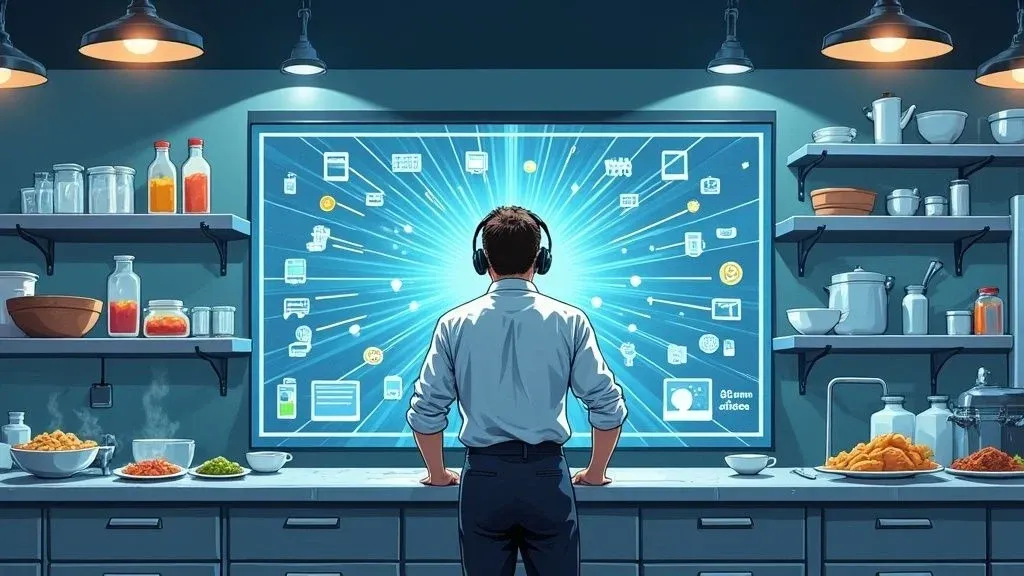
Imagine your restaurant is a busy airport. Orders from your website, DoorDash, and in-house guests are like airplanes trying to land on different runways, all at once. Without a central system, it’s chaos. Restaurant order management software is the air traffic control tower that brings every order into one clear, organized screen for your kitchen.
In simple terms, it’s a tool that pulls every single order—from Uber Eats, your website, and dine-in guests—into one unified system. This ends the “tablet hell” of juggling multiple devices and the frantic scribbling of orders. The goal is to create one streamlined flow from the customer’s click to the kitchen’s ticket, which is critical for restaurant efficiency and delivery success.
What Is Restaurant Order Management Software
At its core, this software is built to tame the chaos of a busy restaurant. Instead of your team wrestling with paper tickets or toggling between five different delivery apps, the system automates the entire process. Technically, it functions as a central aggregator, capturing order data from various sources (APIs from delivery platforms, webhooks from your website, etc.) and injecting it directly into your Point of Sale (POS) system.
Why it matters: This immediately eliminates the costly human errors that happen when staff manually punch in orders. It also prevents orders from getting lost during a dinner rush. By ensuring every meal is made correctly and delivered on time, you boost staff productivity, reduce waste, and build a more profitable business. This technology is a cornerstone of any modern restaurant’s digital strategy. To see the bigger picture, you can dive into our guide on restaurant digital transformation.
Shifting From Manual Chaos to Automated Control
Implementing this software is a perfect real-world example of how to automate business processes in a fast-paced environment. By taking repetitive, low-value tasks off your staff’s plate, they can focus on what truly drives revenue: food quality and guest experience. That’s a direct line to a healthier bottom line and a less stressed team.
The table below shows the dramatic, practical difference.
Before and After Order Management Software
Operational Area Without Management Software (Manual Process) With Management Software (Automated Process) Order Entry Staff manually types orders from multiple tablets into the POS. High risk of human error. Orders from all channels (delivery apps, website, etc.) are injected directly into the POS. Kitchen Workflow Disjointed tickets from various sources create confusion and potential for missed orders. A unified stream of orders appears on a Kitchen Display System (KDS), ensuring consistent pacing. Error Rate High. A single mistyped item can lead to a comped meal and a frustrated customer. Minimal. Automation nearly eliminates typos and modification mistakes. Staff Focus Front-of-house staff are bogged down by administrative tasks and tablet monitoring. Staff can focus entirely on guest service and creating a welcoming atmosphere. Reporting Compiling sales data from different platforms is a manual, time-consuming nightmare. All sales data is centralized, providing a clear, real-time view of performance.
The difference is night and day. Moving from a manual system to an automated one gives you control, saves time, and significantly reduces costly mistakes.
The infographic below drives home the impact on accuracy and speed.

As you can see, a good system can slash order errors by a staggering 80%. It also speeds up your entire process, which means higher staff productivity and happier customers.
This isn’t a niche trend. The numbers show this is becoming standard practice for successful restaurant operations. The global market for restaurant management software was valued at USD 22.19 billion in 2024 and is expected to more than double by 2035 as operators demand more efficient ways to run their businesses.
The Clear Takeaway for Your Restaurant
Ultimately, this isn’t just about adding another piece of tech; it’s about taking back control of your restaurant operations. It creates a single source of truth for every order, whether it’s a simple dine-in ticket or a complex delivery order from an app like Uber Eats. This central hub is what allows you to scale your delivery business, maintain consistency, and grow your profits.
Essential Features That Streamline Restaurant Operations

So what really makes this software work? The magic of restaurant order management software lies in its specific, problem-solving features. These aren’t just bells and whistles; they are practical tools designed to turn daily chaos into a smooth, predictable operation.
The foundation of any good system is multi-channel order aggregation. Think of it as your restaurant’s digital traffic controller. It funnels every order—whether from DoorDash, Uber Eats, your own website, or a phone call—into a single, easy-to-read dashboard. Why it matters: This simple act of unification eliminates the dreaded “wall of tablets,” instantly reducing staff stress, saving time, and cutting the risk of a missed order.
Real-Time Synchronization and Smart Routing for Food Tech
Once all your orders are in one place, the next key feature is real-time menu synchronization. Let’s say you 86 your famous brisket on a busy Saturday. Instead of frantically logging into three different delivery apps, you update it once in the system. Technically, the software then pushes this update via API to all your connected online storefronts immediately.
Actionable insight: This prevents customers from ordering out-of-stock items, which eliminates refund headaches, saves staff time, and protects your online reputation. For example, a restaurant using a system integrated with Uber Eats can 86 an item in their POS, and it will instantly become unavailable on the Uber Eats app, preventing customer frustration.
This kind of food tech is all about automating the small tasks that cause big problems. To see how these tools fit into the bigger picture, take a look at our guide to essential restaurant technology solutions.
Another game-changing feature is smart order routing, especially when connected to your Kitchen Display System (KDS). This bridges the gap between the front-of-house and the kitchen.
Instead of a mess of paper tickets, orders are sent digitally to the correct station. Salads go to the cold line, burgers to the grill, and fries to the fryer. This cuts through kitchen noise, speeds up ticket times, and ensures food quality remains consistent, even during the dinner rush.
Turning Data Into Actionable Insights
Finally, any system worth its salt comes with a powerful analytics and reporting dashboard. This is where your raw sales data is turned into a roadmap for growth. With it, you can:
- Identify Peak Hours: See exactly when you get slammed with dine-in versus delivery orders, so you can schedule your team and prep food more effectively, saving labor costs.
- Track Top-Selling Items: Discover which dishes are heroes on which platform, helping you fine-tune your menu and focus your marketing.
- Analyze Channel Performance: Get a clear picture of how much money each delivery partner is actually bringing in, allowing you to make smarter decisions about your third-party relationships.
Each of these features works together to boost staff productivity, reduce expensive food waste, and ultimately grow your profits. They create a seamless path from the moment a customer clicks “order” to the moment they take their first bite.
The Power of Seamless POS Integration
Think of your order management software as the brain of your restaurant’s operation. Its connection to your Point of Sale (POS) system is the central nervous system. Without this POS integration, you’re just creating more manual work and missing out on the biggest benefits for restaurant efficiency.
Picture a busy Friday night. An order from DoorDash pops up on a tablet. A team member has to stop everything, walk over, and manually punch the entire order into the POS. It’s slow and a recipe for disaster. One missed modifier or a simple typo means a wrong order, a wasted plate of food, and an unhappy customer.
A solid POS integration eliminates that entire chaotic step. Orders from all your delivery apps—Uber Eats, Grubhub, you name it—flow automatically and instantly into your POS system through a direct API connection.
Unlocking True Restaurant Efficiency and Delivery Success
This direct connection is where the magic happens for your restaurant operations. It unlocks a new level of efficiency that manual processes can’t match.
Your kitchen gets perfectly accurate orders in seconds, reducing errors and food waste. Your front-of-house staff can stay focused on in-house guests, improving service. And, crucially, your sales data is always accurate. No more late-night headaches trying to reconcile reports from five different tablets with your POS sales. This saves hours of administrative time and provides a clear financial picture.
This automation is becoming standard practice. The U.S. restaurant management software market is expected to grow at a compound annual rate of about 14.1% between 2025 and 2030. In 2024 alone, front-end tools made up nearly 38.4% of the revenue, driven by businesses that couldn’t operate without this kind of integrated food tech.
Making It Work with Your Current System
The best order management software is built to integrate with the systems you already use. Platforms like OrderOut, for example, have direct integrations with major POS providers like Square and Clover. Getting set up is typically a quick, “plug-and-play” process, not a massive technical project.
Here’s a real-world example of how an integration appears right inside the Square App Marketplace, making the connection straightforward for any restaurant owner.
This simple connection creates a single source of truth for your business. For a closer look at how these connections work, dive into our guide on point of sale integrations.
Actionable Takeaway: A seamless POS integration is essential for any modern restaurant. It directly impacts your bottom line by cutting labor costs, preventing expensive order mistakes, and providing perfectly accurate sales data for smarter business decisions.
Enhancing Your Restaurant Delivery Services

Let’s be honest: a strong restaurant delivery game is no longer optional—it’s a massive part of your revenue. But managing orders from DoorDash, Uber Eats, and others can quickly overwhelm your kitchen. This is where restaurant order management software provides a clear solution.
Think of it as a central command center for every off-premise order. It consolidates all those delivery requests into one clean, manageable queue. Why it matters: This simple act stops your staff from drowning in a sea of tickets from different tablets, immediately improving kitchen workflow and reducing stress. This leads to faster prep times and higher staff productivity.
Mastering Your Online Storefront
True order management is about more than just handling incoming tickets; it’s about giving you total control over your digital presence. One of its most powerful features is centralized menu management.
From a single dashboard, you can tweak prices, add a weekend special, or 86 an item that just sold out. Hit save, and that update instantly populates across every platform. Actionable insight: This feature alone saves hours of manual work and prevents customers from ordering something you don’t have—a surefire way to avoid negative reviews and protect your reputation. For a deeper dive, our guide on navigating third-party delivery service relationships is a great resource.
Improving the Customer Experience
A great delivery experience is about more than just the food. Order management software gives you tools to improve the entire journey and boost customer satisfaction.
Real-time order tracking is a game-changer. It provides the transparency customers now expect, showing them when their food is being prepped and when it’s on the way. This visibility drastically cuts down on “where’s my order?” phone calls and builds trust.
This technology also smooths out the driver handoff. Many systems can automatically notify drivers when an order is almost ready, so they arrive just as the food is being bagged. This means no more drivers crowding your counter and no more food getting cold under a heat lamp.
The table below breaks down the real-world impact on your key delivery metrics.
Impact of Integration on Delivery Metrics
Performance Metric Average Improvement with Integration Why It Matters Order Accuracy 99.5% accuracy rate Fewer mistakes mean fewer refunds, reduced food waste, and happier, repeat customers. Order Prep Time 25% faster Getting food out the door quicker leads to fresher deliveries and higher throughput. Customer Complaints 40% reduction A smoother process from kitchen to curb directly translates to a better customer experience. Staff Labor on Orders 75% less time per order Frees up your team to focus on food quality and in-house guests instead of tablet-juggling.
By optimizing these critical touchpoints, you elevate your entire restaurant delivery operation. The result is a less stressful workflow, happier customers, and a delivery business that is not just surviving, but thriving.
Choosing the Right Software for Your Restaurant

Picking the right restaurant order management software comes down to understanding your restaurant’s specific needs. The goal is to find a system that fixes your current headaches and can grow with you.
Your first and most important step is checking for compatibility with your existing technology. A seamless POS integration is non-negotiable. You’re looking for a true, direct connection, not a clunky workaround that creates more manual work.
Actionable insight: Before you consider any platform, confirm it has official, proven integrations with major POS systems like Clover or Square. This simple check avoids the very problem you’re trying to solve. If you’re also re-evaluating your core system, it’s worth exploring the best POS systems for restaurants to see which ones are built for modern food tech.
Evaluating Key Decision Factors
With compatibility confirmed, think about the future. Will this software handle a 50% increase in delivery volume next year? A system that’s perfect for a single cafe might crumble under the pressure of a multi-location operation.
Next, analyze the pricing. Some platforms offer a flat monthly fee, which is great for predictable budgeting. Others take a small percentage of each order. Run your numbers based on your average order volume to see which model is more cost-effective for your business.
Beyond the big picture, consider these practical factors:
- Ease of Use: How intuitive is the interface? Your goal is a system your team can learn in a single shift, not one that requires weeks of training.
- Customer Support: What happens when something goes wrong at 8 PM on a Saturday? Look for 24/7 support from real people who can solve your problems quickly.
- Analytics and Reporting: The software should provide clear, actionable data on sales trends, channel performance, and top-selling items to help you make smarter business decisions.
The explosive growth in this market shows its importance for restaurant operations. The global market shot up from USD 5.7 billion in 2023 and is on track to hit USD 26.3 billion by 2032. This isn’t a trend; it’s a fundamental shift. You can discover more insights about this market growth on scoop.market.us.
Your Practical Next Step
Always request a demo or free trial. There is no substitute for seeing how the software performs in your restaurant, with your team, during a real service. This is where you’ll discover if it genuinely streamlines your workflow and reduces stress. The best choice will feel like a natural part of your operation, making everyone’s job easier.
Got Questions? We’ve Got Answers
Thinking about adding an order management system can bring up a lot of questions. It’s new food tech, after all. But getting started is far easier than you might think. Let’s walk through some common concerns from restaurant owners.
How Long Does Setup Really Take?
In plain English: you can be up and running in a matter of hours, not weeks. Modern platforms are built for quick onboarding.
The technical side is a simple, guided walkthrough. You’ll link your delivery accounts—like Uber Eats and DoorDash—and then connect the system to your POS. For popular systems like Square or Clover that have pre-built POS integrations, you can often be live and taking orders the same day you sign up. This means you can start seeing time savings and error reduction almost immediately.
Is This Going to Be a Nightmare to Train My Staff On?
Not at all. In fact, it’s the opposite. Good software is designed to make life easier for your team and boost staff productivity. The best systems have a clean, visual dashboard that kitchen staff can learn in minutes.
Actionable Takeaway: The goal is to reduce the training burden. Instead of teaching staff how to juggle five different delivery apps, you teach them one simple, unified system. This frees up your team to focus on what matters: great food and happy customers.
Can I Really Manage All My Online Menus in One Spot?
Absolutely. This is one of the biggest wins for restaurant efficiency. From a single dashboard, you can change prices, add a daily special, or 86 an item that just sold out.
Hit “save,” and those updates are instantly pushed out to all your delivery partners in real time via their APIs. Think of the hours you’ll save and the mistakes you’ll avoid. For example, a restaurant using Clover can update a menu item once and have it reflected on both DoorDash and Uber Eats instantly, preventing incorrect orders and customer disappointment.
Your Practical Next Step
The best way to see how this technology fits into your day-to-day restaurant operations is to try it. You can see exactly how a unified system works by starting a free onboarding process. It’s the quickest way to understand the immediate impact on your time, costs, and accuracy.
Your Next Step to Smarter Restaurant Operations
Choosing to implement a restaurant order management system is a strategic move to modernize your restaurant operations. It’s the central nervous system for your entire ordering process, from customer click to kitchen ticket.
When you centralize all your orders, perfect your POS integration, and streamline your restaurant delivery, you give your team the tools to focus on what truly matters: creating great food and happy customers. This technology slashes the costly mistakes from manual entry, reduces staff stress, and gives you the data needed to make smarter business decisions. This boosts staff productivity and your bottom line.
A good dashboard, like the one below, is designed to be intuitive, pulling all your different channels into one clean screen.
This is what it looks like to manage orders from Uber Eats, DoorDash, and your own website without the usual tablet chaos. It’s all right there, in one spot.
You can read about the benefits all day, but the best way to understand the impact is to see it in action. The practical next step is to try it for yourself.
Ready to take control of your orders and improve efficiency? You can start onboarding for Free in a few clicks.