
Mastering Restaurant Management and Operations
· Thibault Le Conte
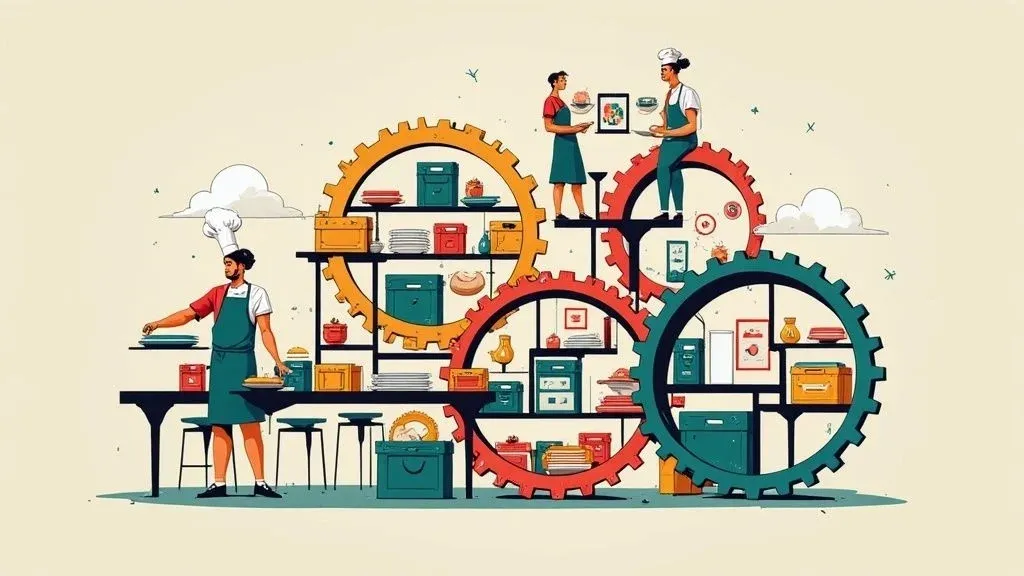
Running a successful restaurant is about much more than just great food. In simple terms, effective restaurant management and operations is the master plan that keeps everything running smoothly, from the kitchen to the front door. It’s the system that ensures every meal, whether for a customer in your dining room or one waiting for a delivery, is perfect.
Technically, this involves coordinating your back-of-house (BOH) workflows, front-of-house (FOH) service, staff schedules, inventory, and technology. When this system works, you reduce costs, minimize errors, and keep customers happy, which is critical for efficiency and profitability.
The Blueprint for Modern Restaurant Operations

To succeed today, you need more than a great menu—you need an operational system where every part works together flawlessly. Think of your restaurant like a high-performance engine. Your cooks, servers, inventory system, and POS are all gears. If one grinds, the whole machine slows down, hurting both service and your bottom line.
This guide is your roadmap to building that engine. We’ll break down the core pillars of modern restaurant management, showing you how smart processes and the right tech can completely change the game. The goal is simple: help you build a restaurant that’s not just surviving, but thriving.
Why Strong Restaurant Operations Are Non-Negotiable
Strong operations are what separate profitable restaurants from struggling ones. They directly boost your bottom line by making your team more efficient and keeping guests coming back. The global restaurant industry is valued at around $4.03 trillion and is expected to hit nearly $6.81 trillion by 2032. With that growth comes intense competition, making operational excellence your sharpest competitive edge.
Why it matters: A well-run operation removes friction. It’s what stops a kitchen ticket from getting lost, prevents a delivery order from being punched in wrong, and keeps a server from being overwhelmed. Every snag you smooth out with better POS integration and efficient workflows adds up to real cost savings, reduced errors, and a much happier customer.
The Core Pillars of Success
To truly get a handle on your restaurant’s performance, you have to juggle several key areas at once. Each one supports the others, creating a solid foundation. For a deeper dive, our detailed guide on restaurant operations management is a great place to start.
To help you visualize this, we’ve broken down the essential components every operator needs to master.
Core Pillars of Modern Restaurant Operations
Operational Pillar Key Focus Why It Matters for Profitability Back of House (BOH) Kitchen workflows, inventory control, and supply chain management. Cuts food waste, lowers cost of goods sold (COGS), and speeds up ticket times for dine-in and delivery. Front of House (FOH) Guest experience, service protocols, and POS efficiency. Increases table turnover, boosts check averages, and builds customer loyalty. Staffing & Training Hiring, onboarding, and continuous team development. Reduces costly employee turnover, ensures consistent service, and improves staff productivity. Technology Integration Connecting POS, delivery platforms, and inventory systems. Eliminates manual errors, provides valuable data, and creates massive operational efficiencies.
By focusing on these pillars, you can stop putting out fires and start building a more resilient, profitable business. The end result is a restaurant that runs smoothly and keeps customers happy, no matter how they choose to dine.
Optimizing Your Back of House Engine

If your restaurant were a car, the back of house (BOH) would be its engine. It’s where raw ingredients become meals and where efficiency directly impacts your bottom line. Fine-tuning this engine is essential for successful restaurant management and operations.
The process starts with getting a firm grip on your inventory—it’s one of the most direct ways to control costs. A messy stockroom is a surefire way to lose money to spoilage.
Taming Your Inventory for Maximum Profit
The simplest way to control inventory is the First-In, First-Out (FIFO) method. Think of it like rotating milk cartons in your fridge; you always put the new one in the back so you use the oldest one first. This simple, actionable step ensures older products get used before they expire, which drastically cuts down on food waste.
Why it matters: This isn’t just about saving a few dollars. It’s about protecting your Cost of Goods Sold (CoGS), a key metric for your restaurant’s financial health. Lowering waste directly boosts your profits. Strong supplier relationships also help by ensuring you get quality ingredients on time, preventing you from running out of a key item mid-service.
Orchestrating the Perfect Kitchen Workflow
Once ingredients are in, the focus shifts to kitchen workflow. A chaotic kitchen leads to slow ticket times, wrong orders, and a stressed-out team, which damages both the guest experience and your profits.
Smooth restaurant operations in the kitchen are built on clear communication and a smart station layout. When every chef knows their role and has every tool they need within arm’s reach, the process just flows.
Why it matters: A seamless path from order ticket to finished plate reduces movement, minimizes wait times, and eliminates errors. For high-volume restaurant delivery, this speed and accuracy are critical to getting good reviews and repeat business.
Integrating Food Tech into Your BOH
This is where modern food tech shines. Old-school paper tickets and shouted orders are a recipe for disaster. The solution is a Kitchen Display System (KDS), a digital command center for your BOH. A KDS connects directly with your Point of Sale (POS) system, flashing new orders onto a screen the second they’re entered.
This one change makes a huge difference:
- Error Reduction: Orders are displayed clearly. No more messy handwriting or lost tickets.
- Improved Speed: The kitchen sees orders instantly, shaving precious seconds off prep time.
- Better Communication: Chefs track orders and coordinate timing without yelling across a noisy kitchen.
Why it matters: This technology is a must-have for restaurants that rely on delivery. When an order from Uber Eats or DoorDash hits your POS, it pops up on the KDS just like a dine-in ticket. This seamless POS integration ensures online orders are made just as quickly and accurately as in-house ones, saving time and protecting your brand’s reputation. For a deeper dive, check out our guide on the benefits of a restaurant kitchen display system.
Efficient BOH operations also mean making smart choices about ingredients, like understanding the pitfalls of reusing cooking oil to maintain quality.
Real-World Impact: How Clover and Square Streamline Operations
Imagine how a POS system from a provider like Square or Clover changes the game. A server takes an order on a tablet, and it instantly appears on the KDS at the right station. The server doesn’t have to run a paper ticket to the kitchen, freeing them up to spend more time with guests. This cuts down ticket times, leading to faster table turnover and happier customers. A finely tuned BOH doesn’t just make great food—it drives revenue.
Your next step: Look at your own BOH and find where technology can smooth out rough spots and boost your team’s productivity.
Designing a Flawless Front of House Experience
Your front of house (FOH) is where your restaurant’s personality shines. It’s the first impression and the lasting memory for every guest, whether they’re walking in for a reservation or placing an order for restaurant delivery.
Simply put, the FOH is your main stage. It’s where a friendly greeting sets the tone and where even a complaint is an opportunity to create a loyal customer for life.
Giving Your Team the Right Tools
Classic hospitality skills are the heart of great service, but the right food tech is what makes it beat stronger. A modern Point of Sale (POS) system is much more than a cash register; it’s the brain of your FOH operation.
Picture this: a server takes a complex order on a handheld tablet. The moment they hit “send,” that order appears instantly and accurately on the Kitchen Display System (KDS). This simple change shaves minutes off every table’s service time and all but eliminates costly ordering mistakes.
Why it matters: In a tough market, this efficiency is non-negotiable. With a projected sales growth of just 2.8%—one of the slowest rates in a decade—restaurants must work smarter to protect margins. You can see the numbers in this restaurant industry sales forecast. Efficient POS integration is a direct path to higher staff productivity and lower costs.
How a Great POS Changes the Game
When your POS is fully integrated, it becomes a powerful ally.
- Smarter Upselling: A modern POS can prompt servers with perfect pairings, making upselling feel like a helpful suggestion.
- Faster Payments: Guests love paying at the table with a handheld device. It cuts the awkward wait for the check and speeds up table turnover.
- Building Loyalty: Every transaction provides data to fuel personalized offers that bring people back.
Why it matters: The beauty of POS integration is how it removes friction. When your team’s workflow is smoother, the guest’s experience is faster and more accurate. This efficiency directly impacts your bottom line by allowing you to serve more guests and reduce costly errors. That’s the win.
Real-World Impact: POS Systems in Action
Think about how a POS from a provider like Clover or Square transforms the dining room.
When a server uses a tablet, they stay on the floor, engaging with guests instead of running to a terminal. The service feels more attentive. These systems can also work with self-ordering kiosks, which gives customers control, improves order accuracy, and frees up staff to focus on hospitality. Check out our guide on self-ordering kiosks for restaurants to see how this works.
Your next step: Look at your current FOH process. Where are the bottlenecks? Is it order errors? Long waits for the bill? Solving these pain points with smart POS integration will deliver an immediate boost to your operations and bottom line.
Solving Your Restaurant Staffing Challenges
Finding and keeping a great team is one of the toughest parts of running a restaurant. You’re not just filling shifts; you’re building a motivated crew that represents your brand. This means you need a real strategy for training and, more importantly, retention.
The staffing problem is a massive issue across the industry. Labor is a constant headache, with the U.S. restaurant turnover rate expected to hit 61.7%. Job openings make up 72.3% of all available roles, showing a huge gap between the staff restaurants need and the people available. You can see more in these restaurant industry labor dynamics.
Building Your Dream Team from Day One
First, hire people who fit your restaurant’s culture. A team that clicks is more likely to stick around and deliver memorable service.
Once you find the right people, consistent training is non-negotiable. Create clear, documented procedures for every role, from how to greet a guest to the kitchen closing checklist. This ensures every team member provides the same high-quality experience for both dine-in and restaurant delivery customers.
Retention Is Where the Real Magic Happens
Hiring is expensive. Constantly replacing people drains your budget and morale. The real goal is keeping the fantastic staff you’ve already invested in.
Why it matters: High turnover is a symptom of a deeper problem. Creating a positive, supportive work environment doesn’t just keep your best people—it reduces the massive costs associated with recruiting and training new staff. Better retention means higher staff productivity, more consistent service, and a healthier bottom line.
Here are a few actionable things you can do right now:
- Schedule with Respect: Use software to create fair, predictable schedules and release them well in advance.
- Keep Everyone in the Loop: Hold quick, regular team huddles to keep everyone informed and connected.
- Show Them a Path Forward: Promote from within and invest in developing their skills.
These aren’t just nice-to-haves; they directly fight the high cost of turnover. For a more detailed playbook, read our guide on 15 proven ways to improve employee retention in the restaurant industry.
Use Your Data to Staff Smarter, Not Harder
Your POS system is a goldmine of information that can change how you staff your restaurant. Instead of guessing how many servers you need, you can use past sales data to predict your labor needs with accuracy.
For example, a modern POS like Clover or Square can show you exactly which hours are your busiest. This means you can schedule people when you need them most, avoiding the waste of overstaffing during slow periods.
Why it matters: This data-driven approach directly impacts your profitability and efficiency.
- Cut Costs: You stop wasting money on labor by matching your schedule to actual customer traffic.
- Boost Morale: Staff gets more predictable paychecks because they aren’t being sent home early.
- Deliver Better Service: You always have the right number of people on the floor during peak hours, so service quality stays high.
This link between POS integration and staffing is a cornerstone of modern restaurant operations.
Your next step: Look at your current scheduling process. Are you using data, or just guessing? The answer could unlock huge savings and lead to a more stable, productive team. Start by digging into your existing POS reports.
Building Your Restaurant’s Tech Stack
Your technology shouldn’t be a random collection of apps. Think of it as a “tech stack”—a set of tools chosen to work together. It’s how they communicate that really moves the needle in your day-to-day restaurant management and operations.
At the center is your Point of Sale (POS) system. Its ability to connect to other software is what makes it a true command center, especially when juggling online orders.
The Game-Changing Power of Delivery POS Integration
If your team is still manually punching in orders from Uber Eats and DoorDash tablets into your POS, you’re operating with one hand tied behind your back. That repetitive process is slow and a major source of costly mistakes. One typo can create a wrong order, a bad review, and a lost customer.
A POS integration solution is the fix. It builds a digital bridge, connecting all your delivery platforms directly to your main system. This single connection automates the entire ordering process.
Why it matters: The goal of a good tech stack is to kill manual double-entry. Every minute your staff spends typing an order from one screen to another is a minute they aren’t helping guests. Automating your restaurant delivery workflow is a direct path to time savings, error reduction, and increased staff productivity. It’s a necessity, not a luxury.
This frees up your managers to focus on the human side of the business—hiring, training, and building a great team.

As you can see, the people part of the business is complex. A smart tech stack gives your leadership the time to do it right.
Real-World Impact: How Direct Integration Smooths Out Restaurant Delivery
Let’s walk through a real-world example. A customer orders on the DoorDash app. Without integration, a tablet dings, a staff member stops what they’re doing, walks over, and manually types the order into the POS. Only then does the kitchen know it exists.
Now, picture that with an integrated system like OrderOut. The second that customer hits “confirm” on DoorDash, the order instantly and automatically appears in your Clover or Square POS. It fires straight to the Kitchen Display System (KDS). No manual entry. No delay. No human error.
This single change brings immediate, concrete benefits:
- Drastic Error Reduction: Orders are transmitted perfectly, meaning fewer wrong meals and customer complaints.
- Massive Time Savings: Your FOH team is freed from being data-entry clerks to focus on serving in-house guests.
- Increased Staff Productivity: Your team can handle a higher volume of orders without getting overwhelmed, boosting morale.
This efficiency is critical for managing the high volume of restaurant delivery orders. To dive deeper, check out our guide on the most important point of sale integrations for your restaurant.
Your next step: The smartest way to start building your tech stack is to solve your biggest problem first. For most restaurants, that’s the chaos of managing delivery tablets. Integrating your delivery apps with your POS offers the biggest return by immediately cutting labor waste, eliminating errors, and speeding up your entire delivery operation.
Tracking the Key Metrics That Drive Profitability
There’s an old saying: what gets measured gets managed. If you’re running your restaurant on gut feelings, you’re flying blind. To make smart, profitable decisions, you need to use Key Performance Indicators (KPIs) to understand the real story of your business.
Think of these metrics as the gauges in a cockpit. They show you where you’re thriving and where you’re bleeding money.
Understanding Your Core Financial Metrics
Let’s start with the two biggest costs: food and staff.
- Cost of Goods Sold (CoGS): This is the total cost of ingredients you used to make the food you sold. A healthy CoGS is usually between 28% and 35%.
- Labor Cost Percentage: This is what you paid your team (wages, taxes, benefits) divided by your total revenue. The industry benchmark is typically between 25% and 35%.
Keeping a close eye on these is a non-negotiable part of solid restaurant management and operations. If your CoGS suddenly shoots up, that’s a red flag that could mean anything from supplier price hikes to food waste.
Using Your POS to Make Data-Driven Decisions
Trying to calculate this manually is a recipe for mistakes. This is where your POS system becomes your most valuable tool. Good food tech automates this tracking, serving up real-time data.
Why it matters: Your POS system is a data goldmine. It connects every sale to your inventory and labor costs, turning raw numbers into clear insights that drive efficiency and save you a fortune. This direct POS integration forges a link between your daily operations and your bottom line.
For example, a modern POS system like Clover or Square can show you your labor cost percentage for any shift. See labor spiking on a slow Tuesday? Adjust the schedule immediately. This is how you stop wasting money on overstaffing. It works the same for food costs. By connecting sales data with inventory, your POS can pinpoint which menu items are most profitable. It’s not just about food; well-trained staff are more efficient, which lowers costs. Exploring how to start measuring training effectiveness and ROI shows how investing in your team pays off.
Your next step: This week, dig into your POS reports. Stop seeing it as just a cash register and start using it as an intelligence hub. Pull your sales and labor reports, identify your busiest and slowest hours, and find one or two places to tighten things up.
Your Practical Next Step: Automate Delivery Orders
Running a successful restaurant is a balancing act of hospitality, sharp operations, and smart technology. We’ve covered everything from fine-tuning your BOH to building a great team. These aren’t separate checklist items; they are gears in the same engine.
If there’s one immediate change you can make that will have a massive impact, it’s this: stop the madness of manual delivery order entry. For most restaurants today, it’s the single biggest drain on time, money, and staff sanity.
Trading Manual Headaches for Automated Flow
Let’s be real—having a team member constantly babysit tablets, punching in orders from Uber Eats or DoorDash, is a huge bottleneck. Every order pulls someone away from what they should be doing. It’s slow and begs for mistakes that mess up your kitchen and a customer’s dinner.
Why it matters: Automating your delivery orders through POS integration transforms a chaotic, error-prone routine into a smooth part of your operations. You’re not just saving a few minutes; you’re cutting down on expensive errors, speeding up your entire restaurant delivery game, and giving precious hours back to your staff. This is a direct line to higher efficiency and better profits.
Picture it: an order comes in from DoorDash and appears instantly on your Clover or Square POS. No one had to lift a finger. The ticket is perfect, the kitchen gets started right away, and your FOH team doesn’t miss a beat. That’s what smart integration actually looks like.
Ready to make your restaurant more efficient and profitable? It starts with automation. You can connect all your delivery platforms and start streamlining your operations today by visiting https://dashboard.orderout.co where restaurant owners can start onboarding for Free in a few clicks.