
Solving Restaurant Employee Turnover for Good
· Thibault Le Conte
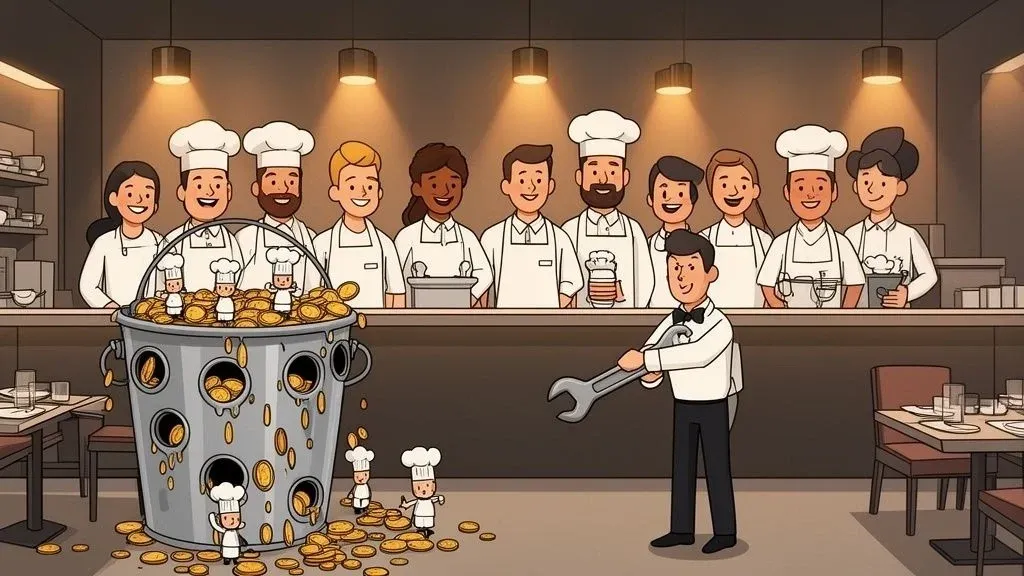
High restaurant employee turnover is more than just a staffing headache—it’s a silent profit killer that steadily drains your restaurant’s bottom line. In simple terms, when employees leave, you’re not just losing a person; you’re losing money, time, and service quality. The real damage goes far beyond the cost of a “help wanted” sign, chipping away at your operational efficiency, guest satisfaction, and ultimately, your profitability.
The Real Cost of High Staff Turnover
Too many operators write off staff churn as a simple cost of doing business. But thinking that way misses the massive financial drain it creates. Picture a leaky bucket: for every new employee you pour in, valuable resources like money, time, and team morale are constantly seeping out. To plug those leaks, you first need to understand the true cost of that constant churn.
The financial hit is much bigger than most people realize. In fact, replacing a single hourly employee can cost anywhere from $2,300 to $5,864 when you add up all the direct and hidden expenses. For a typical restaurant, that number quickly snowballs into a staggering annual loss.
As the infographic shows, what seems like a manageable per-employee cost can easily become a six-figure problem for a mid-sized restaurant over the course of a year.
The Obvious and Hidden Costs of Turnover
To really get your arms around the financial impact, it helps to separate the costs into two buckets: the obvious expenses you can track on a spreadsheet and the hidden ones that quietly sabotage your operations.
This table breaks down the direct and indirect costs of replacing a single employee, helping you quantify the financial impact on your restaurant’s operations.
Cost Category Description Example Expense Direct Costs These are the tangible, easily tracked expenses tied directly to hiring a replacement. Job board fees, background checks, manager’s time for interviews, new uniforms. Indirect Costs These are the less obvious but often more damaging expenses that result from having an inexperienced team. Lost productivity, order errors, decreased service quality, overtime for remaining staff.
Seeing these costs laid out makes it clear that the total financial hit is far greater than just the direct expenses of finding someone new.
Why This All Matters for Your Restaurant Efficiency
These costs directly attack your restaurant’s efficiency. When a great, experienced server walks out the door, they take their menu knowledge, their rapport with regulars, and their mastery of your POS system with them. The new hire, no matter how promising, is going to be slower and make more mistakes for weeks, if not months. This leads to slower service, which means fewer tables turned and less revenue per shift.
A revolving door of new staff means your restaurant is perpetually in training mode. Your team never gets the chance to hit its stride, which slows down service, increases mistakes, and ultimately hurts the guest experience.
Think about the Friday night dinner rush. A new cashier fumbling to manually punch in an order from a delivery app like Uber Eats can create a bottleneck that backs up the entire kitchen. This single point of failure slows down everything—for both dine-in guests and delivery—leading to longer waits and frustrated customers. The cost of a remake or a refund for a mistaken order directly hits your bottom line, and the time lost dealing with it reduces staff productivity.
The ripple effect is huge. That one inexperienced employee highlights how high turnover degrades your entire workflow. As any good guide to food service management will tell you, a stable, confident team is the foundation of a smooth operation. Tackling turnover isn’t just an HR problem; it’s a core strategy for improving your restaurant’s day-to-day performance and profitability.
Why Your Best Restaurant Employees Leave
Your best people—the line cook who’s always consistent, the server who charms every table—don’t just quit on a whim. They leave because of persistent, nagging problems that grind them down over time. Understanding why your A-team walks away is the first real step to convincing them to stay.
It’s rarely about a single bad day. More often, it’s the feeling of being set up to fail in a stressful, chaotic work environment.
This isn’t a new problem. For over a decade, the restaurant industry has been stuck with an incredibly high employee turnover rate, consistently hovering around 75% annually. That’s not a recent trend; it was 75% back in 2018, and it’s still at that level today. This tells us it’s a deep-seated operational issue. For quick-service restaurants, the numbers are even worse, sometimes topping 130%. Think about that—it’s like replacing your entire staff more than once every year. You can discover more insights about these persistent restaurant turnover rates to see the full picture.
When Operational Chaos Drives Your Best Staff Away
While pay and benefits are the foundation, many of your most talented employees are pushed out the door by daily operational friction. Simply put, they get tired of fighting broken systems. These aren’t just minor annoyances; they’re symptoms of a system that burns out even your most dedicated people.
Here are some of the key drivers that lead straight to burnout and turnover:
- Chaotic Scheduling: When schedules are unpredictable or dropped at the last minute, it makes it impossible for your staff to plan their lives. It sends a clear message of disrespect.
- Overwhelming Peak Hour Stress: A constant state of “firefighting” during a rush, with no real system to manage the chaos, creates a level of stress nobody can sustain long-term.
- Lack of Growth Pathways: If employees don’t see a future or a chance to move up, they’ll naturally start looking for a place that will invest in them. A good manager is crucial here, and understanding the core responsibilities of a restaurant manager can show you where those growth opportunities might be falling through the cracks.
These aren’t abstract issues. They show up in very real, painful ways during every single shift.
The Problem With Manual Restaurant Delivery and POS Integration
Let’s put ourselves in the shoes of your front-of-house staff during the dinner rush. A line is forming at the door, the phone is ringing for takeout orders, and on the counter, three different tablets are chiming with orders from DoorDash, Uber Eats, and other delivery apps.
Every time a new online order comes in, a team member has to:
- Stop serving a dine-in guest to tap “confirm” on the tablet.
- Manually punch every single detail of that order into your central POS system.
- Cross their fingers they didn’t miss a special request like “no onions,” which will just lead to a costly remake and an angry customer.
This frantic, error-prone cycle is a huge source of stress. It forces your staff into doing low-value, repetitive data entry instead of what they’re actually there for—taking care of your guests. This operational mess makes them feel overwhelmed and inefficient, which is a powerful reason to look for a job at a restaurant that has its act together.
For instance, a busy cafe using a Square POS system can completely eliminate this chaos. By integrating its delivery apps directly into the POS, every online order shows up instantly and accurately on the kitchen printer. This simple change in food tech drastically cuts down on stress and mistakes, which saves money on remakes and gives staff more time to serve customers, boosting productivity. The same goes for restaurants using a Clover POS; a simple app can centralize all those orders.
Your Takeaway: High restaurant employee turnover is often a direct result of operational failures. When you pinpoint and fix these sources of friction—like the chaos of managing multiple delivery tablets—you create a calmer, more efficient workplace that your best employees won’t want to leave.
Boost Morale with Smarter Restaurant Operations
Keeping great staff isn’t just about paychecks. More often than not, it’s about creating a work environment that isn’t actively working against them. When daily operations are chaotic and clunky, even your most passionate employees will start looking for the exit. This is where smart technology can make a world of difference, turning a stressful job into a smooth, manageable one.
Think about your front-of-house team during a dinner rush. They’re trying to greet guests, but they’re surrounded by a chorus of tablets from DoorDash, Uber Eats, and others, all chiming at once. Each new ding means dropping everything to manually punch another order into the POS, hoping they don’t mis-type a special request. It’s a recipe for stress, mistakes, and lost revenue.
The picture above tells a familiar story. On one side, you have the frantic, overwhelming reality of juggling multiple systems. On the other, the calm focus that comes from a single, efficient workflow. That difference isn’t just a picture—it’s a direct reflection of your team’s daily experience and a huge factor in whether they choose to stay.
From Tablet Chaos to Seamless POS Integration
The most direct way to fix this problem is to get rid of the “tablet farm” altogether. In simple terms, you can connect all your delivery apps directly to your main cash register system. This technology is called POS integration. It builds a bridge between all your third-party delivery apps and the POS you already rely on. Instead of a dozen different tablets screaming for attention, you get one unified, automated stream of orders into your restaurant operations.
Think of it this way: making your staff manually enter delivery orders is like asking your line cooks to write out the full recipe for every dish before they start cooking it. It’s a redundant, time-wasting step that only introduces opportunities for error.
For instance, a busy pizzeria using a Clover POS can use a service like OrderOut to completely automate the process. When an order comes in from Uber Eats, it doesn’t even make a sound on a separate tablet. It just shows up on the Clover screen and prints to the kitchen printer, exactly like an order placed in-house. This saves several minutes per order, reduces errors to zero, and frees your FOH team to focus on dine-in guests, increasing their productivity and earning potential.
The Direct Impact on Efficiency and Staff Happiness
This move from manual to automated workflows delivers real, tangible benefits that get to the heart of what causes high restaurant employee turnover. When you improve your restaurant operating procedures by automating delivery intake, you create a positive ripple effect that your entire team will feel.
Here’s how it makes their day-to-day work better:
- Drastic Error Reduction: Automated orders are 100% accurate. This completely eliminates costly mistakes like missed modifiers or wrong items, which in turn reduces food waste and prevents those awkward moments where staff are blamed for a system-induced error.
- Massive Time Savings: Giving that time back to your team allows them to manage more tables, run food while it’s hot, and deliver better service—which often leads to better tips and higher job satisfaction. Staff productivity skyrockets.
- Reduced Stress and Burnout: Taking away the constant task of tablet-juggling brings a sense of calm and order to the floor. Employees feel like they’re being supported by smart systems, not held back by broken ones.
Simple steps focused on boosting workplace morale can make a huge difference. A café that integrates its Square POS with its restaurant delivery apps isn’t just buying software; it’s buying a less stressful, more supportive environment for its people. Ultimately, fixing the broken systems that create daily friction shows your team you respect their time and are invested in their well-being.
A Modern Playbook for Hiring and Onboarding
Tackling high restaurant employee turnover doesn’t start on an employee’s last day—it starts long before their first. A solid retention strategy is built on smart hiring and a thoughtful onboarding process that sets people up to succeed, not just survive.
The old way of hiring was all about experience. But in a fast-paced kitchen, soft skills like resilience, a cool head, and genuine problem-solving ability are often worth more than knowing a specific POS system. You can teach someone the menu; you can’t really teach them how to stay positive during a chaotic dinner rush.
Hiring for Skills and Onboarding for Success
It’s time to shift your interview focus from “What have you done?” to “How would you handle this?” Asking behavioral questions gives you a glimpse into how a candidate actually thinks and reacts on their feet.
- Problem-Solving: “Tell me about a time a guest was unhappy with their meal. What did you do to turn things around?”
- Teamwork: “Describe a shift where a coworker was completely in the weeds. How did you step in to help?”
- Resilience: “What’s the most stressful night you’ve ever worked, and what got you through it?”
Hiring for these traits helps you find people who are wired for the restaurant world. Once you’ve got them, your next job is to prove they made the right choice with an onboarding experience that shows you’re invested in them.
Your 30-Day Onboarding Plan With Integrated Food Tech
A quick tour and a “good luck” won’t cut it. A structured 30-day plan that bakes in your technology from the very start shows new hires that you’ve built efficient systems to support them. Technology shouldn’t be a confusing afterthought; it should be one of their most valuable tools.
Onboarding is your first, best chance to prove your restaurant is a great place to work. When you show a new hire how your food tech stack solves common frustrations, you aren’t just training them—you’re selling them on a better work experience.
Picture this: on Day 3, you’re with your new cashier. Instead of just pointing at buttons, you explain the why behind your restaurant operations. For example, if you use a system like Square, you can show them how a restaurant delivery order pops up automatically on the POS.
You can then say, “This system prevents you from having to manually punch in tablet orders, which means fewer mistakes and less stress. This saves time, reduces errors, and gives you more time to focus on our guests.” That single moment proves you’re actively trying to make their job easier. You can formalize this tech-first training by building out clear workflows, like those found in restaurant standard operating procedures examples.
This approach carries through their entire first month. On Day 10, maybe you review how a POS integration with a platform like Clover provides clean sales data, which helps management build fairer, more balanced schedules. By Day 30, your new hire understands how your systems directly benefit their day-to-day work, making them more productive and happier in their role.
Building a Culture That Makes People Stay
You can have the most efficient kitchen and the slickest tech, but none of it can patch up a broken culture. While a smooth operation definitely lowers everyone’s stress levels, it’s the human side of the job—feeling valued, supported, and respected—that ultimately keeps your best people from walking out the door.
It all boils down to creating a place where your team actually wants to be. And that starts with three non-negotiables: fair pay and scheduling, real opportunities for growth, and genuine recognition for a job well done. In today’s tough market, getting these right isn’t just a “nice-to-have”—it’s a core business strategy.
Nail the Basics: Competitive Pay and Predictable Schedules
Before you can even think about career paths, you have to get the fundamentals right. Competitive pay is table stakes. With 89% of operators expecting labor costs to keep climbing, you simply can’t afford to fall behind the market rate. Good people know their worth.
But money isn’t everything. A chaotic, last-minute schedule is one of the fastest ways to burn out your staff. Smart scheduling software helps you create stable, predictable schedules that respect your team’s availability while still meeting business needs.
The numbers don’t lie. A 2025 outlook showed 38% of restaurant HR pros saw turnover get worse in the prior year. Today, 41% of restaurants are still reporting significant labor challenges. This has forced a major shift, with 42% of operators now actively implementing new retention strategies to stop the churn. You can dig into these critical retention findings to see just how much the landscape has changed.
Invest in Your People with Continuous Training
Nobody wants to feel like they’re stuck in a dead-end job. When you show your team a clear path for growth, you give them a reason to stick around. This doesn’t have to be a complicated corporate ladder. It can be as simple as a solid cross-training program.
Think about it. When your restaurant operations are running smoothly with a smart POS integration, a lot of tedious work gets automated. For example, when orders from Uber Eats and DoorDash sync directly with your Clover system, your cashier is freed from manually punching in tickets.
That reclaimed time is a golden opportunity for development. Instead of just taking orders, that same cashier can now learn how to expedite, help with inventory counts, or even train as a host. They become a more skilled, more valuable part of the team.
This kind of investment pays you back in spades:
- More Agility: Cross-trained staff can jump in and cover different positions during a crazy rush. Your whole operation becomes more resilient.
- Higher Engagement: Learning something new is a powerful antidote to boredom. It keeps your team challenged and motivated.
- A Stronger Bench: You start building your next shift lead or manager from within your own ranks. For more team development ideas, check out this guide on the best apps for restaurant managers.
Recognize Good Work, Genuinely and Often
Finally, don’t ever underestimate the simple power of “thank you” or “great job.” Recognition doesn’t have to be complicated or expensive. It just has to be authentic and consistent. When people feel seen and appreciated, their loyalty and performance skyrocket.
Below is a table of simple, low-cost tactics you can start using tomorrow.
Low-Cost Tactics to Improve Staff Retention
Tactic Description Impact on Staff Peer-to-Peer “Kudos” Board A simple whiteboard in the back of house where anyone can write a shout-out to a coworker for helping out or doing great work. Fosters teamwork and allows staff to recognize each other’s efforts, building a more positive and collaborative atmosphere. On-the-Spot Recognition A small, immediate reward for exceptional performance, like a $10 gift card or a free meal for handling a tough situation perfectly. Provides instant positive reinforcement, making employees feel that their hard work is seen and valued in the moment. Social Media Spotlight Ask an “Employee of the Week” for permission to feature them on your restaurant’s social media, highlighting their contributions. Offers public recognition that boosts morale and shows both customers and other staff that you celebrate your team members.
These small gestures, combined with fair pay and opportunities to grow, create a powerful culture of respect.
When you pair these human touches with an efficient, low-stress workflow—made possible by food tech like an integrated Square POS—you’ve found the winning formula. This is the kind of culture that makes people love coming to work and, most importantly, makes them choose to stay.
Your Next Step Toward Lowering Turnover
If you’ve made it this far, you know that the revolving door of staff isn’t just “part of the business.” It’s a huge, expensive problem—but one you can absolutely solve. The real solution is to fix the broken systems that are starting fires in the first place.
So, where do you begin? The single most impactful change you can make starts with your delivery and takeout process. How many hours does your team lose every week punching in orders from tablets for Uber Eats or DoorDash? How many expensive mistakes happen when the front-of-house is drowning in a sea of screens?
These are the frustrations that build up and push good people out the door.
When you fix a fundamental point of friction like this, you send a powerful message. You’re showing your team you’re invested in making their daily work better, not just protecting your profit margins.
Take Action Today: Fix Your Restaurant Delivery Workflow
Tackling this one process has an immediate ripple effect. It cuts down on errors, frees up valuable time, and dramatically lowers the stress levels of your entire team. Imagine integrating all those delivery apps directly into your Clover or Square POS. No more manual entry, no more tablet juggling—just a smoother, more productive workflow that saves money and boosts staff productivity.
Of course, technology is just one piece of the puzzle. To build a truly resilient team, you’ll need a broader strategy. Taking a deeper dive into how to improve employee retention can give you a comprehensive playbook for long-term success.
But for today, fixing your order management is a powerful first move that creates a calmer, happier, and more efficient restaurant.
Frequently Asked Questions
Let’s tackle some of the tough questions that come up whenever restaurant owners talk about turnover. Here are a few things I’m asked all the time when it comes to building a team that actually wants to stick around.
What Is a Good Employee Turnover Rate for a Restaurant?
The industry-wide number you’ll often hear is a staggering 75%. Honestly, that’s a crisis, not a benchmark. A much better first goal is to get your turnover rate below 50%. Getting there is a huge win and proves your new strategies are starting to work.
Of course, the best operators don’t stop there. Top-performing restaurants—the ones with a great culture and smooth operations—can get their turnover down to 25-30%. The real goal isn’t just about hitting a magic number; it’s about seeing steady, consistent improvement every quarter as you invest in your people and your systems.
How Can Food Tech Help Turnover if My Main Issue Is Low Pay?
That’s a fair question. While you absolutely have to offer competitive pay, technology helps solve the other major reason people quit: the daily stress and chaos of the job. Smart food tech creates a calmer, more organized, and simply more respectful environment for your team.
Think about it. When you use a POS integration to automatically feed orders from DoorDash or Uber Eats into your system, you eliminate one of the biggest daily headaches. No more staff getting blamed for punching in a wrong order. That single change frees them up to do what they do best—taking care of guests. A less stressful job is a much more appealing job, which directly impacts staff productivity and morale.
When an employee’s daily work is supported by smart systems, they feel more respected and effective. This directly improves job satisfaction and makes them less likely to leave for a competitor, even if the pay is similar.
What Is the Most Important First Step to Reduce Staff Turnover?
Your first move should be to find and fix the biggest point of friction in your daily operations. For almost every restaurant right now, that’s the absolute chaos of managing third-party delivery orders.
Don’t just take my word for it. Go stand by your host stand during a dinner rush and just watch. You’ll see that juggling multiple tablets is a massive source of stress, mistakes, and completely wasted time. Solving that one problem with a POS integration gives your team immediate, tangible relief.
An integration with a system like Clover or Square does more than just streamline orders. It’s a powerful signal to your staff that you see their struggles and are investing in making their jobs better. It’s a foundational step for any real, lasting reduction in your restaurant’s turnover.
Practical Next Step: Stop the tablet chaos and build a team that wants to stay. With OrderOut, you can automate your delivery workflow, reduce errors, and give your staff the tools they need to succeed. Start onboarding for Free in a few clicks.