
Restaurant Duty Manager Job Description & Guide 2026
· Thibault Le Conte
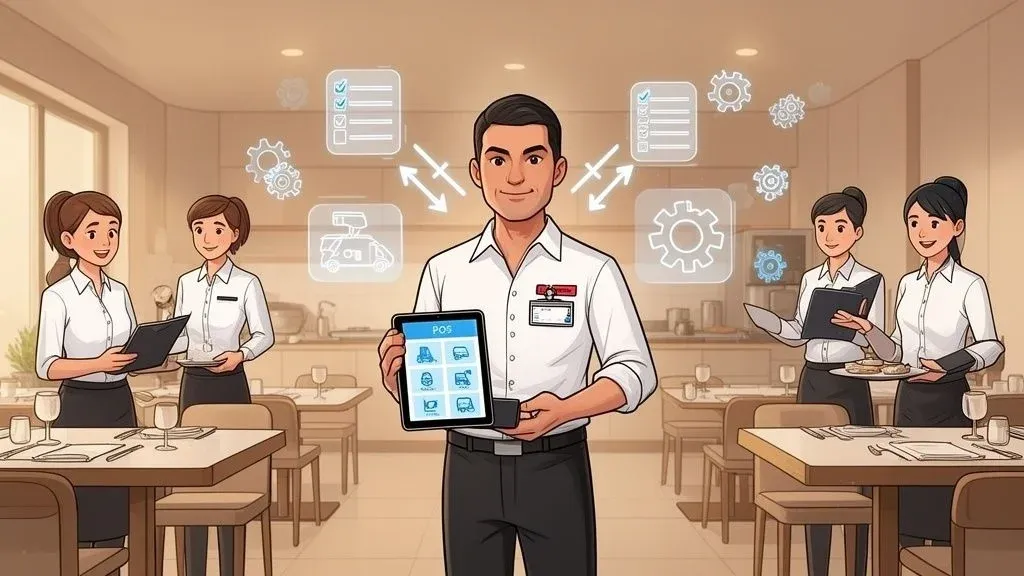
A Restaurant Duty Manager is the person on the floor, making sure each shift goes off without a hitch. They are the captain of the ship during service, steering everything from staff supervision and customer satisfaction to troubleshooting any operational hiccups that pop up. This role is all about immediate, hands-on leadership that directly shapes the guest experience, keeps staff on track, and protects the shift’s profitability.
What a Restaurant Duty Manager Really Does
Think of the Duty Manager as the master of the moment. While a General Manager is busy planning for the next quarter, the Duty Manager’s entire focus is making sure the next hour of service is a resounding success. Their world is the dining room floor, the kitchen line, and every single customer interaction that happens on their watch. You can explore these role differences further in our guide on what a restaurant manager does.
To clarify how these roles fit together, here’s a quick breakdown of their different areas of focus.
Duty Manager vs General Manager At A Glance
Area of Focus Restaurant Duty Manager General Manager Time Horizon Manages the current shift (minutes, hours) Manages the long-term (weeks, months, quarters) Primary Goal Flawless shift execution and guest satisfaction Overall business profitability, growth, and strategy Staff Management Direct, in-the-moment supervision and coaching Hiring, comprehensive training, scheduling, and payroll Financials Closing out registers, shift reports, managing comps Budgeting, P&L analysis, cost control, vendor negotiation Customer Issues Resolves immediate guest complaints and requests Analyzes feedback trends, develops service standards Operations Troubleshoots POS issues, manages service flow Implements new systems, plans menus, ensures compliance
Essentially, the Duty Manager executes the vision that the General Manager creates. Both roles are absolutely vital, but they operate on different timelines and with different priorities.
Why This Role Is Critical for Restaurant Operations and POS Integration
In today’s restaurant, this role has become more important than ever. It’s not just about managing people and plates anymore; it’s about making sure your technology works for you, not against you. A sharp Duty Manager is the link connecting your front-of-house hustle with your digital delivery and POS systems. Simply put, they make sure your technology boosts speed and accuracy, which directly impacts your bottom line.
Why it matters: Without this role, small tech glitches can spiral into chaos, leading to lost orders, angry customers, and wasted food. The Duty Manager is your on-site problem-solver who keeps your entire operation—from dine-in to delivery—running smoothly.
-
POS Integration: They ensure every order, especially from third-party apps, is handled correctly. For example, when a DoorDash order hits your Square POS system through an integration, the Duty Manager ensures it fires to the kitchen instantly. This eliminates manual entry errors, saving an average of 30-60 seconds per order and freeing up valuable staff time.
-
Error Reduction: By actively supervising how technology is used, they cut down on costly mistakes. A Duty Manager familiar with a Clover POS can solve a ticket jam or a payment glitch in seconds, preventing comped meals and keeping service moving. This directly reduces food waste and protects your profit margins.
-
Staff Productivity: They become the go-to expert for any tech questions on the floor. This prevents a small POS problem from grinding the whole team to a halt, which is a huge boost for both productivity and morale. A confident team can serve more guests and process more delivery orders, faster.
Ultimately, the Duty Manager is where your restaurant’s operational strategy becomes reality. Their ability to manage people, processes, and technology on the fly is what drives higher efficiency, fewer mistakes, and a much healthier bottom line.
Core Responsibilities and Daily Duties
The heart of a restaurant duty manager’s role lies in the hands-on, in-the-trenches tasks that make every single shift run smoothly. Think of them as the on-floor commander, translating the General Manager’s strategy into action. They’re the ones who directly impact staff performance, guest happiness, and the day’s profits.
While the GM focuses on the big picture, the Duty Manager owns the shift. They’re not just supervising; they’re actively managing the flow of service from the moment the doors open until the final checks are closed out.
A great duty manager is the essential link between the overarching business plan and what actually happens on the floor. They take the restaurant’s goals and turn them into clear, immediate tasks for the team.
This is a crucial distinction. The GM might set the sales target for the month, but the Duty Manager is the one pushing for that extra dessert sale or ensuring table turn times are efficient tonight.
On-the-Ground Daily Responsibilities
These are the non-negotiable, shift-by-shift duties that are the bread and butter of the job.
- Conduct Pre-Shift Briefings: This is more than just a quick huddle. A solid briefing sets the tone for the entire shift. The duty manager covers the 86’d items, highlights any VIP reservations, and runs through the night’s specials. It gets everyone on the same page, which is critical for boosting staff productivity and keeping service consistent.
- Oversee Service Quality: They need to be a constant presence in the dining room—walking the floor, touching tables, and acting as the final eyes on plates coming out of the pass. This visibility allows them to spot and fix small problems before they escalate into full-blown complaints.
- Handle Customer Issues: When a guest is unhappy, the duty manager is the designated problem-solver. They have the authority to comp a dish, offer a round of drinks, or do what it takes to recover the guest’s experience and turn it into a positive.
- Manage Cash and POS Systems: At the end of the night, they’re responsible for cashing out servers, balancing the till, and running sales reports. Being completely comfortable with your POS, whether it’s Square or Clover, is vital for accuracy and error reduction.
- Uphold Safety Standards: Nothing is more important than safety. A key daily function is enforcing all local and national food hygiene regulations. This is the foundation of a safe and reputable operation.
Weekly and Monthly Planning Duties
While daily tasks are often reactive, the weekly and monthly responsibilities are more about planning and analysis. These proactive duties keep the restaurant healthy in the long run. If you’re looking for a framework, our guide to building restaurant operating procedures can help structure these bigger-picture tasks.
These responsibilities typically involve:
- Staff Scheduling: Building schedules that match forecasted business levels without blowing the labor budget is a constant balancing act.
- Inventory Spot-Checks: Performing quick counts on high-value items like premium spirits or steaks helps keep staff honest and catches potential waste or theft issues early.
- POS Report Analysis: Diving into the data from the past week to see what’s selling, what’s not, and where improvements can be made. For example, are order errors from your Uber Eats integration creeping up? The data will tell you.
- Assisting with Full Inventory: Working alongside the General Manager to conduct the full end-of-month inventory count.
- Contributing to Staff Reviews: Providing the GM with direct, on-the-floor observations about team members’ performance, which is invaluable for formal reviews.
Essential Skills For Restaurant Operations
When you’re hiring a restaurant duty manager, you’re looking for a special blend of people skills, business savvy, and tech know-how. It’s one thing to see “leadership” on a resume, but it’s another thing entirely to watch a candidate prove they can rally a burnt-out team during a chaotic Saturday night service. These are the skills that make a real difference to your restaurant’s efficiency and bottom line.
A truly great duty manager is the one who steps onto the floor and brings order to the chaos, turning a potentially disastrous shift into a smooth, profitable one. This doesn’t happen by accident. It requires a specific, well-honed set of skills that go way beyond just knowing the menu.
Core Soft Skills For Leadership
Soft skills are all about people. They determine how a manager handles staff, interacts with guests, and sets the tone for the entire shift. They are the bedrock of a healthy work culture and outstanding customer service.
- Rapid Problem-Solving: Things go wrong in a restaurant. All the time. The key is having a manager who can think on their feet without panicking. A cook calls out sick on a fully booked night? They don’t just shrug; they immediately rejig the line, jump in where needed, and keep morale from cratering.
- Customer Service Recovery: Even the best teams make mistakes. A top-notch duty manager knows how to fix them. They can take a furious customer whose order was botched and, through genuine empathy and quick action, turn them into someone who leaves a 5-star review. It’s about making the customer feel heard and valued.
- Clear Communication: This is the glue that holds a shift together. It’s about making sure everyone understands the specials during the pre-shift huddle, giving a server direct but supportive feedback, and calmly talking down a tense moment between the front and back of house.
A manager who can solve problems without breaking a sweat saves the restaurant real money. Every issue they defuse is a comped meal avoided, a negative online review prevented, or a dip in staff productivity stopped in its tracks.
Hard Skills For Restaurant Efficiency
Hard skills are the concrete, teachable abilities needed to run the business side of the shift. You can measure these skills, and they have a direct impact on your profitability and operational flow.
These abilities are what allow a manager to make smart, data-driven decisions that protect your margins. For a closer look at the tools that can sharpen these skills, check out our guide to the best apps for restaurant managers.
- Shift-Level Financial Acumen: A great duty manager doesn’t just see the final sales number at the end of the night. They understand what it means. They can glance at a report and instantly analyze the labor cost percentage for their shift or see the financial hit from every dish that had to be voided.
- Inventory Spot-Checking: They have a sixth sense for inventory levels. They’re constantly doing quick mental checks—or actual spot-checks—on high-demand items to make sure you don’t run out of your bestseller halfway through dinner service. That’s a failure that costs you sales and disappoints guests.
- Scheduling and Labor Control: This person needs to be an expert at reading the room. If the floor is dead, they know to start cutting staff to control labor costs. If a surprise rush hits, they know how to adjust on the fly without letting service quality suffer.
The New Essential: Food Tech Proficiency
In a modern restaurant, being good with technology isn’t a bonus—it’s a fundamental requirement. Your duty manager has to be your on-site tech expert, the person who keeps all the systems running so the shift flows without a hitch. This is the skill that directly boosts your efficiency, reduces costly errors, and makes your delivery operations profitable.
Why it matters: Your POS integration and restaurant delivery platforms are the heart of your off-premise business. If they go down, you stop making money. A manager who is fluent in your tech stack prevents this. For instance, when a DoorDash order doesn’t fire to your Square POS system, the duty manager can’t afford to waste time calling a support line. They need to know the troubleshooting steps to get that order into the kitchen now, saving the sale and preventing a negative review.
Whether you’re using a Clover POS or another system, their confidence with your tech stack is what prevents lost orders, improves delivery times, and guarantees your sales data is clean and accurate for reporting.
How To Write A Compelling Restaurant Duty Manager Job Description
Let’s be honest: your job description is more than just a list of duties. It’s your first sales pitch to the leadership talent you want to attract. A great posting doesn’t just outline tasks; it sells the opportunity and gives ambitious managers a real sense of your restaurant’s culture, standards, and modern approach to operations. Think of it as a marketing piece for your next great hire.
A well-crafted restaurant duty manager job description acts as a magnet for candidates with the skills you actually need, like tech-savviness and a focus on efficiency. When you’re specific and strategic with your language from the start, you dramatically improve the quality of your applicant pool. That means you’ll spend far less time sifting through a mountain of mismatched resumes.
Start with an Engaging Role Summary
This is your hook. You have about two sentences to grab a great candidate’s attention. Instead of a generic, boring opening, use this space to capture the core of the role and what makes your restaurant a place they’d actually want to work.
Pro Tip: Don’t just list what they’ll do; show them the impact they’ll have. For example, “As our Restaurant Duty Manager, you’ll be the on-duty leader orchestrating flawless shifts, mentoring a passionate team, and ensuring our dine-in and delivery operations run with maximum efficiency.” That has a lot more punch than, “Seeking a manager to oversee shifts.”
Detail Key Responsibilities with a Focus on Efficiency
When you get to the responsibilities section, be specific. The trick is to connect each duty to a real-world business outcome. This helps a candidate see beyond the what and understand the why behind their work. I find it helps to group them into clear categories.
- Operational Leadership: This is about running the floor. You need someone who can supervise both front-of-house and back-of-house teams to keep service flowing smoothly, from the host stand to the pass. They need to be comfortable actively managing the floor during a busy service to improve table turnover and maximize revenue.
- Customer Experience: The duty manager is your reputation guardian on the floor. They are the first point of contact for guest feedback and must be skilled at resolving issues on the spot to maintain high customer satisfaction.
- Team Management: This covers everything from running pre-shift briefings and providing on-the-spot coaching to helping build weekly schedules. It’s a balancing act between controlling labor costs and making sure you have enough hands on deck for great service.
- Financial & Administrative Duties: This is the nuts and bolts. They’ll be overseeing end-of-shift cash-outs, pulling sales reports from the POS, and helping with inventory spot-checks to cut down on waste and reduce costs.
Highlight Required Skills and Food Tech Proficiency
This section is your secret weapon for attracting leaders who understand the modern restaurant game. Of course, you’ll list the essential soft skills like leadership and problem-solving. But don’t forget to put a special emphasis on technology. This is a clear signal that you run an efficient operation, which is a huge plus for the best candidates out there.
Why it matters: A manager who understands your tech is a manager who can start contributing to your bottom line on day one. Be direct about your POS integration and delivery platforms. A line like, “Proven experience with a Square POS system, including managing integrated orders from platforms like DoorDash and Uber Eats,” is pure gold. It shows you’ve streamlined your restaurant operations and you’re looking for a manager who gets it—someone who can minimize order errors and boost staff productivity. Mentioning your specific POS, whether it’s Clover or Square, attracts people who can hit the ground running with little to no tech training. You can learn more about how to connect your delivery apps to your Clover POS or Square POS.
Close with Compensation and a Call to Action
Finally, don’t be shy about the salary and benefits. Being upfront with a competitive salary range shows that you respect the position and the candidate’s time. Wrap it all up with a clear call to action that tells qualified people exactly how to apply.
Following this structure turns your restaurant duty manager job description into a powerful hiring tool. It’s not just a boring list of requirements; it’s an advertisement for your brand that attracts leaders who are genuinely ready to help you grow.
Top Interview Questions To Ask Candidates
Finding the right duty manager comes down to the interview. Forget the standard questions anyone can prepare for. You need to dig deeper to see how a candidate truly performs under pressure.
The best way to do this is by shifting from hypothetical “what if” questions to behavioral “tell me about a time” questions. This simple change forces candidates to draw from real-life experience, giving you a genuine look at their problem-solving skills and leadership style. Anyone can give a good answer to a theoretical problem; you want someone who has already lived it.
Assessing Leadership And Problem-Solving Skills
These questions get to the heart of restaurant management: dealing with people and fixing problems on the fly. You’re listening for answers that show empathy, quick thinking, and an unwavering focus on service standards, even when the wheels are coming off.
-
Question: “Describe a time a customer was furious because of a major order mistake. How did you turn the situation around?”
- What to look for: A solid answer goes beyond just a free dessert. A great candidate will talk about taking immediate ownership, truly listening to the guest, and offering a solution that makes them feel heard. Top-tier applicants will also mention how they followed up with the kitchen and server to figure out why the error happened, showing they think about preventing future problems—a key to reducing costs.
-
Question: “Walk me through how you’d handle two of your best servers having a public argument during a slammed dinner service.”
- What to look for: The number one priority is protecting the guest experience. The right candidate will immediately de-escalate the situation by moving the conflict away from the dining room. They’ll explain how they would separate the employees, cover their stations, and then sit down with them privately after the rush to mediate. This demonstrates a crucial understanding of both staff morale and operational integrity.
Evaluating Food Tech And POS Integration Skills
In today’s restaurant, your duty manager is your first line of defense for tech issues. Their comfort level with your POS integration and restaurant delivery platforms is non-negotiable. If they can’t troubleshoot a glitchy tablet or a failed order, your shift will grind to a halt.
A candidate who can confidently talk about troubleshooting a POS system sees technology for what it is: a core part of modern restaurant management, not just another hurdle. They understand that tech fluency drives restaurant efficiency and profitability.
- Question: “An integrated DoorDash order hasn’t printed in the kitchen, and the driver is two minutes out. What do you do, right now?”
- What to look for: Look for a calm, step-by-step process. An experienced manager will immediately get the order to the kitchen verbally to start cooking. At the same time, they’d be checking the connection on the Square or Clover POS and the integration software itself. Finally, they’d know to communicate any potential delay to the driver and customer. This shows they can handle food tech emergencies without panicking, saving the sale and protecting your restaurant’s reputation.
For more great questions that will help you build out a rock-solid interview, take a look at our complete list of interview questions for a restaurant manager.
Restaurant Duty Manager Salary And Compensation In 2026
Nailing the right compensation for your duty manager is more than just a line item in your budget. If you offer a competitive and fair package, you’ll attract high-quality candidates who understand the weight of the role. Get it wrong, and you might be left with a revolving door. The exact salary will always depend on your city and the type of restaurant you run, but knowing the industry baseline is your first step.
So, let’s talk numbers. According to the U.S. Bureau of Labor Statistics data from May 2023, the median annual wage for food service managers (which includes duty managers) was $63,060. The pay scale quickly climbs for more experienced professionals, with the 75th percentile earning $79,630 and the top 10% pulling in $101,240 or more. For a deeper dive into how these roles are defined, you can explore detailed manager role descriptions.
Connecting Compensation To Restaurant Efficiency
What separates a manager earning the median from one in the top bracket? It often comes down to their direct impact on your restaurant’s efficiency and, ultimately, your bottom line. A manager who can just lead a team is one thing; a manager whose skills directly boost your profitability is another entirely. In today’s restaurant, that often means being fluent in food tech.
Why it matters: A candidate who already knows the ins and outs of your POS integration isn’t just a nice-to-have; they’re a massive asset that saves you money. For instance, if you’re running a Clover or Square POS, a manager proficient with it can:
- Boost Staff Productivity: They can get new hires up to speed in a fraction of the time and troubleshoot tech glitches during a busy dinner rush without calling for help. Service never stops.
- Cut Down on Costly Errors: When delivery orders from Uber Eats and DoorDash are integrated, mistakes can happen. A manager who understands the system ensures those orders are handled flawlessly, preventing comped meals and food waste.
- Drive Higher Sales Volume: Smooth tech means faster order entry and quicker table turns. A manager who keeps the system humming along is directly responsible for increasing your throughput and the sales you generate each shift.
Paying a premium for a tech-savvy duty manager isn’t an expense—it’s an investment. The ROI shows up in smoother shifts, a more competent team, and fewer profit-draining mistakes. When you look at it that way, a higher salary for the right person is one of the smartest business decisions you can make.
Onboarding and Training Your New Duty Manager
Finding the right person for your duty manager role is a huge win, but the work doesn’t stop there. How you bring them into the fold during those first few weeks is what truly sets them up for success. A well-designed onboarding plan is the quickest way to get a new hire feeling confident, capable, and clued into the unique rhythm of your restaurant.
Think of it this way: a thoughtful training schedule is an investment in their future with you. It systematically builds their confidence across every part of the business, from your team’s inside jokes to the quirks of your tech stack. This also helps you sidestep the massive costs that come with high staff turnover. You can get a clearer picture of that financial impact by reading up on the real cost of high restaurant employee turnover.
A Practical 30-Day Training Checklist
A 30-day plan gives both you and your new manager a clear roadmap. It breaks the role down into digestible chunks, making sure they feel solid in one area before tackling the next.
-
Week 1: Immersion and Observation This first week is all about soaking it all in—the culture, the processes, the people. Have them shadow opening and closing shifts, make sure they get introduced to every single person on staff, and share the story behind your restaurant. The goal here is simple: let them absorb the flow of service without the pressure of being in charge.
-
Week 2: Mastering Restaurant Operations and Food Tech Now the hands-on training really kicks in. This week, they should get deep into your POS integration. They need to become the go-to expert on managing delivery orders from Uber Eats and DoorDash right on your Clover or Square terminal. Mastering the tech is a non-negotiable skill for error reduction and keeping the whole operation humming with restaurant efficiency.
-
Week 3: Supported Leadership It’s time for them to start running the show, but with a safety net. Your new manager should take the lead on shifts while you or another senior leader is available for backup. This is their chance to apply what they’ve learned, make real-time decisions, and start building that crucial rapport with the team as a leader.
-
Week 4: Performance Review and Goal Setting Wrap up the first month with a formal sit-down. Talk about how things went, answer any lingering questions, and work together to set clear, measurable goals for the next 90 days. This conversation solidifies their position and makes sure their focus is aligned with your restaurant’s bigger picture.
For many new managers, stepping into a leadership role for the first time can be daunting. Sharing some practical guidance can make all the difference. These actionable first-time manager tips are a great resource to help them lead with confidence from day one.
By following a structured plan, you’re not just training a manager; you’re building a leader. This upfront investment pays off again and again through better staff productivity, smoother shifts, and a manager who is genuinely ready to help grow your business.
Frequently Asked Questions
If you’re thinking about adding a duty manager to your team, you’ve probably got a few questions floating around. It’s a critical role, so getting the details right from the start is important. Let’s tackle some of the most common ones we hear from restaurant owners.
What Is The Difference Between A Duty Manager And A Shift Supervisor?
It’s easy to get these two roles mixed up, but the key difference really comes down to accountability. In simple terms, the Duty Manager has ultimate authority for the entire restaurant during their shift. They are legally and financially responsible for everything—from cash-outs and securing the building to handling major customer escalations.
A Shift Supervisor, on the other hand, has a narrower focus. They’re typically in charge of a specific section, like the front-of-house servers or the bar team. They lead that crew and solve problems within that zone, but they report directly to the Duty Manager on duty.
How Do I Measure The Performance Of A Duty Manager?
You’ll want to look at a combination of hard numbers and what you see on the floor. The best way to gauge their effectiveness is to see how their leadership directly impacts the shift’s success.
The most effective Duty Managers don’t just manage shifts; they optimize them. Their performance is visible in smoother operations, happier staff, and a healthier bottom line.
Here are a few key performance indicators to track:
- Shift-specific labor costs compared to sales for that period.
- Customer complaint rates and any trends you see in guest satisfaction scores.
- Accuracy of end-of-shift reporting from your POS system.
- Reduced order errors from delivery apps, which is a direct reflection of their training and oversight on your POS integration.
For example, if you notice a significant drop in manual entry mistakes after a manager has trained the team on your Square or Clover integration, that’s a powerful, tangible win. It proves their leadership is improving your restaurant efficiency and saving you money.
Do I Need A Duty Manager If I Have A General Manager?
For almost any busy restaurant, the answer is a definite yes. Your General Manager’s focus should be on the bigger picture: long-term strategy, overall business profitability, marketing, and future growth. They can’t be bogged down in the weeds of every single shift.
That’s where the Duty Manager comes in. Their job is to execute the GM’s strategy on the ground, making sure each individual shift runs without a hitch. They handle the immediate, day-to-day (and night-to-night) restaurant operations, which frees up your GM to actually grow the business instead of just running it.
Practical Next Step: Ready to streamline your delivery operations and empower your managers with the right tools? OrderOut connects all your delivery apps like DoorDash and Uber Eats directly to your POS, eliminating manual entry and costly errors. Start onboarding for Free in a few clicks.