
Reducing Food Waste in Restaurants: A Practical Guide for Modern Kitchens
· Thibault Le Conte
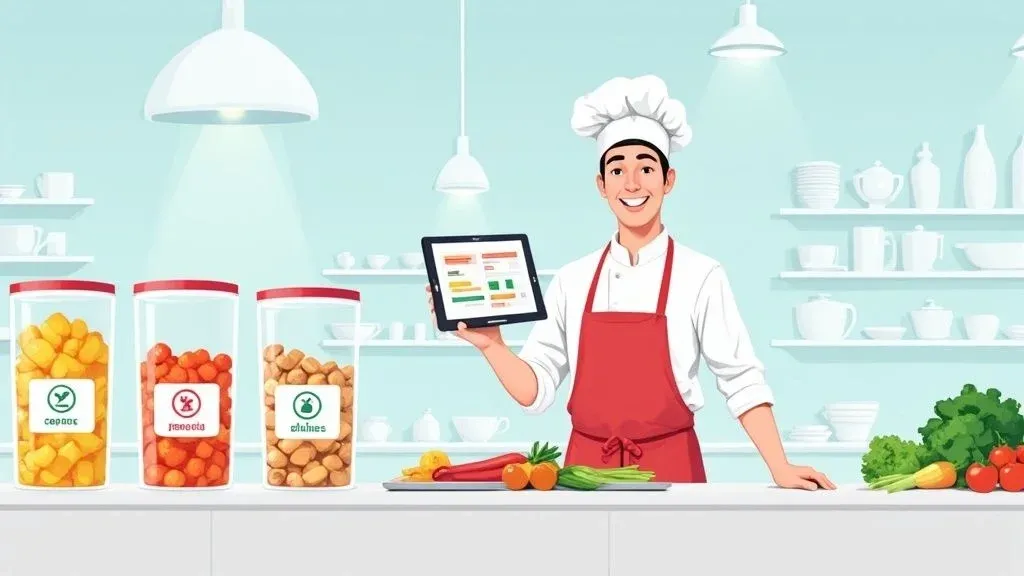
When you think about food waste, you probably picture spoiled produce or food scraped into a bin. But that’s just the surface. In simple terms, food waste is a silent operational problem that drains your labor, energy, and, most importantly, your profits.
If you start treating food waste as a major inefficiency—not just a cost of doing business—you can unlock significant savings and make your entire kitchen run more smoothly. This is about boosting your restaurant’s efficiency and bottom line.
The Hidden Costs of Food Waste in Your Restaurant
That unsold burger patty sitting under the heat lamp? It’s not just the cost of the ground beef you’re losing. Every single item that ends up in the trash carries a chain of hidden expenses that quietly chip away at your profits.
Let’s break it down in simple terms. Think about all the resources that went into that one patty:
- Labor Costs: Someone had to prep it, season it, and cook it. That’s paid time down the drain, reducing staff productivity.
- Energy Costs: The grill that cooked it and the walk-in that kept it cold both use gas and electricity.
- Supply Costs: What about the slice of cheese that was ready for it, or the portioned-out lettuce and tomato? More waste.
- Disposal Costs: Your waste removal bill is based on weight. Food is heavy, and more of it means higher fees and reduced cost savings.
Now, multiply that single patty by every bit of food that gets thrown out over a week, a month, or a year. The financial drain is staggering. It’s one of the biggest, yet most overlooked, threats to a healthy profit margin.

Why This Matters for Restaurant Operations and Delivery
Tackling food waste is a smart business strategy. Every dollar you save by preventing waste goes straight back into your pocket. Technically speaking, you’re optimizing your Cost of Goods Sold (COGS) and improving staff productivity without having to sell a single extra dish. This is critical for improving overall restaurant operations and maximizing profit from every order, including those from your restaurant delivery channels.
By tackling food waste, you are directly optimizing your cost of goods sold (COGS) and improving staff productivity. This isn’t just about being eco-friendly; it’s a powerful business strategy for any modern restaurant.
The scale of this issue is massive. Globally, about one-third of all food produced is wasted. For restaurants, this translates to millions of tons of waste each year. If food waste were its own country, it would be the world’s third-largest emitter of greenhouse gases.
How Food Tech and POS Integration Can Help
This is where modern food tech and POS integration become essential tools. Your point-of-sale (POS) system is much more than a cash register; it’s a data hub that helps you make smarter decisions.
For example, a POS system like Square can show you exactly which menu items are selling and which ones are collecting dust. This real-time sales data eliminates the guesswork in ordering. You’ll stop over-stocking ingredients for unpopular dishes that are just going to spoil. By integrating delivery platforms like DoorDash or Uber Eats with your POS, you ensure every order contributes to this data, giving you a complete picture of your inventory needs and preventing costly errors.
With waste under control, calculating your profitability becomes much more accurate. You can see how these savings add up by using a restaurant profit margin calculator to track your progress.
Before you can fix the problem, you have to understand it. The cost of waste is woven into every part of your operation. Recognizing this is the first step toward building a more efficient and profitable restaurant.
Running a Food Waste Audit From Kitchen to Customer
Before you can fix food waste, you need to know where it’s coming from. An old saying holds true: you can’t manage what you don’t measure. A food waste audit is your first, most critical step. It gives you a clear, simple picture of what’s being tossed, when, and why. This isn’t about guesswork; it’s about getting actionable data.
The goal isn’t to create a massive, time-consuming project. We’re talking about a straightforward framework that anyone on your team can follow. This empowers your staff to become part of the solution and gives you the insights needed to make immediate, meaningful changes.
Categorizing Your Waste for Clarity
First, let’s keep it simple. Breaking your waste into three core categories makes tracking easy and helps you pinpoint the problem, whether it’s in the kitchen or the dining room.
- Prep Waste: This is the unavoidable stuff from prepping ingredients—think vegetable peels, meat trimmings, and coffee grounds. Tracking it can spark creative ideas. Could those veggie scraps become a house-made stock?
- Spoilage: This is any ingredient that expires or goes bad before you can use it. A lot of spoilage is a huge red flag pointing straight to your inventory management and ordering habits.
- Plate Waste: This is simply what customers leave behind. If that side of quinoa is always coming back to the dish pit, it’s a clear signal. Maybe the portion is too big, the recipe needs a tweak, or it’s just not the right pairing.
The scale of this issue is staggering. The food service industry contributes to around 118 million tons of food waste globally every year. Much of this comes from simple inventory mistakes and inefficient prep, with estimates suggesting that 4% to 10% of all food a restaurant buys never even makes it to a customer’s plate.
To get a handle on this, a structured audit is key. The table below outlines a simple framework for categorizing and tracking the waste you find.
| Food Waste Audit Tracking Categories |
| :--- | :--- | :--- | :--- |
| Waste Category | What It Is | Where to Track It | Common Causes |
| Prep Waste | Trimmings, peels, unusable scraps from initial food preparation. | Prep stations, back-of-house bins. | Inefficient cutting techniques, lack of cross-utilization (e.g., for stocks). |
| Spoilage | Expired, rotten, or spoiled ingredients in storage. | Walk-in cooler, dry storage, pantry. | Over-ordering, poor stock rotation (FIFO issues), improper storage. |
| Plate Waste | Food left uneaten on a customer’s plate after their meal. | Dish pit, front-of-house bins. | Overly large portions, unpopular recipes or ingredients, poor food quality. |
By using these categories, you turn trash into organized data that tells a story about your restaurant operations.
Simple Tracking Methods for Busy Kitchens
Once you have your categories, it’s time to measure. You don’t need any fancy tech to get started. A few dedicated bins and a simple log sheet are all it takes.
Grab three bins and label them: Prep, Spoilage, and Plate Waste. Place them by your main trash area for easy use. At the end of each shift, have your team weigh each bin and record the numbers on a log sheet. This simple daily ritual creates a powerful connection to the problem and provides valuable data.

As this shows, the process is straightforward: sort, record, and review. In just a few days, you’ll have a much clearer idea of where your biggest waste streams are.
Connecting Waste Data to Your POS and Delivery Operations
The real power comes when you connect your audit findings to your sales and operational data. Let’s say your audit shows a lot of plate waste from a specific entrée. Your POS can help you dig deeper.
A modern POS system like Clover can track every menu item modification. Are customers constantly asking to hold the garlic aioli on that burger? Your audit showed the side of aioli often goes uneaten, and your POS data confirms it. Now you have solid proof.
This is especially important for your restaurant delivery business. With off-premise orders from platforms like DoorDash or Uber Eats, you don’t get immediate visual feedback. But if you notice complaints or returns on a particular delivery item, it could point to poor packaging or incorrect portioning. To learn more about syncing these processes, check out our guide on choosing the right restaurant order management system.
A food waste audit is more than just tracking trash—it’s an operational diagnostic tool. The data you gather is a direct reflection of your kitchen efficiency, purchasing accuracy, and even menu appeal.
Ultimately, making your team part of the solution is what makes it stick. Frame it as a team effort to make the restaurant more efficient and profitable. The data you gather will become the foundation for smarter ordering, better menus, and a healthier bottom line.
Your practical next step: Run a simple, one-week audit using the three-bin method. Find your single biggest source of waste and make one small change to fix it. You’ll be surprised at the impact on your cost savings.
Ready to automate your restaurant operations and gain more control? Start onboarding for free in just a few clicks.
Using POS Integration for Smarter Inventory
Your Point of Sale (POS) system does more than process payments—it’s the data-collecting brain of your restaurant. When you connect it to your inventory management, you’re not just saving time; you’re building one of your strongest defenses against food waste. This is where you shift from reacting to problems to preventing them.
In simple terms, every time a customer orders a dish, the ingredients are automatically subtracted from your inventory count. This POS integration gives you a live look at what’s on your shelves, which is key to stopping the two biggest culprits of spoilage: over-ordering and forgetting what you have. This is a fundamental part of running an efficient restaurant operation.
Linking Sales Data to Stock Levels
The magic happens when you turn raw sales information into smart insights. Forget digging through spreadsheets or relying on a manager’s “gut feeling.” A connected system automates the most frustrating parts of inventory control.
Here’s how that connection between front-of-house sales and back-of-house stock makes a tangible difference in reducing food waste in restaurants:
- Automated Deductions: Someone orders the Chicken Pesto Panini. The POS instantly tells your inventory system to deduct one chicken breast, two slices of provolone, and a scoop of pesto. This removes the human error common with manual tracking, reducing mistakes.
- Real-Time Accuracy: You always have an exact count of every ingredient. This helps you avoid running out of a popular item and prevents that sinking feeling when you discover cases of lettuce about to spoil.
- Informed Purchasing: Your ordering decisions are now based on hard data—what’s actually selling—not just on what you think you need. This data-driven approach is a game-changer for controlling costs and improving restaurant efficiency.
For example, a system like Square can integrate with apps that sync orders from delivery platforms like DoorDash. Every single transaction, whether dine-in or restaurant delivery, updates your stock counts on the spot, ensuring your data is always accurate.
Here’s a glimpse of how a third-party app can integrate with the Square App Marketplace to sync orders and inventory.

This screenshot shows the authorization step that allows apps to access your POS data, creating the automated link you need for live inventory tracking.
From Manual Headaches to Automated Alerts
One of the best features of this kind of food tech is setting up automated low-stock alerts. No more discovering you’re out of avocados during the Saturday lunch rush. The system can ping you when your stock hits a certain level, giving you plenty of time to reorder. It’s a huge stress reducer that stops expensive, last-minute runs to the grocery store and boosts staff productivity.
POS integration turns inventory management from a periodic, manual headache into a continuous, automated process. It’s about making smarter, data-backed decisions that directly cut waste and boost profits.
This automation also helps with prep lists. Your POS sales reports can give you accurate forecasts. If you know you typically sell 30 Caesar salads on a Friday but only 10 on a Monday, your kitchen team can prep the right amount of romaine. You avoid the waste that comes from over-prepping on slow days.
You can explore a whole world of point of sale integrations to see how different systems can work together to streamline these daily tasks.
The Takeaway
Connecting your POS to your inventory system closes a huge gap in your restaurant’s operations. You’ll minimize spoilage from over-ordering, cut down on costly mistakes from manual entry, and give your team more time to focus on guests. This isn’t just about better tracking; it’s about building a smarter, more profitable business.
Your practical next step: Check what your current POS system can do. Explore its app marketplace or talk to your provider about compatible inventory management tools. A small investment here can pay for itself many times over in saved food costs and reduced waste.
Ready to automate your restaurant operations and gain more control? Start onboarding for free in just a few clicks.
Fine-Tuning Your Menu and Kitchen Operations
https://www.youtube.com/embed/QtVfZuNuR5g
You’ve done your food waste audit. Now you have the data, and it’s time to put it to work in your kitchen and on your menu. This is where you shift from just measuring the problem to actively solving it.
This isn’t about massive changes. It’s about making small, intelligent tweaks to your daily workflow that have a huge impact on reducing food waste in restaurants. We’re talking about designing waste out of your system before it even happens. An efficient kitchen is built on proactive strategies, not reactive cleanups.
Smart Kitchen Practices That Cut Costs
The foundation of a waste-conscious kitchen is simple, disciplined habits. One of the most effective principles is a strict First In, First Out (FIFO) stock rotation. It’s basic, but it works. Organizing your storage so older ingredients are always used first prevents perfectly good food from getting lost in the back of the walk-in.
Cross-utilizing ingredients is another game-changer. This just means you design menu items that share common components, which keeps your inventory moving and slashes the risk of spoilage. For instance:
- Veggie Trimmings: Those onion peels and carrot ends? Don’t toss them. Simmer them down into a rich, house-made stock that costs you next to nothing.
- Imperfect Produce: A slightly bruised tomato might not be great for a Caprese salad, but it’s perfect for a rustic pasta sauce or a hearty soup.
- Protein Offcuts: Trimmings from steaks or fish can be repurposed for high-margin items like tacos, skewers, or even a staff meal. This ensures every last bit of your expensive protein is monetized.
These small adjustments directly boost your restaurant efficiency and pad your bottom line by reducing costs and increasing staff productivity.
Engineering Your Menu for Less Waste and More Profit
Think of your menu as more than just a list of dishes—it’s your most powerful sales tool. You can engineer it to guide customer choices and minimize waste. Your POS sales data is your guide, showing you which items are stars and which are just taking up space.
If your data reveals a dish is consistently unpopular, it’s tying up inventory, prep time, and cooler space for very little return. That’s a clear signal to rework the recipe, try a promotion, or cut it from the menu. Dropping one underperforming item can streamline both your prep line and your purchasing. For more on this, it’s worth reviewing strategies on how to increase sales for a restaurant, as menu optimization is a core component.
Beyond what you offer, how you present it matters. The visual design of your menu can nudge customers toward high-profit, low-waste options. Check out some of these inspiring menu board design ideas to see how great design can influence ordering patterns.
Your POS data is the most honest feedback you’ll ever get. Use it to hunt down unpopular dishes that create waste, and make data-driven decisions to fix them, replace them, or get rid of them.
Tying It All Together with Your POS
Your POS system is the central hub for this process. A modern system like Clover provides detailed, item-level sales reports, giving you a clear picture of what’s moving and what’s not. This POS integration creates a direct feedback loop between front-of-house sales and back-of-house decisions, whether the order comes from a dine-in customer or a restaurant delivery app like Uber Eats.
Get creative with this data! Noticing your bell peppers are on their last leg? Run a fajita platter special to move that inventory fast. You’ve just turned a potential loss into a profitable sale. Another effective trick is offering multiple portion sizes, which is easy to manage in most POS systems. Giving customers more control is one of the best ways to cut down on plate waste.
Your Next Move
Your practical next step: Schedule a quick meeting with your kitchen manager. Pull up your POS sales reports from the last month and compare them with your food waste audit notes. Together, identify one unpopular dish and one frequently wasted ingredient. Then, brainstorm a plan to either repurpose that ingredient or replace that dish.
Ready to automate your restaurant operations and gain more control? Start onboarding for free in just a few clicks.
Managing Plate Waste with Better Portion Control
We’ve talked about reducing food waste behind the scenes, but what about the food that comes back on plates? That’s a huge source of waste. This is especially true for restaurant delivery, where you don’t have the immediate feedback of seeing a half-eaten dish.
Tackling customer-generated waste means shifting your focus to portioning and presentation. It’s about closing the final loop in your waste reduction strategy. When you master portion control, you don’t just slash waste; you also nail consistency and protect your margins on every single order.
The Power of Precision and Standardization
The first step is to stop “eyeballing” portions. Consistency is key for keeping customers happy and costs in check. The good news is that using standardized recipes and simple serving tools are quick, low-cost ways to ensure every dish is the same size, every time.
Putting this into practice is simple:
- Use Portioning Tools: Equip your line cooks with scoops, ladles, and scales. A simple $2 scoop for rice or a $10 digital scale for weighing protein takes the guesswork out of the equation.
- Standardized Recipes: Your recipe cards should be crystal clear about portion sizes, like “6 oz. chicken breast” or “1/2 cup quinoa.” This guarantees uniformity and makes training new staff easier.
- Consistent Dishware: Using the same size plates and bowls for specific dishes gives your kitchen team a natural visual cue for plating the right amount of food.
This precision has a ripple effect across your entire restaurant operations. It simplifies training, makes the line more efficient, and ensures your food cost calculations are accurate, leading to significant cost savings.
Leveraging Food Tech for Smarter Serving
Your POS system can be a powerful ally here. By digging into your sales and modification data, you can spot trends that indicate your portion sizes are off or that certain parts of a dish aren’t popular.
For instance, a POS integration with a system like Clover can show you how often customers ask for “no side salad” or leave specific items off their order. A clear pattern is your cue to make that side optional. You’ll instantly reduce waste and save money.
Here’s a look at how you can manage third-party delivery apps through a Clover POS, giving you a single dashboard for all orders and their custom requests.

Pulling orders from DoorDash, Uber Eats, and others into one place makes it easier to track what your customers really want—and what they don’t—across every channel.
This isn’t a small problem. In the United States alone, consumers are responsible for nearly 35 million tons of food waste from plate scrapings and uneaten groceries. That adds up to a staggering $261 billion every year. You can learn more about the scale of food waste in America and see how these figures have evolved.
Optimizing for Restaurant Delivery and Takeout
When it comes to off-premise orders from platforms like Uber Eats or DoorDash, your best bet is to give customers more control. You can’t see what they leave behind, so you have to be proactive.
Offer customization options on your online menu. Allowing customers to opt out of sides, sauces, or garnishes they don’t want is one of the most effective ways to prevent plate waste before the order even leaves your restaurant.
This simple tweak also improves the customer experience. A diner who doesn’t want plastic cutlery or a side of coleslaw will appreciate being able to say so, and you save on both food and supply costs. It’s also smart to train your servers to listen for feedback from dine-in guests. If they keep hearing, “That was delicious, but I just couldn’t finish it,” it might be time to test a slightly smaller portion.
Your practical next step: Look at your top-selling delivery items. For one week, add a simple “optional” modifier to the most common side dish on your third-party delivery menus. Track how many customers choose to skip it—you might be surprised by the savings.
Ready to automate your restaurant operations and gain more control? Start onboarding for free in just a few clicks.
Putting It All Together: Your Game Plan for a Leaner Restaurant
We’ve covered the theory, but now it’s time for a practical plan. Slashing food waste isn’t about a massive overhaul. It’s about taking smart, manageable steps that create a ripple effect across your entire operation.
The best place to start is a simple food waste audit. It costs you nothing but time and gives you a clear picture of what’s ending up in the bin. From there, you can use the tools you already have more effectively. Your POS system, for instance, is a goldmine of data waiting to be used for smarter purchasing and menu planning.
Make Technology Your Ally for Lasting Change
The real magic happens when you connect all the dots. Imagine a system where your sales, inventory, and restaurant delivery data all talk to each other. This is where you can practically put waste reduction on autopilot.
When every order that comes in from DoorDash automatically updates the ingredient counts in your Square POS, you’re no longer guessing. You’re preventing spoilage before it happens. This deep POS integration is what turns the daily grind of restaurant operations into a smooth, predictable, and data-backed process, reducing errors and saving time.
Tackling food waste isn’t a one-and-done project; it’s a commitment to running a smarter, more efficient business. The payoff is huge—not just in cost savings, but in staff productivity and a stronger brand reputation.
For those truly committed to making a difference, it’s worth learning how businesses can achieve zero waste to landfill. Every bit of data you track and every process you tighten gets you closer to that goal. To dive deeper, check out our guide on maximizing cost efficiency in restaurant operations.
So, what’s your next move? Your practical next step: Start tracking. Commit one week to a basic audit and see what you find. It’s the first step on the path to a leaner, more resilient, and more profitable restaurant.
Ready to see how it works? Start onboarding for Free in a few clicks.
Your Top Questions Answered
Got questions about cutting down on food waste? Here are the answers to the most common ones, from how to get started with no budget to getting your team genuinely invested.
Where Should I Start if I Have a Limited Budget?
Your best first step is a manual food waste audit. It’ll cost you nothing but time.
For one week, set up three dedicated bins to separate and track waste from kitchen prep, spoilage, and customer plates. This simple exercise will instantly show you where your biggest problems are. You might discover you’re consistently tossing a specific herb or that a popular dish has a side that almost always comes back untouched. These are quick wins that don’t cost a dime to fix and provide immediate cost savings.
How Does POS Integration Actually Reduce Spoilage?
Think of it as a live communication line between your sales and your stockroom. A POS integration connects what you sell with what you have on the shelves, moving beyond guesswork.
Here’s a real-world example: A customer orders a margarita through your Square POS. The system instantly deducts the exact amount of tequila and lime juice from your inventory. Technically, this provides real-time, perpetual inventory data. This gives you an accurate picture of your stock levels, can trigger low-stock alerts, and creates purchasing forecasts based on what’s actually selling. It’s a game-changer for avoiding over-ordering perishable items and boosting overall restaurant efficiency.
How Do I Get My Staff to Care About Food Waste?
You can’t just hand down another rule. You have to make it a shared goal. Explain how reducing waste directly impacts the restaurant’s bottom line, which affects everything from job security to creating a better workplace. Their buy-in is essential for successful restaurant operations.
Involve your team from day one. Your chefs, servers, and dishwashers are on the front lines—they see what gets wasted every day and often have the best ideas for how to fix it. When they feel a sense of ownership, you get real, lasting change and improved staff productivity.
Try a little friendly competition between shifts. Offer a small reward, like a round of drinks or a staff meal, for the team that logs the least waste. When your staff feels like they’re part of the solution, they become your most powerful allies.
What Is the Most Overlooked Area of Food Waste?
Without a doubt, it’s plate waste from restaurant delivery. It’s a silent killer of food cost. With dine-in, you see what comes back to the kitchen. With delivery, that feedback loop is gone, so it’s easy to assume the customer ate everything.
The easiest way to tackle this is by offering more customization on your delivery menus through platforms like Uber Eats or DoorDash. Let customers opt out of a side salad, hold pickles, or skip the sauce. This simple tweak, managed through your POS integration, prevents waste before the order is packed, making a big difference to your profit margins on off-premise orders.
Ready to stop guessing and start knowing? Connecting your delivery platforms to your POS system puts waste reduction on autopilot. With OrderOut, you can pull all your operations into one place, cut down on errors, and get the hard data you need to make smarter, more profitable decisions. Start onboarding for Free in a few clicks.