
10 Most Popular Spanish Food Items for Your Menu
· Thibault Le Conte
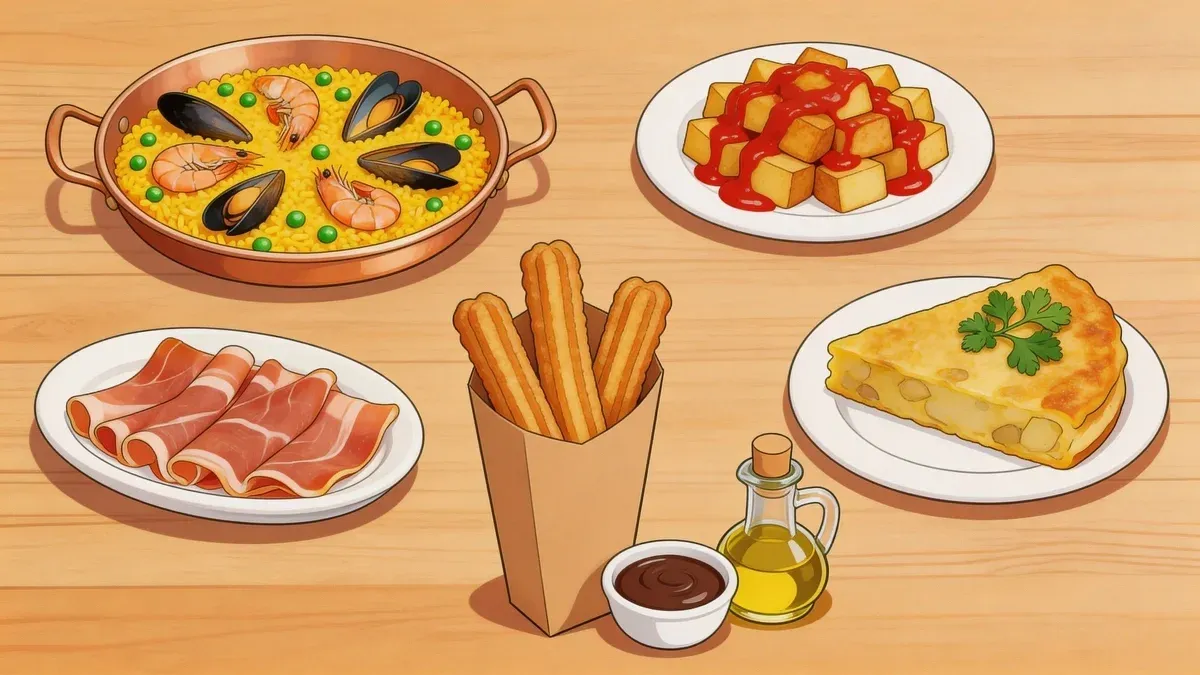
Friday night, the dining room is full, third-party orders are stacking up, and one poorly chosen menu item can stall the whole line. Spanish food solves that problem better than many operators expect because the category gives you built-in range: fast snacks, cold dishes, premium proteins, fried shareables, and a few centerpiece items that raise ticket size.
That mix matters in delivery. The most popular Spanish food gives restaurants more than broad guest appeal. It creates practical menu architecture. You can build bundles around tapas, protect margin with pantry-driven dishes, and use high-recognition items to pull customers in without forcing the kitchen into constant customization.
I recommend Spanish categories to operators who want variety without adding unnecessary prep complexity. Olive oil, potatoes, rice, cured meats, and preserved seafood are easier to portion, hold, and cost than many composed plates. The trade-off is execution discipline. Fried items need packaging that vents properly, cold soups need temperature control, and premium products need menu descriptions that justify the price.
The business case also lines up with current ordering behavior. Analysts tracking Spain’s foodservice market note continued growth tied in part to mobile ordering, which supports the same operating shift many restaurants are already dealing with: more off-premise demand, tighter labor, and greater pressure on ticket timing. For that reason, adding Spanish dishes works best when the menu is built for dispatch, not just for dine-in.
Order flow is part of the margin equation. If Uber Eats and DoorDash orders get re-entered by hand, the kitchen pays for it in missed modifiers, delayed firing, and packing errors. Restaurants using delivery app integrations that send orders straight into the POS give the line a cleaner queue and give managers better control over prep pacing, menu throttling, and item availability.
That is the lens for this list. These dishes are popular, but popularity alone does not protect profit. Ultimately, profitability comes from choosing the right Spanish items, setting them up correctly in your POS, and making sure each one can survive pickup, delivery, and a busy service without dragging down the rest of the menu.
1. Paella
Paella sells the idea of Spanish food better than almost anything else. Customers recognize it fast, and it gives your menu a centerpiece item that feels celebratory. That matters if you want one dish that anchors a Spanish category and supports larger basket sizes.
There’s also an authenticity issue worth handling with care. Popular lists tend to push tourist-friendly seafood versions, while the original Valencian style uses rabbit, chicken, and green beans cooked in a shallow pan. That gap keeps coming up for operators trying to build a menu that feels credible, and Tienda’s overview of Spanish foods reflects how often paella gets presented as a broad icon rather than a regional dish.
Make paella manageable in restaurant delivery
Paella can wreck your line if you treat every order as fully custom at peak. It works better when you narrow the format.
Use one or two house versions. Build prep around those. Then set expectations clearly on ordering channels.
- Limit variation: Offer a seafood version and one land-based version instead of a long build-your-own list.
- Control timing: Only accept paella during windows when the kitchen can commit to the cook time.
- Set bundle logic: Pair it with cold starters or desserts so staff can stage part of the order while the rice finishes.
Practical rule: If paella is on your delivery menu, it needs its own production rules. Don’t let it compete with your fastest items for the same station attention.
One simple operator move is to batch fire paella by prep cycle and communicate longer lead times in the app. This works well if you’re reviewing your mix of popular food delivery apps and deciding which channels deserve your premium items.
A real-world example. A restaurant using Clover or Square can route paella orders into the POS automatically, tag them by prep time, and avoid the front-of-house scramble of reading app tablets aloud to the line. That’s where Spanish food stops being a branding decision and starts becoming an operations win.
For visual inspiration, this classic prep style is useful to study:
2. Tapas
Friday at 7:15, the dining room is full, delivery tablets are firing, and a six-item tapas order can either protect margin or jam the whole line. Tapas work best when they are engineered as repeatable small plates with shared prep, predictable packaging, and tight POS routing.
Build tapas around station discipline
The common mistake is treating tapas like a creative category instead of an operating system. If every dish needs its own garnish, its own pickup timing, and its own container, ticket times stretch and food quality drops in transit.
A stronger setup uses a short core set. Cold tapas hold margin because they can be prepped ahead and packed fast. Fried tapas sell well, but they need strict limits during peak delivery windows. Hot sauced items can work, though only if the sauté or expo station runs clean under pressure.
A few rules I recommend:
- Sell fixed sets first: A 3-tapas combo is easier to price, easier to pack, and easier for guests to order than a long custom list.
- Cross-use ingredients: Potatoes, aioli, olives, manchego, jamón, and roasted peppers should appear across multiple SKUs.
- Separate dine-in and delivery menus: Keep fragile or last-second plates for the dining room and push the best-traveling items online.
- Standardize packaging by item type: One container for cold plates, one for fried items, one for sauced dishes. Staff move faster when packing decisions are made.
Tapas also give operators a reliable way to fill slower dayparts. If you are building bundles for drinks, pickup traffic, or afternoon snacking, a proven happy hour menu strategy adapts well to tapas flights and app-only sampler deals.
One practical setup is to map each tapas SKU to the correct prep station inside Square or Clover, then fire bundles as grouped tickets instead of separate app items. Expo sees one organized order, the kitchen avoids duplicate reads, and six small plates stop behaving like six different problems.
3. Gazpacho
Not every popular item needs heat lamps, fryers, or a stressed sauté cook. Gazpacho earns its place because it’s cold, fast, and easy to portion consistently.
It’s also a smart answer to seasonal demand. During warmer months, customers look for lighter options that feel distinctive. Gazpacho gives you a Spanish menu signal without adding service pressure.
Why it helps restaurant operations
The best delivery items are the least dramatic in the kitchen. Gazpacho is one of them.
You can batch it during prep, hold it cold, and portion it with little labor during rush periods. That gives your team a clean, reliable SKU for lunch and early dinner, if your hot line is stacked with burgers, bowls, or grilled mains.
A few good uses:
- Small cup add-on: Works well next to sandwiches, tapas, or salad orders.
- Combo anchor: Pair it with tortilla Española or bacalao salad for a lighter Mediterranean bundle.
- Seasonal feature: Refresh app photos and descriptions when weather turns warm.
Cold items are operational relief. They let the kitchen absorb delivery volume without slowing the line.
A real-world setup might look like this. Your Uber Eats and DoorDash menus feed directly into Clover, staff see gazpacho as a low-friction cold prep item, and expo can pack it while hot items finish. That’s the kind of menu balancing that protects ticket times without cutting variety.
4. Croquetas
Croquetas are one of the easiest Spanish items to sell because customers understand them. Crispy outside, creamy center, familiar flavors. They’re comfort food with a premium accent.
They’re also highly adaptable. Jamón, mushroom, cheese, cod, or chicken all fit the format. For operators, that means one production method can support several menu personalities.
Best use in food tech and prep systems
Croquetas belong in a disciplined prep program. Form them ahead. Bread them ahead. Label them clearly by filling. Then fry to order.
That makes them useful across dine-in, pickup, and restaurant delivery because the kitchen isn’t building the item from scratch during service. The mistake operators make is offering too many varieties too early. Start with one flagship version and one rotating special.
A few trade-offs matter:
- A larger assortment creates inventory complexity.
- Fry quality drops fast if staff are rushing mixed batches.
- Sauces increase perceived value, but too many cups slow packing and raise error risk.
For delivery, I’d rather see a tight offering like “Jamón Croquetas” and “Croqueta Sampler” than a long list of individual pieces with endless modifiers.
Croquetas also benefit from direct POS flow. If a DoorDash order for multiple croqueta boxes lands in Square automatically, your kitchen can read one clean ticket instead of trying to decode separate app customizations. That’s useful when fried items are competing for fryer space with potatoes, churros, or other bar food.
5. Patatas Bravas
Patatas bravas are simple. That’s exactly why they matter. They’re one of the best support items on a Spanish menu because they’re familiar enough for broad appeal and distinct enough to feel branded.
This is not the dish that makes your restaurant famous. It’s the dish that improves order economics. People add potatoes. Groups share potatoes. Staff can produce potatoes quickly when the prep is right.
What works and what doesn’t
The dish succeeds on texture and sauce discipline. If either side slips, customers notice.
What works:
- Par-cook during prep: Get the potatoes mostly there before service.
- Use separate sauce cups for delivery: That protects crispness better than full tosses.
- Keep naming straightforward: “Patatas Bravas” with a short description sells better than overexplaining it.
What doesn’t work:
- Overloading with toppings: Extra garnish slows assembly and doesn’t improve travel.
- Weak aioli management: If your garlic sauce splits or leaks, you create packing problems.
- Treating it like fries: Bravas need their own sauce identity, not generic condiment packets.
This is also a strong item for testing modifier logic inside your POS. You can let customers choose mild or spicy sauce, extra aioli, or no sauce without complicating the cook line too much. In Clover or Square, that kind of controlled customization is useful because it increases flexibility without turning one potato dish into ten production paths.
6. Jamón Ibérico
A Friday night rush exposes menu weaknesses fast. Hot items back up the line, fried food loses texture in transit, and premium dishes create more labor than margin. Jamón solves a different problem. It gives a Spanish menu immediate credibility without adding another cook station, and that matters if the goal is profitable volume across dine-in, pickup, catering, and delivery.
A tourist favorites survey summary places jamón at the top of Spain’s best-known dishes and also notes the product’s cultural status and premium pricing structure under Spanish regulations, as noted in this survey summary on tourist favorites and Spain’s ham culture.
Premium margin depends on portion control
Jamón looks simple on the plate. Operationally, it only works if purchasing, slicing, and menu language stay tight.
The first decision is product tier. Serrano gives you a lower entry cost and broader accessibility. Ibérico gives you a stronger check average and a clearer premium story. Both can work. Problems start when the menu description is vague and guests do not understand why one plate costs much more than another.
I recommend selling jamón in formats that fit existing order behavior. A small shared plate works for dine-in. A bocadillo or add-on protein works for lunch. A ham board works for catering. For off-premise sales, keep the build restrained. Bread, ham, maybe a simple accompaniment. Extra garnish adds cost, weakens presentation, and does little for perceived value.
This is also a good item for POS discipline. Set fixed weights or slice counts by SKU, then tie each version to a clear modifier path. That keeps staff from freehanding premium portions during a busy shift. If you want to test packaged dessert attachments or event bundles alongside charcuterie and bocadillo orders, this kind of upsell structure pairs well with lessons from a dessert food truck menu strategy.
Catering angle matters here too. Spanish ham boards and sandwich trays travel well than many composed hot dishes, and they are easier to stage in batches. The margin is protected in prep, not at pickup. Teams that treat jamón as a controlled assembly item get better consistency than teams that present it as a luxury special and leave execution loose.
In day-to-day service, jamón earns its place because it adds brand signal, carries premium pricing, and stays operationally light if the portion standards are strict.
7. Churros con Chocolate
Churros are one of those dessert items that operators underestimate until they see attachment behavior. Customers might not open the app looking for dessert, but once churros appear as an easy add-on, they convert well.
There’s also a broad market signal behind that. A gap analysis in the provided research notes post-2025 delivery surges for tapas and churros in major US and EU markets, with churros rising as fair-style snacking gained traction, summarized in the CIEE ranking of Spanish foods context piece. The exact operational takeaway is straightforward. This is a snackable item with delivery demand.
Keep dessert production tight
Churros travel well when you control moisture. They disappoint customers when you seal them too early, overpack sauce, or let sugar dissolve in steam.
Good operational habits:
- Vent the package: A little airflow protects texture.
- Sauce separately: Chocolate belongs in its own cup.
- Offer clear sizes: A small and large format is usually enough.
This item also expands dayparts. Churros can work after lunch, during afternoon snack windows, and as a late-night add-on. If you run a mobile concept or dessert extension, the merchandising ideas in this dessert food truck article can translate well to app-based dessert sales.
A practical example. If Square receives the order directly from Uber Eats, the kitchen can batch dessert prep while mains are still firing, instead of discovering an app-only churro request after the food is already packed. That small timing fix matters.
8. Ensalada de Bacalao
A Spanish menu needs at least one item that speaks to the health-conscious customer without looking generic. Ensalada de bacalao does that well.
Salt cod, potatoes, peppers, onions, olive oil, and vinegar create a dish that feels rooted in Mediterranean cuisine but works on modern delivery menus. It’s useful if your current Spanish lineup leans heavily fried or indulgent.
Use it to widen your customer base
Not every customer ordering from a Spanish restaurant wants croquetas and churros. Some want something cooler, cleaner, and protein-forward. Bacalao salad gives you that option without drifting into non-Spanish territory.
Operationally, it’s a prep item. That’s the main advantage. You can stage components in advance and assemble quickly. The risk is inconsistency in desalting and seasoning. If one batch is balanced and the next is too salty, customers won’t give you much grace.
I’d position this dish in a few specific ways:
- Lunch-friendly main: Especially strong for office orders.
- Bundle partner: Pair with gazpacho for a cold Spanish combo.
- Mediterranean category bridge: Helps customers who don’t know Spanish food find a comfortable entry point.
Cold items are operational relief. They let the kitchen absorb delivery volume without slowing the line.
This is also where good item descriptions matter inside delivery apps. If customers don’t recognize “bacalao,” explain it plainly as cod salad. Technology helps, but menu language closes the sale.
9. Tortilla Española
Tortilla Española is one of the best utility players in Spanish cuisine. It can be a tapa, a light entrée, a side, a breakfast item, or a sandwich filling. Few dishes give operators that much flexibility from such a short ingredient list.
That flexibility matters because Spain’s food and beverages market is expected to reach USD 28.8 billion in 2025 and grow at a 2.87% CAGR to USD 37.1 billion by 2034, with health-conscious demand shaping product choices according to IMARC’s Spain food and beverages market analysis. Tortilla fits neatly into that environment because it’s familiar, filling, and simple.
A menu design win for restaurant operations
The smart way to use tortilla is to avoid overcomplicating it. One classic version beats several novelty versions unless your concept is specifically brunch-driven or regional.
You can sell it as wedges, plate it with salad, or slide it into bread for a portable lunch item. It also gives your kitchen a prep-ahead item that doesn’t need minute-by-minute finishing.
A few strong uses:
- All-day menu anchor: Breakfast through dinner.
- Vegetarian-friendly default: If you use onions, state it clearly because customers have opinions.
- Low-stress delivery item: It holds better than many egg dishes.
If you’re refining how it appears across channels, good menu design software helps keep naming, photos, and modifiers consistent between your POS and delivery platforms.
A dish earns its place on a delivery menu when the kitchen can execute it the same way on a busy Friday that it does on a quiet Tuesday. Tortilla passes that test.
For operators trying to add the most popular spanish food without creating service bottlenecks, tortilla is one of the safest bets.
10. Pulpo a la Gallega
Pulpo a la Gallega is the item that tells customers you’re serious about regional Spanish food. It’s not for every menu, but in the right market it enhances perception quickly.
Tender octopus with olive oil, paprika, and coarse salt sounds simple. It isn’t simple operationally unless your sourcing is disciplined. That’s the whole game with pulpo. Buy well, portion with care, and don’t overhandle it.
Where premium seafood makes sense
This item works best when your customer base is comfortable with premium seafood. If your menu is value-driven and heavily discount-oriented, pulpo can sit awkwardly and create waste.
Where it does fit, it creates range. A customer might order patatas bravas and croquetas one day, then choose pulpo when they want something more special. That broadens your average menu perception even if the item itself sells in lower volume.
A few operator notes:
- Use pre-portioned packs when possible: That protects consistency.
- Keep plating restrained: Oil, paprika, salt, and maybe potatoes. Don’t bury it.
- Explain the regional story: “Galician octopus” sells better than just “octopus.”
Pulpo also pairs well with premium bundles. In a Clover or Square environment with integrated delivery, you can create a seafood-focused combo or a higher-end Spanish tasting set without asking staff to manually ring pieces from multiple platforms. That’s where food tech supports upscale menu strategy rather than just basic order handling.
Top 10 Spanish Foods Comparison
Item Implementation Complexity 🔄 Resource Requirements ⚡ Expected Outcomes ⭐📊 Ideal Use Cases 📊 Key Advantages 💡 Paella High: precise timing and coordination required Medium-High: wide pan, saffron, varied proteins, POS batching High revenue per order; strong visual appeal and repeat business Dine-in, special events, signature menu item, party orders High margins, shareable, versatile proteins Tapas Low-Medium: many small preparations and assembly Low-Medium: diverse ingredients, small‑plate packaging, KDS/POS support Higher order volume and ticket through samplers; fast turnover Delivery platforms, bars, sampler bundles, testing new items Fast prep, flexible menu depth, ideal for bundling Gazpacho Low: no cooking, simple blending and chilling Low: fresh produce, blender, refrigeration Very high margins seasonally; health positioning Summer promotions, cold delivery items, healthy menus Batch-prep, long shelf life, minimal labor Croquetas Medium: breading, frying and temperature control Medium: fryer, prep/assembly space, freezer storage High margins; popular add‑on with strong delivery performance Tapas menus, bundled delivery items, add-on programs Portion-controlled, freezer-friendly, holds well in transit Patatas Bravas Low: simple frying/assembly Low: potatoes, fryer, sauces, minimal equipment Very high margins; universal appeal and fast fulfillment High-volume delivery, filler item, lunch/dinner sides Extremely low cost, quick prep, easy to bundle Jamón Ibérico Low: minimal service prep (plating) High: expensive ingredient, supplier relationships, proper storage Premium positioning; increases average ticket but niche demand Upscale menus, premium delivery, charcuterie boards Zero cook labor, boosts brand perception Churros con Chocolate Low-Medium: frying to order with timing sensitivity Low: fryer, chocolate sauce, piping equipment Very high margins; strong dessert attachment rates Dessert add-ons, afternoon snack delivery, social media promos Low cost, high perceived value, Instagram-friendly Ensalada de Bacalao Low: prep and desalting require planning Medium: salted cod sourcing, fresh produce, chilled storage Good margins; appeals to health-conscious customers Cold delivery, health-focused menus, seasonal offerings Batch-prepable, protein-rich, perceived as healthy Tortilla Española Low: single cook, slice and serve Low: eggs, potatoes, pan; can be prepped ahead High margins; versatile across dayparts and formats Breakfast/brunch, tapas, sliced bulk orders Make-ahead efficiency, room-temperature service, portion control Pulpo a la Gallega Medium: proper texture/handling required High: quality octopus sourcing, higher ingredient cost Premium pricing and differentiation; moderate volume demand Seafood-focused menus, upscale delivery, seasonal specials Authentic regional appeal, premium margin opportunity
Your Next Step Integrate, Optimize, and Profit
Friday night is where menu ideas either make money or create chaos. A paella pickup fires late, three tapas orders arrive with custom swaps, churros sit too long at expo, and someone has to retype a delivery ticket while the line is backed up. Spanish food sells on appeal, but it only performs when the menu, kitchen flow, and order intake are built to handle volume.
The operators who get real margin from these dishes treat them as a system. Paella needs controlled production windows and clear cutoff times. Tapas need tight modifier rules so the line does not lose speed. Gazpacho and ensalada de bacalao carry delivery well and help smooth prep across the day. Croquetas, patatas bravas, and churros can be strong add-ons if fryer capacity is planned before the rush, not during it. Tortilla Española gives you one of the most flexible SKUs on the menu because it works across breakfast, lunch, tapas service, and delivery with little adjustment.
Menu engineering matters more than menu length. A smaller Spanish lineup that travels well, batches cleanly, and fits your station setup will outperform a broader list with uneven execution. I advise operators to start with one premium anchor, one or two cold items, two fried add-ons, and one all-day core item. That mix gives you price range coverage without creating production drag.
Order handling is the next pressure point. Delivery gets expensive fast when staff are bouncing between tablets, keying orders into the POS by hand, and correcting avoidable mistakes at the pass. Sending Uber Eats, DoorDash, and Grubhub orders straight into the POS cuts those extra touches, keeps tickets consistent, and gives the kitchen one workflow to follow.
The first gains are operational. Fewer re-entry errors. Cleaner modifier control. Better pacing on items with narrow holding windows, such as paella and churros. More consistent output on prep-dependent dishes like croquetas and tortilla.
If your team is working with Clover or Square, direct delivery integration keeps menu data tighter and reduces the usual confusion during peak periods. That matters even more with Spanish menus, where small changes in timing, packaging, or portioning can affect food quality by the time the order reaches the guest.
Ready to stop juggling tablets and start streamlining your kitchen? Start onboarding with OrderOut for free in a few clicks and connect your delivery apps directly to your POS system today.
OrderOut helps restaurants turn delivery from a labor drain into a cleaner operating system. If you’re adding Spanish menu items and want Uber Eats, DoorDash, and Grubhub orders to flow directly into Clover, Square, Pecan, and other POS systems, OrderOut gives you a practical way to reduce manual entry, cut order errors, and keep your kitchen focused on production instead of tablet management.