
Marketing Plans for Restaurants: Boost Your Orders with Proven Strategies
· Thibault Le Conte
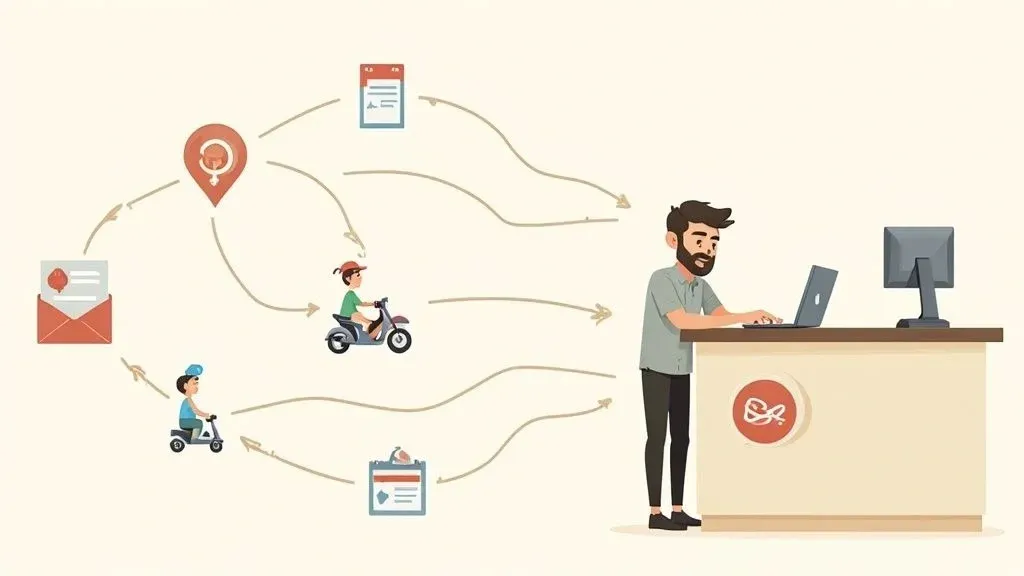
Think of a restaurant marketing plan as your game plan. In simple terms, it’s the playbook that helps you attract new customers and keep your regulars coming back. A great plan ensures your marketing efforts aren’t just random posts and ads; they’re directly connected to your business goals, like getting a 20% bump in online orders or packing the house on a Tuesday night.
Why it matters: A solid marketing plan directly impacts your restaurant’s efficiency. When your marketing efforts seamlessly feed new orders into your delivery and Point of Sale (POS) systems, you reduce chaos in the kitchen, minimize costly mistakes, and free up your staff to focus on in-house guests. This turns marketing spend into profitable, manageable growth.
Building Your Restaurant’s Marketing Foundation

Staring at a blank document labeled “Marketing Plan” can feel overwhelming. The key is to break it down into smaller, actionable steps.
Before you can tell the world how great your restaurant is, you need to be crystal clear on what makes you unique. This is about more than just your menu; it’s about the entire experience you offer. This core identity is the foundation of your marketing, guiding every decision from your Instagram posts to your happy hour specials. Since a customer’s first impression often happens online, a great website is non-negotiable. If you need inspiration, check out these tips for Modern Website Design for Restaurants.
Let’s look at the must-have components of your plan.
Core Components of a Restaurant Marketing Plan
This table breaks down the foundational pillars of any effective marketing plan for restaurants. Think of it as a quick checklist to make sure you’ve covered all your bases.
Pillar Simple Explanation Actionable Example Brand Identity Who you are and what you stand for. Your restaurant’s unique personality. A family-owned Italian spot focused on tradition, community, and fresh ingredients. Goals & KPIs Specific, measurable targets that define what success looks like. Increase online delivery orders by 20% in the next three months. Target Audience A deep understanding of your ideal customer—not just who they are, but what they care about. Young professionals (25-35) who value convenience, healthy options, and sustainability. Channel Strategy The specific platforms you’ll use to reach your target audience. Focus on local SEO (“best tacos near me”) and Instagram food photography. Budget & Calendar How much you’ll spend and when you’ll execute your campaigns. Allocate $500/month for social media ads, with a campaign for the new summer menu in June.
With these core pieces in place, you’ve built a solid framework to guide every marketing decision you make.
Define Your Goals and Brand Identity
So, what are you actually trying to achieve? Simply saying “I want more customers” is a wish, not a goal. You need to get specific and set measurable targets.
For example, a solid goal is to “increase delivery orders through DoorDash by 20% in the next quarter” or “boost weeknight reservations by 15%.” These are numbers you can track in your sales reports. These goals should feel like a natural extension of your brand’s mission. If you haven’t nailed that down yet, our guide on the importance of a restaurant’s mission, vision, and core values is the perfect place to start.
Why it matters: Clear goals connect marketing directly to your daily restaurant operations. For instance, when a marketing campaign designed to boost delivery sales works, those new orders need to flow smoothly into your POS system, like Square or Clover. This integration streamlines your delivery process, cutting down on staff stress and costly order mistakes.
Pinpoint Your Ideal Customer
Once you know what you want to achieve, you need to figure out who you’re talking to. It’s not enough to know their age and where they live; you need to understand their habits.
Ask yourself these practical questions:
- What problem are they solving? Are they looking for a quick, convenient lunch, a fancy date night spot, or a family-friendly place?
- Where do they look for answers? Are they scrolling TikTok for food trends, or are they typing “restaurants near me” into Google?
- How do they decide? Do they rely on Yelp reviews, trust recommendations from friends, or get swayed by a mouth-watering post on Instagram?
Knowing your audience inside and out means you can craft messages that actually land and pick the channels where they’ll see them. This isn’t just busywork—it’s how you ensure every dollar in your marketing budget pulls its weight and drives real orders into your POS system.
Mastering Local SEO to Attract Nearby Customers

Think of local Search Engine Optimization (SEO) as your digital welcome mat. In simple terms, it’s how you show up at the top of the list when a hungry customer pulls out their phone and searches for “best tacos near me.”
This is one of the most direct and effective parts of any restaurant marketing plan today. It’s not about being a tech expert; it’s about making sure your restaurant’s information is accurate everywhere customers are looking—especially on Google. The goal is simple: make it incredibly easy for people in your neighborhood to find you, see your menu, and place an order.
Why it matters: A solid local SEO strategy funnels high-intent customers—people looking to eat right now—straight to your online ordering system. When that system syncs up with your POS, the whole process becomes seamless. For example, a customer finds you on Google Maps, orders, and that order appears directly in your kitchen. This integration cuts down on manual entry mistakes and frees up your staff to focus on guests, directly improving restaurant efficiency.
Your Google Business Profile Is Your Digital Storefront
Your Google Business Profile (GBP) is the most important tool you have for local SEO. It’s that info box that pops up in Google Maps and search results, showing your hours, photos, address, and reviews. Leaving it incomplete is like locking your front door during peak hours.
Learning how to optimize Google My Business for local success is a must. You can’t just list your name and address; you have to treat it like a living profile that gives potential customers a real taste of your restaurant.
Here are actionable steps to take today:
- Fill Out Everything: Complete every single field Google gives you, including service options (delivery, dine-in, curbside) and attributes like “outdoor seating.”
- Upload Great Photos: Show off your best-looking dishes, the vibe of your dining room, and your staff. People eat with their eyes first.
- Turn On Messaging: This lets customers ask quick questions right from your profile, giving you a chance to provide fast, helpful answers.
A complete profile sends strong signals to Google that your business is active, which helps you rank higher in local searches and drives more orders.
Encourage and Manage Your Online Reviews
Online reviews are the new word-of-mouth. They are a massive factor in your local search ranking and a huge driver of trust. Any good marketing plan must include a strategy for actively getting and managing reviews.
Don’t just wait for good ones to appear. Train your staff to politely ask happy customers to share their experience online. A simple QR code on receipts that links to your review pages can work wonders.
Responding to reviews—both good and bad—is crucial. A thoughtful reply to a negative review can turn a bad situation into a public display of fantastic customer service. It shows everyone you care.
Why it matters: Active reputation management directly impacts your bottom line. More positive reviews mean better visibility on platforms like DoorDash, which drives more traffic to your online ordering. When those orders flow smoothly into your food tech setup, like a Clover or Square POS, the efficiency boost is immediate. This error reduction means less wasted food and higher staff productivity.
For a deeper look, check out our guide on local SEO for restaurants.
Driving Orders with Social Media and Delivery Apps
Social media and third-party delivery apps are no longer just marketing channels—they’re essential sales channels. Think of them as digital storefronts, working 24/7 to pull in new customers and send orders to your kitchen. A successful restaurant marketing plan treats these platforms as a direct pipeline to profit.
The goal is to turn passive scrollers into paying customers. It’s about showing the real soul of your restaurant—the sizzle of a steak, the swirl of a latte, or the smile of your server. Real, authentic content builds a following and makes you the first place people think of when hunger strikes.
Creating Crave-Worthy Social Content
Your social media feed is your restaurant’s highlight reel. It’s your chance to make a great first impression and build a connection with diners. Your smartphone is all you really need to get started.
Here are a few simple ideas that work:
- Go Behind the Scenes: Show off your chefs in action. A quick video of someone hand-rolling pasta is far more interesting than another static food photo.
- Put a Face to the Name: Introduce your team. A post about your head chef’s favorite dish adds a human element people connect with.
- Let Your Customers Do the Talking: Share photos from your guests (with permission!). This User-Generated Content (UGC) is authentic marketing that shows how much people love your restaurant.
Visual platforms like Instagram and TikTok are powerhouses for restaurants. According to one restaurant industry report, diners frequently use these platforms to discover new places to eat.
Maximizing Your Restaurant Delivery App Partnerships
For many potential customers, apps like Uber Eats and DoorDash are the go-to search engine for food. Simply being listed isn’t enough; you have to actively manage your profile to stand out.
Your mission is to make choosing your restaurant a no-brainer. This means mouth-watering, high-quality photos for every single item, compelling descriptions, and smart promotions. Running a simple “free delivery on orders over $30” campaign can dramatically boost your visibility and get orders rolling in. For more tips, read how to optimize your third-party delivery service.
Why it matters: A well-managed delivery profile gets you in front of more eyes within the app’s algorithm, turning that app traffic into real, tangible revenue. This is a direct line from marketing effort to sales.
Connecting the Dots with POS Integration for Restaurant Operations
Here’s where marketing meets your day-to-day restaurant operations. Let’s say your social media posts go viral and orders start flooding in. This sounds great, but it can quickly turn into chaos if your kitchen can’t keep up.
This is the problem of “tablet hell”—when your staff is frantically juggling multiple delivery tablets, manually punching every order into your main POS system. This manual data entry is a massive bottleneck. It’s slow, it’s prone to expensive mistakes, and it kills staff productivity. Every minute your host spends re-typing an order is a minute they aren’t helping a guest.
This is exactly what a tool like OrderOut solves. It acts as a bridge, automatically feeding orders from all your delivery apps directly into your POS system. For example, an order placed on Uber Eats can show up instantly in your Square or Clover POS, with no manual entry required.
This type of POS integration ensures the demand you generate online is handled smoothly and profitably, saving time, reducing errors, and keeping your kitchen running efficiently.
Your Next Step: Stop letting manual order entry drain your profits. Connect your marketing efforts with a streamlined operational workflow. You can start onboarding for Free in just a few clicks at https://dashboard.orderout.co.
Building Loyalty Through Smart Email and SMS Campaigns

Getting new customers is great, but turning them into regulars is where sustainable profit comes from. Email and SMS marketing are your direct lines for having personal conversations with your guests long after they’ve paid the bill.
This isn’t about sending generic ads. It’s about delivering real value—a surprise birthday discount, a sneak peek at a new menu, or an exclusive offer. These personalized touches build a real connection and deliver a higher return than traditional ads because you’re talking to people who already know and like you.
How to Ethically Collect Customer Contacts
The foundation of any good email or SMS campaign is a list of people who want to hear from you. The easiest place to get this information is right at the point of sale.
Modern POS systems from providers like Clover and Square make this simple. During checkout, the system can prompt customers to enter their email for a digital receipt. This is the perfect moment to also ask if they’d like to join your loyalty club.
Here are a few proven ways to build your list:
- Go Digital with Receipts: Offer to email or text the receipt and include a simple checkbox to opt-in for marketing messages.
- Use On-Site Promos: A small sign or QR code at the register can offer an immediate reward (like 10% off) for signing up.
- Leverage Your Website: Add a pop-up on your website offering a discount on their first online order in exchange for their email.
The most important thing is transparency. Always be upfront about what they’re signing up for.
Crafting Campaigns That Actually Get Opened
Once you have a list, the goal is to send messages that feel less like marketing and more like a note from a favorite spot. This is where automation becomes your best friend.
Think about setting up automated campaigns that trigger based on customer actions. For example, a new subscriber could get a welcome email with a special offer. For a deeper dive, you might be interested in our guide on effective email marketing for restaurants.
Why it matters: Automating these campaigns connects your marketing directly to restaurant efficiency. Instead of your staff manually tracking birthdays, the system works in the background, driving repeat visits and boosting revenue without requiring extra labor. This is a prime example of using food tech to improve staff productivity and save time. Data from restaurant industry trends shows that loyalty programs directly increase customer traffic.
Email vs SMS Marketing for Restaurants
Deciding between email and SMS can be tricky. The best choice often depends on your message. Here’s a quick breakdown.
Feature Email Marketing SMS Marketing Best For Newsletters, detailed promotions, menu updates, storytelling, and building brand loyalty. Flash sales, time-sensitive offers, order confirmations, and urgent alerts. Open Rate Around 20-30% As high as 98% Content Format Rich content with images, videos, and links. Great for visual appeal. Short, text-only messages (usually 160 characters). Direct and to the point. Cost Generally lower cost per message, especially for larger lists. Can be more expensive per message, but offers high engagement. Customer Action Encourages browsing, reading, and clicking through to a website or menu. Drives immediate action, like placing an order now or visiting today.
A smart strategy often uses both: SMS for urgent, can’t-miss offers and email for deeper, relationship-building content.
Your Next Step: Look at your checkout process. What’s the simplest way you can start asking for customer contact info? Whether it’s a feature in your Square device or a simple sign-up sheet, start building that list today.
Using Food Tech to Streamline Your Marketing and Operations
You’ve built a brilliant marketing plan, and the orders are finally rolling in. This is great, but all that effort can backfire if your kitchen can’t handle the new demand.
This is where smart food tech, especially POS integration, becomes the secret weapon behind a profitable restaurant. When a marketing campaign works, it creates a flood of new orders. Without the right systems, that flood turns into chaos, frustrating your kitchen crew and disappointing new customers.
The End of Tablet Hell with POS Integration
Picture this: It’s Friday night, and you’re slammed. Orders are coming in from Uber Eats, DoorDash, and your website. Your host is juggling three different tablets, frantically punching each order into your main POS system. Inevitably, an order gets missed or typed in wrong. This is “tablet hell”—a massive drain on your resources.
This manual process is a direct hit to your bottom line. It wastes labor hours, increases the odds of expensive mistakes, and slows down your entire service. It’s a bottleneck that kills staff productivity.
Why it matters: Every minute a team member spends on manual order entry directly hammers your restaurant operations, leading to slower service, higher labor costs, and a much greater chance of error reduction failure. For example, a major delivery platform like DoorDash relies on speed and accuracy. Manual entry undermines both, hurting your ratings and potential future orders.
This is why seamless POS integration is a game-changer. Tools like OrderOut act as the central hub for all your digital orders. They grab every order from every platform and feed them directly into a single system, whether you’re using a Square or Clover POS.
That simple connection ends the madness. Orders appear in your kitchen’s workflow instantly and accurately. Your team is freed up to focus on what they do best: making great food. For a deeper dive, check out our guide on POS integration software.
Technology as a Driver of Growth and Efficiency
Getting your tech to work together isn’t just about preventing mistakes; it’s about building a foundation for growth. As restaurateurs look to the future, tech-driven marketing is setting the winners apart. Recent restaurant industry statistics show that a majority of operators are upgrading their POS systems specifically to improve online ordering and customer management.
By adopting tools that make you more efficient, you create the breathing room to handle the new business your marketing brings in. Technology connects your marketing efforts directly to your operations, creating a powerful cycle of customer engagement without piling more manual work onto your team.
Making Every Marketing Dollar Count
Let’s look at the real-world impact. Say you spend $500 on a social media campaign that brings in 50 new delivery orders.
- Without Integration: Your staff spends an extra 2-3 minutes per order on manual entry. That’s over two hours of paid labor just to process that new business. If just two of those orders are entered incorrectly, you lose money remaking food and likely lose a customer forever.
- With Integration: The orders flow right to your kitchen. There is zero extra labor cost for order entry, and the chance of a manual error is eliminated. The full value of your marketing spend is captured efficiently.
This isn’t just about convenience; it’s about making your business more resilient. The time savings and error reduction from automation mean your team can handle a higher volume of orders without feeling crushed, ensuring a great customer experience.
Your Practical Next Step: Take a hard look at your current order-taking process. Calculate the time your staff spends manually entering delivery orders each week. That number represents a direct and immediate opportunity for cost savings and a huge boost in efficiency.
Streamlining this one workflow is one of the most impactful operational improvements you can make. You can start the process for free in just a few clicks at https://dashboard.orderout.co.
Turning Your Plan into Profit
We’ve laid out the pieces, but a great restaurant marketing plan is more than a collection of ideas. It’s a system where marketing brings in customers, and your operations can handle the rush without breaking a sweat.
Think of it this way: marketing and operations are two sides of the same coin. A killer campaign is only a win if you can get those orders out correctly and on time. If your marketing works too well, it can create your biggest headache, swamping your staff and leading to mistakes that turn first-time customers into one-time customers.
It All Comes Down to Workflow
The real magic happens when you tie your marketing efforts together with technology that smooths out friction points. The goal is a seamless journey from the moment a customer finds you online to the second their order fires in the kitchen. This is where POS integration becomes your secret weapon, turning the demand you create into revenue, not chaos.
The Clear Takeaway: An integrated system that sends orders from apps like Uber Eats and DoorDash straight to your POS eliminates the single biggest bottleneck in a modern restaurant—manual order entry. This immediately reduces mistakes, frees up your staff, and makes your entire operation more profitable.
Your First Three Moves
Feeling overwhelmed? Don’t be. Here are three actionable things you can do right now to see a real difference.
- Go All-In on Your Google Business Profile. This is your digital storefront. Fill out every field. Upload at least 10 mouth-watering photos. Most importantly, start asking for reviews and reply to every single one. It’s the single highest-impact, lowest-cost marketing task you can tackle today.
- Pick One Social Channel and Own It. You don’t need to be everywhere. If your crowd is on Instagram, focus your energy there. Pull out your smartphone and shoot short, behind-the-scenes clips of the kitchen. It’s real, it’s engaging, and it works.
- Run a Delivery Operations Audit. Grab a stopwatch and time how long it takes your staff to manually type a delivery order into your POS, whether it’s a Square or a Clover system. Multiply that by your average number of delivery orders per day. That number is the hidden labor cost you can reclaim instantly with automation.
The best marketing plans combine smart strategies to attract customers with even smarter workflows to keep them happy. When you focus on efficiency first, you build a business where every new customer has a great experience and comes back for more.
Practical Next Step: Ready to stop the tablet madness for good? See how much time and money you can save by automating your delivery orders. You can start onboarding for Free in a few clicks at https://dashboard.orderout.co.