
Marketing for Food Truck: 2026 Growth Strategies
· Thibault Le Conte
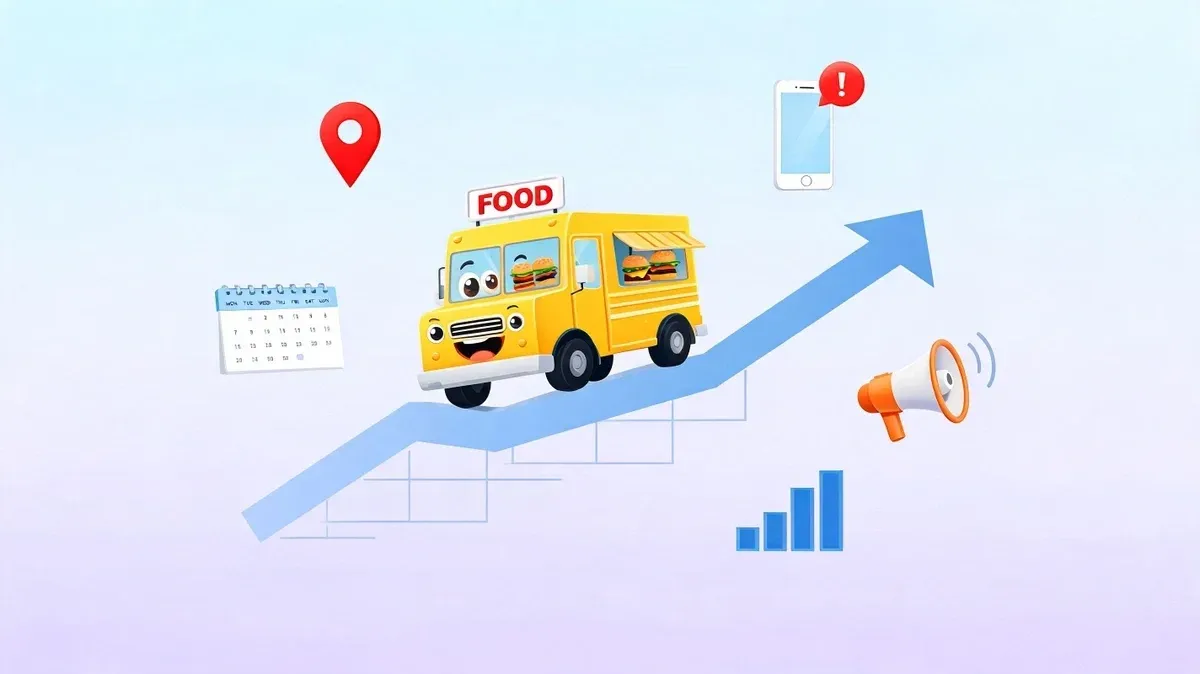
Lunch starts in 20 minutes. You’ve posted today’s location on Instagram, one staff member is prepping, another is handling the window, and three delivery tablets are already lighting up. That’s the core challenge with marketing for food truck businesses. Getting attention is only half the job. The other half is serving that demand without slowing down the line, missing tickets, or burning out your crew.
The strongest food truck operators treat marketing and operations as one system. A promo that brings a crowd but jams your workflow isn’t a win. A brewery pop-up that fills the truck but creates ticket confusion isn’t growth. The goal is simple: bring in more customers, serve them cleanly, and turn that traffic into repeat business.
Build Your Brand and Master Local SEO
A food truck brand needs to answer one question fast: why should someone remember you after one meal? For some trucks, it’s a signature item. For others, it’s speed, humor, local sourcing, or a very specific niche like smash burgers, birria tacos, or vegan comfort food. If your brand sounds like “great food and friendly service,” it’s too generic to help.
Start with three decisions:
- Pick one lead product that appears in your photos, menu boards, and captions again and again.
- Choose a voice that fits your crowd. Playful, chef-driven, family-friendly, late-night, street-food authentic.
- Make your truck easy to identify from a distance and on a phone screen. Color, menu layout, and logo should all match.
Set up your Google Business Profile like a daily sales tool
Most owners think of Google Business Profile as a setup task. It’s really a live marketing channel. People searching “food truck near me” or looking for lunch options need current information, not a profile you touched six months ago.
Focus on the basics first:
- Keep hours realistic: If your service changes by event, update it.
- Use posts for location drops: Daily spot, special menu item, sold-out warning, event appearance.
- Upload current photos: Truck exterior, menu board, plated best-seller, line at service.
- Answer reviews: Especially when customers mention wait time, favorite items, or service issues.
If you need a solid primer on how small operators grow your local business online, that guide is worth reviewing because local search for a mobile business depends on consistency more than cleverness.
Practical rule: If a hungry customer can’t tell where you are, when you’re open, and what your best item is in under 15 seconds, your local marketing is leaking sales.
Use location data instead of guessing
A lot of food truck advice says to park in “high-foot-traffic” areas. That’s incomplete. Foot traffic matters, but sales velocity by location matters more. Existing food truck guides often miss how operators should measure placement over time, and trucks that systematically track sales velocity by location can optimize routes and marketing spend better than those relying on gut instinct, as noted by AO Fund’s food truck marketing resource.
That means tracking simple operational notes after each shift:
- What sold fastest
- When the line peaked
- Whether office workers, families, or event traffic drove orders
- Whether delivery demand matched walk-up demand
- How long tickets took during the rush
Those notes help you stop chasing busy-looking spots that don’t convert. They also make your future promotions sharper. If a weekday office park produces fast lunch turns and clean menu execution, market that stop heavily. If a trendy evening spot creates lots of browsers but weak check averages, don’t keep forcing it.
For owners building a fuller system, this guide to a restaurant marketing plan is useful because it helps translate scattered tactics into a repeatable weekly process.
Develop a Social Media and Content Strategy
Social media works best when it answers two customer questions: what looks good today, and where can I get it right now? Food trucks have an advantage here. Your business already creates motion, urgency, and visual content every shift. The mistake is posting randomly and hoping a great photo does the work.
A practical content mix looks different by platform:
- Instagram: Best for your hero items, Reels of prep, and clean location graphics.
- TikTok: Best for personality, line energy, menu drops, and short kitchen action clips.
- Facebook: Best for weekly schedules, event pages, and community updates.
- X or Threads: Best for quick changes, sellout alerts, and same-day movement.
Build content around moments that lead to orders
You don’t need a content studio. A modern phone, good window light, and a repeatable shot list are enough. The key is making every post support a buying decision.
Use three recurring post types:
- Location post in the morning: Where you are, service window, parking note.
- Urgency post before peak: Limited special, weather tie-in, combo feature.
- Proof post during service: Line, sizzling grill, customer favorite, sold-out momentum.
Captions should do a job. “Come grab lunch” is weak. “Serving outside the brewery until sellout. Birria tacos and loaded fries are on” gives people a reason to move.
Good social content for a food truck should reduce friction, not just build awareness.
Don’t create a rush your team can’t absorb
Often, marketing for food truck businesses falters at this stage. A flash promo works. Then one person gets stuck managing online orders, another is answering DMs, and the line slows down at the window. If your process can’t absorb demand, your marketing punishes your staff.
That’s why your promotions should match your operational reality:
Promotion type Best use Operational caution Limited menu drop Drives urgency on a proven item Don’t add prep-heavy extras Same-day location post Fills a routine stop Keep menu board simple Event teaser video Builds turnout before a pop-up Confirm staffing and inventory Delivery promo mention Extends reach after lunch rush Make sure order flow is manageable
A Square or Clover setup can help at the truck, but only if the system around it is organized. If you want examples of how restaurants use digital channels more strategically, this post on social media and restaurants is a useful reference.
Video still does the best job of showing energy and speed when executed straightforwardly.
Keep a weekly rhythm
The easiest way to stay consistent is to stop reinventing content every day. Pick a weekly pattern and repeat it:
- Monday: Schedule and locations
- Wednesday: Best-seller close-up or prep video
- Friday: Weekend event or collaboration announcement
- During service: Stories showing line movement, specials, and sold-outs
That rhythm keeps customers trained. They learn when to check your page and what to expect.
Leverage Events and Local Partnerships for Growth
Friday at 6:30 p.m., the line is 20 deep, tickets are backing up, and the host is asking if you can stay another hour. That sounds like a win until you realize the menu is too broad, prep is running short, and half the people in line may never see your truck again. Event marketing works when the turnout fits your service model and gives you a clear path to repeat sales.
Events are the top marketing driver for 37% of food truck owners, ahead of social media, location-based strategies, and word-of-mouth, according to Fliprogram’s food truck statistics. The primary benefit is not a single busy shift. It is using events to fill the register today, collect customer information, create usable content, and secure the next booking without adding chaos to the truck.
Choose events that fit your menu and service style
A packed event can still be a bad fit.
The best operators screen events the same way they screen equipment purchases. They ask whether the setup will improve throughput, margin, and repeatability. A music festival with long dwell time may reward a tight, high-speed menu. A premium concept may sell better at a brewery series or office campus than at a discount-driven street fair. If setup rules, parking, or power requirements force your crew into workarounds, the marketing upside fades fast.
Use a quick filter before you commit:
- Service fit: Can your team produce tickets fast with the menu you plan to serve?
- Audience fit: Does that crowd already buy your category, price point, and portion size?
- Logistics: Are parking, power, prep space, and load-in simple enough to protect service speed?
- Follow-on value: Can the event turn into catering leads, recurring stops, or a host partnership?
Recurring placements usually beat one-off appearances. A standing spot at a brewery, office campus, retail center, or neighborhood market gives you repeated exposure and a more predictable prep plan. That lowers marketing effort and helps ordering stay consistent from week to week.
For owners testing recurring temporary service in new locations, this guide on what a pop-up restaurant is is a useful framework.
Turn event traffic into customer data you can use
A long line is nice. A list you can market to later is better.
Treat every event like two jobs at once. First, serve fast and protect ticket times. Second, capture enough customer data to bring those buyers back on a slower day, at a regular stop, or through a future catering offer. QR codes on packaging, quick email or SMS signups, and simple post-purchase surveys all work if the process takes seconds, not minutes.
Keep it practical:
- Put a QR code on cups, napkins, or signage: Send people to your schedule, catering form, or loyalty signup.
- Ask one short question after purchase: What item did they order, or how did they hear about you?
- Offer a clear follow-up incentive: A free side on the next visit, first notice of a special, or entry into a small giveaway.
- Coordinate one post with the host venue: Let the brewery, market, or retailer push your next appearance to their audience too.
The goal is to leave with more than cash. You want contacts, content, and a reason for the host to invite you back.
Build partnerships that reduce marketing workload
The best local partnerships lower acquisition cost because the host already has attention and trust with the audience. A gym can promote your high-protein bowls after a challenge event. A bottle shop can build a weekly taco night around your truck. A retailer can use your menu as part of a product launch or sidewalk sale.
I tell owners to judge partnerships by three operating questions:
- Is there real customer overlap?
- Will the partner actively promote the event?
- Will service be easy on site?
That third point affects profit more than people expect. If the host is vague about parking, power, setup time, or pickup flow, your crew spends the shift solving avoidable problems instead of pushing orders out. Good partnerships bring customers and make the service window easier to run. Bad ones create exposure on paper and friction in practice.
Optimize Your Restaurant Operations with Delivery App Integration
A lot of trucks add delivery because demand is there. Then the tablets start piling up. One for Uber Eats. One for DoorDash. One for Grubhub. Orders come in during a walk-up rush, and someone has to re-enter them manually into the POS while the kitchen waits. That’s not a delivery strategy. It’s a bottleneck.
The core issue is simple. Marketing expands faster than operations. If your truck gets more visible but your order flow stays manual, growth starts hurting service.
What POS integration actually means
In plain language, POS integration means online orders flow directly into the same system your team already uses for in-person sales. Instead of reading from a tablet and typing the ticket again, the order appears in the POS and kitchen workflow automatically.
That matters because manual entry creates three expensive problems:
- It slows order processing
- It introduces typing mistakes
- It ties up staff during the busiest part of service
A food truck crew is small. Every extra touch matters.
Why this matters for restaurant delivery profitability
Managing multiple delivery platforms is a major operational pain point for food trucks that are trying to scale. Restaurants using integrated solutions report 30 to 40% faster order processing times, which frees up staff and improves accuracy, according to Attack Marketing’s analysis of food truck marketing and operations.
That speed improvement isn’t just an operations win. It affects marketing outcomes too. If a customer orders through Uber Eats or DoorDash and gets a clean, accurate handoff, they’re more likely to order again. If the kitchen misses modifiers because somebody retyped the ticket wrong, your marketing spend just bought a bad experience.
The best delivery marketing is often invisible. It’s the order that arrives correctly without creating chaos inside the truck.
Real examples with Clover and Square
Here, food tech becomes practical, not abstract. If your truck runs on Clover, your team should not have to bounce between a POS screen and a stack of delivery tablets to stay caught up. The same goes for Square.
You can see how this works with Clover app integration for delivery order management or Square app integration for delivery order management. The point isn’t the app page itself. The point is operational design. One system is easier to train, easier to monitor, and easier to scale.
For owners comparing channels, this breakdown of popular food delivery apps is helpful when deciding where delivery belongs in your revenue mix.
Fix tablet hell before you spend more on promotion
If you’re planning to push delivery on social media, add a QR code to packaging, or partner with an event venue that also wants app ordering, clean up the back end first. Marketing for food truck businesses becomes much more profitable when the team can handle increased order volume without extra manual work.
A simple rule works here: don’t increase channel complexity until ticket flow is under control.
Build Customer Loyalty and Drive Repeat Business
First-time traffic keeps the truck busy. Repeat traffic keeps the business healthy. Most food truck owners spend too much energy chasing new eyeballs and not enough building systems that bring customers back automatically.
Paper punch cards rarely hold up well in a mobile business. Customers lose them. Staff forget to stamp them. Online orders get left out completely. That’s why loyalty needs to connect to the same sales system you use every day.
Use loyalty that follows the customer across channels
Food trucks that implement app-based loyalty linked to their POS can increase visit frequency by 20 to 30%, according to Restolabs’ food truck marketing ideas. The key point is operational, not cosmetic. Online orders from platforms like DoorDash need to count the same way as in-person purchases. If they don’t, your best customers get a fragmented experience.
That’s why digital loyalty works better when it’s tied directly to order history, whether someone buys at the window or places an online order.
What a simple loyalty setup looks like
You don’t need a complex rewards ladder to get results. Start with one clean offer and one follow-up rhythm.
A practical setup might include:
- A welcome reward: Small incentive after signup
- A repeat trigger: Reward after several purchases, not just one
- A comeback message: Sent to customers who haven’t ordered recently
- A favorite-item prompt: Offer built around what they already buy
The best campaigns feel personal because they use actual purchase behavior. If someone orders loaded fries every other Friday, send a loaded fries offer. If a customer only shows up at brewery nights, invite them to the next one.
Loyalty should reward behavior you want repeated, not just hand out discounts.
Sample monthly promotional calendar for a food truck
Here’s a straightforward template operators can run.
Week Theme / Goal Tactic Channel(s) Week 1 Bring back recent first-time buyers Send a follow-up offer tied to the item they ordered last SMS, email, in-app Week 2 Increase traffic at a slower location Promote a location-specific special during a weak shift Instagram, Facebook, truck signage Week 3 Boost repeat visits Double points or bonus reward on a core menu item Loyalty app, email, POS receipt messaging Week 4 Reactivate lapsed customers Send a “we miss you” offer with a clear expiry window SMS, email
Keep the offer easy for staff to explain
Promotions fail when the customer understands them less than you do. If the staff has to stop and explain five different rules, the line slows down. A good food truck promo is simple enough to mention in one sentence at the window.
That also applies to channel consistency. If a customer earns points on a walk-up order but not on an online order, trust drops. If your loyalty messaging says one thing and the POS reflects another, the program turns into friction.
For food truck owners, loyalty is not just a retention tactic. It’s an operations tool. It gives your team a repeatable reason to bring customers back without creating a new marketing campaign every week.
Track Your KPIs and Make Data-Driven Decisions
Most trucks already have data. They just don’t have it organized in a way that helps them decide what to do next. If you’re serious about marketing for food truck growth, you need a short KPI list that connects promotion to actual performance.
Start with a few numbers you can act on:
- Sales by location
- Average order value
- Order mix by channel
- Repeat customer activity
- Ticket flow during peak windows
That’s enough to make smarter decisions without drowning in reports.
Look for decisions, not dashboards
A KPI only matters if it changes behavior. If one recurring office stop produces cleaner tickets, faster throughput, and stronger repeat traffic than a crowded weekend market, that should affect scheduling. If delivery performs well only after lunch, don’t push it hard during your busiest walk-up period.
Many owners also struggle with the basic question of ROI. If you want a plain-English explanation of calculating marketing investment for Florida firms, that framework helps clarify how to connect spend to return without overcomplicating the math.
Integrated systems make the useful data easier to see
Restaurant operations and marketing finally meet. If walk-up orders live in one place and delivery app orders live somewhere else, you can’t see the full picture clearly. You’ll spend time stitching together reports instead of spotting patterns.
A connected setup makes it easier to answer questions like:
- Which locations generate repeat customers?
- Which promotions raise volume but hurt service speed?
- Which channels produce the most manageable order flow?
- Which menu items work best in person versus delivery?
For operators building that habit, this guide to restaurant KPI tracking is a solid starting point.
The payoff isn’t just better reporting. It’s better weekly decisions. You stop running every event. You stop overposting weak locations. You stop promoting delivery in ways the truck can’t support. You spend more time on the channels that create profitable traffic and less on the ones that only look busy.
The practical next step is to tighten your tech stack so your marketing and order data live closer together. That gives you a clearer view of where profit really comes from.
If you want a simpler way to connect delivery apps with your POS, reduce manual order entry, and make growth easier to manage, take a look at OrderOut. Restaurant owners can get started quickly through the free onboarding dashboard.