
Mastering Manager Duties in a Restaurant for Modern Success
· Thibault Le Conte
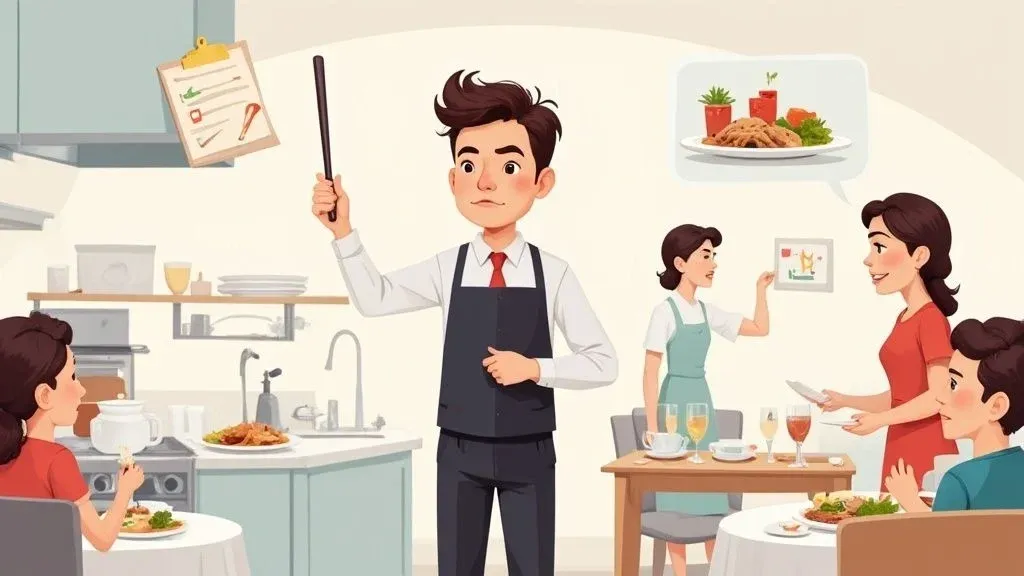
When restaurant owners think about manager duties, they’re really talking about a delicate balancing act across four key areas. A great manager is like the central hub of a wheel, keeping everything spinning smoothly by expertly handling operations, staff management, financial health, and the customer experience simultaneously. Getting this right is crucial for restaurant efficiency, as it directly impacts everything from delivery speed to profitability.
The Four Pillars of Modern Restaurant Management
Think of a restaurant manager as the conductor of a complex orchestra. Every section—from the kitchen to the front of house—needs to work in perfect harmony to create a memorable performance for the guest. The role has grown far beyond just watching over the dinner rush; a modern manager is a strategic leader who has to be a master of multitasking. Strong management isn’t just a nice-to-have; it’s the bedrock of customer loyalty and the long-term survival of the business.
This infographic lays out the four fundamental pillars every manager needs to master.

As you can see, a manager’s day is split between the concrete, like operations and finance, and the more nuanced, like team leadership and guest satisfaction. This is what makes the job so incredibly dynamic.
To truly excel, a manager has to wear many different hats. Their day-to-day can involve anything from drafting a budget and dissecting a P&L statement to training new hires and making sure every health code is followed to the letter. These tasks are absolutely critical because they directly shape both the guest’s experience and the restaurant’s bottom line. For a deeper dive, you can check out our guide on the primary responsibilities of a manager in a restaurant.
Lately, this balancing act has gotten even tougher with rising food costs and ongoing staffing shortages. A sharp manager, for instance, knows how to forecast customer traffic with precision. This prevents over-ordering and the kind of food waste that can absolutely crush profit margins.
At the end of the day, what separates a good manager from a great one is their ability to weave these different duties into a single, cohesive strategy. This solid foundation is what fuels a restaurant’s efficiency and helps it not just survive, but thrive in a crowded market.
To put it all together, let’s look at a quick summary of how these four pillars work in practice.
Four Pillars of Restaurant Management Duties
Pillar Core Duties Why It Matters Daily Operations Overseeing service, managing inventory, ensuring food quality, and maintaining health/safety standards. Ensures a smooth, consistent customer experience. This boosts restaurant efficiency and delivery speed. Staff Management Hiring, training, scheduling, and motivating the team. Fostering a positive work culture. A happy, well-trained team delivers better service, reduces turnover, and boosts staff productivity. Financial Oversight Budgeting, payroll, analyzing P&L statements, controlling costs (food, labor), and managing cash flow. Drives profitability, prevents waste, and ensures long-term financial stability through cost savings. Customer Experience Handling guest feedback, resolving complaints, building relationships, and ensuring high satisfaction. Creates loyal customers who return and recommend the restaurant, directly boosting revenue and online ratings.
Mastering these four areas is the core of effective restaurant leadership. It’s a challenging job, but one that directly translates to a thriving, successful business.
Mastering Restaurant Operations with Food Tech
Ever walked into a restaurant where everything just works? That smooth, almost effortless flow is no accident—it’s the direct result of a manager’s obsession with operational excellence.
In simple terms, this means getting the basics right, every single day. The kitchen is prepped, the dining room is immaculate, and everyone on the team knows their exact role before the doors open. This foundational readiness is what stands between a chaotic dinner rush and a seamless service.
Building on that foundation, a manager implements systems like iron-clad opening and closing checklists, strict health code compliance, and smart inventory management. These aren’t just boxes to tick; they’re the pillars of restaurant efficiency and cost control. Getting this right leads to faster service, fewer mistakes, and happier customers.
Streamlining Inventory with POS Integration
A manager’s handle on inventory can make or break a restaurant’s profitability. A simple but powerful strategy is enforcing a strict First-In, First-Out (FIFO) system for stock rotation. This means you use the older ingredients first, a basic step that dramatically cuts down on food waste and protects your profit margins from spoilage.
Modern POS integration elevates this from a manual chore to a strategic advantage. This technology connects your sales system directly to your inventory, automating the tracking process.
Real-World Example: Imagine a manager using their Square POS. Every time the kitchen punches in an order—whether for a dine-in table or an Uber Eats delivery—the system automatically deducts those ingredients from the stock count. This provides a live, accurate picture, preventing the nightmare of running out of a bestseller on a Saturday night. This real-time data allows for smarter purchasing, significant time savings, and a sharp reduction in costly food waste.
This insight turns purchasing from guesswork into a science, a core part of effective restaurant operations.
How POS Integration Improves Restaurant Delivery
Ultimately, solid restaurant operations create a flawless connection between the front and back of the house. When an order is entered correctly, fired to the kitchen instantly, and made with ingredients you actually have in stock, the entire machine runs better. For a deeper dive, check out our complete guide to successful restaurant operations management.
This efficiency has a huge ripple effect on your restaurant delivery performance. Quicker ticket times mean DoorDash drivers aren’t left waiting around. This not only improves your restaurant’s rating on the app but also guarantees customers get their food hot and fresh. By mastering these operational duties, a manager directly lifts staff productivity, slashes expensive errors, and builds a rock-solid reputation for reliability.
The takeaway: Strong operational systems, powered by smart food tech, are the engine that drives a successful restaurant. It frees your team to focus on what really counts—incredible food and unforgettable service.
Building and Leading a High-Performing Team

Any seasoned pro will tell you a restaurant is only as strong as its people. This makes team leadership one of the most critical manager duties. In simple terms, your main goal is to build a crew that is happy, motivated, and working together effectively.
When your team feels supported and knows their roles inside and out, they provide better service. This directly translates to happier guests, better delivery times, and a healthier bottom line.
This role is so much more than just creating a schedule. It’s a constant cycle of smart hiring, smooth onboarding, ongoing training to keep skills sharp, and conducting fair performance reviews. A team with great leadership isn’t just productive—it’s a team that sticks around, which saves you from the massive time and cost of high turnover.
Optimizing Staff for Peak Restaurant Efficiency
One of the most immediate ways a manager can boost restaurant efficiency is through smarter scheduling. Instead of guessing how busy you’ll be, modern restaurant tech allows you to make data-backed decisions.
The technical solution lies in leveraging your POS data. The sales reports in your Point of Sale system contain a goldmine of information about your busiest and slowest times.
Real-World Example: A manager can use the scheduling software that connects with their Clover POS to pull up sales data from previous weeks. This gives them a crystal-clear picture of peak hours and slower periods, both for in-house dining and delivery. By matching the staff schedule to actual customer demand, you avoid wasting money on labor during lulls and prevent the team from getting overwhelmed during a rush.
This kind of strategic staffing is a perfect example of how POS integration turns a routine task into a powerful tool for boosting staff productivity and controlling costs within your restaurant operations.
Cultivating Leadership and Professional Growth
Building a killer team means you need to get what makes people tick. To really create a team that works well together, you first have to understand what makes a good leader. You can dive deeper into the essential leadership skills for managers to sharpen your own approach.
For a look specifically at our industry, check out our guide on the 10 best restaurant manager and leader traits.
Let’s be honest: the restaurant manager role is tough. It means long hours and requires a unique mix of skills. In the United States, the average monthly salary for a restaurant manager is around $5,798, and top performers in busy locations can clear over $80,000 a year. Despite the grind, the job is incredibly rewarding for those who truly master the art of leadership.
Practical Next Step: Start investing in your team’s development. Create a simple, repeatable training process for new hires and schedule regular one-on-ones to give feedback and support. A small investment in your team’s growth pays off big time in loyalty and performance.
Driving Profitability with Financial Oversight

Of all the manager duties, financial oversight is what truly separates a passion project from a profitable business. At the end of the day, the goal is straightforward: make sure more money comes in than goes out.
This financial discipline isn’t just about crunching numbers; it’s the engine that powers your entire operation, ensuring efficiency and preventing waste.
A good manager needs to be comfortable with the core financial tools of the trade. This means regularly digging into Profit & Loss (P&L) statements to see where the money is coming from and where it’s going. It also means obsessing over the Cost of Goods Sold (COGS) and labor cost percentages—typically the two biggest drains on any restaurant’s budget.
Using POS Integration for Smarter Financial Decisions
Getting a handle on your finances requires more than just reading reports; it demands action. This is where a manager’s strategic thinking really shines.
A great place to start is with menu engineering. This means analyzing sales data to identify your most popular and profitable dishes and giving them the spotlight. Strong supplier negotiations are another key part of the puzzle, helping you lower food costs without cutting quality. It’s also about spotting opportunities where technology can boost the bottom line, like learning how a digital queue management system can prevent lost revenue on busy nights.
This is where your POS integration becomes a financial superpower. A modern POS is so much more than a cash register; it’s a data goldmine.
Real-World Example: A manager can pull detailed sales reports directly from their Clover or Square system to create shockingly accurate sales forecasts. This data shows exactly what sold, when it sold, and how—whether it was a dine-in customer or a delivery through DoorDash. This insight leads to smarter purchasing and staffing decisions, which directly cuts unnecessary expenses and boosts your profit margin.
This is a perfect example of how food tech has become a fundamental part of financial restaurant operations, leading to significant cost savings. If you want to get a better grip on your numbers, our guide can help you find your restaurant profit margin calculator.
Practical Next Step: Block out time every week to review your POS sales data against your costs. This simple, consistent habit turns financial management from a reactive chore into a proactive strategy for growth.
Creating an Unforgettable Customer Experience
In the restaurant world, the guest experience isn’t just a part of the job—it is the job. One of the most important manager duties is to be the chief architect of guest satisfaction. The goal is straightforward: make sure every single person who interacts with your restaurant, whether in-person or online, leaves happy and eager to return.
Great service is what brings people back and gets them talking. This goes way beyond just being polite; it’s about putting smart systems in place. Think of it as creating clear channels for feedback, drilling your team on what five-star service looks and feels like, and mastering the delicate art of turning a complaint into a chance to win a customer for life.
Managing Your Digital Front Door and Restaurant Delivery
Today, the customer experience often starts on a phone screen, long before anyone steps inside. A smart manager knows that third-party delivery services like Uber Eats and DoorDash are a new front door to their restaurant. That means you have to be just as present on those platforms as you are on the dining room floor.
You need to be actively monitoring these apps for reviews and addressing any issues right away.
Real-World Example: A fast, thoughtful reply to a negative delivery review does two things. First, it shows the unhappy customer you care, which can sometimes salvage the relationship. Second, it signals to the platform’s algorithm that you are an engaged and quality partner. This simple act not only protects your restaurant’s reputation but can actually boost your ranking in the app, getting you in front of more customers.
This isn’t just an extra task; it’s a core part of modern restaurant operations. It proves your commitment to service extends beyond your physical address, which is absolutely critical for building a brand people trust.
Turning Feedback into Fuel for Growth
One of the best things a manager can do is build a culture where feedback isn’t seen as a complaint, but as a gift. It’s free data telling you exactly how to get better. This starts with training your staff to handle unhappy guests with real empathy and professionalism, giving them the power to fix problems on the spot.
Here’s a simple, actionable framework to teach your team:
- Listen Actively: Train your crew to hear the guest out completely. No interrupting.
- Apologize Sincerely: A genuine “I’m sorry” can immediately de-escalate a situation.
- Offer a Solution: Empower your staff to make things right, whether that’s remaking a dish or offering a discount.
- Follow Up: For anything serious, you, the manager, should personally check in to show the guest they were truly heard.
Practical Next Step: Carve out ten minutes in your next pre-shift meeting for service recovery training. Pick a common complaint (like a late delivery) and role-play it with your team. This small investment will build their confidence and pay you back tenfold in customer loyalty.
Using Food Tech to Enhance Restaurant Management
Today’s best restaurant managers don’t just lead people; they also have a firm grip on technology. Smart food tech isn’t a futuristic luxury anymore—it’s a fundamental part of a modern manager’s toolkit, essential for boosting restaurant efficiency and staying competitive. It’s all about turning stressful, manual chores into smooth, automated processes.
At its core, this means using digital tools to work smarter, not harder. One of the most powerful examples is POS integration. This technology acts as a digital bridge, connecting all your online ordering apps directly to the central nervous system of your restaurant: the point-of-sale system.
The Power of POS Integration in Restaurant Delivery
Think about what happens when an order from DoorDash comes in. Without integration, a staff member has to stop what they’re doing, run to a tablet, and manually type that entire order into your Square or Clover POS. It’s slow, tedious, and a recipe for mistakes that cost you money.
Now, let’s look at the same scenario with POS integration. The moment that DoorDash order is placed, it automatically flows directly into your POS system and prints in the kitchen, just like any other ticket. No one has to touch a thing.
This one change completely eliminates manual order entry. The impact on restaurant efficiency is huge. This automation leads to massive time savings, a drastic reduction in order errors, and a significant boost in staff productivity. Your team can finally focus on the guests right in front of them instead of juggling tablets.
A critical duty for any modern manager is to find and implement tools that deliver this kind of operational payoff. You can see how this fits into a bigger picture by reading about restaurant digital transformation.
The demand for managers who know their way around these tools is only getting stronger. The employment of food service managers is expected to grow by 6% globally between 2024 and 2034, which translates to roughly 42,000 new openings each year. To stand out and succeed, managers have to use technology to track sales, keep costs in line, and make customers happier. Discover more insights about these industry trends.
Practical Next Step: Take a hard look at the technology you’re currently using. Pinpoint the biggest time-waster in your daily restaurant operations—that manual entry of delivery orders is a great place to start—and see how a simple integration could solve it for good.
Ready to Take the Reins of Your Restaurant?

Let’s pull all these threads together. The modern restaurant manager’s role is a careful blend of old-school hospitality and new-school, tech-driven strategy. When you master operations, financials, team leadership, and guest services, you’re not just managing—you’re building a foundation for real, sustainable growth.
But if there’s one move that delivers the biggest impact right now, it’s getting the right technology in your corner. The best tools are the ones that take repetitive tasks off your plate, cut out expensive human errors, and give you the hard data needed to make smart, confident decisions.
From Tablet Juggling to a Single, Streamlined System
Think about your restaurant delivery orders. Getting your POS integration right isn’t just a “nice to have” anymore; it’s a core strategy for survival and profitability. Imagine a world where every order from Uber Eats, DoorDash, and other platforms flows directly into your main POS system automatically. This single change can completely transform your kitchen’s workflow from chaotic to calm.
Here’s why this is such a game-changer:
- Time Savings: Your staff will no longer burn valuable minutes manually re-entering orders from a half-dozen different tablets.
- Error Reduction: Automation eliminates the typos and misfires that lead to wasted food, costly redos, and frustrated customers.
- Increased Staff Productivity: Instead of being chained to delivery tablets, your crew can focus on what they do best—creating amazing experiences for your guests.
For example, connecting your delivery partners directly to your Clover or Square POS turns a major operational headache into a smooth, reliable process. It’s a simple shift that makes restaurant operations feel less like a juggling act and more like a well-oiled machine.
The Clear Takeaway: The most logical next step for any manager is to stop juggling tablets and start unifying operations. The goal is simple: get every single order into one central hub for complete control and clarity. This is how you build a more profitable, more organized, and far less chaotic restaurant.
Ready to streamline your delivery operations and boost restaurant efficiency? Start onboarding for Free in a few clicks.