
How to Increase Sales in a Restaurant: 6 Proven Strategies
· Thibault Le Conte
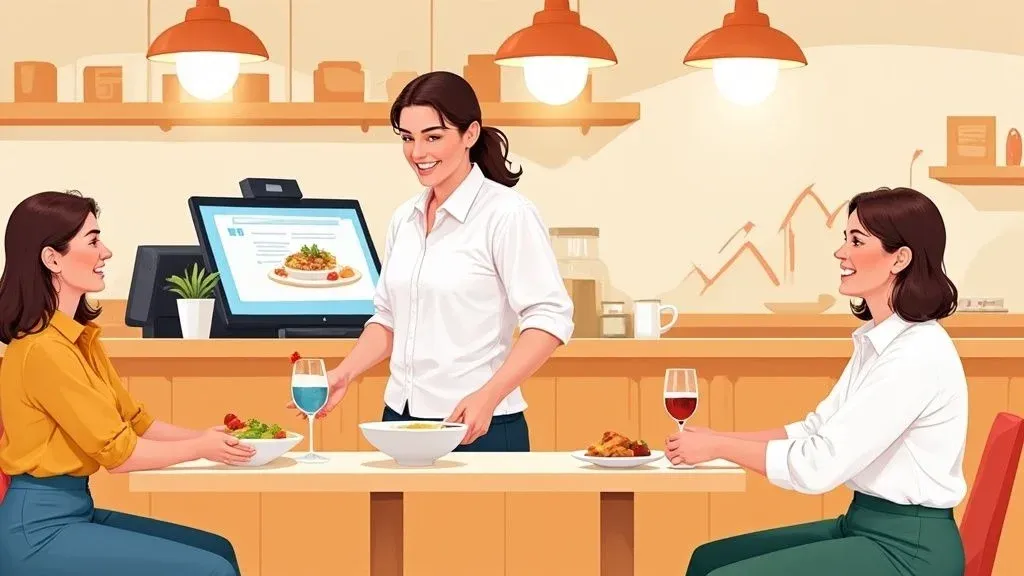
Trying to figure out how to increase sales in a restaurant can feel like you’re being pulled in a dozen different directions at once. Should you focus on the in-house guest experience? Your digital presence? The truth is, it’s not an either/or situation. The most successful restaurants master both.
They blend smart, efficient operations with a genuine focus on customer engagement. In simple terms, they make sure the kitchen runs smoothly while also creating an experience that makes people want to come back. This approach doesn’t just get new people in the door; it creates loyal regulars.
6 Proven Ways to Boost Your Restaurant Sales
So, you’re wondering how to actually increase sales without needing a massive budget or completely tearing down your current operation. The key is to zero in on a few high-impact areas that work together.
This guide is all about actionable strategies that real restaurant owners can implement quickly. We’ll cover how to turn your menu into a silent salesperson, empower your team to enhance the dining experience, and get a real handle on your online ordering.
The goal is a multi-pronged approach that strengthens what you do inside your four walls while intelligently expanding your digital footprint. It’s about making smart choices—like integrating your delivery apps directly with your POS system—that lead to happier customers, a less frantic team, and a much healthier bottom line. Why it matters: This integration streamlines your entire restaurant delivery operation, cutting down on the manual work that leads to errors and delays, which directly impacts profit.
To get a clearer picture of where we’re headed, let’s break down the core strategies we’ll be diving into.
Quick Guide to Increasing Restaurant Sales
This table outlines the core strategies we’ll cover, highlighting the primary benefit and a key action for each.
Strategy Area Primary Benefit Key Action You Can Take 1. Menu Engineering Increases profitability per guest Redesign your menu layout to highlight high-margin “star” items. 2. Upselling & Service Boosts average check size Train staff on suggestive selling techniques for drinks, sides, and desserts. 3. Online Ordering & Delivery Expands your customer base Integrate third-party apps with your POS using a tool like OrderOut. 4. Local Digital Marketing Drives new customer traffic Run targeted social media ads promoting a special offer for first-time visitors. 5. Operations & Staffing Improves efficiency and reduces costs Optimize staff schedules based on sales data to avoid overstaffing. 6. Measurement & Optimization Provides data for smart decisions Regularly track key metrics like food costs, table turnover, and RevPASH.
Think of these areas as interconnected gears. When one turns, it helps the others move more smoothly, creating a powerful cycle of growth.
Where to Start: The Big Three
While all six areas are important, you can get the biggest bang for your buck by starting with these three fundamentals:
- Menu Engineering: This is more than just pricing your food. It’s about using smart design to guide guests toward your most profitable and popular dishes. Think of your menu as your most valuable marketing tool.
- Staff Training: Your team is your secret weapon. Empowering them with upselling and cross-selling techniques that feel like genuine, helpful suggestions is a game-changer. It instantly increases the average check size and boosts staff productivity.
- Digital Optimization: You have to streamline your online ordering and delivery channels. This is where modern food tech becomes your best friend. Integrating platforms like DoorDash directly into your Clover or Square POS system eliminates the nightmare of manual entry errors and saves precious minutes during a chaotic dinner rush.
By focusing on these interconnected areas, you create a powerful cycle. Efficient operations free up your staff to provide better service, which in turn leads to higher sales and better reviews, further boosting your digital presence.
Each of these pillars deserves a closer look. Let’s dive into the specifics of how you can put these ideas into action and start seeing a real difference in your numbers.
Engineer Your Menu for Maximum Profitability
Think of your menu as your restaurant’s most valuable salesperson. It’s more than just a list of what you serve; it’s a powerful tool that, when designed correctly, can subtly guide your customers toward your most profitable dishes. This process is called menu engineering.
Simply put, menu engineering is analyzing every item you sell based on two things: how popular it is (how many you sell) and how profitable it is (your margin on each one). From a technical standpoint, this involves creating a matrix that plots item popularity (menu mix percentage) against profitability (contribution margin). This data-driven approach transforms your menu from a static list into a dynamic profit-generating machine.

Find Your Winners and Losers
Once you dig into the numbers, every dish falls into one of four categories. Knowing where your items land is the key to making smarter decisions.
- Stars: These are your rockstars. They’re wildly popular and highly profitable. Your customers already love them, and they make you fantastic money.
- Plow-horses: Everybody seems to order these, but the profit margins are disappointingly low. They’re crowd-pleasers that aren’t pulling their financial weight.
- Puzzles: These dishes have killer margins, but for whatever reason, they just don’t sell. They’re a huge missed opportunity hiding in plain sight.
- Dogs: Low popularity, low profitability. These are the items dragging your menu down, taking up space and kitchen resources without giving anything back.
Turn Menu Insights Into Real-World Action
Okay, you’ve categorized your dishes. Now it’s time to act. Your goal is to highlight your Stars, fix your Puzzles, improve your Plow-horses, and cut your Dogs loose.
Your Stars need to be the center of attention. Make them pop! Place them in a highlighted box, use a photo, or position them in the top-right corner of the page where the eye naturally lands first. For a deeper dive, check out our guide on essential menu elements for your restaurant.
For your Puzzles—those high-margin wallflowers—try rewriting the description with mouth-watering language. Or, better yet, get your servers to personally recommend it as a “chef’s special.” A little push can make all the difference.
Why It Matters for Efficiency: Smart menu engineering has a ripple effect on your entire restaurant operations. When you successfully push high-margin dishes that are also quick for the kitchen to prepare, you’re not just making more money per plate—you’re speeding up ticket times. That means faster table turnover, reduced food waste, and a less-stressed kitchen staff, all of which save time and money.
What about the lower-profit items? With your Plow-horses, try a slight price bump—even a dollar can make a huge impact over time. You could also bundle it in a combo with a high-margin side or drink. As for the Dogs, be ruthless. Cut them. Removing them from the menu simplifies your inventory and lets your kitchen focus on what sells.
Your immediate next step: Go into your POS system and pull the sales data from the last 30-60 days. Open up a spreadsheet, list your menu items, and calculate the profit margin and total number sold for each. This simple exercise is the first real step toward a much more profitable menu.
Turn Your Staff Into a Powerful Sales Force
Your menu can point customers in the right direction, but your front-of-house team is who really seals the deal. Great service is about actively making the dining experience better, which naturally drives up revenue. This is where you shift your team’s mindset from simply taking orders to becoming genuine sales experts.
The two best tools they have are upselling and cross-selling. Upselling is suggesting a better version of something a customer already wants (e.g., a premium gin instead of the house gin). Cross-selling is recommending items that go well with their order (e.g., sautéed mushrooms with a steak).

Upselling The Smart Way
Upselling is all about presenting a better version of something a customer already wants as a genuine upgrade, not just a ploy to make a few extra bucks.
Instead of just waiting for someone to order a generic gin and tonic, train your staff to ask, “Would you like that with a premium local gin like Hendrick’s, or our house gin?” This naturally introduces a higher-margin option without being pushy. The same goes for food—suggesting grilled shrimp on a salad or upgrading to truffle fries are classic upsells for a reason. They work.
Cross-Selling to Complete the Meal
Cross-selling is about recommending items that perfectly complement what the customer has already ordered. When a guest orders a steak, a well-trained server should see an immediate opportunity.
Instead of just nodding, they can add real value by saying, “Excellent choice. The sautéed mushrooms and a glass of our Cabernet Sauvignon are absolutely fantastic with the ribeye.” It comes across as expert advice, not a sales pitch, and you’ve just added two high-margin items to the bill. For a deeper dive, check out our guide to restaurant management and operations.
Why It Matters for Efficiency: Mastering these techniques has a direct impact on your bottom line and staff productivity. When servers consistently increase the average check size, you’re making more money from every table. This increased productivity means hitting your sales targets with the same number of staff, which is a huge win for managing labor costs and maximizing restaurant efficiency.
Turning Training into Revenue
Knowing the concepts is one thing; pulling them off during a busy service is another. Good training is key.
- Role-Play Scenarios: Spend five minutes in pre-shift meetings running through common orders and have staff practice their upselling and cross-selling responses.
- Tasting Sessions: Your team can’t sell something with passion if they’ve never tried it. Let them taste the premium spirits and new desserts to make their recommendations authentic.
- Incentivize Performance: Start a friendly contest to see who can sell the most of a featured appetizer. Small rewards can be a powerful motivator.
Your next step: This week, pick one specific upsell and one cross-sell for the whole team to focus on. For instance, everyone suggests your signature cocktail instead of a standard well drink (the upsell) and recommends garlic bread with every pasta dish (the cross-sell). Track the sales numbers for those items in your POS to see the immediate impact.
Nail Your Online Ordering and Restaurant Delivery Game
Having a slick online ordering system isn’t just a “nice-to-have” anymore—it’s essential. The real challenge is making sure your kitchen can handle the flood of orders without everything grinding to a halt.
This is where many restaurants stumble. Third-party apps like Uber Eats and DoorDash are great for reaching new customers, but they can create chaos behind the scenes. Juggling multiple tablets while staff manually punch every order into your POS system is slow, frustrating, and a recipe for mistakes during the dinner rush. This is a massive drain on staff productivity.

Bridge the Gap with POS Integration
The fix for this operational nightmare is POS integration. In simple terms, it creates an automated pipeline from delivery apps straight to your kitchen. Technically, this means using middleware or an API to connect third-party ordering platforms (like DoorDash) directly to your restaurant’s Point of Sale system.
When you connect delivery platforms to a POS like Clover or Square, your entire restaurant delivery workflow transforms. An order from Uber Eats doesn’t just buzz on a tablet; it shoots directly to your kitchen printer or KDS, formatted exactly like an in-house order.
The payoff is immediate:
- Slash Order Errors: Manual entry is where mistakes happen. One typo means a wrong dish and a wasted plate of food. This food tech automation eliminates that risk, reducing costly errors.
- Give Your Staff Their Time Back: Every minute your team isn’t re-typing orders is a minute they can spend with dine-in guests. It’s a massive staff productivity boost.
- Speed Up Your Kitchen: Orders hit the line the second they’re placed online, leading to faster prep times and quicker food delivery.
The Real-World Financial Impact
Getting your digital house in order isn’t just about making life easier; it’s about making more money. For example, a restaurant owner using DoorDash can see a significant boost in orders, but without integration, they might need an extra staff member just to manage the tablets. With POS integration, they can handle a 30% increase in delivery volume with the same staff, turning that extra revenue directly into profit. This is a clear example of how food tech boosts restaurant efficiency.
This kind of growth is only sustainable if your restaurant operations can keep up. POS integration is the backbone that lets you handle that volume profitably.
Why It Matters for Delivery: A smooth delivery process directly helps your bottom line and your brand. When integrated systems cut down on errors and speed up service, you get better reviews on the delivery apps. Better reviews mean you show up higher in the listings, which gets you even more orders. It’s a powerful growth loop driven by operational efficiency.
Make Your Own Ordering Platform a Priority
While third-party apps are great for finding new customers, don’t neglect your own direct ordering channel on your website. This lets you keep all the revenue and collect valuable customer data. Make sure your platform is mobile-first, visually appealing, and simple to use. For a deeper look, check this guide on on-demand delivery for restaurants.
Your next step: Tonight, observe your delivery process. Time how long it takes a staff member to punch in an online order when you’re busy. That number will show you exactly how much time—and potential for error—you can eliminate with POS integration.
Drive Traffic with Smart Local Marketing
Getting your in-house service and online ordering running like a well-oiled machine is a huge win. But to really see sales climb, you need a steady stream of new and returning customers. This is where a smart local marketing strategy becomes your best friend.
Own Your Local Search Presence with SEO-friendly Practices
When someone nearby searches for “tacos near me,” you have to be one of the top results. This comes down to your Google Business Profile (GBP). Think of it as your digital front door.
Optimizing it is crucial. Ensure your address, phone number, and hours are accurate. Upload high-quality photos of your food and dining room. An updated menu is non-negotiable. Most importantly, actively encourage and respond to reviews. A steady flow of recent, positive reviews signals to both Google and potential diners that you’re a top spot. This is the foundation of local SEO for restaurants. For a deeper dive, this guide on Local SEO for Restaurants: Boost Your Visibility Today is a fantastic resource.
Why It Matters for Efficiency: A well-managed Google Business Profile is a highly efficient marketing tool. It costs nothing but time and directly drives foot traffic, reservations, and online orders. This reduces your reliance on paid advertising, lowering your customer acquisition cost and saving you money.
Engage and Entice on Social Media
Platforms like Instagram and Facebook are where you build a real community. The goal isn’t just to post pretty food pictures; it’s to spark conversations that get people into your restaurant.
A simple giveaway works wonders. Offer a $50 gift card and ask people to follow your page, like the post, and tag a friend. This small move can expand your reach exponentially. Behind-the-scenes content is also pure gold. A quick video of your chef plating a signature dish gives your restaurant a personal, authentic feel.
Create Promotions That Are Easy to Track
The final piece of your marketing puzzle is running promotions you can actually measure. Instead of a generic “10% off,” tie your promotions to specific channels.
- Taco Tuesday Special: A classic that creates reliable business on a typically slow day.
- Punch-Card Loyalty: A “buy nine, get the tenth free” card is a fantastic way to encourage repeat business.
- Trackable Discount Codes: Use specific codes for different platforms, like “FB20” for a Facebook ad and “INSTA15” for an Instagram story.
By using distinct codes, you can look at your POS data and see exactly which campaigns are driving sales. This closes the loop between your marketing and your revenue. Want to learn more? Check out our detailed guide on local SEO for restaurants.
Your next step: Log in to your Google Business Profile right now. Are your hours, menu link, and main photo correct? If not, spend ten minutes fixing them. It’s one of the highest-return marketing activities you can do.
Your Next Move for Higher Restaurant Sales
We’ve walked through a ton of strategies. The real secret to boosting restaurant sales isn’t finding one magic bullet. It’s about making a series of smart, deliberate changes that compound over time.
Don’t try to do everything at once. Pick one or two things to focus on right now. Maybe this month is all about training your team on upselling. Next month, you can focus on making your restaurant delivery process bulletproof.
Where to Focus for the Biggest Wins
Real, lasting growth happens when you nail the trifecta: an unforgettable customer experience, smart restaurant technology, and sharp marketing. Getting this mix right creates a more resilient and profitable business.
You’ll find that every improvement you make creates a ripple effect.
For example, a smoother delivery operation means happier customers, which leads to better online reviews. Those glowing reviews then become powerful fuel for your marketing, pulling in new customers and kicking off a cycle of growth. It all works together.
The Power of Smart Food Tech and POS Integration
If you’re looking for the single most impactful place to start, attack your biggest operational headache. For many restaurants, that’s the chaos of juggling delivery tablets and manually entering orders into the POS. It’s a slow, error-prone process that kills staff morale and eats into your profits.
This is where adopting the right food tech makes a world of difference. Bringing in a tool for direct POS integration immediately stops the manual data entry nightmare. This single change cuts down on costly mistakes and gives your team their time back, letting them focus on what actually matters—taking care of your guests. To see how this works, check out our guide on POS integration software.
Ready to end the tablet madness and start seeing more revenue? Integrating your delivery platforms is the most logical first step.
Got Questions? We’ve Got Answers
We’ve covered a lot of ground, but you might still have a few questions. Let’s tackle some of the most common ones.
What’s the Single Fastest Way to Increase My Restaurant’s Sales?
Focus on the customers you already have by increasing your average check size. It’s faster and cheaper than finding new people.
Smart upselling is your best bet for immediate results. When your server genuinely recommends a signature appetizer or suggests upgrading a cocktail with a top-shelf spirit, your sales go up on the spot, with zero marketing spend. This is a simple, actionable insight that boosts revenue and improves staff productivity.
How Big of a Deal Is POS Integration for My Restaurant Delivery Services?
It’s a game-changer for restaurant operations. Running without it is like trying to race with the handbrake on.
Without it, someone has to manually re-enter every single delivery order from a tablet into your POS. It’s slow and leads to errors. Integrating apps like DoorDash directly into your Square or Clover system makes that entire painful process disappear. This modern food tech saves labor costs, eliminates order mistakes, and gets food to the kitchen faster, leading to a much more efficient business.
For example, instead of paying a host to stand by a tablet station for hours, that employee can be greeting guests or helping servers, directly improving the customer experience and your bottom line. That’s a clear time and cost saving.
Should I Pour My Energy Into Getting New Customers or Keeping the Old Ones?
You need both, but start with your regulars. Keeping existing customers happy is almost always more profitable and costs less.
Your loyal regulars are the foundation of your business. Simple things like a basic loyalty program or an email list for exclusive offers can work wonders for repeat business. Once that’s locked down, use local SEO and social media to bring new faces in the door, then wow them so they become regulars.
How Do I Know if My Marketing Promotions Are Actually Working?
If you’re not tracking, you’re just guessing. You have to measure.
For any digital marketing, unique promo codes are your best friend. Create one code for your Instagram ad (“INSTA15”) and a different one for your email newsletter (“EMAIL10”). This tells you exactly where your sales are coming from. Your POS system is your source of truth; dive into the sales reports to see the real impact.
Ready to stop juggling tablets and start growing your business? The first, most practical next step is streamlining your restaurant delivery operations. OrderOut plugs your delivery apps directly into your POS, saving you time, money, and a whole lot of headaches.
You can start onboarding for Free in just a few clicks at https://dashboard.orderout.co.