
How to Increase Sales in a Restaurant: Your Proven Guide
· Thibault Le Conte
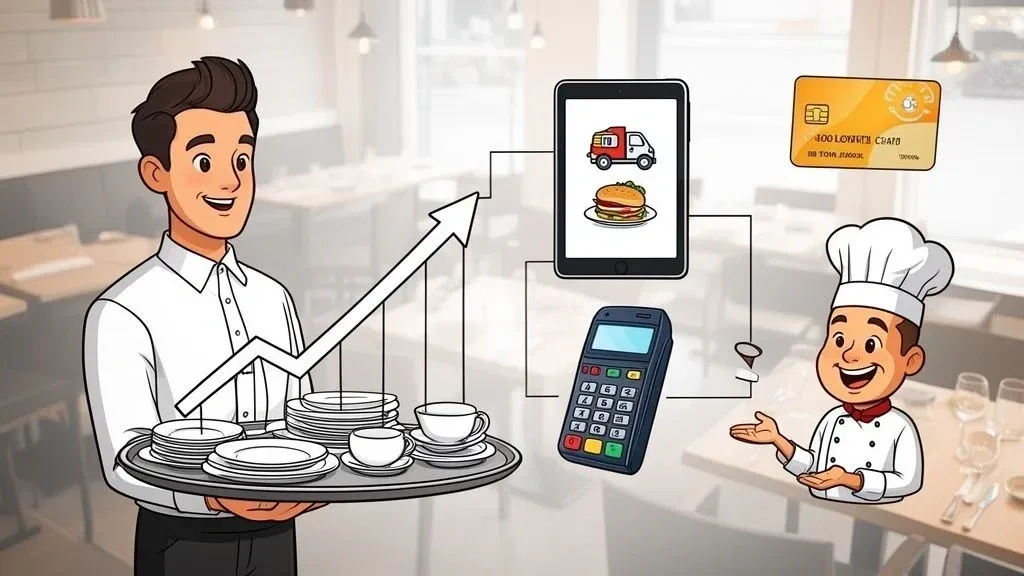
Struggling to get more customers in the door and more dollars on each check? You’re not alone. The secret isn’t some magic bullet; it’s about combining that incredible guest experience you already provide with a smarter, tech-savvy strategy.
This is your guide to real, sustainable growth. We’re going to walk through how to turn those first-time visitors into regulars who bring in predictable, recurring revenue.
Your Playbook for Boosting Restaurant Revenue
Let’s get one thing straight: you’re selling a lot more than just food. You’re crafting an entire experience. And in today’s market, that experience is built on a foundation of smart, strategic decisions that touch every part of your business, from the menu design to your local marketing efforts.
First, we’ll dive into how to turn your menu into your most powerful sales tool and train your staff to be more than just order-takers—they’ll become your best salespeople.
But here’s the real game-changer: modern food tech isn’t just a “nice-to-have” anymore. It’s essential. Integrating tools that feed your restaurant delivery orders straight into your POS system is no longer optional. It’s a core part of running a modern restaurant, cutting down on those frustrating manual errors and giving your team the time they need to focus on what truly matters—your guests. This directly impacts your restaurant efficiency by reducing errors and freeing up staff, which means faster service and happier customers.
Think of this as your roadmap. Let’s start building a more resilient, profitable restaurant.
Engineer Your Menu for Maximum Profitability
Your menu isn’t just a list of what you serve—it’s the most powerful sales tool you have. When you treat it like one, you can make a serious impact on your bottom line. This is where menu engineering comes in. It’s all about digging into the data to see what’s selling, what’s not, and most importantly, what’s actually making you money.
Think of your dishes in four simple categories. You’ve got your stars (the popular, high-profit items everyone loves) and your dogs (the low-profit, low-popularity items that are just taking up space). By figuring out which is which, you can start making strategic moves with pricing, placement, and promotion.
This whole process is about connecting the dots between your menu, your team, and the tech you use to create a solid revenue strategy.

It’s amazing what a few small tweaks can do. I’ve seen restaurants boost profits just by removing dollar signs from their prices or drawing a simple box around a high-margin special. These little visual cues subtly guide your guests’ eyes (and their orders) right where you want them to go.
Want to get into the nitty-gritty of design? We’ve got a full guide on the essential menu elements your restaurant needs that breaks it all down.
Turn Your Staff Into a Powerful Sales Force
Your front-of-house team is so much more than just staff; they’re the face of your brand and, honestly, one of your most powerful sales drivers. The goal is to shift their mindset from simply taking orders to becoming confident guest advisors. This all starts with simple, effective training on suggestive selling and upselling that feels genuinely helpful, not pushy.

Think about the difference here. Training a server to say, “Our crispy onion rings are incredible with that burger,” is worlds away from a generic, “Anything else?” When your team truly knows the menu inside and out, they can make authentic recommendations that actually make the meal better for the guest and naturally increase the check size. We dig into this a lot more in our guide covering the essential duties for a restaurant manager.
On top of personal skills, getting your team comfortable with modern restaurant operations tech can make a huge difference. For example, a POS like Clover can be set up to automatically prompt staff with smart add-on suggestions right at the point of sale. This simple integration directly boosts staff productivity and reduces the mental load on your team, letting them focus more on the guest experience.
This little nudge not only boosts sales but also speeds up service and helps turn tables faster. When you invest in training your team this way, you’re turning every single guest interaction into a real revenue opportunity.
Master Local Marketing and Digital Promotions
Getting new diners through the door and giving your regulars a reason to return all comes down to smart local marketing. You don’t need a massive budget to make a real impact; it all starts with nailing the fundamentals.
First things first: claim and meticulously optimize your Google Business Profile. This is non-negotiable for showing up when hungry locals search for a place to eat.
Engage Your Neighborhood
Once your online foundation is solid, it’s time to get proactive. Actively managing your online reviews—thanking the good, addressing the bad—builds trust and shows you’re listening. Running targeted promotions like happy hour specials or a weekday lunch combo can be a lifesaver for driving traffic during those notoriously slow periods.
To really zero in on potential customers, look into the power of hyperlocal advertising for small businesses. This lets you put your message directly in front of people in your immediate vicinity. Think about creative local partnerships, too. Could you team up with a nearby brewery for a special beer and food pairing event? These community ties build genuine connections.
The goal is to create a consistent, welcoming presence right where your local customers are looking. For a more comprehensive look at this, our digital marketing for restaurants guide goes into much greater detail. It’s all about turning those online eyeballs and community buzz into real foot traffic and, ultimately, more sales.
Build Loyalty and Drive Repeat Business
You’ve heard it a thousand times, but it’s a foundational truth in this business: it costs way less to keep a customer than to find a new one. This is exactly why a solid loyalty program isn’t just a nice-to-have—it’s your engine for predictable, recurring revenue.
The modern playbook for how to increase customer loyalty has moved far beyond crumpled paper punch cards.
Smart Loyalty Programs That Actually Work
Today’s most effective loyalty programs are built right into your POS system. Think simple digital punch cards or more sophisticated point-based systems that run seamlessly in the background.
A great example is the loyalty feature built into platforms like Square for Restaurants. It automatically tracks customer spending and doles out rewards, making your guests feel genuinely valued without any extra work for your staff. This POS integration is a goldmine. It not only boosts loyalty but also improves restaurant efficiency by automating the entire reward process, saving valuable time and eliminating manual tracking errors. It gives you the data to send out personalized offers—like a free dessert on their birthday—that create a real, personal reason for them to walk back through your doors.
The Real-World Impact on Your Bottom Line
Don’t just take my word for it; the numbers speak for themselves. According to the Future of Restaurants report, a staggering 83% of restaurant leaders confirm that their loyalty programs lead directly to bigger checks and more frequent visits.
This table breaks down how a well-implemented loyalty program can directly boost your key performance indicators.
Metric Reported Impact Why It Matters for Sales Visit Frequency Customers in loyalty programs visit 20% more often. More visits mean more consistent cash flow and less reliance on one-time customers. Average Order Value Members spend 15-25% more per transaction. Customers are more willing to add an appetizer or dessert to reach the next reward level. Customer Retention A 5% increase in retention can boost profits by 25-95%. Loyal customers become your most profitable segment over time.
When customers feel seen and appreciated, they don’t just come back—they become your most vocal advocates. That kind of word-of-mouth marketing is priceless.
Looking for more ways to bring people back? We’ve got a whole list of proven restaurant promotion ideas you can put into action this week.
Optimize Restaurant Delivery with POS Integration
Let’s be honest: online delivery is a huge opportunity, but it can also be a massive headache. If you’re juggling a “tablet farm” with buzzing alerts from Uber Eats, DoorDash, and Grubhub, you know the chaos I’m talking about. Every tablet is another chance for a missed order, a manual entry mistake, and a frustrated kitchen staff.
The real game-changer here is direct POS integration. This isn’t just another piece of food tech; it’s the central nervous system for your off-premise orders, connecting every delivery app directly into the system you already use. It’s about taking back control of your restaurant operations.

Picture this: an order comes in from DoorDash. Instead of a staff member scrambling to find the right tablet and punch it into the POS, it flows automatically into your Clover or Square system. No one has to touch a thing. This single move can slash order errors by up to 30%, saving you from costly redos and angry customers. We break down the nuts and bolts of how integrated POS systems work in another guide if you want to dive deeper.
This isn’t just about cutting down on mistakes. Getting orders right and out the door faster directly impacts your ratings on delivery apps. Better ratings mean more visibility, which ultimately leads to more orders. By automating this process, you achieve significant cost savings (fewer remakes), time savings (no manual entry), and a huge boost in staff productivity.
With the global food service market projected to hit $6,450.30 billion by 2032, delivery is clearly where the growth is. According to recent food service market trends, this isn’t slowing down. Getting your delivery tech integrated is no longer a luxury—it’s a fundamental step to growing your off-premise sales without losing your mind (or your margins).
Your Practical Next Step
We’ve covered a lot of ground here, digging into everything from the psychology of menu design to the nuts and bolts of local marketing. It’s clear that growing your sales isn’t about one magic bullet, but a series of smart, deliberate improvements. The key is to just get started. Pick one thing from this guide—maybe it’s a fresh look at your menu or a new approach to staff training—and really nail it.
But if you’re looking for the change that will make the most immediate, tangible difference to your daily grind and your profit margins, zero in on your delivery process.
Think about it: cutting out manual order entry is a huge win. It slashes those frustrating (and expensive) mistakes, gives your team back precious time, and starts protecting your bottom line from the very first day. If you’re ready to run a tighter, more profitable ship, this is the place to start.
You can begin the free onboarding process in just a few clicks right here: Start with OrderOut for free.
Frequently Asked Questions
What’s the Fastest Way to Get a Bump in Restaurant Sales?
If you’re looking for a quick win, the best move is often a one-two punch: fine-tune your menu and run a smart promotion. Start by using menu engineering principles to draw more attention to your high-profit dishes. At the same time, launch a limited-time offer, like a “Two-for-Tuesday” special, to pull people in on a day that’s usually dead. This gives you an immediate cash injection while you work on your bigger-picture strategies.
How Can I Boost Sales When My Restaurant Is Slow?
Slow periods are a part of the business, but you don’t have to just accept them. The key is to create a reason for people to come in when they otherwise wouldn’t. Think about targeted promotions that create a sense of urgency.
A few ideas that always work well:
- Aggressive happy hour drink specials
- Weekday lunch combos for the local office crowd
- Themed trivia or music bingo nights
Push these events hard on your social media and email list to get the word out. Another great tactic is to offer double loyalty points during off-peak hours—it’s a powerful way to shift traffic and make your regulars feel appreciated.
Do Delivery App Integrations Actually Help Sales That Much?
They absolutely do, but not just by being on the apps. Simply being on third-party platforms gets your name out there, but connecting them directly to your POS system is where the real magic happens for your bottom line.
Think about it: POS integration completely eliminates the need for your staff to manually punch in orders from a half-dozen tablets. This one change slashes costly order entry errors and frees up your team to focus on the customers in front of them. Orders hit the kitchen faster, which means better delivery times, happier customers, and higher ratings on platforms like Uber Eats and DoorDash.
It’s a domino effect. Better restaurant efficiency leads to a better customer experience, which drives more repeat business and boosts your visibility on the apps—ultimately leading to more orders and a much healthier profit margin. This is a clear example where a one-time tech setup creates ongoing time and cost savings.
Ready to stop juggling tablets and start protecting your profits? OrderOut makes it simple. Get started for free in just a few clicks.