
How to Increase Restaurant Sales with Proven Strategies
· Thibault Le Conte
Trying to grow your restaurant’s sales in a crowded market can feel like an uphill battle. The simple truth is that real growth comes from making your operations smarter, not just working harder. To increase restaurant sales, you need a practical plan that focuses on two key areas: building a more profitable menu and using technology to make your kitchen more efficient. Let’s get into the actionable steps you can take today to build a more streamlined and profitable restaurant.
Your Game Plan for Increasing Restaurant Sales

Boosting revenue isn’t about finding one secret trick. It’s about getting all the different parts of your business—your menu, your marketing, and your day-to-day operations—to work together smoothly. A great starting point is these 4 proven strategies to increase restaurant sales. The core idea is to think beyond just serving great food and build a better customer experience from the moment they discover you online to the second their food arrives. This means making it simple for people to find you, place an order without any friction, and get exactly what they expected.
A Modern Blueprint for Restaurant Operations
A solid plan for growing sales is built on three pillars: perfecting what you sell, how you sell it, and who you’re selling it to. Here’s what that looks like in the real world:
- Menu Optimization: This is more than just food costing. It’s about using your sales data to identify which dishes are both popular and profitable, and then positioning them as the stars of your menu.
- Operational Efficiency: This is where modern food tech becomes essential. A prime example is integrating all your restaurant delivery apps—like DoorDash and Uber Eats—directly into your Point of Sale (POS) system. This eliminates the “tablet farm” and the error-prone process of manually entering orders.
- Targeted Outreach: Using your customer data to attract new diners and, more importantly, encourage repeat business from your regulars through focused digital marketing.
Why It Matters: The real game-changer is when these elements connect. An optimized menu brings in more profit per order. POS integration ensures those orders are processed flawlessly and efficiently, which directly reduces errors and frees up your staff to focus on guests. For instance, a restaurant using a POS like Clover or Square can see every order from every platform on one screen. This single change boosts staff productivity, cuts down on costly mistakes, and provides clean data to make smarter business decisions.
This guide will walk you through each piece of the puzzle, turning a huge challenge into simple, manageable steps.
Core Strategies for Restaurant Delivery and POS Integration
Strategy Area Key Action Primary Benefit Menu Engineering Identify and promote high-profit, high-popularity items. Increased profit margin on every sale. Upselling & Cross-Selling Train staff and optimize online menus for suggestive selling. Higher average check size. POS & Delivery Integration Consolidate all online orders into a single system. Reduced errors, saved labor, faster service. Digital Marketing Run targeted ads and email campaigns based on customer data. Attract new customers and drive repeat business.
These pillars work together to create a cycle of growth. Better operations lead to better service, which fuels positive reviews and repeat business, all while you’re maximizing the profitability of every single order. The first practical step is to audit your current tech setup. If you are losing time and money managing a mess of delivery tablets, a streamlined operation through POS integration is the bedrock of sustainable growth.
Streamline Restaurant Operations with POS Integration

In a busy restaurant, efficiency is the lifeblood of your profitability. Every second your staff spends juggling tablets and manually entering delivery orders is a second stolen from serving in-house guests or ensuring an order is perfect. This is where Point of Sale (POS) integration changes the game.
Simply put, POS integration acts as a central command center for all your orders. Instead of having separate tablets for Uber Eats, DoorDash, and other delivery services, every online order flows straight into your main POS system and is sent directly to the kitchen. No manual entry, no mistakes.
The High Cost of Manual Order Entry
If you haven’t integrated your delivery apps, you’re familiar with the chaos of manual order entry. An order comes in on a tablet, a staff member stops what they’re doing, and re-enters every detail into the POS. This creates a domino effect of problems:
- Inflated Labor Costs: This repetitive task consumes hours of your team’s time, adding up to significant labor costs over a year.
- Costly Order Errors: Manual entry is a recipe for human error. A simple typo can lead to a customer complaint, wasted food, refunds, and a damaged reputation.
- Slower Service Times: During a rush, juggling tablets creates delays that slow down the kitchen and push back delivery times, leading to negative reviews.
Why It Matters: POS integration directly boosts restaurant efficiency. By automating order entry, you reduce labor costs, minimize expensive mistakes, and speed up your entire service flow. This means your team can handle a higher volume of orders without added stress. A real-world example is a busy café using a Square POS system; a DoorDash order appears on the same screen as a walk-in order, simplifying the entire process. To understand the mechanics, you can learn how POS system integration works.
How Food Tech Integration Increases Restaurant Sales
Automating your order flow is a direct line to higher sales and better margins. When your team can process more orders with greater speed and accuracy, you can serve more customers. The demand for digital ordering is massive; recent data shows 85% of Gen Z and 82% of millennials prefer contactless ordering. By 2025, 78% of restaurant owners stated online ordering is the channel driving the most business. More details on these restaurant industry statistics can be found at sculpturehospitality.com.
A seamless ordering process is a fundamental expectation. Integrating your POS with delivery apps removes friction for your team and your customers, creating a better experience that drives repeat business. Imagine a pizzeria that integrates its delivery apps with its Clover POS. Before, staff were swamped entering online orders. After integration, orders flow automatically, freeing up the team to manage the dining room and handle more takeout calls, directly increasing their capacity to generate revenue during peak hours.
Practical Next Step: Audit your current order process. If your team is manually entering orders from multiple tablets, it’s time to explore a POS integration solution. Eliminating this one bottleneck can unlock immediate gains in both efficiency and profitability.
Engineer Your Menu for Maximum Profitability
Your menu is your most powerful sales tool. When designed with intention, it guides customers toward your most profitable dishes, boosting your bottom line with every order. This strategy is called menu engineering, and it’s one of the best ways to increase restaurant sales without spending more on marketing.

It’s about using psychology and data to turn a simple list of items into a revenue-generating machine. You’re not tricking customers; you’re just making your best, most profitable items impossible to ignore.
Using Data to Find Your Menu All-Stars
First, you need to analyze your sales data. Most modern POS systems, like Square or Clover, can generate detailed reports showing you what’s selling well and what isn’t.
Categorize every dish based on two factors: popularity (how often it sells) and profitability (how much money you make on it). This will sort your menu into four groups:
- Stars: High popularity and high profitability. Feature these prominently.
- Plow-horses: High popularity, but low profitability. Tweak a side dish or portion to improve the margin.
- Puzzles: High profitability, but low popularity. Promote these with better descriptions or staff recommendations.
- Dogs: Low popularity and low profitability. Consider removing these from the menu.
Once you know your Stars, redesign your menu to make them shine. Place them in the “golden triangle”—the prime spot at the top, middle, and upper-right where a diner’s eyes naturally go first.
Using Design and Language to Guide Choices
How you describe an item makes a huge difference. “Chicken Sandwich” is boring. “Crispy Buttermilk-Brined Chicken Sandwich with House-Made Pickles and Zesty Aioli on a Toasted Brioche Bun” creates an experience and justifies a higher price.
Another technique is decoy pricing. Place a very expensive item on the menu to make other high-profit dishes look like a better value in comparison. This subtly guides customers toward your target items. To learn more, check out our guide on the essential elements of a successful restaurant menu.
Why It Matters: A well-engineered menu improves your entire restaurant operation. By promoting items that are both profitable and efficient for your kitchen to prepare, you can reduce ticket times, turn tables faster, and create a smoother service experience, which directly impacts your bottom line.
Stay Current with Food Tech and Trends
A menu redesign isn’t a one-time project. Staying on top of food trends is crucial for attracting new customers. For 2025, restaurants focusing on trends like Korean cuisine and gourmet egg sandwiches are seeing a lift in sales. Technomic’s forecast shows concepts in chicken, Mexican, and coffee are set for strong growth. You can see more of these global restaurant trends on technomic.com. Combining trends with smart design and data-driven decisions will transform your menu into a powerful engine for growth.
Practical Next Step: Pull a sales report from your POS for the last 90 days. Identify your top five “Stars” (high profit, high popularity) and brainstorm one simple menu change to make them stand out even more this week.
Implement Smarter Pricing and Promotions
Pricing is a delicate balance. Go too high, and you risk scaring away customers. Go too low, and you leave profit on the table. The key is to get a firm grip on your food costs, knowing down to the penny what every ingredient costs you. This data allows you to build smart promotions that actually make you money, rather than just offering generic discounts that can devalue your brand.
Creating Value Beyond Discounts
A great promotion solves a problem, like a slow Tuesday night or a low average check size. The goal is to make the customer feel they’ve found an amazing value while you simultaneously boost revenue.
Here are a few proven tactics:
- Combo Deals and Bundles: Packaging a main, side, and drink together increases the average ticket size and simplifies ordering for the customer. For your kitchen, it helps predict orders and streamline prep.
- Happy Hour Specials: This is a classic strategy to combat the mid-afternoon slump. Deals on drinks and appetizers can fill empty seats and attract more customers.
- Tiered Spending Rewards: Instead of a simple discount, offer something like, “Spend $50, get a free dessert.” This encourages customers to add one more item to their order to reach the reward threshold.
Why It Matters: Smart promotions tie directly to restaurant efficiency. Bundles and combo deals can streamline kitchen operations by making order volumes more predictable. This reduces waste and allows your team to work faster, turning tables more quickly and increasing your overall sales capacity.
Loyalty Programs That Drive Repeat Business
A solid loyalty program gives customers a reason to choose your restaurant over competitors. It is far more cost-effective to retain an existing customer than to acquire a new one. Modern POS systems from providers like Clover or Square often have built-in loyalty features, making it easy to track rewards without adding extra work for your staff. To learn more, check out some of the best loyalty programs for restaurants. By rewarding your regulars, you build a stable and predictable source of revenue.
Adjusting Prices with Confidence
Pricing is not a “set it and forget it” task. You must monitor your costs and adjust for inflation. Recent data for 2025 showed that fast-food restaurants strategically raised prices by 4%, while casual dining increased by 2% to 3%. This was a calculated move to protect margins while offering value through smart upselling and bundling. You can see more on these restaurant pricing trends at Squareup.com.
Practical Next Step: This week, review the food costs for your five best-selling items. Create one new, profitable combo deal and run it as a special. Track the data to see how it impacts your average check size.
Expand Your Reach with Digital Marketing
In today’s market, even the best food won’t sell itself if no one knows you exist. That’s where digital marketing comes in. It’s how you get discovered by hungry customers actively searching for their next meal online. Your first priority should be your local search presence, starting with your Google Business Profile (GBP). When someone nearby searches “best tacos near me,” a fully optimized GBP is what makes your restaurant appear on the map.
Dominate Local Search and Social Media
Your digital marketing should make it easy for people to find you, view your menu, and place an order. A complete GBP is essential, but you also need to be active on the social media channels where your customers spend their time. For restaurants, mastering some proven strategies to generate leads for local businesses can be a game-changer for bringing in new customers.
Here’s where to focus your energy:
- Google Business Profile Optimization: Ensure your hours, address, and phone number are 100% accurate. Add high-quality photos of your food and restaurant, upload your current menu, and actively encourage and respond to customer reviews.
- Targeted Social Media Ads: Use platforms like Facebook and Instagram to run ads targeted to people within a specific radius of your restaurant. You can target based on interests (like “foodies”) to ensure your budget reaches potential customers.
- Community Engagement: Interact with your followers. Respond to comments, share posts from customers who tag you, and run polls or contests to keep your restaurant top-of-mind.
Why It Matters: Every marketing effort should tie back to your operations and sales. A strong local search presence reduces your reliance on costly third-party commissions by driving more direct traffic. Well-targeted social ads can fill seats on slow nights, smoothing out your revenue and making kitchen demand more predictable.
Use Your POS Data as a Marketing Engine
Your POS system is one of your most powerful marketing tools. The customer data collected by systems like Clover or Square is a goldmine for creating effective marketing campaigns. You have access to order histories, visit frequency, and contact information.
This data allows you to send targeted, personal messages. Imagine sending an email to a customer who hasn’t visited in 60 days with a special offer on their favorite dish. This personal touch brings people back. You can learn more about building effective email marketing campaigns for your restaurant. Platforms like DoorDash and Uber Eats also serve as marketing channels, introducing your brand to a broad audience. Once they place an order, your job is to win them over and turn them into a loyal, direct customer.
Practical Next Step: Log into your Google Business Profile this week. Ensure every field is filled out, respond to your three most recent reviews, and upload five new, high-quality photos of your most popular dishes. This simple 20-minute task can immediately boost your visibility in local search.
Boost Your Average Check Size with Smart Upselling
You’ve already done the hard work of getting a customer in the door. The most direct path to increasing your restaurant’s sales is convincing the diners you already have to spend a little more through smart upselling and cross-selling. It starts with training your staff to make helpful suggestions, like a premium side or a perfectly paired drink. The key is to make it feel like a genuine recommendation, not a pushy sales tactic. This classic strategy is even more powerful when applied to the digital world.
Let Food Tech and POS Integration Automate Upsells
Your online ordering system and delivery apps can act as your 24/7 sales team. When a customer orders online, they have time to browse, which is a perfect opportunity for automated suggestions. On platforms like Uber Eats or DoorDash, you can configure your menu to automatically prompt customers with add-ons and upgrades. This food tech is designed to boost your average ticket with no extra effort from your staff.
Here are a few ways to implement this:
- Suggestive Modifiers: When a customer adds a burger to their cart, an instant prompt can ask: “Add Bacon for $2” or “Make it a Double for $4.”
- “Go Large” Options: For items like fries or drinks, make upgrading to a larger size a simple, one-click option.
- “Frequently Bought Together” Pairings: Use your data to suggest popular combos, like offering a side of garlic knots to someone ordering pasta.
Why It Matters for Restaurant Operations: Automating these suggestions through your online menu and POS integration creates consistency. It ensures every online customer receives an upsell offer—something even your best server might forget during a busy dinner rush. This consistency leads to a predictable and steady increase in revenue, improving staff productivity by letting technology handle the upsell.
Tie Upsells into Your POS Data
The real magic happens when your tech works together. When you integrate your delivery platforms with a POS system like Clover or Square, all order data flows into one central hub. You can then analyze which upsells are working and which aren’t. For instance, a report might show that customers who buy your spicy chicken sandwich are highly likely to also add mac and cheese. You can then feature this pairing as a “combo deal” on your menu. The same principles apply to in-house technology, as a self-ordering kiosk can boost sales through similar automated prompts.
Practical Next Step: Review your online menu this week. Find your top three selling entrees and add at least one automated, paid modifier or a “frequently bought with” suggestion to each one.
Putting It All Together for Higher Sales
We’ve covered menu engineering, marketing, and tech integration. The secret to increasing restaurant sales is making all these pieces work together seamlessly. Your first move should be to address your technology. If your staff is still manually entering online orders from a sea of tablets, you have a major—and expensive—bottleneck. Integrating your delivery apps directly with your POS should be your top priority.
Your Strategic Next Step
Imagine a restaurant running on a Clover POS system that connects its DoorDash and Uber Eats accounts. Orders flow directly from the app to the kitchen printer without manual intervention. This single change eliminates most order errors, frees up your team to focus on in-house guests, and provides clean data you can use to make smarter decisions. When your staff isn’t bogged down by manual entry, they have the time and energy to focus on what they do best: providing great service and upselling, which leads to higher check averages.

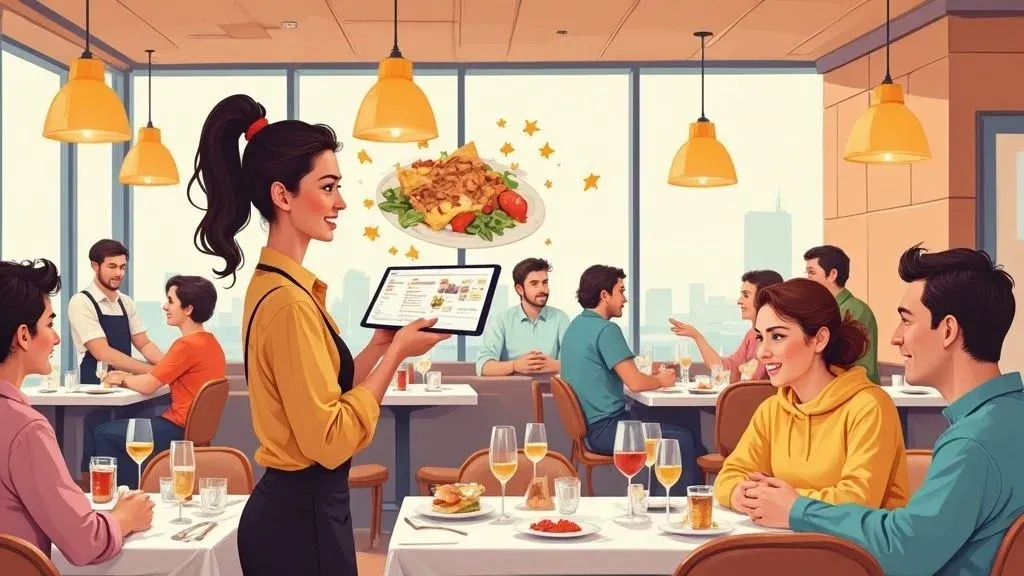
The graphic above perfectly illustrates how a small suggestion from your team can make a big impact on your bottom line.
Final Takeaway: Real growth happens when your menu, marketing, and operations support one another. Start by implementing POS integration. It’s the foundation that eliminates manual work, reduces errors, and provides the insights you need to drive sales forward.
At OrderOut, we connect all your delivery apps directly to your POS so you can get back to what you do best. To start streamlining your delivery operations, you can start onboarding for Free in a few clicks.