
How to Boost Sales in a Restaurant: Practical Strategies for Growth
· Thibault Le Conte
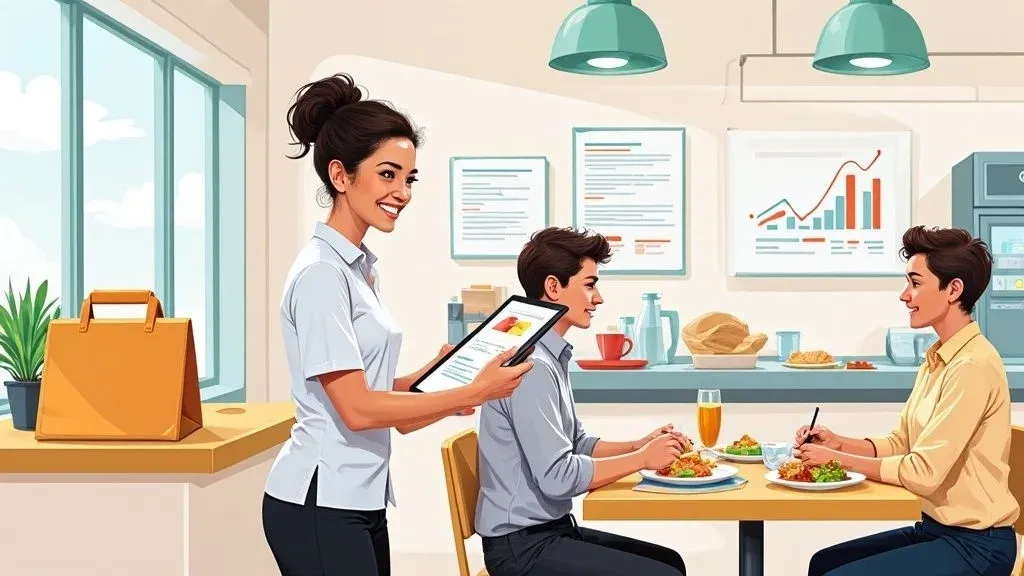
If you want to significantly boost your restaurant’s sales, you need to focus on two key areas: what you’re selling and how you’re selling it. It all starts with a deep dive into your menu to identify your most profitable items, followed by smart, targeted strategies to bring more customers in the door and streamline your restaurant operations.
Your Foundation for Growth: Menu and Marketing

Before you can focus on growth, you need a strong foundation. In the restaurant world, that foundation is your menu. It’s not just a list of dishes; it’s your most powerful sales tool. By understanding which items are both popular and profitable, you can strategically design your menu to guide customers toward the choices that benefit your bottom line the most.
This process is called menu engineering. In simple terms, it’s about making your star dishes the heroes of your menu.
- Find Your Stars: These are the dishes everyone loves that also have great margins. They deserve the spotlight—place them prominently and give them descriptions that make mouths water.
- Solve Your Puzzles: These are high-profit items that just don’t sell well. A simple fix like a better photo, a slight price adjustment, or training staff to recommend them can turn them into stars.
- Rein in Your Plowhorses: These items are super popular but have low profit margins. You can’t get rid of them, but you can increase their profitability by raising the price slightly or pairing them with a high-margin side or drink.
- Cut Your Dogs: Low profit and low popularity. These dishes complicate your kitchen operations and take up valuable menu space. It’s usually best to remove them.
Crafting a Modern Marketing Strategy
Once your menu is optimized for profit, it’s time to tell people about it. Modern restaurant marketing is about building a community and giving customers a reason to choose you over the competition.
A critical part of this is effectively reaching people in your immediate area. By mastering your local marketing strategy, you can turn nearby residents into loyal, repeat customers.
The goal is to turn a first-time visitor into a regular. A welcoming atmosphere encourages guests to stay longer and spend more, while an active online presence keeps your restaurant top-of-mind between visits.
Connecting Marketing Directly to Your Menu
Your marketing efforts should directly highlight your menu’s strengths. For example, you can run a social media campaign featuring a “star” dish or offer a limited-time deal on a “puzzle” item to boost its sales. This combination of menu psychology and targeted promotion is a powerful engine for growth.
We’ve seen casual dining chains thrive by doing just this—they’ve upgraded their atmosphere while pushing value-focused ads and getting really active on social media. It works.
High-Impact Strategies to Boost In-House Sales
Here are proven, actionable tactics you can implement quickly to increase sales from your dine-in customers.
Strategy Primary Goal Example Action Upselling & Cross-selling Increase Average Check Size Train staff to suggest premium sides, appetizers, or wine pairings. “Would you like to add our truffle fries to that burger?” Loyalty Programs Encourage Repeat Business Offer a digital punch card or a points system that rewards frequent diners with discounts or free items after a certain number of visits. Themed Nights & Events Attract New Customers & Fill Slow Nights Host a “Taco Tuesday” special, a wine-tasting evening, or live music on a Wednesday to draw a crowd during off-peak times. Strategic Menu Placement Guide Customer Choices Place your high-profit “star” dishes in the upper-right corner of the menu, where a diner’s eye naturally falls first. Limited-Time Offers (LTOs) Create Urgency & Excitement Introduce a seasonal dish or a special cocktail available for only a few weeks to drive immediate traffic and create buzz.
These strategies are not complex, but they require consistent effort. Start with one or two, measure the impact on your sales, and adjust as needed.
The Takeaway
Boosting sales comes back to the fundamentals. Engineer your menu to highlight your most profitable items, then use smart marketing to connect with your local community. Ready to perfect your most important sales tool? Check out our deep dive on the essential menu elements that drive restaurant success.
Streamline Restaurant Operations with Smart Food Tech

Making your restaurant more efficient is one of the quickest ways to improve your profit margins. When your kitchen, front-of-house, and delivery channels work together seamlessly, you don’t just cut costs—you create a better customer experience that brings people back. This is where smart food tech becomes a crucial tool for growth.
Think of your Point of Sale (POS) system as the command center of your restaurant. It’s more than a cash register; it’s the hub that connects every order, payment, and inventory item. Getting this right transforms daily chaos into a smooth, predictable workflow, which is essential for boosting sales.
The Power of POS Integration
A modern POS system’s real value is its ability to connect with your other tools. This is called POS integration, and it’s what separates struggling restaurants from thriving ones. In simple terms, it means all your orders—whether from Uber Eats, DoorDash, or your own website—flow into one central system, eliminating the need for multiple tablets.
Why it matters for restaurant efficiency:
- Fewer Errors: Orders from delivery apps go directly to your POS and kitchen printers. This eliminates costly mistakes that happen when staff manually re-enter orders, saving you money on remakes and refunds.
- Increased Staff Productivity: Your team can stop juggling tablets and focus on what matters: cooking great food and serving guests. This directly improves service quality and table turnover.
- Faster Service: With all orders in a single, organized queue, your kitchen workflow becomes much smoother. This leads to shorter ticket times and happier customers.
For example, a restaurant using a system like Square can integrate its delivery apps so every order is processed through one dashboard. This not only saves significant time but also provides a complete and accurate picture of daily sales across all channels, helping you make smarter business decisions.
Why Centralized Tech Matters for Your Bottom Line
The restaurant industry operates on tight profit margins, often between 3% and 5%. Every mistake and piece of waste hurts. Smart restaurant operations use technology to manage inventory and staffing, which are your two biggest costs. For a closer look at the numbers, these insights on restaurant industry statistics are worth a read.
By centralizing your technology, you turn raw data into actionable insights. You can see which delivery platforms are most profitable, identify sales trends to optimize staffing, and track inventory to reduce food waste—a major profit drain.
This creates a positive cycle: improved efficiency leads to a happier, less-stressed team and faster service. Happier staff provide a better customer experience, which leads to repeat business and positive reviews, directly driving up your sales. For a deeper dive into making these connections work, check out our guide on POS system integration.
Your Practical Next Step
Take a close look at your current technology. Are you still manually entering delivery orders? If your systems aren’t integrated, exploring a POS integration solution for a system like Clover is one of the most impactful changes you can make to improve your restaurant’s efficiency and profitability.
Master Your Digital Storefront and Online Presence
Today, your restaurant’s online presence is as important as its physical location. A strong digital storefront doesn’t just get you noticed; it converts online searchers into paying customers. The goal is simple: make it incredibly easy for people to find you, view your menu, and place an order.
It all starts with a simple search like “tacos near me.” Winning that customer means appearing at the top of the results. This is the core of local search engine optimization (SEO), and your most powerful tool is your Google Business Profile.
Think of your Google Business Profile as your restaurant’s digital billboard. It must be complete, accurate, and appealing, featuring high-quality photos of your food, your current menu, and correct hours.
Optimize Your Google Business Profile for Maximum Impact
A well-maintained Google Business Profile is a direct line to new customers. Research shows that 1 in 3 people discover and book restaurants directly through Google. It’s free marketing that delivers continuous results.
Here’s how to make yours stand out:
- Encourage Reviews: Ask happy customers to leave a review. A steady stream of positive feedback signals to Google and potential diners that you’re a top choice.
- Keep Information Current: Nothing ruins a customer experience faster than showing up to a closed restaurant because the online hours were wrong. Accuracy is key.
- Use High-Quality Photos: Let people eat with their eyes. Post vibrant, professional-looking photos of your food, dining area, and team.
Your digital presence and physical storefront are two sides of the same coin. A great online profile brings customers to your door, while an engaging physical presence keeps them coming back and attracts passersby.
Speaking of your physical presence, don’t underestimate your actual storefront. A great guide to LED signs for businesses can walk you through how to turn your brick-and-mortar location into an attention-grabbing beacon that pulls people in off the street.
Build a Mobile-Friendly Website That Sells
While Google is often the first touchpoint, your website is where you control the entire customer experience. It must be mobile-friendly and designed for one purpose: driving orders. If a potential customer can’t figure out how to order within seconds of landing on your site, you’ve likely lost them for good.
An intuitive, simple online ordering system is a necessity. This smooth journey—from discovering you on Google to easily placing an order on your site—is what unlocks your restaurant’s sales potential. To dive deeper into this, check out our complete guide on local SEO for restaurants.
Your Practical Next Step
Set aside 15 minutes today to audit your Google Business Profile. Are your hours correct? Is your latest menu uploaded? Do the photos look recent and delicious? Fixing these small details is a fast, no-cost way to boost your visibility and bring more customers through your door tonight.
Expand Your Reach with Seamless Restaurant Delivery Integration
Online restaurant delivery is no longer a trend; it’s a fundamental part of the business and a massive revenue stream. But managing it without the right setup can create operational chaos.
The biggest challenge isn’t just being on apps like Uber Eats or DoorDash; it’s the nightmare of managing multiple tablets. This is “tablet hell,” where staff must manually punch every order from each app into your Point of Sale (POS) system. It’s a slow, error-prone process that costs you time and money.
Escape Tablet Hell with Direct POS Integration
The solution is direct POS integration. In simple terms, this technology connects all your third-party delivery apps directly to your main POS system. This creates a single, streamlined channel for every order, whether it’s for dine-in, takeout, or delivery.
Instead of an employee frantically re-typing an order from a delivery tablet, the order instantly appears in your POS and prints straight to the kitchen. This is a game-changer for your daily restaurant operations.
By automating the flow of delivery orders, you eliminate the single biggest point of failure in the online ordering process. This isn’t just about convenience; it’s about reclaiming lost time, reducing food waste from incorrect orders, and freeing up your staff to focus on serving customers.
This is a critical piece of building an effective online presence. You want a seamless path from a customer finding you online to a meal arriving at their door.

As the graphic shows, seamless delivery is a critical part of turning an online search into a profitable sale.
The Real-World Impact on Efficiency and Sales
Imagine a busy Friday night. Without integration, your host is juggling four buzzing tablets while trying to greet guests. Now, imagine that same night with direct POS integration, like the kind that works with systems such as Clover. Every online order flows quietly and accurately into the kitchen queue. The difference is night and day.
Let’s break down how this impacts your team’s daily tasks.
Manual vs Integrated Delivery Management
Operational Task Manual ‘Tablet Hell’ Method Integrated POS Solution Order Entry Staff manually re-types every order from multiple tablets into the POS. Orders from all apps automatically appear in the POS and are sent to the KDS. Menu Updates Log into each delivery platform separately to 86 items or change prices. Update your menu once in the POS, and it syncs across all connected platforms. Error Handling High risk of human error, leading to wrong orders, food waste, and refunds. 100% order accuracy as the customer’s order is transmitted directly. Reporting Manually combine reports from each app and the POS for a full sales picture. All sales data is centralized in one place for clear, comprehensive reporting.
Why it matters for restaurant efficiency: This automation directly boosts sales by reducing costly errors, increasing staff productivity, and speeding up service, which encourages repeat business.
When all your sales data is in one place, you get a clear view of your business. You can finally see which delivery platforms are your top performers and make smarter, data-backed decisions. If you’re weighing your options, our guide on choosing a third-party delivery service offers valuable insights.
Your Practical Next Step
If your team is still manually entering delivery orders, it’s time to explore an integration solution that connects your delivery apps to your POS, whether you use a system like Square or another provider. This single change can have a massive positive impact on your workflow, reduce staff stress, and unlock significant sales potential.
Capitalize on Food Trends and Menu Diversification
Staying relevant is essential for long-term growth. This means understanding what your customers are craving. Tapping into food trends isn’t about chasing every fad; it’s about making strategic menu additions that attract new customers and keep regulars excited.
Adapting to consumer demand is a reliable way to increase sales. You don’t need to reinvent your entire concept. Instead, introduce targeted, high-margin specials that align with what people are already looking for.
Identify and Act on What People Want
Market research can be simple. Start by browsing delivery apps like DoorDash and Uber Eats to see what’s popular in your area. Keep an eye on local food blogs and social media groups to discover what dishes people are talking about.
The global restaurant industry is projected to reach $4.03 trillion in sales, with significant growth in specific categories. For example, the chicken segment is expected to grow by 6.9%, with Mexican food following at 6.2%. You can explore these restaurant industry sales forecasts to see where the market is headed. This data provides a clear roadmap of what customers want.
How New Menu Items Affect Your Restaurant Operations
When you add new items, it impacts your daily restaurant operations. To ensure a smooth rollout, these additions must integrate seamlessly with your existing technology. For example, if you create a spicy chicken sandwich to capitalize on that trend, you need it to appear instantly across all your ordering platforms.
Smart diversification means innovating within your existing operational strengths. If you run a pizzeria, try a birria pizza. If you own a cafe, consider a line of specialty coffee drinks. The key is to add excitement without creating chaos in your kitchen.
Why it matters for restaurant efficiency: A restaurant using a system like Clover with POS integration can update its menu from one central dashboard. This change is automatically pushed to all connected delivery platforms, saving you significant time and preventing costly ordering errors from outdated menus. This agility allows you to test new dishes, analyze sales data in your POS, and adapt quickly, keeping your menu fresh and profitable.
Your Practical Next Step
Set aside 30 minutes this week to research food trends in your city. Can you create a special using ingredients you already have? Brainstorm a limited-time offer, add it to your POS, and promote it online. It’s a low-risk experiment that could unlock a new revenue stream and attract curious new customers.
What’s Your Next Move for Higher Sales?
We’ve covered a range of strategies, from menu engineering to leveraging technology. The central theme is that boosting restaurant sales isn’t about a single magic solution. It’s about making consistent, intelligent improvements that enhance both your efficiency and the customer experience.
For many restaurant owners, the most significant challenge—and the most impactful place to start—is overcoming operational bottlenecks. Manually entering orders from multiple delivery tablets is a recipe for errors, staff stress, and wasted time. This is where integrating your delivery platforms directly into your POS system becomes a game-changer, creating a stable foundation for growth.
To understand how operational efficiencies impact your finances, check out our guide on using a restaurant profit margin calculator. You’ll be amazed at how small operational tweaks can lead to significant profit gains.
Taking control of your delivery operations isn’t just about reducing headaches; it’s about creating a more reliable, professional service that encourages repeat business and drives revenue.
Think about the ripple effect. When you automate order entry, your team becomes more productive. Order accuracy improves, which means happier customers. Plus, you get clean, centralized data to see what’s really working, allowing you to make smarter business decisions.
Your Practical Takeaway
Stop juggling tablets and start building a more streamlined, efficient operation. The first step is to integrate your delivery apps directly with your POS system. This single action will reduce errors, save time, and provide the data you need to grow your sales intelligently. You can start onboarding for Free in a few clicks and see the difference it makes firsthand.
Still Have Questions?
We get it. Driving sales is the name of the game, and you’ve probably got a few questions about where to start. Here are some of the most common ones we hear from restaurant owners just like you.
What’s the Fastest Way to Get a Sales Bump?
For a quick win, focus on optimizing your restaurant delivery and online ordering process. Integrating platforms like DoorDash and Uber Eats directly into your POS system is an immediate game-changer. It eliminates manual entry errors, which means faster ticket times and happier customers.
To accelerate results, pair this tech upgrade with a compelling limited-time offer. Promote it on your social media channels to create a sense of urgency that drives immediate orders.
How Can I Increase Sales Without a Huge Marketing Budget?
You don’t need a massive ad spend to see results. Get creative with what you already have:
- Engineer your menu: Place your most profitable dishes in the spotlight. Use design elements to guide customers’ eyes to high-margin items.
- Optimize your Google Business Profile: This is your digital storefront, and it’s free. Upload high-quality food photos, ensure your hours are correct, and encourage regulars to leave reviews. Positive reviews are invaluable for local search visibility.
- Train your team to upsell effectively: This is about making helpful suggestions, not being pushy. A simple, “Would you like to start with our signature calamari?” or “That dish pairs perfectly with our new IPA,” can easily increase your average check size.
Does POS Integration Really Make That Much of a Difference?
Absolutely. A robust POS integration is the backbone of a modern, efficient restaurant. When all your orders—from your website, third-party apps, or walk-ins—flow into one system, the chaos disappears.
Your kitchen can process orders faster and more accurately. Your front-of-house team is less stressed and can focus on providing excellent service. For instance, connecting your delivery apps to a system like Square or Clover centralizes everything. This operational efficiency doesn’t just save time; it creates a better customer experience that builds loyalty and directly boosts long-term sales.
Ready to stop juggling tablets and start building a more profitable operation? OrderOut connects your delivery apps directly to your POS system, saving you time and eliminating costly errors. You can start onboarding for Free in a few clicks.