
How to Boost Sales in a Restaurant With Profitable Strategies
· Thibault Le Conte
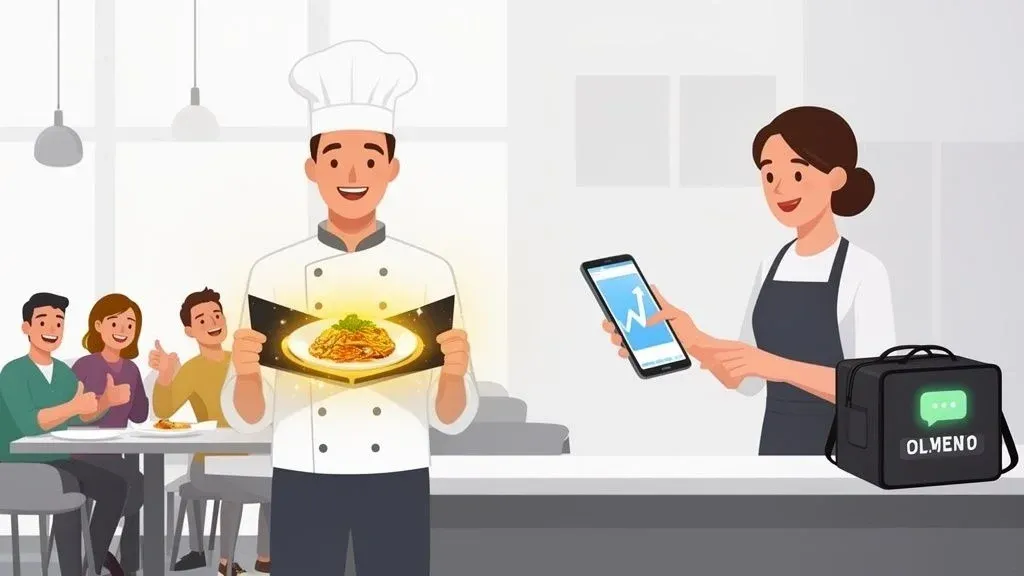
If you want to boost sales, the very first place to look isn’t your marketing budget—it’s your menu. By digging into your sales data and making a few strategic design changes, you can start guiding customers toward your most profitable dishes. It’s the fastest way to lift your average check size without spending a single extra dollar. This matters because a well-designed menu directly impacts restaurant efficiency, ensuring your kitchen focuses on high-margin items that are simple to produce, which is a core part of optimizing your restaurant operations.
Master Your Menu to Maximize Profitability and Restaurant Operations
Think of your menu as your best salesperson. It’s on every table, in every customer’s hands, silently influencing what they order. Before you pour money into ads or promotions, you need to make sure this internal sales tool is working as hard as it can for you.
This whole process is called menu engineering. In simple terms, it means using your sales data to figure out which dishes make you the most money (high profit) and which ones your customers order the most (high popularity). The technical part involves analyzing reports from your POS system to categorize every item. By highlighting your most profitable and popular dishes, you boost sales and make your kitchen more efficient, as your team can prep for high-demand items, reducing waste and ticket times.
Find Your Stars and Puzzles
First things first, you need to get into your data. Your POS system is a goldmine. In simple terms, you’re looking for a report that shows you how many of each dish you sold over a period of time. Technically, this is called an item-level sales velocity report, and you can pull it directly from systems like a Clover or Square terminal. This data is the raw material for menu engineering.
With that data in hand, you’ll sort every single dish into one of four categories:
- Stars: High profit, high popularity. These are your heavy hitters. Everyone loves them, and they make you great money.
- Puzzles: High profit, low popularity. The hidden gems. They’re profitable, but for some reason, they just aren’t selling.
- Plowhorses: Low profit, high popularity. The crowd-pleasers. They sell like crazy but don’t do much for your bottom line.
- Dogs: Low profit, low popularity. These are just taking up space and tying up inventory.
This flowchart breaks it down visually, showing how to slot each item based on its sales and profit numbers.

As you can see, the goal is pretty clear: showcase your Stars and figure out how to solve your Puzzles.
For a clearer picture, this table breaks down exactly what to do with the items in each quadrant.
Menu Engineering Quadrant Action Plan
Item Category Description (Popularity/Profitability) Actionable Strategy Example Stars High Popularity / High Profitability Feature prominently, don’t change the price, ensure quality is consistent. Your best-selling Wagyu Burger with truffle fries. Puzzles Low Popularity / High Profitability Rename, redescribe, make it a special, train staff to recommend it. The delicious but overlooked Seared Scallop Risotto. Plowhorses High Popularity / Low Profitability Slightly increase the price, reduce portion size slightly, or pair with a high-profit side. The classic Chicken Parmesan that everyone orders. Dogs Low Popularity / Low Profitability Remove it from the menu. Don’t waste time, money, or kitchen space on it. That obscure vegan casserole that sells once a month.
This framework gives you a simple, repeatable process for keeping your menu optimized for profit.
Design Your Menu to Sell
Now that you know what to promote, it’s time to think about how. A typical diner’s eyes gravitate to what’s known as the “golden triangle”—the upper-middle, top-right, and top-left corners of a menu. This is prime real estate. Put your Stars and Puzzles there.
Words matter, too. Don’t just list “Chicken Pasta.” Sell it. “Pan-Seared Tuscan Chicken with a Sun-Dried Tomato Cream Sauce over Fresh Pappardelle.” Details make the dish sound more valuable and can easily justify a higher price. If you want to dive deeper, check out these essential menu elements for your restaurant.
A well-engineered menu does more than just boost sales—it makes your kitchen run smoother. When you highlight items that are both profitable and quick to prepare, you shorten ticket times, reduce stress on your line cooks, and turn tables faster during that crazy dinner rush.
Another great move? Bundles. Pairing a high-margin entrée with a drink and a side is a classic way to bump up the average check. And don’t forget the power of suggestion—learning how to effectively upsell seasonal beverages can add a surprising amount to your daily sales.
By turning your menu from a simple list into a strategic tool, you’ve already taken a massive first step toward a more profitable restaurant.
Turn Your Staff Into a Powerful Sales Team
Your menu might be your silent salesperson, but your front-of-house team? They’re your active sales force. They are the human connection to your brand, and with the right training, they can add serious revenue to every single check.
This isn’t about turning servers into pushy car salesmen. It’s about transforming them into knowledgeable guides who actually enhance the guest experience.

The key is moving beyond standard service steps and into practical, non-aggressive sales techniques. That shift in mindset is where the magic happens, maximizing the value of every single person who walks through your door.
The Art of the Specific Recommendation
One of the biggest missed opportunities I see happens constantly. A server asks, “Can I get you something to drink?” and the guest says, “Just water for now.” A trained server knows this is their cue to offer something specific and enticing.
Forget generic questions. Empower your staff with simple, natural-sounding scripts that genuinely help the guest decide.
-
Instead of: “What’s good?”
-
Try This: “The chef is really proud of our Seared Scallop Risotto tonight. The scallops were delivered fresh this morning, and it pairs beautifully with our Sauvignon Blanc.”
-
Instead of: “Do you want an appetizer?”
-
Try This: “Have you tried our new spicy margarita? It’s made with a house-infused jalapeño tequila and it’s the perfect match for the guacamole to start.”
This approach does two crucial things. First, it shows confidence and expertise, which builds trust. Second, it steers them toward the high-margin items you already identified during your menu engineering, directly bumping up the check total.
When your team can passionately describe the ingredients, the flavor profile, or the story behind a dish, it stops feeling like a sales pitch. It feels like a genuine insider tip. That’s how you build a connection and drive sales organically.
Deep Product Knowledge Is Your Foundation
You can’t sell what you don’t know. The best upselling comes from a place of genuine enthusiasm, and that only happens with deep product knowledge. Regular training and tasting sessions aren’t a luxury—they are an essential investment in your bottom line.
Your staff has to be able to answer questions confidently and make compelling suggestions on the fly.
- Wine Pairings: Can they recommend a red and a white for your top five entrees without hesitating?
- Dietary Modifications: Do they know which dishes can be made gluten-free or vegan off the top of their head?
- Ingredient Sourcing: Can they share a quick, interesting fact about where your steak comes from or who bakes your bread?
This level of expertise doesn’t just sell more; it also cuts down on errors and mods sent to the kitchen, which is a huge boost to your overall restaurant efficiency. A server who knows the menu inside and out can guide a guest with an allergy to a safe and delicious choice the first time, improving staff productivity. A well-informed team is one of the most critical parts of effective leadership, something we dive into in our guide to essential manager duties in a restaurant.
Seamlessly Integrating Sales with Food Tech
Modern food tech makes this entire process so much smoother. In simple terms, when a server uses a handheld ordering tablet, they can add suggestions to the bill instantly. The technical aspect is the POS integration, which ensures the handheld device communicates directly with the central POS system. For example, using a handheld Square terminal, a server can add a suggested wine pairing to the order instantly, right at the table.
There’s no awkward pause where a guest might change their mind. The order is fired to the kitchen and bar immediately, which shaves precious minutes off ticket times and lets your team handle more tables. This direct link between sales training and technology is crucial for improving restaurant efficiency and boosting your bottom line.
Automate Restaurant Delivery Orders With POS Integration
In today’s restaurant world, delivery isn’t just an add-on; it’s a core part of your business. But as those orders start rolling in from Uber Eats, DoorDash, and Grubhub, a huge bottleneck often forms right at your front counter: manual order entry. This doesn’t just slow you down—it costs you real money and chips away at your hard-earned reputation.
We’ve all seen it. The dinner rush hits, and one of your best team members is stuck in “tablet hell,” surrounded by a chorus of beeping iPads. They hear a chime, grab a tablet, squint at the order, then pivot to the POS to punch it all in. This frantic dance repeats over and over, all while your dine-in guests are waiting for service.
It’s a recipe for disaster. You’re paying a skilled employee to do low-level data entry, which kills staff productivity. Worse, it’s a breeding ground for mistakes. One wrong modifier or a missed item, and you’re dealing with an angry customer, a one-star review, and the cost of remaking and re-delivering the food. That’s how you lose sales, not grow them.

Why POS Integration is a Game-Changer for Restaurant Delivery
The only way out of this mess is to build a direct pipeline from your delivery apps straight to your kitchen. That’s where POS integration comes in. In simple terms, this technology automatically sends online orders into your restaurant’s main computer system. The technical side involves using an API (Application Programming Interface) to connect platforms like Uber Eats directly to your Point of Sale system. Instead of someone re-typing everything, orders pop up on your kitchen display system (KDS) or ticket printer just like any dine-in order.
This one change can completely transform your restaurant operations. It’s not just about convenience; it’s about taking back control and building a delivery system that can actually scale. When you remove the manual steps, you eliminate the single biggest source of human error, significantly reducing costs associated with remakes.
The results are immediate and easy to see:
- Fewer Mistakes: Orders are sent exactly as the customer placed them. Typos and forgotten modifiers drop to virtually zero, reducing costly errors.
- More Productive Staff: Your team is freed from juggling tablets and can focus on what matters—taking care of guests and making sure every order is perfect. This boosts staff productivity.
- Faster Service: Tickets hit the kitchen the second they’re placed. That means faster prep times, happier drivers, and more satisfied customers, saving valuable time.
How Integration Works in the Real World
Let’s make this tangible. Say your restaurant runs on a Clover POS and you take orders from both Uber Eats and DoorDash. The old way means you have two tablets and a staff member glued to them during peak hours.
With an integration partner like OrderOut, the workflow is totally different. A customer orders on DoorDash. OrderOut grabs it instantly, translates it into the right format, and injects it straight into your Clover system. The ticket prints in the kitchen, 100% accurate, without anyone lifting a finger. This automation is key to improving restaurant efficiency and profitability.
This seamless connection is how you scale your restaurant delivery business. It lets you handle a massive influx of orders without hiring more people or compromising on quality. To get a deeper look at how these systems connect, check out our guide on POS software integration.
The chaos of managing multiple delivery tablets is a direct barrier to growth. POS integration removes that barrier, turning a stressful, error-prone process into a streamlined, automated revenue stream. It’s the operational backbone of a successful modern delivery strategy.
The Financial Impact of Automation
Automating your delivery workflow is one of the smartest financial moves you can make. Digital ordering is where the growth is. In the U.S. alone, restaurant and foodservice sales hit roughly $1.5 trillion in 2023 and are on track for $1.6 trillion by 2025, with off-premise channels driving a huge chunk of that spending.
Think about the labor savings. Manually entering a single order can easily take 5–10 minutes during a rush. If you eliminate that for 40 delivery orders a day, you’ve just reclaimed over three hours of paid labor. Every single day. That’s time and money you can pour back into marketing, training, or other sales-driving activities.
It’s the same story if you use a system like Square for Restaurants. Integrating it with delivery apps consolidates every single sale—from walk-ins to online orders—into one dashboard. This gives you a crystal-clear, complete picture of your business performance, helping you make smarter decisions.
Your Next Step: A More Efficient Delivery Operation
Don’t let clunky, manual processes put a ceiling on your sales. The first step is simple: take a hard look at your current workflow and pinpoint where manual entry is slowing you down. The next is to find a solution that connects your digital storefront directly to your kitchen.
When you automate the flow of delivery orders into your POS, you’re not just buying a piece of software. You’re investing in a more efficient, profitable, and scalable business. You cut costs, reduce stress for your team, and create a delivery experience that keeps customers coming back.
Capture Your Local Market With Digital Marketing
You don’t need a huge advertising budget to fill your tables. In fact, some of the most powerful ways to bring in new customers won’t cost you a dime. If you focus on a few smart digital marketing tactics, you can start to really own your local area and keep a steady stream of guests coming through the door.

This all starts with your most valuable piece of online real estate: your Google Business Profile. When someone nearby searches for “tacos near me” or “best brunch spot,” your profile is the very first impression they get. Making it count isn’t just a good idea—it’s essential for boosting sales.
Master Your Google Business Profile
Think of your Google Business Profile (GBP) as your digital front door. It’s pretty straightforward: when potential customers are searching on Google Maps or in a local search, your profile gives them all the info they need to decide where to eat. A well-kept profile simply ranks higher, gets seen more often, and drives more foot traffic and online orders.
Your mission is to make that profile irresistible. This goes way beyond just listing your address and phone number.
- Upload Mouth-Watering Photos: You need at least 10-15 high-quality photos of your best dishes, your dining room vibe, and your storefront. Show people exactly what they’re missing out on.
- Keep Your Menu Current: Make sure your full menu is uploaded and easy to read. Nothing loses a potential customer faster than an old menu with outdated prices.
- Encourage and Respond to Reviews: Don’t be shy about asking happy customers to leave a review. Then, make it a point to respond to every single one—the good and the bad. A thoughtful reply to a negative review shows you’re listening and can actually win over people who are on the fence.
This is a critical part of your restaurant operations because it directly brings in new customers without you spending a cent on ads. A strong GBP builds trust before anyone even sets foot in your restaurant. For a full playbook on this, our guide on local SEO for restaurants digs into all the details.
Simple and Effective Social Media Plays
Forget about trying to go viral on every platform out there. For most restaurants, a focused social media strategy is way more effective for actually driving sales. The goal is local engagement, not global fame.
Instead of chasing trends, stick to what works. A simple contest for a free dinner for two can work wonders. To enter, just have people post a photo from a past visit and tag your restaurant. This creates a flood of genuine, user-generated content that acts as powerful social proof.
Another easy win? Post your daily specials with a great photo, every single day. It gets your followers into the habit of checking in and gives them a reason to pick you over a competitor on any given night.
When you’re ready to put a little money behind it, hyper-targeted ads on platforms like Facebook and Instagram offer an incredible return. You can target users within a tight five-mile radius of your restaurant, making sure every dollar is spent reaching potential customers who can actually walk in.
Build Your Own Marketing List
Third-party apps and social media are great for getting discovered, but you don’t own that customer relationship. The single most valuable marketing asset you can build is your own email or text message list.
It’s easier than you think. Place a simple QR code on every table with a tempting offer: “Scan to join our VIP club and get a free appetizer on your next visit.” When customers scan it, they pop in their email address.
That simple action turns a one-time guest into a long-term marketing opportunity. Now you can send out weekly promotions, announce new menu items, and share special deals directly to their inbox, driving repeat business for a fraction of what it costs to find a new customer. If you want to get really smart, you can integrate this with your POS integration data from systems like Square or Clover to segment your list and send even more personalized offers.
Your next practical step is to audit your Google Business Profile right now. Check your photos, update your hours, and respond to your last five reviews. That simple, 15-minute task is a direct investment in your next sale.
Leverage Your POS Data for Smarter Decisions
Think of your Point of Sale system as more than just a digital cash register. It’s an intelligence hub, quietly gathering critical business insights with every single order. In simple terms, your POS tracks what you sell and when. Technically, this data can be analyzed to reveal deep patterns about customer behavior, menu performance, and operational efficiency. Learning how to tap into this information is one of the fastest ways to understand what’s really going on in your restaurant and start making smart, profitable decisions.
This isn’t about needing a degree in data science. It’s about knowing which questions to ask and where to look for the answers that are already at your fingertips. Simple, powerful insights are hiding in your daily sales reports, just waiting to help you fine-tune everything from staff schedules to your next big promotion.
Uncover Your Most Important Metrics
You don’t need to get lost in a sea of spreadsheets and complex analytics. To get started, just focus on a few key performance indicators (KPIs) that give you a clean, clear snapshot of your restaurant’s health. These numbers are what help you shift from making decisions based on “gut feelings” to making them based on cold, hard facts.
Start by pulling these essential reports from your POS:
- Sales by Daypart: This is your roadmap to your busiest and slowest hours. Is lunch a ghost town while dinner service is slammed? Are Tuesdays consistently your weakest day? This report tells you exactly when you need to focus your marketing efforts.
- Item-Level Sales Reports: As we touched on with menu engineering, this is the raw data showing what’s flying out of the kitchen and what’s collecting dust. It’s the absolute foundation for optimizing both your dine-in and delivery menus.
- Sales Per Labor Hour: This is a crucial efficiency metric. Calculated by dividing your total sales by the number of staff hours worked in that period, it tells you how productive your team is.
Imagine you pull up the reports from your Clover POS and notice a sharp sales drop between 2 PM and 4 PM every single weekday. Now you have a specific problem to solve. Instead of guessing, you can launch a targeted happy hour or a “two-for-one” late lunch special to drive traffic precisely when you need it most. This action improves restaurant efficiency by making your staff and space more productive during slow hours.
Turn Raw Data Into Real-World Actions
Once you’ve spotted a trend, the next step is to actually do something about it. The goal is to create a direct line between what the data is showing you and a tangible change in your restaurant operations.
Let’s walk through a real-world scenario. You compare sales data and find that your dine-in customers love your delicate seafood dishes, giving them rave reviews. But on DoorDash, those same dishes get mediocre ratings because they just don’t travel well. That one insight is huge. It tells you to create a separate, delivery-optimized menu featuring heartier items you know will arrive looking and tasting great. We dive deeper into how to use these insights in our guide to understanding your restaurant menu data.
The ultimate goal is to centralize all your sales data into one place. When your dine-in, takeout, and delivery sales flow through a single integrated system, you gain a complete, 360-degree view of your business, empowering you to make choices that directly boost the bottom line.
Why Integrated Data Matters for Profitability
In this business, efficiency is profit. Top-performing restaurants might hit a 10% net profit margin, but the industry average hovers around a razor-thin 3–5%. There’s simply no room for error or waste. Integrated platforms that plug delivery orders directly into systems like a Square POS are game-changers. They stop the madness of manual order entry and dramatically cut down on mistakes, reducing costs and saving time.
When every single ticket—whether it’s from a table in your dining room, a pickup order, or a delivery app—flows through one central POS, you unlock a new level of control. You can analyze which items sell best on which channel, spot bottlenecks during specific dayparts, and adjust your staffing and prep accordingly. This unified view, as highlighted in these industry insights on restaurant profitability, gives you a massive competitive advantage.
This is where food tech and POS integration truly shine. You move beyond simply taking orders to actively shaping your sales strategy.
Here’s your next step: block off 30 minutes this week. Pull a “sales by hour” report from your POS for the last month. Find your slowest three-hour block and brainstorm one specific, simple promotion you could run to fill that gap. This is a quick, actionable way to improve restaurant efficiency and boost sales.
Wrapping Up: Your Next Move for Higher Sales
So, what’s the secret to boosting your restaurant’s sales? It isn’t a single magic bullet. It’s about being smarter on the inside—with menu engineering and sharper staff training—and more strategic on the outside with your marketing.
Throughout this guide, we’ve seen one theme pop up again and again: operational efficiency.
When you automate tedious tasks like manually punching in delivery orders, you’re not just saving a few minutes. You’re slashing expensive errors, letting your team focus on the customers in front of them, and building a smoother operation that guests will notice. This is why POS integration is so critical; it directly boosts restaurant efficiency and profitability by freeing up staff and reducing costly mistakes. If you’re looking for even more growth strategies, this practical guide on how to increase sales is a great next read.
Having a clear, centralized view of your entire operation is a game-changer. Just look at what a modern dashboard can show you at a glance:
This isn’t just data for data’s sake. This is the kind of insight that lets you make decisions based on facts, not guesswork—the kind that directly beefs up your bottom line.
The single most powerful change you can make is putting the right technology to work for you. It’s time to take firm control of your operations and unlock the sales potential that’s been hiding in plain sight.
Your practical next step is clear. Automating your delivery order flow with a reliable POS integration will immediately reduce errors, save staff time, and improve your overall restaurant efficiency. Ready to see how seamless integration can truly transform your restaurant? Head over to the OrderOut dashboard and start onboarding for Free in a few clicks.
Your Top Questions, Answered
I Need to Boost Sales Fast. What’s the Quickest Win?
Want an immediate impact? Focus on two things. First, get your team on board with suggestive selling. Training your staff to genuinely recommend a profitable appetizer or a premium side can bump up your average check size right away.
The other quick win is to automate your delivery orders with a POS integration service. In simple terms, this stops your staff from manually punching in orders from Uber Eats and DoorDash. This single change saves a ton of time, slashes expensive order mistakes, and lets you handle more deliveries without the chaos. More volume, more sales.
How Can I Get More Customers In During Slow Periods?
Your POS data is your best friend here. Dig in and find out exactly when you’re slowest—down to the hour. Don’t guess.
Once you know your dead zones, you can get creative with targeted promotions. Think about a “late lunch” deal, a happy hour with killer appetizer specials, or a special midweek prix-fixe menu. The key is to shout about these deals on your Google Business Profile and social media. That’s how you grab the attention of locals looking for a good reason to come in.
Is All This Restaurant Technology Actually Worth the Investment?
One hundred percent. Modern food tech, especially POS integration, pays for itself faster than you’d think. Think about all the time your team spends manually entering orders from DoorDash or Uber Eats into your POS. It’s a huge time-suck and a recipe for errors.
A service that plugs those apps right into your Clover or Square system practically eliminates those expensive mistakes and frees up your staff. That’s not just a small tweak; it’s a fundamental upgrade to your restaurant operations that lets you scale the business and seriously improve your bottom line by boosting efficiency and reducing costs.
Ready to see how seamless integration can transform your restaurant? OrderOut connects your delivery apps directly to your POS, eliminating manual work and boosting efficiency. Start onboarding for Free in a few clicks.