
Master Your Food Cost Percentage Calculation for Higher Profits
· Thibault Le Conte
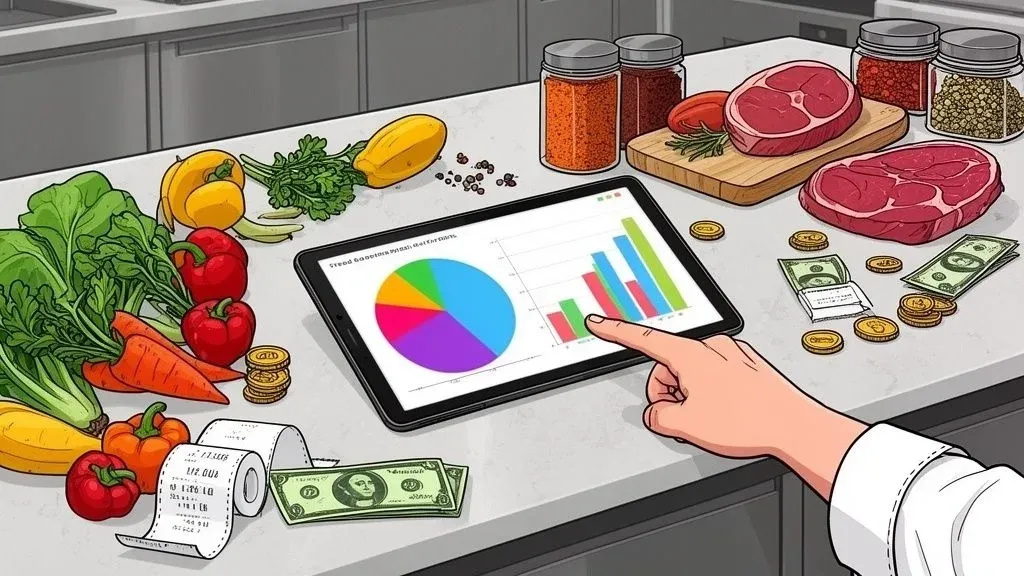
Calculating your food cost percentage is the single most important step you can take to understand your restaurant’s financial health. In simple terms, it tells you what percentage of your sales revenue is spent on ingredients. The technical formula is straightforward—(Cost of Goods Sold / Total Food Sales) x 100—but the story it tells is profound. It reveals exactly how efficiently you’re turning raw ingredients into revenue, which is critical for restaurant efficiency. After all, high sales don’t mean much if your ingredient costs are silently eating away at your profits.
Why Food Cost Percentage Is Your Most Important Number
Think of your food cost percentage as the pulse of your restaurant. It’s a direct, unfiltered look at your profitability. If your sales numbers look great but your bank account isn’t growing, this metric is the first place you need to look. It uncovers the hidden story behind your menu pricing, inventory management, and kitchen efficiency.
Getting a firm grip on this number is the foundation for making smarter business decisions. Once you know your food cost percentage, you can finally:
- Set Profitable Menu Prices: Stop guessing. Start pricing your dishes based on their actual ingredient costs to ensure every single sale contributes to your bottom line.
- Identify Waste and Inefficiency: A sudden spike in your food cost percentage is a major red flag. It can signal problems like over-portioning, spoilage, or even theft, giving you an actionable insight to improve restaurant operations.
- Optimize Your Inventory: You can avoid tying up precious cash in excess stock or, just as bad, running out of key ingredients during a rush. This number guides smarter purchasing.
- Engineer a More Profitable Menu: Pinpoint which dishes are your true profit drivers and which are barely breaking even. This allows you to strategically promote high-margin items and rethink the losers.
The Real-World Impact on Restaurant Efficiency
In today’s market, every single percentage point counts. Let’s look at the industry benchmarks.
Ideal Food Cost Percentage By Restaurant Type
This table provides a snapshot of what successful restaurants are aiming for. Use it as a guide to see where your numbers should ideally fall.
Restaurant Type Industry Average Food Cost % Fast Food / QSR 25% - 30% Fast Casual 28% - 32% Casual Dining 30% - 35% Fine Dining 32% - 38% Pizza 20% - 25% Steakhouse 35% - 40%
These aren’t just abstract numbers; they have real-world consequences. When nearly 38% of operators report being unprofitable, with most blaming higher food costs, controlling this metric becomes a genuine survival strategy.
This is where technology can be a lifesaver. Imagine trying to calculate your total sales by manually adding up every single receipt, including dozens of orders from restaurant delivery platforms like Uber Eats or DoorDash. It’s a recipe for errors and a massive waste of time.
By integrating these delivery services directly with your Point-of-Sale (POS) system, you completely automate one half of the food cost percentage calculation. This eliminates manual data entry, reduces costly mistakes, and gives you an accurate, real-time picture of your total sales. This POS integration immediately boosts staff productivity and saves hours of administrative work.
This kind of integration immediately boosts your team’s productivity. Instead of spending hours buried in spreadsheets trying to reconcile sales reports, your staff can focus on what matters most: serving guests and improving operations. When you have a clear, accurate view of both your costs and sales, you can manage your restaurant’s finances with real confidence. This metric is a cornerstone of your financial reporting, which you can learn more about by checking out our guide on creating a restaurant income statement.
Actionable Takeaway
Your first step isn’t just to calculate this number once and forget it. You need to track it consistently—ideally on a weekly basis. This is how you spot trends, react quickly to rising supplier costs, and stay in firm control of your profitability.
Calculating Your Food Cost Percentage Step By Step
Let’s be honest, diving into the numbers can feel like a chore, but getting a handle on your food cost percentage is one of the most powerful things you can do for your restaurant’s bottom line. In simple terms, you’re just figuring out what slice of every dollar you earn goes right back into buying ingredients.
The technical formula looks simple enough:
Food Cost Percentage = (Cost of Goods Sold / Total Food Sales) x 100
But don’t let the simplicity fool you. The process requires discipline. One missed invoice or a lazy inventory count can throw this number off completely, leading you to make bad calls on everything from menu prices to supplier negotiations.
As you can see, it’s a direct flow from what you buy to what you earn. Nailing this calculation is fundamental to your financial health.
The Building Blocks of the Formula
Before you can get your final percentage, you first need to figure out your Cost of Goods Sold (COGS). This isn’t just a number you can look up; you have to calculate it. COGS tells you the direct cost of the ingredients that went into the dishes you actually sold over a certain period.
The formula for COGS is:
COGS = (Beginning Inventory + Purchases) - Ending Inventory
Let’s quickly unpack each of those terms in clear language:
- Beginning Inventory: This is the dollar value of all the food and drink you have sitting on your shelves at the very start of the period you’re measuring (say, Monday morning).
- Purchases: This is the total value of everything you bought from your suppliers during that period. You have to be meticulous here—every single delivery counts.
- Ending Inventory: This is the dollar value of what’s left on the shelves at the end of the period (e.g., Sunday night).
Consistency is everything. If you decide to track this weekly, you need to count your inventory on the same day, at the same time, every single week and log every purchase as it comes in. This discipline is what turns abstract numbers into actionable insights.
A Practical Walkthrough: A Bistro’s Weekly Calculation
Let’s run through an example to see how this works in the real world. Imagine you run a small bistro and want to get a grip on your costs for the first week of the month.
First, you need to pull your numbers together.
- Beginning Inventory (Start of Week 1): You did your stock take on Sunday night and had $12,000 worth of ingredients.
- Purchases (During Week 1): You got two big deliveries from your suppliers, totaling $3,500.
- Ending Inventory (End of Week 1): The following Sunday, you count again and find you have $11,000 in stock.
- Total Food Sales (During Week 1): You check your POS reports and see you brought in $13,500 in food sales.
Now, we calculate the Cost of Goods Sold (COGS) using the formula.
COGS = ($12,000 Beginning Inventory + $3,500 Purchases) - $11,000 Ending Inventory COGS = $15,500 - $11,000 COGS = $4,500
So, your bistro used up $4,500 worth of ingredients to make that $13,500 in sales.
Finally, we can calculate the food cost percentage.
Food Cost Percentage = ($4,500 COGS / $13,500 Total Food Sales) x 100 Food Cost Percentage = 0.3333 x 100 Food Cost Percentage = 33.3%
Your food cost for the week is 33.3%. That’s a solid number, pretty typical for a casual spot. More importantly, it’s now your benchmark. If it creeps up to 38% next week, you’ll know immediately that something’s off. Is a supplier overcharging you? Is there a waste issue in the kitchen? Now you know what questions to ask.
Why This Matters for Restaurant Operations
One of the biggest headaches in this process is manually pulling together your sales data, especially when you’re juggling dine-in, takeout, and a half-dozen delivery apps. It’s a recipe for error. This is where integrating your POS system—whether it’s Clover or Square—with your delivery services becomes a game-changer. It automatically consolidates the “Total Food Sales” part of the equation.
This kind of automation does more than just save you from hours of spreadsheet drudgery; it removes the risk of human error, giving you data you can actually trust. Your sales numbers need to be just as bulletproof as your inventory counts. This POS integration directly improves restaurant efficiency, saving managers hours each week and reducing costly accounting mistakes.
For an even deeper dive into the nuances of this formula and how to apply it, this guide on Mastering Food Cost Percentage for Restaurant Profitability is an excellent resource.
Key Takeaway: Think of your food cost percentage as a vital sign for your restaurant. Consistent, weekly tracking—backed by accurate inventory and clean sales data—is what gives you the power to spot problems early, control your costs, and actually protect your profits.
Don’t Let Bad Data Derail Your Restaurant
Getting your food cost percentage wrong is actually worse than not calculating it at all. A bad number gives you a false sense of confidence, leading you to make pricing and purchasing decisions based on flawed data. The real trick is to spot and stamp out the hidden cost inflators that quietly sabotage your calculations.
Many of these issues fly completely under the radar but can seriously skew your final percentage. Things like untracked employee meals, a little bit of product spoilage here and there, and everyday kitchen waste add up way faster than you’d think. This makes it look like you’re using more ingredients than you actually sold, creating a gap between your inventory counts and your sales reports and artificially inflating your Cost of Goods Sold (COGS).
Uncovering the Hidden Costs in Your Kitchen
Getting to a truly accurate food cost percentage comes down to operational discipline. Every single ingredient that leaves your storeroom has to be accounted for—whether it lands on a customer’s plate, becomes a staff meal, or ends up in the bin. If you ignore these “invisible” costs, you’re setting yourself up for failure.
Here are the most common culprits I see and how to get them under control with actionable steps:
- Employee Meals: A generous staff meal policy is fantastic for morale, but if it’s not tracked, those ingredients are bleeding into your COGS. The fix is simple: create a clear policy and have managers ring up every staff meal. Even if you comp it to zero, this action correctly removes the ingredient cost from your sales-based calculations.
- Spoilage and Waste: That case of tomatoes that went soft or the steak that was sent back directly inflates your food cost. The best solution is a low-tech one: put a waste log right next to the trash can. Staff can quickly jot down what was tossed and why. This simple habit gives you powerful data on what’s going wrong and where. For a deeper dive, check out our guide on reducing food waste in restaurants.
- Theft: It’s an uncomfortable conversation, but internal theft is a real source of inventory shrinkage. Your best defense is consistent, visible inventory tracking. When your team knows you’re keeping a close eye on the numbers, accountability goes way up.
The Constant Battle with Supplier Price Hikes
Another huge variable is the rollercoaster of supplier prices. Global inflation and shaky supply chains have made this a persistent headache for every operator. It’s not just a feeling; the numbers back it up. One analysis showed average food costs for small restaurants shot up by $200 per week in the summer of 2023 compared to the year before.
By late 2023, the Producer Price Index for foods was 37% higher than pre-pandemic levels. When the price you pay for ground beef or cooking oil changes, it directly impacts the value of your inventory. If you aren’t updating those costs in your system, your COGS will be off, and your food cost percentage will be a work of fiction.
How Simple Typos Lead to Inaccurate Data
Finally, some of the most damaging—and most avoidable—errors are born from manual data entry.
Picture a slammed Friday night. Your manager is trying to close out and has to manually punch in every single order from DoorDash and Uber Eats into a spreadsheet. One tiny typo—entering a $15.50 order as $1.55—can throw off your entire sales report.
When your “Total Food Sales” number is artificially low because of a simple mistake, your food cost percentage will look alarmingly high. You might start chasing a non-existent waste problem in the kitchen when the real culprit was a data entry slip-up.
This is exactly where modern restaurant tech makes a world of difference. Integrating your delivery platforms with a POS system like Clover or Square completely eliminates this risk. By automating the flow of sales data, you guarantee the denominator in your food cost calculation is always accurate. This frees up your team’s time and gives you numbers you can actually trust.
Turning Your Food Cost Data Into Higher Profits
Getting a handle on your food cost percentage is a huge first step, but that number is just the beginning. The real magic happens when you start using that data to make decisions. This is where you transform a simple accounting metric into a powerful tool for improving restaurant efficiency and fattening your bottom line.
It’s all about trading gut feelings for data-driven confidence. When you know your numbers inside and out, you can make smarter, more strategic moves in your kitchen, with your suppliers, and most importantly, on your menu.
Strategic Menu Engineering for Maximum Profit
Your menu is your number one sales tool, but not every dish pulls its weight. Once you know the food cost for every single item, you can see which dishes are your profit-making superstars and which ones are quietly draining your bank account. This whole process is called menu engineering.
It’s actually pretty straightforward. You’re just sorting your menu items based on two key things: how profitable they are (their food cost percentage) and how popular they are (how many you sell).
This simple analysis drops everything into one of four buckets:
- Stars: These are the champs. Everyone loves them, and they make you great money. Your job here is simple: protect them, keep the quality perfect, and feature them prominently.
- Plowhorses: People order these all the time, but the margins are thin. You definitely don’t want to get rid of them, but you can find ways to make them more profitable. Think about tweaking the recipe slightly, adjusting the portion size just a hair, or nudging the price up a little.
- Puzzles: These dishes have fantastic margins, but for some reason, they just don’t sell well. They’re your hidden gems. Maybe they need a better spot on the menu, a more exciting description, or a little push from your servers.
- Dogs: These are the duds. Nobody’s ordering them, and they’re not making you money anyway. In most cases, the best move is to cut them loose. It simplifies your kitchen, streamlines your inventory, and lets you focus on what works.
The big takeaway? By shining a spotlight on your ‘Stars’ and gently improving your ‘Plowhorses,’ you can seriously boost your overall profitability without having to blow up your entire menu. It’s one of the smartest things any operator can do.
If you want to go deeper on this, our article on analyzing restaurant menu data is a great next read.
Smart Cost-Reduction and Purchasing Strategies
Beyond menu tweaks, your food cost percentage acts like a spotlight, illuminating your purchasing and inventory habits. If your percentage is consistently creeping up, it’s a sure sign there are savings to be found.
One of the easiest wins is to lean into seasonal ingredients. When produce is in season, it’s at its absolute best in terms of flavor and also at its lowest price. Crafting daily specials or limited-time offers around these items can lower your costs while giving regulars something new and exciting to try.
This data also gives you more leverage with your suppliers. When you can walk into a meeting with hard data on your exact usage and cost trends, you’re in a much better position to negotiate better pricing. Don’t be shy about shopping around, either. A little friendly competition between vendors can go a long way.
Optimizing Inventory to Slash Waste
Finally, tight cost tracking is your secret weapon against food waste. When you know exactly how much of each ingredient you go through in a typical week, you can dial in your ordering to avoid having excess stock just sitting on your shelves, expiring. This means less spoilage and less cash tied up in inventory.
This detailed view also helps you catch operational slip-ups. For example, if your numbers show you’re burning through cheese 15% faster than your recipes say you should be, that’s a red flag for over-portioning. You can then work with your kitchen crew, maybe introduce some portioning tools or do a quick training session, and get those costs right back where they belong. To see the bigger picture, it’s always a good idea to calculate the mean food cost over several weeks or months to understand your average performance and spot any worrying trends.
This is how your food cost percentage becomes a proactive tool, not just a reactive number you glance at. It’s the thread that connects your back-of-house operations directly to your financial health, empowering you to make small, informed changes that add up to big profits.
Your Practical Next Step
Don’t let your food cost report just gather dust. Use it. Engineer your menu for higher profits, negotiate smarter with suppliers, and tighten up kitchen operations to cut down on waste.
Here’s a challenge for this week: pick one high-cost, popular item (a ‘Plowhorse’) and brainstorm one small change. Maybe it’s a slightly different garnish or a minor recipe tweak. See if you can improve its margin without your customers even noticing.
Automating Restaurant Operations with POS Integration
Let’s be honest, wrestling with spreadsheets and trying to match up a stack of sales slips at the end of a busy week is a nightmare. This manual process is where the biggest errors in your food cost percentage calculation happen. The time you and your managers sink into that data entry is bad enough, but it’s the inevitable human error that can completely torpedo your results. This is where modern food tech, specifically POS integration, becomes your best tool for getting your costs under control.
Imagine every single sale, whether it’s a customer at the counter or an order from Uber Eats, instantly and correctly landing in one central hub. That’s what a properly integrated system does. When you connect your third-party delivery apps directly to your POS, you get rid of the biggest weak spot in your “Total Food Sales” number: manual data entry mistakes.
By bridging the gap between restaurant delivery services and your main system, this kind of food tech ensures every dollar is accounted for automatically. It’s about having sales data you can actually trust.
How Food Tech and Automation Lifts Your Entire Operation
This isn’t just about making life easier. It fundamentally changes how you run your restaurant by injecting speed and reliable data into your daily routine. Instead of waiting until Sunday night to piece together your sales, you see a live, consolidated picture of your revenue as it’s happening.
This simple shift gives you some serious advantages:
- You get your time back. Think about the hours your manager spends punching in delivery orders. A good POS integration hands that time back to them, so they can focus on what really matters—coaching the team, talking to guests, and making the restaurant better. This is a direct boost to staff productivity.
- You kill the costly errors. One typo or a forgotten order slip can skew your entire week’s numbers. Automation makes that risk disappear, giving you clean, dependable sales figures. This means your food cost percentage is a real number you can use to make smart business decisions.
- You can act now, not next week. See your food costs creeping up? With up-to-the-minute sales data, you can immediately check it against your inventory and spot problems like waste or portioning issues on the day they happen—not a week later when the money is already lost.
This changes your weekly food cost check from a time-sucking chore into a quick, reliable health check for your business. It’s the difference between trying to find your way with an old map and having a live GPS guide you.
What Seamless POS Integration Looks Like in the Real World
Picture this: an order comes in from DoorDash. With an integration platform like OrderOut working with your Square or Clover POS, that order is automatically pushed through. It prints in the kitchen just like any other ticket, and the sale is recorded in your system without anyone lifting a finger.
That seamless flow means your end-of-day report is always 100% complete. It has every dollar from every channel—no missing tickets, no manual math, and zero guesswork. To see more on the nuts and bolts, you can dig into the details of POS integration software and how it works.
Manual Vs. Automated Food Cost Tracking
The difference between the old way of doing things and the new, automated approach is night and day. It’s not just a minor improvement; it’s a completely different way of operating. Here’s a quick breakdown of just how much things change.
Feature Manual Calculation Automated with POS Integration (e.g., via OrderOut) Data Accuracy Prone to human error, typos, and missed entries. 99.9% accurate, removing the risk of manual mistakes. Time Investment Hours per week spent on manual data entry and reconciliation. Minutes per week for review; data collection is instant. Decision Speed Data is backward-looking; you can only react to last week’s problems. Data is real-time; you can identify and solve issues the same day. Staff Productivity Ties up managers and staff with low-value administrative tasks. Frees up the entire team to focus on guests and operations.
Simply put, automation gives you more accurate numbers in a fraction of the time, allowing you to run your business proactively instead of reactively.
Your Takeaway and Next Move
Stop letting manual entry be the weak link in your financial chain. The single most impactful step you can take toward a consistently accurate food cost percentage is to automate your sales data collection. Connecting your delivery platforms to your POS system isn’t a luxury anymore—it’s a core part of running a modern, profitable restaurant.
By embracing this technology, you’ll save countless hours, eliminate expensive mistakes, and gain the real-time visibility you need to protect your bottom line.
Where Do You Go From Here?
Getting a real handle on your food cost percentage is probably the single most powerful thing you can do for your restaurant’s financial health. It’s the difference between hoping for profit and actually planning for it.
When you stop relying on gut feelings and start using solid numbers, everything changes. Suddenly, you have the clarity to make smart, strategic calls on your menu, your purchasing, and your day-to-day operations. The insights you get don’t just protect your margins; they give you back your time. That’s more time for you and your team to focus on what you’re really there for: creating an incredible experience for your guests.
True cost control is built on a foundation of clean, reliable data. Think about it—if your sales numbers are off because of manual entry errors from services like DoorDash or Uber Eats, your whole calculation is compromised from the start. Integrating these platforms directly with your POS system cleans up that data automatically, making sure the sales side of your food cost formula is always spot-on.
Ready to take that first step? You can start by getting your delivery sales data automated today. It only takes a few clicks to get started for free at https://dashboard.orderout.co.
Answering Your Top Questions About Food Cost
When you’re trying to get a handle on your restaurant’s finances, a few questions about food cost percentage always seem to come up. These aren’t just academic questions—the answers directly impact how you run your business and, ultimately, how much money you make. Let’s dig into the most common ones we hear from operators.
How Often Should I Be Running These Numbers?
For most restaurants, a weekly calculation is the gold standard. Think of it as your financial pulse check. It’s frequent enough to catch a problem, like a supplier suddenly jacking up the price of produce or a spike in kitchen waste, before it does any real damage to your bottom line.
A daily calculation can often be skewed by the timing of deliveries and normal sales ups and downs, giving you a distorted picture. Waiting a full month, on the other hand, is like driving with your eyes closed. By the time you spot an issue, you could have lost thousands. A consistent weekly routine gives you the control you need.
What’s A “Good” Food Cost Percentage, Anyway?
You’ll often hear the industry benchmark is between 28% and 35%, but honestly, there’s no magic number that works for everyone. The right target depends entirely on your restaurant’s concept.
A high-end steakhouse working with prime cuts and expensive ingredients might be perfectly healthy and profitable with a food cost hovering around 40%. On the flip side, a busy pizzeria that relies on high volume and lower-cost ingredients should be aiming for something much tighter, maybe in the low 20s.
The Real Goal: Don’t get fixated on a universal number. Instead, understand what’s typical for your specific niche and then focus on managing your own costs to stay profitable within that model.
Where Do Delivery App Commissions Fit In?
This is a big one, and it trips up a lot of owners. The fees you pay to services like DoorDash or Uber Eats are a significant expense, but they absolutely do not belong in your food cost calculation.
Those commissions are an operational or marketing expense, plain and simple. Your food cost percentage—your Cost of Goods Sold (COGS)—should only ever include the direct cost of the ingredients you use to make your dishes. That said, you absolutely must account for those delivery fees when setting your menu prices to make sure every off-premise order is actually making you money.
What’s The Difference Between Food Cost and Prime Cost?
Think of it this way: food cost is just one piece of a much bigger puzzle. Prime cost gives you a more complete view of your operational efficiency.
Prime cost is the combination of your two biggest controllable expenses:
- Total Cost of Goods Sold (this covers all your food and beverage inventory)
- Total Labor Costs (wages, payroll taxes, benefits—the whole package)
Most successful restaurateurs try to keep their prime cost at or below 60% of their total revenue. Nailing down your food cost is the essential first step to getting a firm grip on your prime cost and building a truly profitable business.
Tired of chasing down numbers and fighting manual errors? OrderOut syncs your delivery apps directly with your POS, so your food cost calculations are always based on real-time, accurate sales data. Get started for free in just a few clicks.