
A Restaurant Owner’s Guide to Dynamic Price Strategy
· Thibault Le Conte
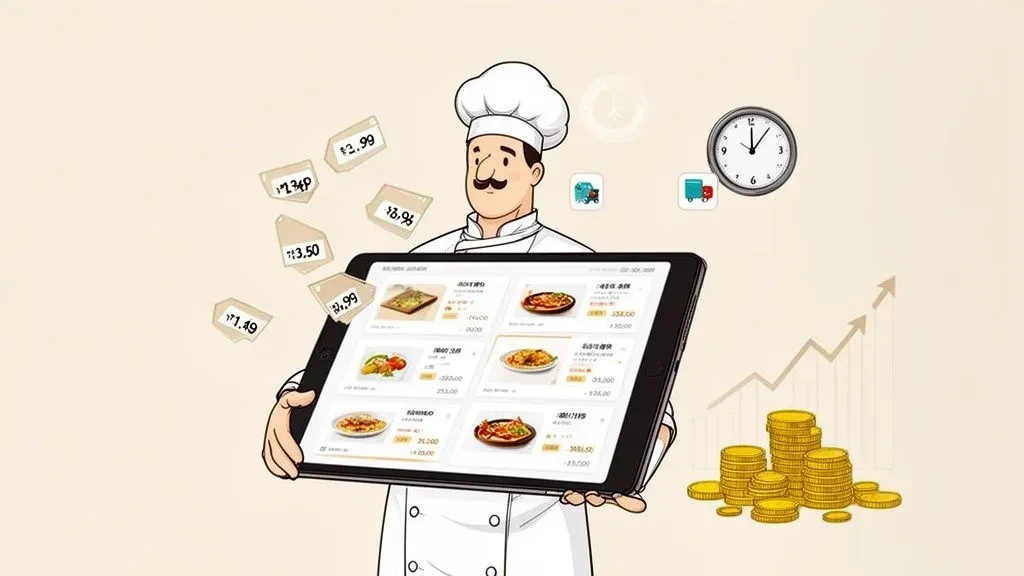
Picture this: your restaurant’s menu prices aren’t just static numbers on a page. Instead, they’re working for you, actively adjusting to the rhythm of your business. In simple terms, a dynamic price strategy is an automated way to change your menu prices based on real-time information—like the time of day, customer demand, or even local events.
Technically, it means using data and automation, often through your POS system, to optimize pricing for maximum revenue. This data-first approach helps you get the most out of every single order, whether it’s from a delivery app or an in-house diner, directly improving your restaurant’s efficiency and profitability.
What Is A Dynamic Price Strategy And Why Restaurants Should Care
You’ve already seen dynamic pricing in action. Think about how airlines charge more for flights around the holidays or how Uber Eats fares surge during rush hour. It’s the same powerful concept, but applied directly to your menu. Instead of being stuck with one price list, your menu pricing becomes flexible and responsive to what’s happening right now.
This isn’t about pulling prices out of thin air. A well-executed dynamic price strategy is a precision tool. It gives you the power to earn more during that chaotic Friday night dinner rush while also offering more attractive prices to draw people in on a slow Tuesday afternoon. This matters because it directly impacts your bottom line and smooths out your restaurant operations.
This shift is already making huge waves in the food industry. Dynamic pricing in food delivery has fueled massive growth, with the online market projected to climb from $257.43 billion in 2025 to an incredible $694.65 billion by 2035. This boom is largely thanks to platforms like Uber Eats and DoorDash, which constantly adapt their pricing based on time, location, and demand. For a closer look at these trends, check out this report on the online food delivery market.
Before we dive deeper, let’s quickly break down how this modern approach stacks up against the old way of doing things.
Dynamic Pricing vs Static Pricing At A Glance
This table breaks down the core differences between a traditional, fixed menu price and a modern, adaptive pricing model for your restaurant.
Feature Static Pricing (Traditional) Dynamic Price Strategy (Modern) Price Flexibility Fixed; prices rarely change Adaptive; adjusts to real-time data Revenue Potential Limited to fixed profit margins Maximized during peak and off-peak times Operational Effort Low initial effort, but high manual effort to update Automated through software, reducing manual work Customer Targeting One-size-fits-all approach Can offer targeted prices to different segments Data Reliance Based on historical costs and competitor analysis Driven by live data (demand, time, inventory)
As you can see, moving to a dynamic model opens up a world of possibilities for optimizing how your restaurant earns money.
The Power of POS Integration in Food Tech
For restaurant operators, the secret to making this work lies in modern food tech. What used to be a complex strategy reserved for massive chains is now within reach for any restaurant with the right tools. The real game-changer here is POS integration.
In simple terms, POS integration connects your delivery platforms directly to your point-of-sale system, allowing them to “talk” to each other automatically.
This matters because it lets you automate price adjustments seamlessly. This eliminates manual work, which reduces costly errors, and ensures your pricing is always optimized for maximum profit. This means more time for your staff to focus on guests, not tablets.
For example, when a platform integrates DoorDash orders right into your Clover POS, you can create rules to automatically raise prices during peak dinner hours. It’s a set-it-and-forget-it way to make sure you’re not leaving money on the table.
This kind of automation brings direct benefits to your daily operations:
- Boosted Revenue: You can automatically capitalize on high-demand periods without needing someone to watch the clock.
- Increased Staff Productivity: Your team is freed from juggling multiple tablets and manually punching in orders. They can focus on what matters most: the guest experience.
- Reduced Errors: Automation gets rid of the human errors that creep in when updating menus on different platforms, leading to better order accuracy and happier customers.
Of course, you need to know if these changes are actually working. To learn how to track your success, take a look at our guide on the most important KPIs for restaurant success.
Your Practical Next Step
The main takeaway is simple: a dynamic price strategy is no longer a complicated theory. It’s a practical, accessible tool that can directly improve your bottom line. With seamless POS integrations for systems like Square, you can put these ideas into action efficiently and see an immediate, positive impact on your restaurant’s profitability.
How Top Delivery Apps Already Use Dynamic Pricing
If you think a dynamic price strategy is some far-off, complex idea, I’ve got news for you: you’re already seeing it in action every single day. The major delivery platforms your restaurant partners with are masters of this model, constantly tweaking prices behind the scenes to keep their marketplaces running smoothly.
Picture a rainy Friday night. Everyone wants to order in, but fewer drivers want to be out on the roads. Delivery apps like DoorDash and Uber Eats roll out ‘surge pricing’ in these exact moments.
But here’s the thing—surge pricing isn’t just a random fee hike for the customer. At its core, it’s an incentive. The higher delivery fees are designed to lure more drivers onto the road to meet that sudden explosion in demand. It’s how the apps prevent a total meltdown and keep delivery times from getting out of hand. This is a powerful, live demonstration of how dynamic pricing shapes the entire food delivery ecosystem.
Turning Delivery App Surges Into Your Profit
So, where’s the opportunity for your restaurant? Simple. When a delivery app flags a high-demand period and jacks up its fees, it’s a clear signal that customers in your area are willing to pay more for convenience. If your menu prices stay flat, you’re leaving money on the table. The delivery app pockets the extra profit, but you don’t.
But what if you could mirror that strategy? With the right POS integration and food tech, you can. Imagine a tool that connects your DoorDash orders directly to your Square POS. When the app’s algorithm triggers a surge, your system could automatically add $1 to the price of your burger on that platform.
This automatic adjustment lets you capture a slice of that higher customer spending. Instead of just absorbing the platform’s commission on a fixed price, you’re aligning your pricing with the real-time market value and boosting your own margins.
This simple shift turns your restaurant from a passive participant into an active, strategic player. You’re no longer just reacting to the market; you’re proactively optimizing your restaurant operations for profitability. If you’re curious about which platforms are leading the charge, our guide on the most popular food delivery apps has the full rundown.
Why Integration Is Your Key to Success
Let’s be realistic. Trying to manually track surges and update prices across a half-dozen delivery tablets during a dinner rush is a non-starter. It’s a surefire recipe for mistakes, wasted time, and a seriously frustrated team. This is why restaurant delivery integration isn’t just a nice-to-have; it’s essential for pulling off a dynamic pricing strategy.
A centralized platform that syncs with your Clover POS becomes your command center. You set the rules once, and the system handles the rest flawlessly.
- Time Savings: Your team is freed from the tablet-juggling olympics and can focus on what matters: making great food and serving guests.
- Error Reduction: Automation eliminates the risk of manual typos that lead to incorrect pricing and kill your margins.
- Enhanced Productivity: Staff can manage a higher order volume with way less stress, which improves kitchen workflow and speeds up ticket times.
The success of the big players proves this model works. In the hyper-competitive U.S. food delivery market, DoorDash has masterfully used dynamic pricing to lock down a commanding 56% market share. That success is built on algorithms that adjust fees and menu prices based on live demand. You can dig into more food delivery market trends to see the data for yourself.
Ultimately, the top delivery apps have already trained customers to expect price fluctuations. By adapting to this model, you can make sure your restaurant stays competitive and, more importantly, profitable.
The next step is figuring out which pricing model actually fits your specific needs. Let’s explore the different approaches you can take.
Choosing The Right Dynamic Pricing Model For Your Menu
Picking the right dynamic pricing strategy isn’t about jumping into complex algorithms. It’s about finding a practical approach that fits your restaurant’s unique rhythm and customer base. The best place to start is by looking at your busy and slow periods—the natural ebbs and flows of your business.
Most successful strategies fall into a few key categories. By understanding these models, you can find the perfect fit for your menu, whether you’re running a bustling pizzeria that’s slammed on weekends or a quiet café with a predictable lunch crowd. The real magic happens when you automate these rules through POS integration, letting food tech handle the heavy lifting for maximum impact with minimal effort.
Time-Based Pricing: Capitalize On Your Predictable Peaks
Think of this as your classic “happy hour” or “lunch special,” but supercharged with automation. Time-based pricing is exactly what it sounds like: adjusting your menu prices based on the time of day, day of the week, or even the season. It’s the most straightforward strategy to get started with, making it perfect for restaurants with very predictable demand patterns.
For example, you already know your delivery orders go crazy between 6 PM and 9 PM on Friday and Saturday nights. Instead of keeping your burger price static, you can program your system to automatically bump it up by 10% during that three-hour window. On the flip side, you could offer a 15% discount on all appetizers ordered between 2 PM and 4 PM to bring in some business during that notorious afternoon lull.
This isn’t about price gouging; it’s about matching your price to the value you’re providing at that moment. During a hectic dinner rush, customers are paying for convenience and speed, and they’re often willing to pay a little more for it. An automated system makes this adjustment seamless.
By using a POS integration that connects your delivery apps to your Clover system, you can set these time-based rules once and forget about them. The tech takes over from there, saving your staff time, reducing the headache of manual updates, and eliminating costly errors that can quietly eat away at your margins.
Demand-Based Pricing: React to Those Unexpected Rushes
While time-based pricing is great for patterns you can predict, demand-based pricing is all about reacting to real-time market conditions. This model automatically raises prices when demand unexpectedly surges and can lower them when things suddenly go quiet. It’s the same principle Uber Eats uses for surge pricing when a sudden downpour has everyone ordering in at once.
Imagine the local team makes the playoffs and the whole city is glued to the game. All of a sudden, delivery orders for wings and pizza are flying in. A demand-based system would see this spike and could automatically increase the price of your most popular game-day items. This lets you capitalize on the moment without forcing a manager to be glued to a screen, manually changing prices. For restaurants looking to implement more advanced models, new developments in AI in business automation offer some incredibly sophisticated solutions.
This approach absolutely requires a smart POS integration. A platform that syncs your third-party delivery orders with your Square POS can analyze the incoming order volume and trigger these price changes based on thresholds you’ve already set. It ensures your restaurant operations are always optimized for profitability, no matter what’s happening outside your doors.
Customer Segmentation: Reward Your Best Customers
A smart pricing strategy isn’t just about making more money during busy times; it’s also a powerful way to build a loyal following. Customer segmentation is all about offering different prices to different groups of people. It’s your chance to create exclusive deals for your regulars, making them feel special and encouraging them to keep coming back.
Here’s how you could put this into practice:
- Loyalty Members: Offer a permanent 10% discount on all online orders for anyone signed up for your loyalty program.
- First-Time Customers: Tempt new diners with a special one-time offer, like a free dessert with their first delivery order.
- Corporate Clients: Create custom pricing menus for large corporate lunch orders placed through a dedicated online portal.
This strategy moves the focus from blanket price changes to targeted, value-driven offers. It shows your best customers that you appreciate them, which is one of the most important things you can do for long-term success. Of course, knowing your numbers is critical here. You can learn more by reading our guide on how to calculate food cost percentage.
Your Practical Next Step
You don’t need to try all of these models at once. In fact, you shouldn’t. Start simple. Dive into your sales data and find your most obvious peak and off-peak times. A time-based model is almost always the easiest and most effective starting point.
Pick one or two of your best-selling items and set up a simple rule, like a small price increase during your weekend dinner rush. By automating this through your integrated POS system, you can test the waters and see the impact on your revenue with very little risk. Once you’re comfortable, you can start exploring other models and get more creative.
Ready to put these strategies into action and automate your pricing? Get started for free in just a few clicks on the OrderOut dashboard.
How To Implement A Dynamic Price Strategy With POS Integration
Diving into dynamic pricing doesn’t mean you need a data science degree or a huge budget. It’s all about using the tools you already have—especially your POS system—to make smarter, more profitable decisions. I’m going to walk you through how to launch your first dynamic pricing model, step-by-step, turning that raw data into real revenue.
The whole process is more straightforward than you might think. It’s about starting small, testing your approach, and letting technology do the heavy lifting. This way, you can stay focused on running your restaurant while your pricing works intelligently in the background.
Step 1: Analyze Your Sales Data
Your point-of-sale system is a goldmine. Seriously. Before you can set any new pricing rules, you need to get a feel for the natural rhythm of your business. The first move is to jump into your sales reports and pinpoint your busiest and slowest periods with real precision.
Look for the obvious (and not-so-obvious) patterns:
- Peak Hours: When does your Friday dinner rush truly begin and end? Is it a tight 6 PM to 9 PM window, or does it stretch later?
- Slow Periods: Where are the lulls? Pinpoint those quiet mid-afternoon slots, like 2 PM to 4 PM on a Tuesday.
- High-Demand Days: Are Saturdays consistently your biggest day for delivery? If so, by how much?
This initial analysis is the bedrock of your entire strategy. It replaces guesswork with hard facts, making sure your price adjustments are based on how customers actually behave, not just how you think they behave. A solid POS software integration is your best friend here, giving you the clean, centralized data you need to see these patterns clearly.
Step 2: Choose a Simple Starting Strategy
Alright, you’ve got your data. Now it’s time to pick a model. The key here is to not overcomplicate things. Don’t try to boil the ocean. Your goal is to start with a simple, manageable strategy that will give you clear results. For most restaurants dipping their toes in the water, a time-based model is the perfect entry point.
Let your analysis from Step 1 be your guide. If you found that weekend evenings are your absolute peak for delivery orders, that’s your target. Your first strategy could be as simple as: “We’re going to increase prices on our top-selling delivery items during the weekend dinner rush.”
This flowchart gives you a great visual of the most common models. It helps you see where to begin and how you might get more advanced later on.
As you can see, different factors—like the time of day, overall demand, or even the type of customer—can trigger price changes. These are the building blocks of any dynamic model.
Step 3: Set Your Pricing Rules
Now we get specific. It’s time to turn your general strategy into a clear, actionable rule that a system can actually follow. This rule needs to define the what, when, and how much of your price change.
Let’s stick with our weekend dinner rush example. A concrete, programmable rule would be: “Increase the price of all appetizers and entrees by 15% on Uber Eats and DoorDash, from 6 PM to 9 PM every Friday and Saturday.”
That rule is crystal clear. There’s no ambiguity, which makes it easy to automate.
The key is precision. Vague goals like “charge more when we’re busy” are impossible for a system to act on. A specific rule creates a clear trigger and a predictable outcome, which is absolutely essential for measuring success and keeping your restaurant operations consistent.
For restaurants looking to get even more sophisticated, advanced white-label AI platforms can provide the analytical horsepower for real-time adjustments, helping you refine your rules over time for even better results.
Step 4: Automate The Entire Process
This is it—the final and most important step. This is where you unlock massive efficiency gains. Manually changing prices on a bunch of delivery tablets during a dinner rush is not a strategy; it’s a recipe for mistakes and staff burnout. Automation is your superpower.
This is where a tool that connects your delivery apps directly to your POS system becomes non-negotiable. Platforms like OrderOut become the central command center for all your restaurant delivery channels. You just need to input your pricing rule—like that 15% weekend increase—one time.
From that moment on, the system handles everything. It automatically pushes the higher prices to Uber Eats and DoorDash when 6 PM hits on Friday and switches them back at 9 PM. Your staff doesn’t have to lift a finger.
The benefits are immediate:
- Time Savings: Your team is free to focus on what matters—your guests—instead of fiddling with tablets.
- Error Reduction: You eliminate the risk of manual typos that can cost you real money.
- Maximized Revenue: You never miss an opportunity to capitalize on peak demand because the system is always on.
This approach transforms a complex strategy into a simple, set-it-and-forget-it process that just works.
Your 4-Step Dynamic Pricing Implementation Plan
Getting started is a matter of following a clear roadmap. This table breaks down the entire process into four manageable steps, showing you exactly what to do, what tools to use, and what to expect.
Step Action Key Tool/Resource Expected Outcome Step 1 Analyze Sales Data Your restaurant’s POS system reports A clear list of peak/off-peak hours, days, and best-selling items Step 2 Choose a Simple Strategy Your data analysis from Step 1 A defined model to test (e.g., time-based pricing for weekend delivery) Step 3 Define Specific Rules A simple spreadsheet or document A concrete rule: “Increase X items by Y% during Z hours on delivery apps” Step 4 Automate Execution An integration platform like OrderOut A “set-and-forget” system that automatically applies your rules, saving time and increasing revenue
By following this plan, you can methodically roll out a dynamic pricing strategy that is built on your own business data and runs without constant manual effort. The path to smarter pricing is right in front of you.
How To Use Dynamic Pricing And Keep Customers Happy
Let’s be honest: the biggest fear with dynamic pricing is scaring off your regulars. But profitability and customer loyalty don’t have to be at odds. The secret isn’t about hiding price hikes; it’s about being transparent and offering genuine value.
When you get it right, this strategy can actually build stronger relationships with your customers. Think of it less as penalizing people for ordering at 7 PM on a Friday and more as rewarding them for their loyalty and flexibility.
Frame Price Changes As Value, Not Penalties
How you talk about your pricing is everything. You want customers to feel smart for ordering during a slow period, not gouged for ordering during the dinner rush.
- Promote Off-Peak Discounts: Don’t just lower the price; shout about it. Use marketing language like, “Escape the crowds with our Midday Deals! Get 15% off all appetizers from 2-4 PM.” This turns a lower price into a special, exclusive offer.
- Create Loyalty-Exclusive Pricing: Make your regulars feel like VIPs. Offer them a fixed, lower price no matter what time they order. This insulates them from peak-hour increases and gives them a powerful reason to keep coming back.
This simple shift in communication changes the entire narrative. It’s no longer a penalty for convenience but a reward for planning ahead.
Start Small And Stay Transparent
The quickest way to burn trust is to shock customers with sudden, massive price changes. That’s a one-way ticket to a social media firestorm. The key is to ease into your dynamic pricing strategy.
Start with a small, data-backed adjustment. A 5-10% increase on just a few of your most popular delivery items during that chaotic two-hour window on a Saturday night is a great place to begin. Watch the data, listen to the feedback, and only expand once you know it’s working.
A thoughtful dynamic price strategy isn’t about squeezing every last cent out of a customer. It’s a tool for managing demand and rewarding loyalty. When your regulars feel valued and your pricing logic is clear, you build a stronger, more resilient business.
Transparency is non-negotiable here. Using restaurant food tech like digital menu boards is a fantastic way to display real-time prices clearly and openly. Our guide on digital menu board software dives into how this tech can keep your in-house diners informed and happy.
Connect Your Strategy To POS Integration And Efficiency
Trying to pull this off manually is a recipe for disaster. This is where solid POS integration becomes your best friend, helping you improve restaurant operations without alienating your customer base.
Just imagine trying to juggle special prices for loyalty members on DoorDash and Uber Eats while also running a happy hour discount. It’s chaotic. A system that syncs your delivery apps with your Clover or Square POS can automate all of these rules seamlessly.
This level of automation means your staff isn’t bogged down trying to remember complex discounts, which massively reduces order entry errors. It frees them up to focus on great service and ensures the right price is always shown to the right customer, building the kind of trust that keeps them coming back.
Your Practical Next Step
Here’s a simple first move: pinpoint your slowest two-hour block of the week. Create a small but enticing discount just for that window. Now, market it as a special deal. Set up the rule in your integrated system and watch what happens. You’ll likely drive some extra traffic without anyone feeling slighted.
Ready to automate your pricing and keep customers happy? Start for Free in just a few clicks on our dashboard.
Where Do You Go From Here? A Path to Smarter Restaurant Pricing
Let’s pull all these threads together. Think of dynamic pricing as the next evolution for your restaurant—moving away from a rigid price list and into a smart system that ebbs and flows with the real-time pulse of your business. Seamlessly connected to your POS, this isn’t just theory; it’s a practical tool for thriving in a tough market.
By letting technology handle the price adjustments, you can automatically capture more revenue when demand is high and strategically lower prices to bring in customers during those quiet afternoon lulls. It also means you’re reclaiming precious time by eliminating the tedious, error-prone task of manually updating prices during a chaotic service. Your team can finally stop juggling tablets and start focusing on what they do best: serving guests.
Why This is a Game-Changer for Operations
The impact here is felt far beyond the bottom line. Integrating dynamic pricing into your daily workflow fundamentally smooths out your entire operation.
- Reclaim Your Time: No more staff members hunched over multiple delivery tablets, painstakingly changing the price of a burger one platform at a time.
- Eliminate Costly Mistakes: Automation gets rid of human error. You can trust that the price a customer sees is always the correct one, everywhere.
- Empower Your Team: When your staff isn’t bogged down by administrative busywork, they can manage more orders with less stress and dedicate their energy to creating a great guest experience.
Imagine connecting your Uber Eats menu to your Clover or Square POS. You define the logic—say, a 15% price increase on Fridays from 6 PM to 9 PM—just once. The system then takes over, ensuring you capitalize on that dinner rush without anyone lifting a finger.
You no longer have to leave money on the table or wrestle with tablet chaos during the Friday night rush. The path to more intelligent, profitable pricing is right in front of you.
It’s time to take the reins and make your menu pricing truly work for you. Adopting a dynamic strategy isn’t just about tweaking numbers on a screen; it’s about building a smarter, more resilient, and ultimately more profitable restaurant.
Ready to put your pricing on autopilot and watch your profits grow? You can get started for free in just a few clicks on the OrderOut dashboard.
Frequently Asked Questions
Let’s tackle some of the common questions that pop up when restaurant owners start thinking about dynamic pricing. It’s a powerful tool, but it’s natural to have concerns. Here are some honest answers to help you see how it could work for you.
Will A Dynamic Price Strategy Scare Away My Regulars?
That’s the number one worry, and it’s a valid one. The short answer is: not if you do it thoughtfully. The trick is to make sure your regulars always feel like they’re getting the best deal.
Instead of just hiking prices during a rush, think of it as creating opportunities to reward loyalty. You could offer your regulars exclusive “off-peak” deals or special pricing only available to members of your loyalty program. Transparency is everything. As long as people feel valued and not taken advantage of, they’ll understand.
Plus, let’s be honest—anyone ordering from DoorDash or Uber Eats is already seeing prices fluctuate based on demand. Your goal is simply to find that sweet spot between improving your margins and keeping your customers happy.
Is This Too Complicated For My Small Restaurant To Manage?
It definitely used to be. A few years ago, this was something only the big chains with data science teams could even attempt. But technology has caught up, and now it’s accessible to everyone.
The game-changer is POS integration. When you use a platform that links your third-party delivery apps directly to your POS system—like Square or Clover—the complexity just melts away. You set the rules once, and the system handles the rest. Think of it as simple “if this happens, then do that” logic. You don’t need to be a tech wizard; you just need to know your restaurant.
How Do I Know Which Dynamic Pricing Model Is Right For Me?
The best way to start is by looking at the data you already have. Your own POS sales reports are a goldmine of information, showing you exactly when you’re slammed and when things are quiet.
For most restaurants, jumping in with a simple Time-Based model is the smartest first move. See a huge surge in delivery orders every Friday and Saturday night between 6 PM and 9 PM? That’s your signal.
You don’t need to get fancy and launch four different pricing strategies at once. Pick one clear opportunity, make a small adjustment, watch what happens, and build on that success. It’s all about taking small, measured steps.
What Is The Real Impact On My Restaurant Efficiency?
This is where you’ll feel an immediate and massive difference. Think about the chaos of a Friday night rush, with a manager frantically trying to update prices on three different delivery tablets. It’s stressful, slow, and a breeding ground for costly mistakes.
Automating your pricing with POS integration makes all of that disappear. Instantly.
Your team is no longer fumbling with tablets. They’re focused on what they’re good at: making great food and getting it out the door. This means fewer order errors, less stress, and faster ticket times—all of which lead to a much smoother and more profitable operation.
Ready to stop leaving money on the table and make your operations run smoother? OrderOut connects your delivery apps directly to your POS, making it simple to put a smart dynamic pricing strategy to work.