
8 Duties Assistant Manager Restaurant You Should Know
· Thibault Le Conte
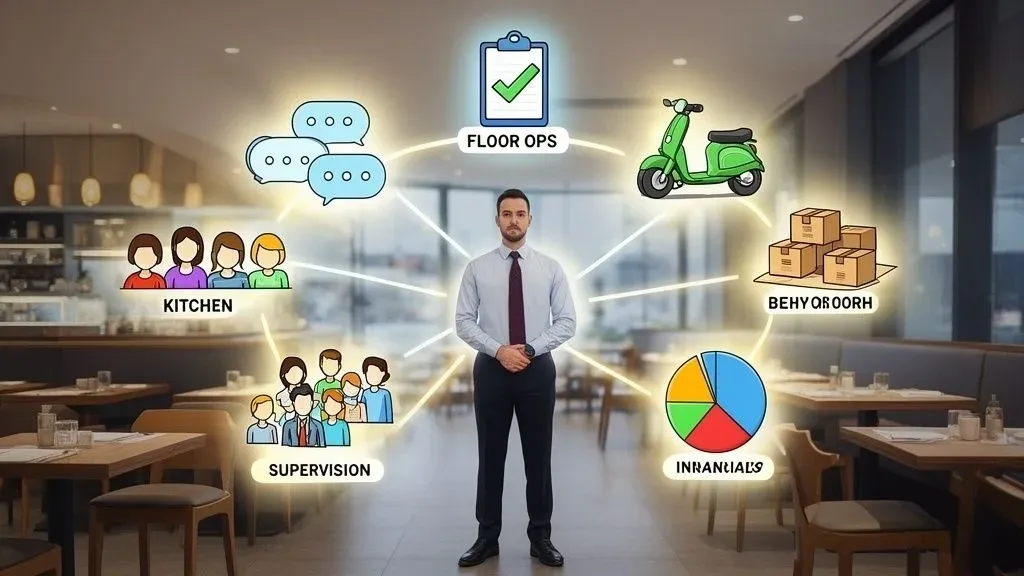
The role of an assistant restaurant manager has expanded far beyond traditional floor supervision and closing duties. In today’s competitive landscape, this position is the engine room of efficiency. The assistant manager is the critical link who ensures every part of the business—from in-house dining to third-party delivery—runs smoothly, efficiently, and profitably. A skilled assistant manager directly impacts everything from staff productivity and labor costs to customer satisfaction and the bottom line.
This guide provides a detailed breakdown of the essential duties of an assistant manager in a restaurant, organized for clarity and immediate application. We will move beyond generic job descriptions to offer actionable insights and real-world examples that you can implement today. You will learn how to effectively manage:
- Restaurant Operations: Overseeing delivery integrations and optimizing online order flow.
- Staff and Labor: Creating data-driven schedules and managing labor costs.
- Inventory and Financials: Controlling food costs and maintaining profitability.
- Quality and Service: Ensuring order accuracy and resolving customer issues.
- Restaurant Delivery Performance: Using data from platforms like Uber Eats and DoorDash to optimize operations.
For instance, one of the most time-consuming and error-prone duties is manually entering delivery orders from multiple tablets into the restaurant’s point-of-sale (POS) system. We will explore how a focus on POS integration, such as connecting OrderOut with a system like Clover or Square, can eliminate this manual work entirely. This single change saves hours of labor, reduces costly mistakes, and frees up the assistant manager to focus on higher-value tasks like staff training and improving the guest experience—showcasing why mastering these modern duties is critical for restaurant efficiency.
1. Overseeing Restaurant Delivery and POS Integration
A core responsibility for a modern assistant manager is managing the flow of digital orders. Simply put, this means making sure that orders from delivery apps like Uber Eats and DoorDash get into the kitchen quickly and correctly. The technical side of this duty involves overseeing POS integration technology that automatically sends orders from all third-party platforms directly into the restaurant’s central point-of-sale (POS) system.
Why it matters: This duty is all about improving restaurant efficiency. Without integration, staff must manually re-type every order from a tablet into the POS, a process that is slow and full of potential for expensive errors. A smooth integration eliminates this step, reducing order mistakes and freeing up staff. For example, a busy cafe using an integrated Clover system can cut its order processing time from several minutes to just a few seconds, getting food to customers faster and reducing staff stress.
H3: Actionable Insights for Order Management
- Automate to Save Time: The primary goal is to eliminate manual order entry. A system that connects delivery apps to your POS, like Square, can save hours of labor daily, directly reducing costs and allowing staff to focus on customers instead of tablets.
- Create a Tech Troubleshooting Guide: Technology can fail. Create a simple, one-page guide for staff on what to do if the POS integration or a delivery app goes down. This prevents panic and ensures a smooth fallback to manual processing.
- Train for Manual Overrides: While automation is key, staff must know how to handle exceptions. Train them to manually pause orders on a specific platform during an extreme rush or adjust an order in the POS if incorrect information is sent from an app.
- Review Performance Weekly: Use data to spot problems. Each week, review integration metrics like order acceptance time, error rates, and system downtime to identify and fix recurring issues with your food tech provider. For a deeper dive, learn more about integrated POS systems.
2. Staff Scheduling and Labor Cost Management
A primary duty is creating staff schedules that meet customer demand without overspending on payroll. The simple explanation is having the right number of people working at the right times. The technical depth comes from using data from your POS and delivery apps to predict busy periods. This allows an assistant manager to align staffing levels with actual order volume from both in-house dining and online channels like DoorDash, optimizing restaurant operations.
Why it matters: Smart scheduling directly boosts profitability. Labor is one of a restaurant’s biggest expenses, so optimizing it saves significant money. For example, a pizzeria analyzed its restaurant delivery data and found its Friday online order rush started an hour before its dine-in rush. By scheduling one extra cook to come in 45 minutes earlier only on Fridays, it reduced delivery prep times by 25% during that peak, improving customer satisfaction and increasing repeat orders—a clear win for staff productivity and cost savings.
H3: Actionable Insights for Labor Management
- Use Data for Forecasting: Before creating a schedule, analyze the last 8-12 weeks of sales data from your POS and delivery apps. Identify hourly trends to build an accurate forecast for staffing needs.
- Create “Flex” Shifts: Build flexibility into your schedule with on-call staff who can come in during unexpected rushes. This prevents overstaffing every shift while providing a buffer for busy periods, which is key for efficient restaurant operations.
- Justify Every Hour: Use POS reports to identify your most and least profitable hours. Cross-reference this with delivery data to ensure every scheduled hour is justified by sales volume.
- Review Schedules Monthly: Customer habits change. Review your labor cost percentage against sales every month and be ready to adjust schedules to match new trends. For more on managing your team, see these pointers on creating a restaurant tip chart. Mastering efficient staff scheduling practices is essential.
3. Food Cost Control and Inventory Management
A fundamental duty is managing food costs and inventory. In simple terms, this means making sure you don’t waste food or run out of popular ingredients. The technical side involves tracking Cost of Goods Sold (COGS), setting “par levels” (the minimum amount of an item to keep in stock), and using sales data from your POS and delivery apps to forecast exactly what you’ll need.
Why it matters: This duty directly protects your profit margins. In an industry with thin margins, controlling food costs is non-negotiable. For example, a burger joint used its integrated POS integration with a Square system to analyze delivery data. It found that its best-selling online burger had a 15% lower margin than the dine-in version due to packaging costs and app commissions. They adjusted the delivery price slightly to restore profitability, a direct financial win driven by data. This is a clear example of error reduction in financial planning.
H3: Actionable Insights for Inventory Control
- Use Data-Driven Par Levels: Set your par levels based on actual order volume from all channels, including delivery. Adjust these weekly to reflect sales trends and reduce waste from over-ordering.
- Count High-Cost Items Daily: Perform quick daily counts of your most expensive items (e.g., steak, fresh seafood). This helps you spot waste or theft issues immediately, not weeks later.
- Enforce FIFO Strictly: Train all staff on the “First-In, First-Out” (FIFO) system. Use clear labels with delivery dates to ensure older stock is used first, minimizing spoilage and saving money.
- Analyze Menu Profitability: Use POS sales data to regularly review the profitability of each menu item, especially after factoring in delivery commissions. Learn how to calculate food cost percentage to make informed decisions.
4. Quality Control and Order Accuracy Assurance
A key duty is making sure every order is correct and meets quality standards before it leaves the kitchen. This means establishing checkpoints to catch mistakes. For delivery, this is especially critical, as the assistant manager is the last line of defense to ensure what was packed matches what the customer ordered online.
Why it matters: This duty protects your restaurant’s reputation and prevents financial losses from refunds. On delivery apps like Uber Eats, a single wrong order can lead to a one-star review and a lost customer. For instance, a sushi restaurant struggling with delivery complaints implemented a simple “photo-check” step for all to-go orders. Before sealing the bag, a staff member took a quick photo. This simple action reduced their order errors by 35%, leading to better reviews and higher restaurant delivery volume.
H3: Actionable Insights for Quality Assurance
- Create Visual Checklists: Post a simple, picture-based checklist at your packing station. This should prompt staff to verify all items, special requests, and necessary condiments and utensils are included.
- Assign a Quality Inspector: During peak hours, designate one person to be the “quality checker.” Their only job is to double-check every order against the ticket before it’s handed off, a huge factor in error reduction.
- Monitor and Respond to Reviews Quickly: A key duty is checking platform reviews daily. Respond to all complaints, especially negative ones, within two hours to show you care and resolve the issue before it escalates.
- Use Order Status Tech: Tools that track an order’s journey from kitchen to customer can help pinpoint where delays or errors happen. For a better view, you can learn more about order status software.
5. Delivery Platform Performance Analysis and Optimization
An essential duty for a modern assistant manager is to analyze how well third-party delivery platforms are performing. This isn’t just about which app brings in the most sales; it’s about which is most profitable. The technical aspect involves tracking metrics like order volume, average ticket size, and commission fees for each platform (e.g., DoorDash, Uber Eats) to see which ones provide the best return.
Why it matters: Being on multiple delivery apps doesn’t guarantee success; it can even lose you money if not managed well. Analyzing performance helps you focus resources on profitable channels. For example, a cafe analyzed its data and realized that while Uber Eats brought in many orders, the lower average ticket size meant its profit per order was 20% less than on DoorDash. They shifted their marketing promotions to DoorDash, increasing overall restaurant delivery profit by 10% without changing their menu.
H3: Actionable Insights for Platform Optimization
- Create a Monthly Profit Scorecard: Use a simple spreadsheet to track key metrics for each platform: total sales, commission fees, marketing costs, and net profit. Review this monthly to make data-driven decisions.
- Calculate True Profit Per Order: Go beyond revenue. Subtract all costs—commissions, fees, packaging—to find the real profit from an average order on each app. This reveals which platforms are truly valuable for your restaurant operations.
- Negotiate Your Commission Rates: Use your performance data as leverage. If you can prove you are a high-volume, highly-rated partner, you can often negotiate a lower commission rate when your contract is up for renewal.
- Test Price Adjustments Strategically: If you need to raise prices on delivery apps to cover fees, test the change on one platform at a time. This lets you measure the impact on order volume before rolling it out everywhere. For more context, find more details in this comparison of delivery platforms.
6. Kitchen Operations and Order Flow Management
A critical duty is supervising the kitchen’s workflow, especially with the added complexity of delivery. This means ensuring orders from all channels—dine-in, takeout, and apps like DoorDash—flow smoothly into the kitchen without creating chaos. The technical tool for this is the Kitchen Display System (KDS), which displays all orders in one place. The assistant manager ensures this food tech is used effectively to prevent bottlenecks.
Why it matters: Efficient kitchen operations are the heart of a successful delivery business. Poor order flow leads to long ticket times, stressed staff, and cold food. Proper KDS management increases staff productivity and ensures speed and quality. For instance, a fast-casual spot integrated its delivery orders directly into its KDS. This simple change cut its average prep time from 12 minutes to 8, leading to happier customers and better ratings on restaurant delivery apps.
H3: Actionable Insights for Kitchen Workflow
- Prioritize by Pickup Time: Train the kitchen to cook orders based on the driver’s ETA, not just when the order came in. This simple change ensures food is hot and ready exactly when the driver arrives, a key to efficient restaurant operations.
- Use KDS Color-Coding: Configure your KDS to use different colors for dine-in, takeout, and delivery orders. This visual cue helps staff prioritize and ensures the right packaging is used.
- Set Time-Based Alerts: Program your KDS to flash or make a sound when an order is nearing its time limit. This prompt helps the kitchen team stay on track during a rush.
- Create a Designated Handoff Zone: Establish a specific area for completed delivery orders, away from the kitchen pass. This prevents congestion and ensures drivers can grab orders quickly without disrupting the kitchen flow.
7. Customer Service and Complaint Resolution
A crucial duty is being the main point of contact for customer complaints, especially from delivery. This means skillfully handling issues like wrong orders, missing items, or late deliveries. The assistant manager must investigate what went wrong, communicate with the customer empathetically, and coordinate with delivery services like DoorDash to resolve the problem.
Why it matters: Great complaint resolution protects your online reputation and builds customer loyalty. A swift, positive response can turn a one-star experience into a five-star save. One restaurant that started responding to all Uber Eats complaints within 15 minutes saw its platform rating climb from 4.2 to 4.7 stars in two months. This improved rating led to more visibility and a 15% increase in weekly orders. Learning how to resolve customer complaints effectively is a direct driver of revenue.
H3: Actionable Insights for Customer Service
- Set a Response Time Goal: Create a policy that every complaint receives an initial response within two hours. A fast acknowledgment shows the customer they are a priority, even if a full resolution takes longer.
- Track and Analyze Complaints: Use a simple spreadsheet to log every complaint. Review it monthly to spot recurring problems (e.g., a specific dish that travels poorly) and fix the root cause. This is a practical form of error reduction.
- Empower Your Team: Train and authorize staff to resolve minor issues (like a missing drink) on the spot with a pre-approved solution, such as a refund or discount code. This frees you up to handle more complex problems.
- Follow Up After Resolution: A day after resolving a complaint, send a brief follow-up message to ensure the customer is satisfied. This small gesture builds powerful loyalty and shows you genuinely care.
8. Training and Staff Development for Delivery Operations
A vital duty is training the team on the specifics of delivery. This isn’t just basic orientation; it’s teaching everyone—from cooks to packers—how to handle online orders. The assistant manager is responsible for ensuring staff are proficient with food tech like delivery tablets and POS integrations, know the correct packaging standards, and can handle customer service for remote diners.
Why it matters: A well-trained team is faster, more accurate, and more confident. This directly improves restaurant efficiency, reduces costly mistakes, and lowers staff turnover. For example, a restaurant implemented quarterly training sessions focused on its integrated delivery workflow with a Square POS. By practicing how to handle common issues, the restaurant improved its order accuracy from 95% to 98%, saving hundreds of dollars weekly in refunds and boosting staff productivity.
H3: Actionable Insights for Staff Training
- Create Visual Guides: Develop simple, one-page guides with pictures showing the correct steps for packing orders, confirming modifications, and handing off to drivers.
- Train with Real Scenarios: Use anonymized examples of past order mistakes during training. This makes the consequences tangible and the lessons more memorable.
- Practice with the Tech: During slow periods, have staff practice using the delivery tablets and POS integration features. Hands-on practice builds confidence and reduces errors during a real rush.
- Reward Accuracy: Publicly recognize and reward staff members or teams who consistently achieve perfect order accuracy. Positive reinforcement helps build a culture where quality is a top priority.
Assistant Restaurant Manager: 8-Duty Comparison
Item 🔄 Implementation Complexity ⚡ Resource Requirements ⭐ Expected Outcomes 📊 Key Advantages / Results 💡 Ideal Use Cases Order Management and Integration Oversight Moderate–High: API/POS integration and staff training Integration software, IT support, reliable internet, monitoring staff Higher order accuracy; fewer manual entries Up to 95% fewer entry errors; saves 2–4 admin hrs/day; improved kitchen coordination Multi-channel restaurants with high delivery volume Staff Scheduling and Labor Cost Management Moderate: forecasting models and scheduling policies Scheduling software, POS analytics, manager planning time Reduced labor costs and overtime Lowers labor by 5–15%; matches staffing to demand; decreases wait times Restaurants with variable peaks or multiple locations Food Cost Control and Inventory Management Moderate–High: disciplined tracking and system ties to POS Inventory system, supplier coordination, daily counts Reduced waste; improved COGS margins Lowers waste 10–20%; improves COGS by 2–5%; prevents stockouts Perishable-heavy menus and high-cost-ingredient kitchens Quality Control and Order Accuracy Assurance Low–Moderate: process changes and verification checkpoints Additional labor for checks, packaging materials, training Fewer returns/refunds; better ratings Reduces refunds up to 40%; improves platform ratings and customer satisfaction High-complaint or premium-quality delivery offerings Delivery Platform Performance Analysis and Optimization High: cross-platform consolidation and advanced analytics Analytics tools, consolidated dashboard, analyst time Better channel profitability decisions Identifies highest-margin platforms; improves negotiation leverage Businesses using multiple delivery platforms seeking margin lift Kitchen Operations and Order Flow Management Moderate: KDS setup and workflow redesign KDS hardware/software, staff training, station reconfiguration Faster prep times and fewer bottlenecks Reduces prep time 20–30%; improves on-time delivery and throughput High-volume, quick-service kitchens focused on delivery Customer Service and Complaint Resolution Low–Moderate: procedures and multi-channel response workflows Staff time, refund authority, tracking system Faster resolution and improved retention Lowers negative reviews; protects platform ratings; recovers revenue Restaurants prioritizing reputation and repeat customers Training and Staff Development for Delivery Operations Moderate: curriculum creation and regular updates Training materials, manager time, e-learning tools Higher consistency; fewer errors; better retention Faster onboarding; improved proficiency; lower turnover High-turnover sites or locations adopting new systems
Final Thoughts
The assistant restaurant manager is the operational heart of a modern restaurant. This role is no longer just about supervising shifts; it’s about actively engineering a more efficient and profitable business. As we’ve seen, the modern list of duties for an assistant manager in a restaurant requires a powerful combination of hospitality skills and sharp operational management, especially in mastering the complexities of online ordering and restaurant delivery.
From ensuring a seamless flow between the kitchen and delivery drivers to meticulously managing inventory and labor costs, the assistant manager’s impact is felt everywhere. Their ability to guarantee order accuracy, resolve customer complaints gracefully, and uphold high standards for quality sets the tone for the entire team. Mastering these duties is about building a resilient, efficient, and positive work environment where both staff and customers thrive.
Key Takeaways for Success
To excel and drive measurable results, an assistant manager should focus on these critical actions:
- Become the Operational Hub: Your main job is to ensure smooth, uninterrupted service. This means actively managing the floor, anticipating bottlenecks in the delivery process, and being the go-to troubleshooter for any issue.
- Embrace Data and Technology: Use data from your POS integration with systems like Clover or Square to make smarter decisions. Tracking metrics on delivery times, order accuracy, and food costs reveals opportunities for improvement and boosts restaurant efficiency.
- Invest in Your Team: Your success depends on your team’s performance. Prioritize consistent training, give constructive feedback, and lead by example. A well-trained, motivated staff is your best tool for reducing errors and improving speed.
- Master Financial Levers: Understand that daily decisions impact the bottom line. Diligent inventory counts, smart scheduling, and minimizing waste directly increase profitability.
Your Practical Next Step
The most effective assistant managers are proactive problem-solvers. Start by taking one actionable step this week to improve your restaurant operations. A great place to start is by auditing your delivery order process. Watch how an order comes in from an app like Uber Eats, how it’s entered into the POS, and how it’s prepared and handed off. Identify the biggest bottleneck or source of errors. Is it manual entry? Is it communication between the front counter and the kitchen? Tackling this one issue can lead to significant improvements in time savings and accuracy.
By focusing on restaurant efficiency, empowering your team, and strategically using food tech, you can transform from simply managing shifts to truly engineering a more successful and profitable restaurant.
Ready to eliminate manual order entry and boost your restaurant’s efficiency? OrderOut seamlessly connects delivery platforms like DoorDash and Uber Eats with your POS, cutting down on costly errors and saving hours of labor. Give your assistant managers the time they need to lead. Get started for free in just a few clicks at https://dashboard.orderout.co.