
8 Best Salad Bar Salads for Restaurants in 2026
· Thibault Le Conte
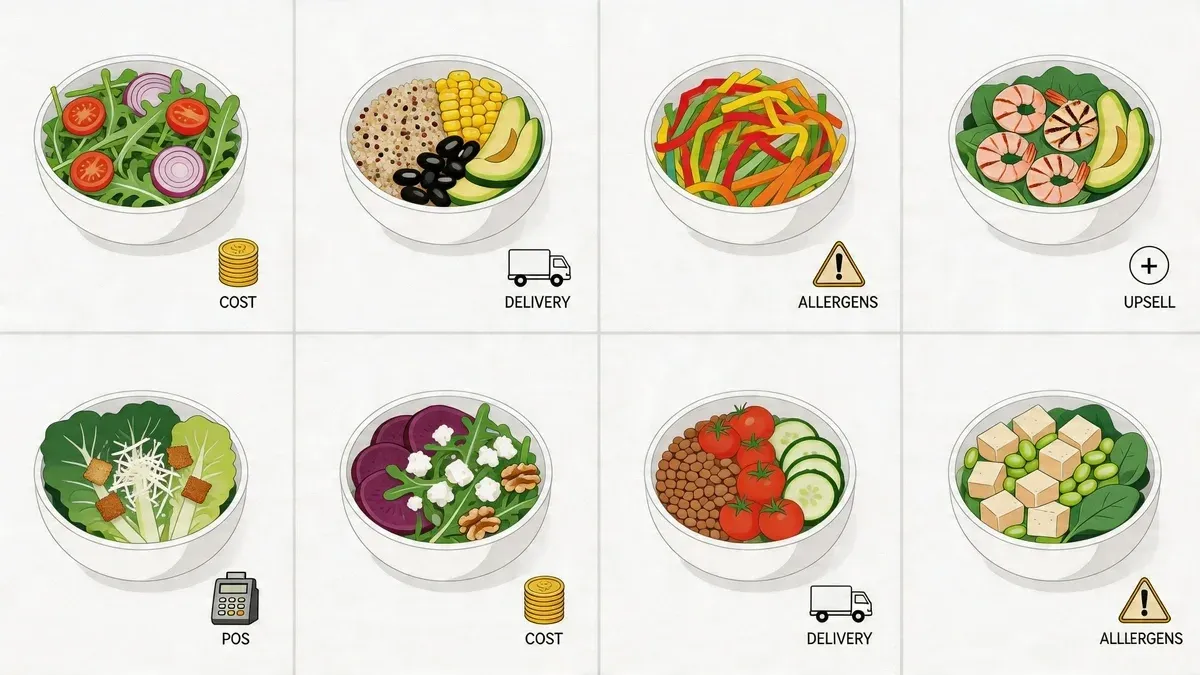
Entree salads already appear on 64.3% of American restaurant menus, and 67.9% of diners say they usually, always, or occasionally order them when eating out, according to Litehouse Foodservice’s survey of 5,000 U.S. respondents. Operators should read that for what it is. Salad is not a side category. It is a revenue line with clear demand and enough menu familiarity to scale across dine-in, pickup, and third-party delivery.
The operators who make money with salad bars do one thing differently. They treat each salad as a controlled product, not an open-ended ingredient pile. That means fixed builds, portion rules, clean modifier logic in the POS, and packaging that protects texture on the trip from kitchen to customer. A salad that looks profitable on paper can lose margin fast if staff have to hand-key substitutions, over-portion premium toppings, or remake wilted bowls from delivery complaints.
Dinner matters here. Litehouse reports salads serve as a main dish 52% of the time, with demand skewing toward dinner at 56% versus lunch at 39%. That creates a practical opening for larger, higher-ticket bowls that combine produce with grains, proteins, and paid add-ons. The best versions also help the back of house. Shared ingredients lower waste, batch prep stays manageable, and prep teams can build for speed without sacrificing consistency.
Menu design has to support that system. Clear naming, smart upsell prompts, and restrained customization convert better than sprawling salad bar logic that asks guests to make ten decisions before checkout. Operators who tighten that experience on digital channels usually see fewer ordering errors and faster line execution. If your team is revising menu presentation, these restaurant menu board ideas are a good reference point for simplifying choice without cutting perceived value.
The eight salads below are built as business units. Each one balances guest appeal with food cost control, labor efficiency, digital ordering logic, and delivery performance. That is the standard for a salad that deserves menu space.
1. Classic Garden Salad with Customizable Protein Stations
A garden salad earns its menu space because it can serve three jobs at once: entry-price salad, higher-ticket protein bowl, and low-friction digital order. Operators who set it up well usually get better prep control than they do from trend-driven builds with six sauces and a long modifier chain.
What it is: a fixed base of mixed greens, tomatoes, cucumbers, onions, and carrots, paired with a short, priced protein list. Why it matters: the salad feels familiar to guests, but the line stays disciplined. How to do it: standardize the base by weight, then limit proteins to options your kitchen can prep and replenish without slowing service, such as grilled chicken, tofu, chickpeas, and hard-boiled eggs.
The base carries the sale. Litehouse found that greens are the ingredient guests care about most, so cold, crisp lettuce matters more than adding one more premium topping. If the greens are fresh and portioned correctly, the salad reads as dependable. That matters because dependable items become repeat orders, and repeat orders are easier to forecast.
This salad also works well as a business unit inside your ordering system. Build one menu item. Add required protein modifiers. Price each protein based on actual portion cost, not guesswork. That setup cuts order-entry errors, keeps tickets readable, and gives you cleaner sales data by protein type. If you are tightening both in-store and digital presentation, menu design software for restaurants helps structure those choices so the best-margin versions are also the easiest to order.
Practical rule: Fix the base, require one protein choice, and pack dressing on the side for off-premise orders.
A setup like Square with OrderOut lets you make protein selection mandatory so orders arrive as structured tickets instead of open-text notes. That matters during rush periods, when vague modifiers create remakes, ticket delays, and portion mistakes.
Profit comes from restraint. Keep the vegetable set stable. Cross-use the same proteins in wraps, grain bowls, or lunch plates. Pre-portion proteins in exact serving sizes so double-protein upgrades ring accurately and hit target margin. The salad still feels customizable to the guest, but the kitchen is really running a controlled assembly line.
Use a few operating rules to protect margin and speed:
- Set exact base weights: Greens shrink fast if staff build by eye. Use a bowl guide or scale.
- Keep proteins short and high-utility: Four options usually outperform eight because they simplify prep, storage, and digital choice.
- Price modifiers with intent: Double protein, avocado, and premium dressings should be mapped in the POS, not handled as verbal add-ons.
- Pack for texture: Dressing, wet toppings, and hot proteins should stay separate when the order is traveling.
- Label allergens clearly: Eggs, dairy, nuts, and gluten-related add-ons need visible labeling on the package and the ticket.
Chains like Sweetgreen, Cava, and Panera prove the operating principle. Guests like choice, but they order faster from a short decision tree. That is why the classic garden salad remains one of the best salad bar salads to build around. It is easy to understand, easy to price, and easy to scale without creating line chaos.
2. Mediterranean Harvest Bowl with Grains
Grain bowls earn repeat orders because they solve two problems at once. Guests want a salad that eats like a full meal, and operators need a format that portions cleanly, travels well, and protects food cost.
A Mediterranean harvest bowl does that better than many salad builds. The core is sturdy and familiar: grains, roasted vegetables, chickpeas, cucumbers, olives, feta, herbs, and a tahini or lemon dressing. It reads as premium on a menu, but it does not depend on delicate greens or last-second handling to arrive in good shape.
The broader demand trend supports the category. Grand View Research projects the global packaged salad market at USD 14.29 billion in 2025 and USD 25.97 billion by 2033, with a projected 7.9% CAGR from 2026 to 2033, according to Grand View Research’s packaged salad market analysis. For restaurant operators, the practical takeaway is simple. Standardized, prep-friendly salad components are becoming more normal for customers, not less.
Why it works as a business unit
This bowl carries margin well because grains and chickpeas add substance at a lower cost than making every order protein-led. Roasted vegetables raise perceived value, especially if you use vegetables already in your hot line or catering program. Feta and olives bring enough salt and richness that the bowl still tastes complete before a guest adds chicken or salmon.
That trade-off matters. A bowl that can stand on its own as a vegetarian order gives you a profitable default, while protein becomes a measured upsell instead of a required cost.
The format also gives the kitchen a better hold window than leaf-heavy salads. Farro, quinoa, roasted squash, eggplant, peppers, and chickpeas all tolerate batching and portioning. Cucumbers, herbs, and feta finish the bowl with freshness right before service.
Warm grains plus cold toppings create contrast that guests notice.
How to build it for speed and consistency
Run this salad with a fixed framework: one grain, two roasted vegetables, one legume, two cold accents, one cheese, one dressing. That keeps prep tight and helps staff build the bowl the same way on the line, at the pickup shelf, and on third-party orders.
Keep the base Mediterranean bowl as the lead item. Then add a premium version with one protein upgrade. On delivery apps, fewer decision points usually convert better than a long modifier tree. If you need a practical model for structuring profitable digital menus, use these restaurant sales tactics for menu positioning and upsells.
Use the POS to treat this bowl like a controlled assembly item, not a free-form salad bar plate. Clover with OrderOut lets operators define approved modifiers, tie prices to add-ons, and send a cleaner ticket to the kitchen. That matters when a grain runs out at 1:15 p.m. If farro is eighty-sixed, the menu needs to update fast so cashiers, delivery apps, and production are all selling the same build.
A few operating rules keep this bowl profitable:
- Pre-portion grains by weight: This controls food cost and keeps the bowl from turning into a cheap filler item.
- Batch roast with intent: Use vegetables that cross into sides, wraps, and catering so trim loss stays low.
- Limit swaps: One approved grain substitute is manageable. Five creates ticket noise and slower assembly.
- Pack wet and dry components separately for delivery when needed: Tahini on the side is usually a better call for longer drive times.
- Price protein as an add-on, not part of the base promise: The vegetarian version should already feel complete.
If your digital menu needs cleanup before you launch bowls like this, restaurant teams usually benefit from stronger menu design software guidance so profitable presets stand out first.
3. Asian Fusion Salad with Sesame-Ginger Dressing
Nearly nine out of ten restaurant menus include salads, according to reporting in The Packer’s summary of salad menu trends. In that crowded category, this salad works because it gives operators a distinct flavor profile and strong visual appeal without adding a long prep list or fragile ingredients.
The base is straightforward: cabbage, romaine, carrots, cucumbers, edamame, herbs, sesame seeds, and a protein such as tofu or chicken. What makes it valuable on the menu is how well those ingredients hold under real service pressure. Cabbage and carrots last longer than delicate spring mix. Sesame-ginger dressing has punch, so a smaller portion still reads as flavorful. That helps food cost and reduces the number of bowls that come back flat after a delivery delay.
Treat this salad like a business unit, not a generic salad-bar scoop. The house build should be fixed in the POS, named clearly on third-party apps, and priced around the protein decision. A vegetarian base keeps the entry price attractive. Chicken, tofu, shrimp, or salmon can then carry margin as controlled add-ons rather than turning every bowl into a high-cost default.
What it is, and why it matters
This is the right salad for operators who need a lighter menu item that still feels intentional. Guests recognize the flavor cues immediately. Sesame, ginger, scallions, herbs, and crunchy vegetables signal what the bowl will taste like before they read every ingredient.
That lowers ordering friction.
From an operations standpoint, this salad also solves a common problem. It travels better than heavily dressed greens, and it handles assembly in stages. Teams can pre-prep cabbage mix, portion edamame, and hold proteins separately, then finish the bowl fast during lunch. For stores trying to build a stronger lunch mix, it also pairs well with seasonal LTOs and digital promos built from practical restaurant marketing ideas for repeat traffic and add-on sales.
How to build it so it stays profitable
Start with one approved core build. Keep the modifier tree short. I usually recommend one base, two protein choices, one premium protein upgrade, and limited topping edits. Too many substitutions slow the line and create tickets that all look different, which is exactly how portion control slips.
A strong standard build looks like this:
- Base: shredded cabbage with a smaller romaine portion for freshness and cost balance
- Produce: carrots, cucumbers, scallions, cilantro, edamame
- Crunch: sesame seeds, with wonton strips or crispy noodles packed separately
- Protein: tofu or chicken as the primary options
- Dressing: sesame-ginger, portioned and sealed on the side for off-premise orders
The trade-off is simple. More texture makes the salad more craveable, but crispy components lose value quickly once trapped in a humid container. Keep those separate. The same rule applies to herbs. Add them at finish, not during early prep, or they darken and drag down presentation by mid-shift.
POS and delivery setup that protects the product
Build the menu so the kitchen receives a controlled ticket every time. The item name should stay consistent across dine-in, pickup, and delivery channels. Modifier names should also match. “Extra dressing” should not appear as three different instructions depending on where the order started.
Set a few rules in your system:
- Default dressing on the side for delivery: better texture, fewer spill complaints
- Charge for extra protein and extra avocado: both add cost fast
- Block incompatible edits: fried toppings inside the bowl for long-distance delivery create a worse guest experience
- Use prep labels by station: base, protein, garnish, and dressing should be easy to identify during rush periods
This category sells best when the photo matches the packaged result. If the delivery version always looks flatter than the menu image, sales drop and refund requests rise. Use a slightly deeper bowl, keep cucumbers and protein visible on top, and finish with sesame seeds after lidding if your packaging allows it.
Here’s a useful prep visual for teams training on this style of bowl:
4. Keto and Low-Carb Power Salad
A keto or low-carb power salad only works when the rules are clear. If the label says low-carb and the guest can accidentally add croutons, sweet dressings, and grain toppings through unchecked modifiers, your menu is creating its own complaints. The salad should be built to protect the promise.
This category usually includes greens, avocado, eggs, bacon, seeds, cheese, grilled salmon, steak, or chicken. It’s heavier, richer, and more likely to be ordered by someone who knows exactly what they want. That’s good for repeat business, but only if consistency is tight.
Why this segment deserves dedicated menu logic
Customers buying a keto-style salad aren’t browsing casually. They look for direct language, approved add-ons, and obvious dressing choices. If they have to decode your menu, they leave or place a risky custom order.
Operationally, this means you shouldn’t bury these salads inside a generic salad category. Put them in their own section on delivery apps and in your POS. Then apply modifier rules that block non-compliant add-ons from attaching to keto-labeled items.
Build the menu so staff don’t have to police diet rules ticket by ticket.
Restaurant tech does its real work. A connected order flow can pass your approved modifier structure from POS to delivery channels so the kitchen receives fewer contradictory tickets.
How to keep margins under control
The trap here is overbuilding every bowl with premium ingredients. Avocado, bacon, steak, nuts, and specialty dressings can drive food cost up fast. The fix is to choose one premium anchor, not four, and balance the bowl with lower-cost but satisfying components like eggs, seeds, and sturdy greens.
A better operating pattern looks like this:
- Create fixed dressing presets: Avocado ranch, olive oil and lemon, or blue cheese.
- Batch-prep premium proteins off-peak: Dinner is often the stronger daypart for meal-sized salads, so have proteins ready before the rush.
- Name the salad clearly: “Keto Cobb” sells better and causes fewer mistakes than “Custom Power Greens.”
If you’re trying to market these specialty salads without cluttering the whole menu, these restaurant marketing ideas can help you position them as high-intent offers rather than niche afterthoughts.
5. Warm Roasted Vegetable and Grain Salad
Dinner salads need more staying power, and this one earns its place by eating like an entree instead of a side. Roasted sweet potatoes, cauliflower, carrots, Brussels sprouts, lentils or farro, greens, herbs, and a sharp vinaigrette give you a bowl that feels substantial, holds up in transit, and uses ingredients that cross into multiple dayparts.
The operational value is straightforward. Roasted vegetables and cooked grains are prep-friendly, easy to portion, and forgiving on the line. They also let you turn the same base into different SKUs. One version can stay vegetarian, another can add chicken or salmon, and a premium version can use seasonal vegetables at a higher price point without changing the station setup.
Execution decides whether this salad sells again.
The common failure is heat management. If hot vegetables hit tender greens too early, the bowl collapses before pickup. If grains are underseasoned, the salad eats flat even when the ingredient list looks strong on paper. Build this as a composed item, not a tossed salad. Keep grains and roasted vegetables warm, greens cold, and dressing on the side unless the order is dine-in.
Why it works as a business unit
This salad fills a useful gap on the menu. Guests who want something lighter than a pasta or sandwich still expect dinner-level value, especially on delivery apps where side salads struggle to justify the check. A warm grain salad closes that gap. It reads as healthy, but it also reads as filling.
It also gives operators strong control over margin. Root vegetables, grains, and legumes usually cost less than premium proteins, and they create enough plate coverage that you do not need an oversized portion of chicken or steak to make the bowl feel complete. That balance matters if you want a salad that can survive third-party commission pressure without constant repricing in the POS.
Menu design should reflect that role. List it under entree salads or bowls, not under side salads, and build modifiers with clear add-on logic. Extra avocado, feta, chicken, or salmon can raise average ticket fast, but only if the POS pushes those options in the right order and the kitchen has fixed portions attached to each modifier.
How to build it for quality and speed
Use a simple assembly sequence the line can repeat during rush periods:
- Portion grains first: This creates a stable base and keeps hot ingredients off delicate greens.
- Add greens beside or over the grains, not under the hottest vegetables: That protects texture.
- Top with roasted vegetables last: Warm, not scorching, is the target.
- Pack dressing separately for off-premise orders: Acid plus steam softens the bowl too fast.
- Set one house version and two paid protein add-ons: Too many combinations slow production and create ticket errors.
Timing matters more here than with a standard cold salad. Fire the warm components close to pickup, especially on third-party orders. If your app orders feed directly into the POS, use prep pacing and promised-time rules so the kitchen is not building these bowls ten minutes before a driver arrives. That reduces wilt, reduces remakes, and keeps the guest experience consistent.
For self-serve, buffet, or hybrid lunch service, the format can also be adapted into a hot-cold station. These buffet lunch menu ideas for restaurants show how to structure that kind of setup without creating unnecessary labor.
Seasonal rotation is another strength. Swap in squash, mushrooms, beets, or charred broccoli as produce costs change. Keep the grain, greens, and dressing framework stable so you can update the offer without retraining the team or rebuilding the item in every ordering channel. That is how this salad stays fresh for guests and efficient for the operation.
6. Superfood and Wellness Salad with Nutritional Add-Ons
Wellness salads earn their keep when they raise check average without creating a slow, expensive station. The winning version uses a premium base, a short list of high-perceived-value add-ons, and clear modifier rules across dine-in, pickup, and delivery.
What it is. A nutrient-forward salad built around sturdy greens like kale or a kale-spinach blend, then finished with ingredients guests already associate with wellness: quinoa, berries, avocado, seeds, fresh herbs, and a distinct dressing such as turmeric-ginger or lemon tahini.
Why it matters. This item gives operators a justified premium tier. It also performs well as a base for paid add-ons because guests already expect personalization in this category. The risk is operational, not culinary. If the line carries too many powders, seeds, specialty fruits, and wellness claims, food cost rises, prep gets fragmented, and staff start building every bowl differently.
Kale has demand, but it is not the right solo base for every concept. In mixed-audience operations, a kale blend usually sells better than straight kale because it keeps the wellness positioning while softening texture and bitterness. That choice also reduces complaints from guests who want something healthy but still easy to eat.
The menu language needs discipline. Sell flavor first, then function. “Kale, quinoa, berries, avocado, pumpkin seeds, turmeric-ginger dressing” works better than a list of health promises your staff cannot explain consistently.
How to build it as a profitable menu unit
Treat each add-on like a measured upgrade, not an open invitation to customize forever. The best options are easy to portion, easy to count in inventory, and easy to read on a ticket. Extra avocado, hemp seeds, chia seed crunch, collagen add-on packets, and one protein choice are usually enough.
Set up the item with a fixed core and a short modifier tree in your POS. Keep the first screen simple. Base salad, choose dressing, add up to two wellness boosts, add protein if wanted. That structure matters because this salad often attracts high-intent digital orders, and long modifier chains create abandoned carts, ticket clutter, and assembly mistakes.
Use these operating rules:
- Keep the core under control: One greens blend, one grain, one fruit element, one seed mix, one signature dressing.
- Choose boosts with shelf life: Seeds and dry toppings are safer than several fragile produce add-ons.
- Portion premium items tightly: Avocado and specialty toppings need standard scoops or pre-portioned packs.
- Write modifiers in guest language: “Add hemp seeds” sells better than internal shorthand or wellness jargon.
- Audit add-on sales monthly: Remove low-use modifiers that create prep but do not add revenue.
This salad works best when every component has a job. Kale or a greens blend gives structure. Quinoa adds substance. Seeds add margin and texture. Avocado gives you a clean upsell. A distinctive dressing separates the item from a generic house salad and gives the kitchen one repeatable flavor profile to train around.
For off-premise, protect texture and appearance. Keep wet fruit light, dress lightly by default, and offer dressing on the side as the digital default if travel times are inconsistent. Guests buying a wellness salad tend to notice bruised avocado, soggy greens, and missing add-ons fast. That makes execution tighter here than on a basic side salad.
Done right, this is not a trend item. It is a premium salad framework that supports price, encourages smart add-ons, and stays manageable for the line.
7. Local Seasonal Farm-to-Table Salad
Seasonal produce gives operators two profit advantages at once. It sharpens the freshness story guests notice, and it gives the kitchen a cleaner path to swapping ingredients without rebuilding the whole menu item.
The mistake is treating a farm-to-table salad like a free-form special. It performs better as a fixed product with a rotating center. Build it as a business unit. Keep the frame stable, then change the featured produce based on availability, quality, and cost. That usually means greens, one seasonal hero ingredient, one dairy or crunch element, and one house vinaigrette. Staff learn it faster, guests recognize it faster, and the POS stays cleaner.
What it is: a limited-run salad with a stable build and a changing local ingredient. Spring might use asparagus and radish. Summer can shift to tomatoes or peaches. Fall often works with apples, squash, or beets.
Why it matters: this is one of the few salads that can support a premium price without piling on expensive proteins. Guests understand the value when the menu names the ingredient clearly and gives a short sourcing cue. “Local strawberry salad” sells with less explanation than a vague “market salad.” It also gives marketing teams an easy reason to refresh app art, email promos, and table signage without launching a whole new category.
The trade-off is operational. Frequent ingredient changes create menu update work, training gaps, and out-of-stock risk if nobody owns the process. The answer is standardization around the parts that should not change.
Use these rules:
- Keep the build pattern fixed: Rotate the produce, not the whole composition.
- Write the item around the hero ingredient: “Late Summer Tomato Salad” is clearer than “Chef’s Seasonal Salad.”
- Approve substitutions before service: If the farm mix changes, staff need one backup plan, not five manager decisions.
- Limit fragile add-ons: Burrata, ripe peaches, and soft herbs raise the appeal, but they also shorten hold times and increase waste.
- Price by replacement cost, not by optimism: A seasonal story does not protect margin if the featured ingredient spikes mid-run.
This category also benefits from disciplined menu tech. Update the item once in the POS, then push the same name, description, and modifier set to every delivery channel. That reduces the common seasonal headache where one app still shows peaches after the kitchen has switched to apples. It also cuts refund risk from inaccurate digital menus.
For off-premise orders, choose components that travel better than they photograph. Tender greens, juicy fruit, and soft cheese can collapse fast in transit. Use sturdier greens, pack dressing on the side by default, and avoid overbuilding the bowl. A farm-to-table salad should arrive looking intentional, not like a compostable box full of wet garnish.
Done well, this salad gives you a repeatable seasonal promotion with controlled labor, cleaner digital menu management, and a pricing story guests will pay for.
8. Protein-Loaded Athletic and Recovery Salad
High-protein bowls attract one of the best repeat-order segments on a salad menu. The buyer is usually clear about the job they want the meal to do. Support training, recover after a workout, and stay filling enough to justify a premium price.
What it is. A produce-first bowl built around a clearly named protein target, usually chicken, steak, salmon, tofu, eggs, lentils, or a combination that reaches a credible high-protein position without turning the salad into a heavy mixed plate. The strongest builds use sturdy greens, one satisfying carbohydrate such as quinoa or sweet potatoes, and a dressing with enough acid and salt to keep lean proteins from eating flat.
Why it matters. This salad works as a business unit, not just a healthy menu option. It gives you a clear upsell path, strong lunch and post-gym demand, and a format that translates well to kiosks, POS ordering, and delivery apps. It also gives guests a reason to trade up from a side salad to a full-price entree bowl.
The operational risk is sprawl. If guests can add three proteins, two grains, five toppings, and any dressing, ticket times slow down and food cost gets loose fast. Keep the composition fixed and rotate the hero protein or recovery angle instead. A grilled chicken recovery bowl, salmon performance salad, and plant-protein training bowl are easier to prep, price, and ring than an open-ended build-your-own format.
Research summarized in the USDA salad bar report supports the broader point that visible produce choices can increase produce selection. In restaurant terms, that matters because a protein-led salad still needs vegetable volume to protect margin and keep the bowl aligned with guest expectations.
How to build it for margin and speed
Start with two or three named presets. That keeps ordering fast and gives the kitchen a standard build. Then allow a short list of approved swaps, such as changing chicken to tofu or quinoa to extra greens. Staff should not have to interpret a long modifier chain during a rush.
Set protein portions by cost and by hold quality, not by marketing language. Chicken is usually the workhorse because it reheats well, holds texture, and supports margin. Salmon can carry a higher price, but only if your turnover justifies the shelf life and trim loss. Steak adds appeal, yet it creates consistency problems if line cooks are hitting different temps.
Use menu tech to keep these bowls disciplined. Create each preset as a distinct item in the POS, attach only the swaps you want to honor, and push the same naming to every ordering channel. That reduces voids, cuts remake risk, and gives cleaner sales data by bowl type instead of burying demand inside custom salad modifiers.
A few practical rules keep this category profitable:
- Name the function clearly: “Chicken Recovery Bowl” sells faster than “High-Protein Salad.”
- Cap modifications: One protein swap and one base swap is usually enough.
- Pack wet components separately: Yogurt dressings, cut tomatoes, and marinated beans can collapse greens during delivery.
- Choose durable produce: Romaine, kale, cabbage, and spinach travel better than delicate spring mix.
- Price for replacement cost: If salmon spikes, adjust the menu price or feature another hero protein.
Gym partnerships and studio promos can bring trial, but retention comes from consistency. If the bowl arrives with dry chicken, weak seasoning, or a sloppy modifier miss, the fitness crowd will not give it many second chances.
Done right, this salad creates a high-clarity offer with repeat demand, controlled assembly, and strong digital ordering performance.
Top 8 Salad Bar Salads Comparison
Salad Concept 🔄 Implementation Complexity ⚡ Resource Requirements ⭐ Expected Outcomes / Key Advantages 📊 Ideal Use Cases / 💡 Tips Classic Garden Salad with Customizable Protein Stations Medium, modular assembly, POS presets needed Moderate, multiple proteins, prep space, clear separate packaging ⭐⭐⭐, high perceived value, consistent delivery, supports many diets Delivery-focused fast-casual; pack dressings separately, create POS preset combos 💡 Mediterranean Harvest Bowl with Grains Medium, batch grain prep and component staging Moderate, grains, roasted veg equipment, warm/cold separation ⭐⭐⭐, hearty delivery stability, good margins, photo-friendly Health-conscious menus and mobile orders; pre-portion grains, separate warm/cold elements 💡 Asian Fusion Salad with Sesame-Ginger Dressing Medium, flavor balance and timing for crispy elements Moderate, specialized garnishes, short-shelf ingredients, separate crisp packaging ⭐⭐⭐, distinct flavor, strong visual appeal, drives loyalty Social media-driven offerings; pack crispy items separately, use POS house preset 💡 Keto and Low-Carb Power Salad Low–Medium, simple builds but requires nutritional accuracy Higher, premium proteins, clear macro labeling, controlled modifiers ⭐⭐⭐, strong repeat orders, premium margins, good delivery stability Targeted keto category in delivery apps; block carb modifiers in POS, label net carbs 💡 Warm Roasted Vegetable and Grain Salad Medium, temperature control and pre-cooking workflow Moderate, warmers, insulated packaging, batch-roast capacity ⭐⭐⭐, maintains warmth, seasonal appeal, efficient batch prep Cool-season delivery; use insulated containers, batch-roast in morning shifts 💡 Superfood and Wellness Salad with Nutritional Add-Ons High, niche ingredients and complex inventory tracking High, specialty superfoods, higher ingredient cost, add-on management ⭐⭐⭐, premium pricing, upsell opportunities, strong wellness branding Wellness positioning and influencer marketing; modular POS add-ons, track add-on popularity 💡 Local Seasonal Farm-to-Table Salad High, frequent menu changes and supplier coordination Moderate–High, local sourcing relationships, frequent POS updates ⭐⭐⭐, strong community engagement, storytelling, seasonal cost control Farm-focused marketing and limited-time features; rotate POS seasonally, cite farm origins 💡 Protein-Loaded Athletic and Recovery Salad Medium, macro tracking and portion control required High, lean protein sourcing, storage, precise portioning ⭐⭐⭐, repeat customers, gym partnerships, clear nutritional value Gym/fitness partnerships and post-workout offers; create macro-tracked presets and exclusive discounts 💡
Your Next Step From Salad Concepts to Seamless Operations
The best salad bar salads don’t win because they sound healthy. They win because they’re easy for customers to understand and easy for staff to execute. That’s what separates a salad that adds margin and a salad that slows the entire kitchen.
A strong salad menu starts with disciplined structure. Use a fixed base, a short list of approved proteins, clear dressings, and controlled modifiers. Keep ingredients modular enough to cross-utilize across multiple salads, but don’t let that flexibility spill into endless customization. Every extra choice needs to justify itself in speed, margin, or guest satisfaction.
Restaurant delivery and POS integration stop being back-office topics and become menu design tools. If a custom salad from DoorDash has to be retyped by hand while the line is in the weeds, the menu is costing you time. If the same salad arrives in the kitchen as a clean, mapped ticket from your POS, staff move faster and make fewer avoidable mistakes.
That matters even more with salads because they attract modifiers. Extra chicken, no onions, dressing on the side, swap kale for romaine, add avocado, remove cheese. None of that is hard on its own. It becomes hard when those instructions live in different formats across multiple apps and never map cleanly into your core system. A connected workflow fixes that by making the ticket readable before the salad ever gets built.
The eight salads above show the pattern. The classic garden salad gives you a stable core item. Mediterranean and warm grain bowls give you better delivery durability. Asian fusion adds visual appeal and texture if you package it properly. Keto, wellness, seasonal, and athletic salads let you serve specific customer intents without rebuilding your entire operation. Each one can become a reliable seller if you define its rules in advance and support those rules with the right food tech setup.
There’s also a broader operations upside. Salads are one of the easiest categories to improve through prep discipline and cleaner digital menus. Batch proteins off-peak. Portion high-cost toppings. Pack dressings separately. Set approved substitutions. Build presets before opening the door to full customization. Those steps reduce waste, shorten ticket times, and help newer staff execute with more confidence.
If you’re working on labor efficiency at the same time, this also connects directly to managing restaurant staff and inventory. A salad menu with clear build logic is easier to train, easier to stock, and easier to audit than a menu built around improvisation.
The practical next step is simple. Pick one salad from this list that fits your concept right now. Map its base, proteins, modifiers, and packaging rules. Then make sure it appears the same way in your POS and on every delivery app. Once one salad runs cleanly, repeat the system with the next.
If you want to eliminate manual order entry and connect delivery apps directly into your POS, you can start onboarding in just a few clicks through the OrderOut dashboard.
If you want your salad menu to drive faster service, fewer order mistakes, and cleaner restaurant delivery workflows, OrderOut connects apps like Uber Eats, DoorDash, and Grubhub directly into POS systems such as Clover, Square, Pecan, and others. It’s a practical way to turn your best salad bar salads into easier-to-run, more profitable menu items.