
The 7 Best Delivery Services for Restaurants in 2026: A Complete Guide
· Thibault Le Conte
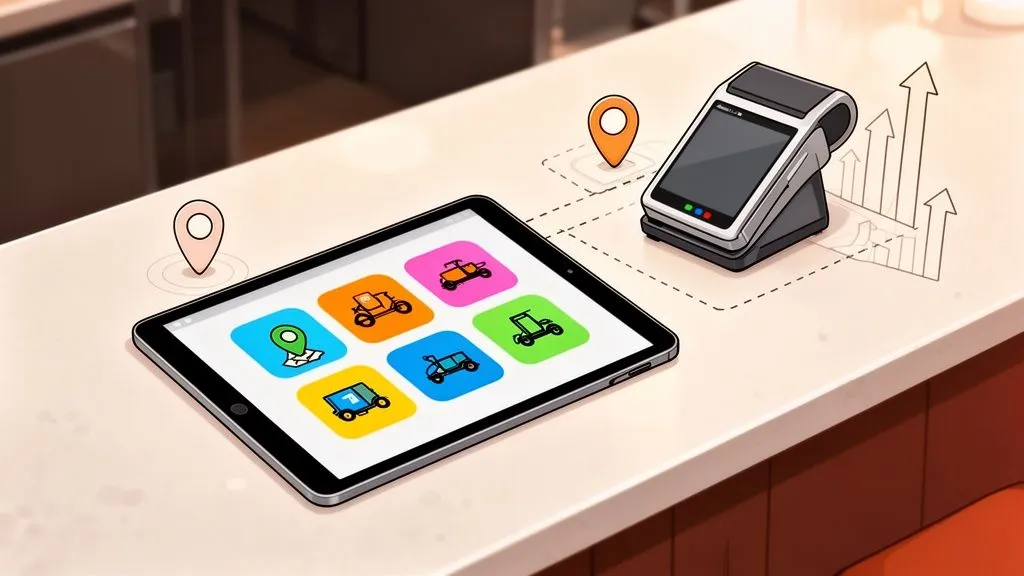
In the modern restaurant landscape, third-party delivery apps are essential channels for growth, not just optional add-ons. But with so many platforms available, choosing the right partners can feel overwhelming. The key isn’t simply picking the one with the most users; it’s about finding the services that align perfectly with your brand, customer base, and operational workflow. Selecting the wrong platform can lead to kitchen bottlenecks, high commission fees that erode profits, and a disjointed customer experience.
This guide is designed to cut through the noise. We will provide a comprehensive roundup of the 7 best delivery services, moving beyond surface-level features to offer actionable insights specifically for restaurant owners and operators. We’ll explore how each platform impacts your kitchen’s efficiency, the critical importance of seamless POS integration, and how you can leverage these food tech tools to boost your bottom line. We will dive deep into the specifics that matter most to your daily restaurant operations, such as commission structures, market reach, and integration capabilities with systems like Clover and Square.
Here, you will find a clear, practical breakdown of top contenders like DoorDash, Uber Eats, and Grubhub, along with notable regional players. Each analysis is structured to help you make an informed decision, complete with direct links and illustrative screenshots. Our goal is to equip you with the knowledge to build a delivery strategy that expands your reach, streamlines your operations, and ultimately drives sustainable revenue. Let’s get started.
1. Uber Eats: Maximizing Reach in a Massive Marketplace
As one of the titans in food delivery, partnering with Uber Eats gives your restaurant instant access to a vast and active user base. In simple terms, it’s like opening a new digital storefront in a high-traffic area. Customers who use Uber for rides are often loyal to the Uber Eats platform, creating a built-in audience ready to discover your menu.
This massive reach is what makes Uber Eats one of the best delivery services for restaurants aiming for growth and brand visibility. It’s not just about getting orders; it’s about getting your menu in front of millions of potential new customers who might not have found you otherwise.
Improving Restaurant Operations with Food Tech Integration
The core value of Uber Eats lies in its powerful logistics network and extensive user data. For a restaurant, this translates to high order potential. However, a high volume of orders can quickly overwhelm your staff and kitchen if not managed properly. This is where direct Point of Sale (POS) integration becomes critical.
Manually entering Uber Eats orders into your POS is slow and prone to human error. A simple “fat finger” mistake can lead to an incorrect order, an unhappy customer, and lost revenue. Integration automates this entire workflow.
Here’s how it works in practice: Imagine your restaurant uses a Clover POS system. With an integration solution, the moment a customer places an order on the Uber Eats app, it appears directly in your POS and prints at the kitchen station just like an in-house ticket. This eliminates manual entry entirely.
Why It Matters for Restaurant Efficiency: This automation directly translates to significant time savings for your staff, a drastic reduction in order errors, and faster ticket times. It transforms a potential operational headache into a streamlined, efficient revenue stream, keeping both your kitchen staff and your customers happy.
Key Features and Restaurant Considerations
- Vast Customer Base: Leverages the immense Uber user network, providing unparalleled market reach.
- Uber One Membership: The platform’s subscription program ($9.99/month) encourages repeat orders from loyal customers by offering $0 delivery fees and discounts, driving consistent volume to participating restaurants.
- Integrated Platform: Combines food, grocery, and rides within a single app, creating a sticky ecosystem that keeps users engaged with the brand.
While Uber Eats offers incredible reach, it’s essential to understand its structure compared to other platforms. For a detailed breakdown of commission fees and operational models, you can explore a comprehensive comparison of Uber Eats, DoorDash, and Grubhub.
Takeaway: Uber Eats excels at providing access to a massive marketplace. To fully capitalize on this volume without compromising operational efficiency, integrating it directly with your POS system is not just a convenience; it’s a strategic necessity.
2. DoorDash: Tapping into Suburban Strength and Loyalty
As a dominant force in the U.S. market, particularly in suburban areas, DoorDash provides restaurants with a powerful channel to reach a dedicated and high-spending customer demographic. For a restaurant owner, this means becoming a go-to choice for millions of households looking for their next convenient meal.
This deep market penetration makes DoorDash one of the best delivery services for restaurants seeking to capture consistent, high-value orders. Partnering with DoorDash isn’t just about fulfilling deliveries; it’s about becoming a staple in the local community and leveraging a platform known for its frequent promotions and loyal subscriber base.
Improving Restaurant Operations with POS Integration
The primary value of DoorDash for a restaurant lies in its immense order volume and the loyalty driven by its DashPass program. However, managing this influx of orders without the right systems can create operational bottlenecks, especially during peak hours. This is where seamless Point of Sale (POS) integration is essential.
Manually keying in DoorDash orders is a recipe for inefficiency and errors. A misplaced modifier or incorrect address can derail the entire customer experience and negatively impact your bottom line. Integration automates this process, connecting the marketplace directly to your kitchen.
Here’s how it works in practice: Let’s say your restaurant operates on a Square POS system. With an integration solution in place, a customer’s DoorDash order is instantly sent to your Square POS, appearing as a standard ticket and printing directly in the kitchen. No manual intervention is needed from your front-of-house staff.
Why It Matters for Restaurant Delivery: This level of automation frees up your staff to focus on in-house guests, eliminates costly order mistakes, and accelerates kitchen throughput. It transforms the high volume from DoorDash from a potential challenge into a streamlined and highly profitable part of your business.
Key Features and Restaurant Considerations
- Massive US Coverage: Extensive reach, especially in suburban markets, connecting you with a large and active user base.
- DashPass Membership: DoorDash’s subscription program ($9.99/month) drives repeat business by offering members $0 delivery fees and reduced service fees on eligible orders, encouraging frequent and larger check sizes.
- Strong Promotional Cadence: The platform frequently runs merchant deals and promotions, giving restaurants opportunities to attract new customers and boost visibility.
While DoorDash offers incredible volume, it’s crucial to understand its partnership models and how to best leverage its platform. To get your restaurant live and start accepting orders, you can learn more about how to add your restaurant to DoorDash.
Takeaway: DoorDash excels at connecting restaurants with a loyal, high-volume customer base, particularly in suburban markets. To manage this demand effectively and protect your profit margins, integrating DoorDash directly into your POS system is a foundational step for operational success.
3. Grubhub: Leveraging Strategic Partnerships for Targeted Reach
As one of the original players in the food delivery space, Grubhub offers restaurants access to a mature and loyal customer base, particularly in major urban markets. Its long-standing presence and strategic partnerships, most notably with Amazon, create a unique value proposition for restaurants looking to tap into a high-value consumer demographic.
This strategic positioning makes Grubhub one of the best delivery services for restaurants aiming to connect with dedicated online shoppers and subscription-savvy customers. It’s not just about listing your menu; it’s about gaining visibility within an ecosystem where convenience and member perks drive ordering decisions.

Streamlining Restaurant Operations with POS Integration
Grubhub’s core strength lies in its established user base and powerful integrations that expand its reach. For a restaurant, this translates into a steady stream of orders from a desirable customer segment. However, managing this influx alongside your in-house and other delivery channels requires a streamlined operational workflow to prevent kitchen bottlenecks.
Manually keying in Grubhub orders from a tablet into your POS system is an inefficient process that invites costly errors. A mistyped item or a missed special request can damage your restaurant’s reputation and bottom line. Direct POS integration is the key to turning this channel into a seamless part of your operation.
Here’s how it works in practice: Let’s say your restaurant operates on a Clover POS. With a direct integration, when a customer places an order via the Grubhub app or even through Amazon, that order is instantly and automatically sent to your POS. It prints in the kitchen exactly like a ticket from a server, with no manual intervention needed from your front-of-house staff.
Why It Matters for Your Food Tech Stack: Automating the order entry process eliminates the risk of human error, freeing up your staff to focus on serving in-person guests. This efficiency boost leads to faster order fulfillment, improved accuracy, and a more consistent experience for every customer, regardless of how they order.
Key Features and Restaurant Considerations
- Amazon Prime Partnership: Offers Grubhub+ membership as a free, ongoing benefit to all U.S. Prime members, instantly connecting your restaurant with millions of highly engaged consumers.
- Grubhub+ Membership: A subscription program that encourages repeat business by offering members unlimited $0 delivery fees on eligible orders, lower service fees, and other exclusive perks.
- Established Market Presence: A trusted brand with deep penetration in many key metropolitan areas, providing access to a loyal and established customer demographic.
While Grubhub’s Amazon integration provides a powerful channel for customer acquisition, it’s vital to manage the incoming order flow efficiently. To understand how to connect this platform directly to your existing systems, you can explore the specifics of a Grubhub and Clover integration.
Takeaway: Grubhub excels at connecting restaurants with a high-value, subscription-oriented customer base through strategic partnerships. To harness the full potential of this audience without disrupting your kitchen’s workflow, integrating Grubhub directly with your POS system is an essential operational strategy.
4. Instacart: Tapping Into the Grocery Shopper’s Mindset
While traditionally known for groceries, Instacart has evolved into a comprehensive delivery ecosystem, now including restaurant partnerships through its integration with Uber Eats. For a restaurant, this presents a unique opportunity to capture a different kind of customer: the planner. This is the person ordering their weekly groceries who decides to add a prepared meal to the cart for that evening.
Partnering with Instacart means placing your menu alongside pantry staples and fresh produce, tapping into a customer base that values convenience and one-stop shopping. This strategic placement makes Instacart one of the best delivery services for reaching households already in a purchasing mindset, potentially converting a grocery run into a restaurant order.

Restaurant Delivery and Operational Impact
Instacart’s value for restaurants is its ability to access a high-intent, convenience-focused audience. The operational model for restaurants leverages the Uber Eats network, meaning the order fulfillment process is similar. However, the customer journey starts in a completely different context, which can lead to different ordering patterns and peak times.
Because these orders are routed through a third-party integration (Uber Eats), the risk of manual entry errors and operational slowdowns remains a significant concern. A disjointed workflow where staff must monitor an Instacart tablet, then manually punch the order into your Square POS, creates friction and opportunities for mistakes.
Here’s how it works in practice: With a proper integration solution like OrderOut, an order placed within the Instacart app is seamlessly passed through the Uber Eats network and appears directly on your kitchen printer via your POS. Your staff treats it like any other incoming ticket, with no need for manual transcription or separate tablet management.
Why It Matters for Restaurant Efficiency: Automating this flow is crucial for tapping into the Instacart market without adding operational complexity. It ensures that your restaurant can efficiently serve this unique customer segment, turning a novel revenue stream into a reliable and error-free part of your daily operations, reducing errors and saving staff time.
Key Features and Restaurant Considerations
- Access to Grocery Shoppers: Reach a massive, loyal user base that is already making purchases for their home.
- Instacart+ Membership: The platform’s subscription ($9.99/month or $99/year) drives loyalty by offering $0 delivery fees on eligible orders over a certain threshold, encouraging larger and more frequent combined orders.
- Integrated Convenience: By offering groceries, retail, and now restaurant meals in one app, Instacart creates a sticky platform that keeps users engaged and simplifies their purchasing decisions.
While Instacart opens up a new demographic, it’s vital to streamline how those orders enter your kitchen. To understand how this fits into your broader strategy, you can explore the fundamentals of a food online ordering system.
Takeaway: Instacart excels at providing access to a unique audience of planners and grocery shoppers. To effectively capture this market without disrupting your kitchen’s workflow, integrating the platform directly with your POS system is essential for maintaining speed, accuracy, and efficiency.
5. Caviar: Targeting a Premium, Food-Focused Audience
Caviar offers a distinct approach by positioning itself as a curated marketplace for premium and independent local restaurants. Simply put, instead of competing on sheer volume, Caviar focuses on quality. This attracts a discerning customer base often referred to as ‘foodies’ who are actively seeking unique culinary experiences. For restaurants with a higher price point or a specialized menu, this platform provides a direct channel to a more targeted demographic.

This curated environment makes Caviar one of the best delivery services for restaurants aiming to build a premium brand identity. Being featured alongside other top-tier local eateries can elevate your restaurant’s perception and attract customers willing to pay for quality.
Enhancing Restaurant Operations for Premium Service
Since its acquisition by DoorDash, Caviar operates on the same powerful logistics network. This means restaurants gain access to the extensive DoorDash driver fleet and technology while still benefiting from Caviar’s premium branding. However, this also means the operational challenges are similar: managing a new stream of digital orders efficiently is paramount to protecting both your profit margins and your brand’s reputation for quality.
Relying on a separate tablet for Caviar orders introduces the risk of manual entry errors and diverts staff attention from in-house guests. A simple mistake in transcribing an order from the tablet to your POS can lead to a dissatisfied premium customer, which is particularly damaging for a brand built on excellence. Direct POS integration is the solution.
Here’s how it works in practice: Your restaurant uses a Square POS system. With an integration, a customer’s order on the Caviar app is instantly sent to your Square POS, automatically appearing on your kitchen display system (KDS) or printing at the correct prep station. The need for a staff member to manually re-enter the order is completely eliminated.
Why It Matters for Restaurant Delivery: This seamless automation ensures order accuracy and speeds up kitchen workflows, allowing your team to maintain high standards of service even during peak hours. It turns the opportunity of reaching a premium audience into a streamlined and profitable part of your operations, boosting staff productivity and reducing costly errors.
Key Features and Restaurant Considerations
- Curated Marketplace: Attracts a food-savvy audience actively searching for high-quality, local dining options, leading to potentially higher average order values.
- DoorDash Logistics: Leverages the extensive and reliable DoorDash driver network for fulfillment, ensuring a robust delivery infrastructure.
- DashPass Integration: Orders are eligible for DashPass benefits, appealing to a large base of subscribers who frequently order and seek value on delivery fees.
While Caviar provides access to a valuable niche audience, its availability is limited to select major metropolitan areas. For restaurants in its service zones, it offers a powerful way to stand out. Managing orders from Caviar alongside other platforms requires a robust system to maintain efficiency. You can discover how an order management system provides a central hub for all your delivery channels.
Takeaway: Caviar is the ideal platform for reaching a premium customer segment. To fully leverage this audience without sacrificing operational quality, direct POS integration is essential to ensure every order is as perfect as your in-house dining experience.
6. Gopuff: Tapping Into the Ultra-Fast Convenience Market
While not a traditional restaurant delivery platform, Gopuff presents a unique partnership opportunity for restaurants looking to capture the impulse-buy and convenience-driven consumer. Gopuff operates a network of micro-fulfillment centers, delivering snacks, drinks, and household essentials in as little as 20 minutes. For a restaurant, this opens a new sales channel for grab-and-go items, desserts, or bottled beverages.
Partnering with Gopuff allows you to place your most popular, pre-packaged items directly into their fulfillment centers. This makes your brand available to a customer base seeking immediate satisfaction, a market distinct from those planning a full meal. This model positions Gopuff as one of the best delivery services for incremental revenue and brand extension beyond your four walls.
How This Model Impacts Restaurant Operations
Unlike aggregator models where orders come directly to your kitchen, the Gopuff partnership is centered on wholesale and retail logistics. You sell your packaged products to Gopuff, and they handle the entire customer-facing transaction, storage, and delivery. This completely removes the operational burden from your in-house staff and kitchen.
This model is ideal for items with a stable shelf life that can be sold as retail products. Think of it less as a delivery service and more as getting your products onto the digital shelf of a high-speed convenience store.
Here’s how it works in practice: Imagine your restaurant is known for its signature bottled cold brew or a popular line of gourmet cookies. You can arrange to stock these items in a local Gopuff micro-fulfillment center. A customer craving a late-night snack orders your cookies through the Gopuff app, and a Gopuff driver delivers it from their warehouse, requiring zero action from your restaurant staff at the time of the order.
Why It Matters for Restaurant Efficiency: This creates a passive revenue stream that doesn’t interfere with your core dine-in or hot food delivery operations. It expands your brand’s reach into a new consumer context-the immediate need-without adding complexity to your kitchen workflow or requiring POS integration. This saves significant time and labor.
Key Features and Restaurant Considerations
- Ultra-Fast Delivery: Leverages a network of local micro-fulfillment centers to deliver products, often within 20-30 minutes, capturing the impulse-buy market.
- FAM Membership: A loyal subscriber base ($7.99/month) receives $0 delivery fees and exclusive deals, encouraging frequent repeat purchases of stocked items.
- Wholesale Model: Restaurants sell products to Gopuff, offloading the storage, packing, and final-mile delivery logistics, which simplifies operations.
While Gopuff excels at convenience, it serves a different purpose than platforms like DoorDash or Uber Eats. It’s not designed for hot, made-to-order meals but for consumer-packaged goods. You can learn more about its unique business model and offerings directly on their website at https://www.gopuff.com.
Takeaway: Gopuff offers a powerful channel for restaurants to sell pre-packaged goods and reach a new audience focused on speed and convenience. It’s a low-touch, high-potential way to generate incremental revenue without straining kitchen operations.
7. delivery.com: Diversifying Revenue Beyond the Kitchen
While most platforms focus solely on food, delivery.com broadens the horizon by creating a comprehensive local marketplace. For a restaurant, this platform offers a unique opportunity to tap into a customer base looking for more than just their next meal. They might be ordering groceries, alcohol, or even scheduling a laundry pickup, all within the same ecosystem.

This multi-category approach makes delivery.com one of the best delivery services for restaurants situated in dense, mixed-use neighborhoods. It attracts a different type of loyal user: one who values the convenience of consolidating all their local delivery needs into a single account and app, making your restaurant a regular part of their routine.
The Role of POS Integration in Diverse Marketplaces
The core value of delivery.com is its ability to capture a diverse local audience. While its market share may be smaller than the giants, its users are often highly engaged within their local area. Integrating delivery.com with your POS system is crucial to harnessing this potential without adding operational complexity.
Managing another tablet and manually inputting orders from a niche platform creates the same problems as managing the larger ones: it consumes staff time and invites costly mistakes. POS integration automates this process, ensuring orders from delivery.com flow into your kitchen with the same efficiency as an in-person order.
Here’s how it works in practice: Your restaurant uses a Square POS system. A customer orders a family meal from your restaurant on the delivery.com app. With a direct integration, that order instantly appears in your Square POS and is sent to the kitchen printer. Your staff doesn’t have to touch a separate tablet or re-key any information.
Why It Matters for Restaurant Delivery: Automating orders from platforms like delivery.com allows you to diversify your revenue streams without diversifying your operational headaches. It ensures every order, regardless of its source, is processed quickly and accurately, protecting your margins and maintaining high standards for customer satisfaction while improving staff productivity.
Key Features and Restaurant Considerations
- Multi-Category Marketplace: Attracts customers ordering food, alcohol, groceries, and services like laundry, increasing the potential for discovery.
- No Required Subscription: Customers can access $0 delivery fee promotions from merchants without committing to a monthly subscription, lowering the barrier for them to try your restaurant.
- Strong Local Focus: Tends to have a dedicated user base in the specific urban markets it serves, offering a way to reach loyal neighborhood customers.
While delivery.com provides a unique way to engage a local audience, its smaller footprint means it’s often best used as a supplementary channel alongside larger platforms. Availability varies significantly by city, so it’s essential to confirm its presence in your area.
Takeaway: delivery.com excels at capturing the “one-stop-shop” local customer. Integrating it with your POS system is the key to adding this valuable, diversified revenue stream without disrupting your kitchen’s workflow or increasing the risk of manual errors.
Top 7 Delivery Services Comparison
Platform 🔄 Implementation complexity 💡 Resource requirements 📊 Expected outcomes ⭐ Ideal use cases ⚡ Key advantages Uber Eats Low for users; moderate for merchants (onboarding, menu sync) Moderate — commission fees, staff for packing/fulfillment High order volume and national reach in metros Users who want rides + delivery in one app Wide availability; integrated rides + delivery; membership savings DoorDash Low consumer complexity; moderate merchant setup and promotions Moderate — commissions, marketing to leverage DashPass High demand with frequent promo-driven spikes Frequent diners seeking broad restaurant choice and deals Massive restaurant coverage; DashPass promotions and value Grubhub Low to use; moderate merchant integration; Amazon-linked options Moderate — commissions; optional Grubhub+ subscription Strong urban orders; extra reach via Amazon integration Amazon Prime users and urban restaurants Amazon integration; Grubhub+ perks and member-only promos Instacart Moderate — retailer partnerships and shopper coordination Higher — inventory sync, in-store shoppers, membership perks Fast grocery/retail fulfillment; high repeat grocery orders Grocery-first users needing fast, same-day delivery Extensive grocery/retail network; low minimums with Instacart+ Caviar Moderate — curated merchant onboarding and selection Lower merchant scale but higher curation effort; DashPass-linked Lower volume but higher spend per order in select cities Diners seeking premium or specialty local restaurants Curated upscale options; DashPass cross-app benefits Gopuff Low for consumers; high ops complexity (micro-fulfillment centers) High — inventory stocking, local micro-warehouses, delivery logistics Very fast, short-window deliveries for convenience items Urgent staples, late-night needs, frequent small orders Ultra-fast delivery from micro-fulfillment centers; clear membership value delivery.com Moderate — multi-category integrations (food, alcohol, laundry) Moderate — merchant integrations, city-specific partners Variable results depending on local merchant network Households/offices wanting many categories from one account Multi-category offerings (laundry, alcohol, groceries) and platform integrations
Your Next Step: From Managing Tablets to Mastering Delivery
Navigating the crowded landscape of food delivery partners can feel like the final boss of restaurant management. We’ve explored the giants like DoorDash and Uber Eats, niche players like Caviar, and regional powerhouses such as Grubhub. Each platform offers a unique gateway to new customers, but simply being listed isn’t the endgame; it’s the opening move. The real victory lies in transforming this complex ecosystem from a source of operational stress into a streamlined, powerful engine for growth.
The core challenge isn’t choosing one of the best delivery services; it’s managing all of them without sacrificing your sanity or your profit margins. The image of a counter cluttered with ringing tablets, each demanding immediate attention, is all too familiar. This “tablet hell” is a direct drain on efficiency, leading to costly order errors from manual re-entry, frustrated staff, and a disjointed customer experience. The fundamental takeaway from our analysis is this: manual processes are the single biggest bottleneck in a modern delivery operation.
From Platform Selection to Operational Excellence
Choosing the right mix of platforms is a strategic decision based on your specific goals, cuisine type, and customer demographic.
- For Maximum Reach: A combination of DoorDash and Uber Eats often provides the most extensive customer base, tapping into two distinct, massive user pools.
- For Premium Branding: If your restaurant targets a more discerning clientele, supplementing with a service like Caviar can align your brand with a curated, high-end marketplace.
- For Hyper-Local Dominance: Don’t underestimate regional champions like delivery.com, which can offer a dedicated local following and potentially more favorable terms.
However, a multi-platform strategy only succeeds when the back-end is unified. The true path to mastering delivery isn’t about juggling tablets faster; it’s about eliminating them entirely. This is where direct Point-of-Sale (POS) integration becomes the most critical investment you can make in your restaurant’s future.
The Non-Negotiable: Direct POS Integration
Imagine every order from every platform-DoorDash, Grubhub, Uber Eats-flowing directly into your kitchen printer, exactly like an in-house order. No more manual punching. No more misinterpretations. Just a seamless stream of revenue appearing on your central POS screen.
This is the power of integration. By connecting these disparate third-party services directly into your Clover (https://www.clover.com/appmarket/apps/NWHCH32XVYV40) or Square (https://squareup.com/us/en/app-marketplace/app/orderout) system, you solve multiple problems at once:
- Drastic Error Reduction: Eliminates human error from re-keying orders, saving money on comps and remakes.
- Increased Staff Productivity: Frees your front-of-house team to focus on dine-in guests instead of being chained to tablets.
- Faster Order Throughput: Gets orders to the kitchen instantly, improving prep times and delivery speed.
- Simplified Reporting: Consolidates all sales data into one place, making accounting and performance analysis effortless.
Beyond choosing the right delivery platform, mastering the art of delivery also involves crucial operational decisions, such as selecting appropriate eco-friendly takeaway containers that protect food quality and align with your brand’s values. Integrating your tech stack allows your team to focus on these high-impact details rather than on tedious data entry.
The path forward is clear. Stop letting manual workflows dictate your restaurant’s potential. By embracing automation, you take back control, turning a chaotic and fragmented process into a cohesive and profitable part of your business. The best delivery services are those that work for you, seamlessly and efficiently, within the operational system you already use every day.
Ready to eliminate tablet chaos and unify your delivery operations? OrderOut connects all the top delivery platforms directly to your POS system, saving you time, reducing errors, and boosting your bottom line. Stop managing apps and start managing your business by visiting https://dashboard.orderout.co where restaurant owners can start onboarding for Free in a few clicks.