
A Restaurant Owner's Guide to Automation: Boost Efficiency and Profits
· Thibault Le Conte
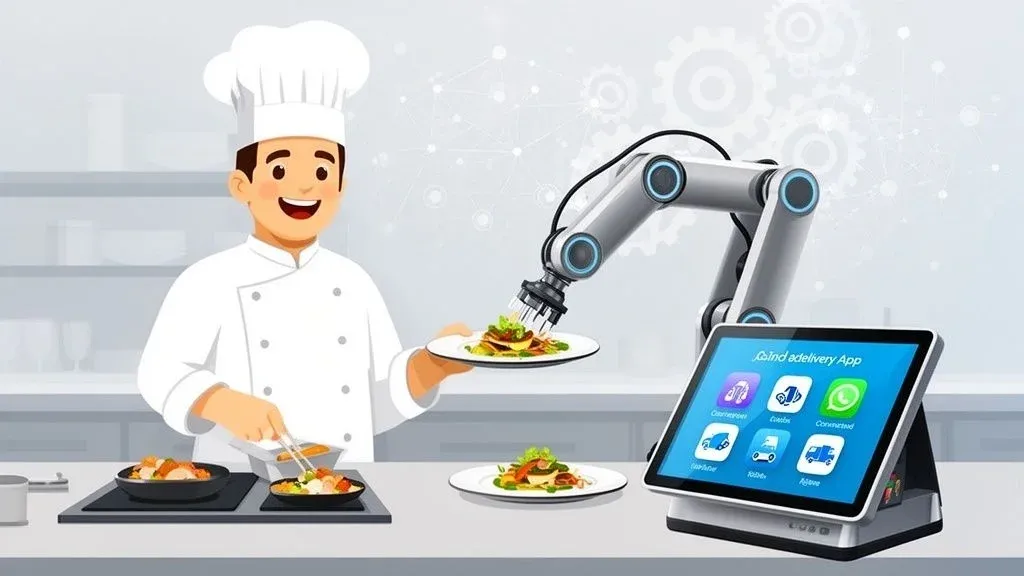
If you’re feeling the squeeze from rising food costs and a tight labor market, you’re not alone. Automation in restaurants isn’t a sci-fi concept with robots; it’s a practical solution available today to solve your biggest operational problems. Think of it as your most reliable employee—one that never calls in sick and perfectly handles repetitive tasks every single time. By automating the right processes, you can improve restaurant efficiency, streamline delivery, and get the most out of your POS system.
Why Automation in Restaurants Matters More Than Ever
Are you drowning in a sea of delivery app tickets, tedious inventory counts, and chaotic scheduling? In simple terms, restaurant automation uses technology to handle the boring but essential jobs that slow your business down. This isn’t about replacing your team; it’s about empowering them.
Why it matters: When your front-of-house staff isn’t stuck manually punching Uber Eats orders into the POS, they can connect with customers. This directly improves service, reduces costly errors, and boosts staff productivity. For example, by integrating a delivery service like DoorDash with a Clover POS, you eliminate manual entry, saving time and preventing mistakes that lead to wasted food and refunds. This is how you shift from constantly putting out fires to running a smooth, proactive operation.
The Driving Forces Behind Restaurant Automation
The industry-wide move toward automation is a direct response to the very real pressures restaurant owners face daily. This technology is no longer a “nice-to-have” but a must-have for growth.
Here’s what’s pushing the change:
- Persistent Labor Shortages: Good help is hard to find and even harder to keep. Automation fills the gaps by taking over tasks that don’t need a human touch, letting you run a lean, effective team.
- Rising Operational Costs: Everything from ingredients to payroll is more expensive. Automation cuts down on costly order errors, reduces food waste with smarter tracking, and helps you schedule staff more efficiently.
- Changing Customer Expectations: Diners demand a smooth digital experience, from ordering on their phone to getting their food fast. Automation is the engine that helps you meet those expectations without breaking a sweat.
The bottom line is simple: automation allows you to serve more customers, more accurately, with the team you already have. It turns operational chaos into a well-oiled machine.
Key Areas of Restaurant Automation at a Glance
Automation Area What It Does Primary Benefit POS & Delivery Integration Automatically sends online orders from apps like DoorDash directly to your POS and kitchen printer. Eliminates manual order entry, saving time and preventing costly mistakes. Kitchen Automation Uses Kitchen Display Systems (KDS) to organize orders and track ticket times. Improves kitchen workflow, reduces errors, and speeds up service. Inventory Management Tracks ingredient levels in real-time as orders are placed and alerts you to low stock. Cuts down on food waste, prevents running out of popular items, and simplifies ordering. Labor & Scheduling Helps create optimal staff schedules based on sales forecasts and automates payroll calculations. Reduces labor costs, prevents over/understaffing, and saves hours of admin work.
As you can see, each piece of the automation puzzle is designed to solve a specific problem that costs you time and money.
Understanding the Financial Impact of Food Tech
The industry is investing heavily in technology because the returns are real. The global food automation market was valued at $15.04 billion in 2024 and is expected to jump to $16.7 billion in 2025.
Even more telling, the restaurant technology sector—which includes POS and ordering systems—is projected to skyrocket from $5.1 billion in 2024 to $17.2 billion by 2032. This massive growth proves one thing: your competitors are using this tech to get ahead. You can find more insights on these restaurant automation statistics and see how other operators are adapting.
Your Next Step: For most restaurants, the biggest bottleneck is managing third-party delivery orders. Integrating services like DoorDash directly with your Clover or Square can deliver an immediate win by getting rid of manual entry and the expensive mistakes that come with it.
Making Your POS System the Heart of Your Restaurant Operations
Your Point of Sale (POS) system can be so much more than a digital cash register. Its real power is unlocked when it becomes the central brain of your operation, connecting your kitchen, delivery apps, and front-of-house staff into a single, intelligent workflow. The alternative is the costly confusion many restaurants know all too well: staff stuck with time-sucking manual work, like punching an order from a DoorDash tablet into the POS. This double-entry isn’t just slow; it’s a recipe for expensive mistakes.
Why POS Integration Is a Game-Changer for Restaurant Delivery
So, what is POS integration? In simple terms, it’s getting your different software systems to “talk” to each other automatically. Technically, this means using APIs (Application Programming Interfaces) to allow your third-party delivery apps, inventory software, and kitchen display system to exchange data with your POS without anyone lifting a finger.
Why it matters: A fully integrated POS eliminates manual work, which directly reduces labor costs and costly order errors. This creates a single source of truth for your entire business, making your restaurant operations more efficient and profitable.

As you can see, automation is a necessary solution to the real-world problems of rising costs and staff shortages. Integrating your systems through the POS is one of the most powerful forms of automation you can implement. To learn more, check out our guide to POS software integration.
From Theory to Reality: How a POS Integration Works
Picture this: an order comes in from Uber Eats. Without integration, a staff member has to stop what they’re doing, walk to the tablet, and manually type the order into the POS. It’s a clunky, error-prone process.
Now, imagine using a platform like OrderOut to connect everything. The moment a customer places an order on Uber Eats, it’s instantly and automatically sent to your POS and kitchen printer. This seamless connection is available for leading systems like Clover and Square. For example, a restaurant using Square for its POS can install an integration app directly from the marketplace to sync all their DoorDash and Uber Eats orders in minutes.
The impact is immediate: staff become more productive, order mistakes practically disappear, and your restaurant delivery becomes much more efficient.
Escaping “Tablet Hell” with Delivery Consolidation
If your front counter is cluttered with tablets for Uber Eats, DoorDash, and Grubhub, all blinking and beeping for attention, you’re stuck in “tablet hell.” This setup leads to missed orders, frazzled staff, and costly mistakes when a tired employee inevitably punches in “1” instead of “10” wings. This digital juggling act is a massive drag on your entire operation.
The answer is delivery consolidation, a type of automation built to end this exact chaos.
The Universal Remote for Your Restaurant Delivery
Think of delivery consolidation software as a universal remote for all your delivery partners. Instead of fumbling with multiple devices, you get a single dashboard that handles everything. This technology acts as a bridge, grabbing every order from every third-party app and pushing it directly into your main POS system.
This simple change solves several critical problems at once:
- It kills manual re-entry. Orders appear in your POS automatically.
- It dramatically reduces expensive mistakes. Removing the human element of re-typing orders improves accuracy.
- It frees up your team to focus. Staff can spend their time on valuable tasks, not babysitting tablets.
To unify these interactions, restaurants can build a winning omnichannel communication strategy so customers have a consistent experience everywhere.
From Tablet Hell to a Smooth Workflow
So, what does this look like during a busy dinner rush? Imagine a customer orders a burger and fries on DoorDash. With a tool like OrderOut connected to your POS, the process becomes hands-off for your staff.
The moment the customer hits “confirm,” the order is instantly fired into your POS system and prints in the kitchen. This seamless integration transforms a chaotic, error-prone task into a smooth, automated workflow. For a deeper dive, check out our guide on what to look for in a third-party delivery service.

The image here shows it perfectly: orders from different delivery platforms all funnel into one central hub, simplifying your daily operations.
Why It Matters: Every minute your staff spends manually punching in a delivery order is a minute they aren’t helping an in-house guest. This automation leads directly to cost savings (fewer mistakes), time savings (no more double entry), and happier, more productive staff (who can focus on service, not tablets).
If your biggest daily headache is managing that fleet of delivery tablets, consolidating them is the single most impactful piece of automation you can implement today.
Streamlining Restaurant Operations from Kitchen to Back Office
The front counter is just the start. The real impact of automation comes when you bring that same efficiency into the heart of your operation—the kitchen and back office. This is where you build a connected system that cuts down on chaos and drives profitability.

Taming Order Flow with Kitchen Display Systems (KDS)
Think of a Kitchen Display System (KDS) as a digital air traffic controller for your kitchen. It’s a screen that neatly displays all incoming orders, getting rid of messy paper tickets. When an order hits your POS—whether from a guest at table five or a driver from DoorDash—it pops up on the KDS instantly.
Why it matters: A KDS is the bridge connecting your front-of-house directly to your back-of-house via your POS. This direct link means no more lost tickets, way less shouting during a dinner rush, and faster, more accurate orders, leading to improved staff productivity and happier customers. You can learn more in our guide on restaurant Kitchen Display Systems.
Nailing Consistency with Smart Food Tech
With your orders flowing smoothly, the next step is automating the cooking itself. This is where advanced food tech like programmable fryers and combi ovens comes in, removing the guesswork to ensure every dish is perfect. For example, a smart fryer can automatically lower and lift a basket of fries, ensuring perfect crispiness every time. This guarantees rock-solid consistency, improves food safety, and frees up your cooks for more skilled work.
Streamlining Your Back-Office Headaches
True efficiency doesn’t end when the food leaves the pass. Automation can also take on time-sucking administrative chores.
Automated Inventory Management
Modern inventory systems sync directly with your POS to track ingredients as they’re used. Sell a burger, and the system instantly subtracts the ingredients from your stock count. This gives you a live, accurate view of what you have, preventing stockouts and reducing food waste—a massive leap forward for any restaurant’s operations.
Smarter Staff Scheduling
Smart scheduling software analyzes sales data from your POS to predict your busiest times and helps you build a schedule to match. This ensures you’re never understaffed for a rush or overstaffed during a slow spell, giving you direct control over your labor costs.
How Smart Food Tech Creates Happier Customers
Great hospitality feels like magic, but it’s really about ruthless efficiency behind the scenes. Automation in restaurants frees your staff from tedious tasks so they can focus on what actually matters: the guest. When technology handles the monotonous work, your team can truly shine. A smooth operation behind the counter translates directly to a smooth experience for the customer.
Think about it: an order from DoorDash that flows straight into your POS integration and to the kitchen printer is far less likely to have errors. Every minute your team isn’t tied up with manual data entry is a minute they can spend checking on tables and creating memorable moments that earn five-star reviews.
Balancing High-Tech with a Human Touch
The trick is to use automation to amplify hospitality, not replace it. Data shows that while customers love using technology for simple tasks like ordering and paying, they still want to talk to a person when something goes wrong. Nailing this balance builds real loyalty.
While 45% of Millennials and 41% of Gen Z are fine ordering food made by a robot, 60% of consumers still want a human to handle customer support. The lesson is clear: use tech for speed, but rely on your people for warmth and problem-solving. You can discover more about these restaurant technology trends to better understand what customers are looking for.
Practical Ways to Improve the Guest Experience
You don’t need to rip everything out and start over. It’s about spotting the little moments of friction for your guests and plugging in simple, smart tech solutions. The right software can make all the difference. You can explore a variety of these tools by reading more about SaaS for restaurants.
- Self-Service Ordering: Kiosks and QR-code menus put customers in the driver’s seat. They can customize their order exactly how they want it and pay without waiting for a server. This speeds things up and dramatically improves order accuracy.
- Automated Communication: Keep your customers in the loop without lifting a finger. Automated texts that confirm an order, give a delivery ETA, or buzz a guest when their table is ready reduce their anxiety and make them feel cared for.
- Instant Customer Support: Many restaurants are turning to sophisticated AI chatbot platforms. These can provide instant answers to common questions and make customers feel heard 24/7.
Your Takeaway: The best food tech is the kind that works quietly in the background, making every guest interaction smoother. By automating the right things, you empower your most valuable asset—your team—to create genuine human connections. Start by using automation to perfect your ordering and payment processes to reduce friction and free up staff time.
Your Practical Roadmap to Restaurant Automation
Getting started with automation doesn’t mean you need to rip out your entire tech stack. The most successful restaurants start small. They find their single biggest headache and fix that first. This way, you get a tangible win right out of the gate without causing massive disruption.
Step 1: Pinpoint Your Biggest Bottleneck
Before you buy any software, figure out where the real friction is in your daily grind. Stand in a corner during a Friday night rush and watch.
Where does the system break down?
- Is your host juggling five delivery tablets, frantically punching orders into the POS while in-house guests wait? (A delivery integration issue)
- Are your kitchen staff yelling about confusing order mods from handwritten tickets? (A KDS could solve this)
- Is your manager stuck in the back office for hours trying to build the next week’s schedule? (A scheduling software opportunity)
For many restaurants, that single source of chaos is the swarm of third-party delivery orders. If that’s you, you’ve found your starting point.
Step 2: Pick a Tool That Plays Well with Others
Now that you know the problem, find the right tool to solve it. When looking at options, focus on a rock-solid POS integration. A new tool is worthless if it can’t communicate with the system that runs your entire operation. A great way to vet this is to check the official app marketplaces for major POS providers like Clover or Square. If a company is listed there, it’s a good sign their integration is reliable.
Step 3: Bring Your Team Along for the Ride
This step is the most important. You have to get your team to want to use the new tech. Frame automation as a tool to make their jobs less frustrating, not a robot coming to replace them.
Explain the why. Say something like, “Remember how annoying all those tablets are? We’re getting a system that gets rid of them. No more manual entry for DoorDash orders. You can finally focus on the guests in front of you.” When your staff sees a tool as their ally, they’ll embrace it. If you want to go deeper, we have a guide on making a successful restaurant digital transformation.
Your Actionable First Step: Don’t try to solve everything at once. Zero in on your biggest pain point—which is probably consolidating all those delivery apps—and find a solution that plugs directly into your POS. This one move will pay for itself almost immediately by slashing order errors, freeing up your staff, and bringing calm back to your front-of-house.
Answering Your Top Questions About Restaurant Automation
Jumping into new technology always comes with questions. Let’s tackle the big ones restaurant owners have when they start thinking about automation.
Is This Going to Be Too Expensive for My Small Restaurant?
Not at all. The most effective tools are software-based, often running on a simple monthly subscription. Take a service that connects your delivery apps to your POS. The cost is usually minor compared to the immediate returns from eliminating order-entry mistakes and saving hours of paid labor. It’s an investment that quickly pays for itself through improved efficiency and error reduction.
Will This Technology Replace My Staff?
This is the biggest myth. The goal of restaurant automation isn’t to replace your people—it’s to make their jobs better. Automation handles repetitive tasks like manually typing online orders. This frees your team to focus on what matters: talking to guests, providing personal service, and boosting staff productivity and morale.
What’s the Best Place to Start?
Target your biggest headache first. For most restaurants, that’s the chaos of managing a tablet farm for DoorDash, Uber Eats, and other delivery apps.
Start by finding a tool that pulls all those online orders into one place and sends them directly to your POS. This single change provides a massive, immediate win by stopping a constant source of stress, slashing errors, and giving you back hours of labor every week.
How Do I Get This to Work with My Current POS System?
Choose technology built for seamless POS integration. The best solutions have official, certified partnerships with major POS companies. For instance, trusted integrators are often listed right in the app marketplaces for systems like Clover and Square. These connections are designed to be plug-and-play, ensuring all your data flows perfectly.
Your Takeaway and Next Step
Automation is no longer a luxury; it’s a necessity for running a modern, profitable restaurant. The most practical and impactful first step is to solve the chaos of third-party delivery. By integrating all your delivery apps directly into your POS, you can immediately reduce errors, save valuable staff time, and streamline your entire operation. This single change provides a clear return on investment and sets the foundation for future automation success.
Ready to take control of your restaurant delivery and boost your efficiency? Start onboarding for Free in a few clicks.